
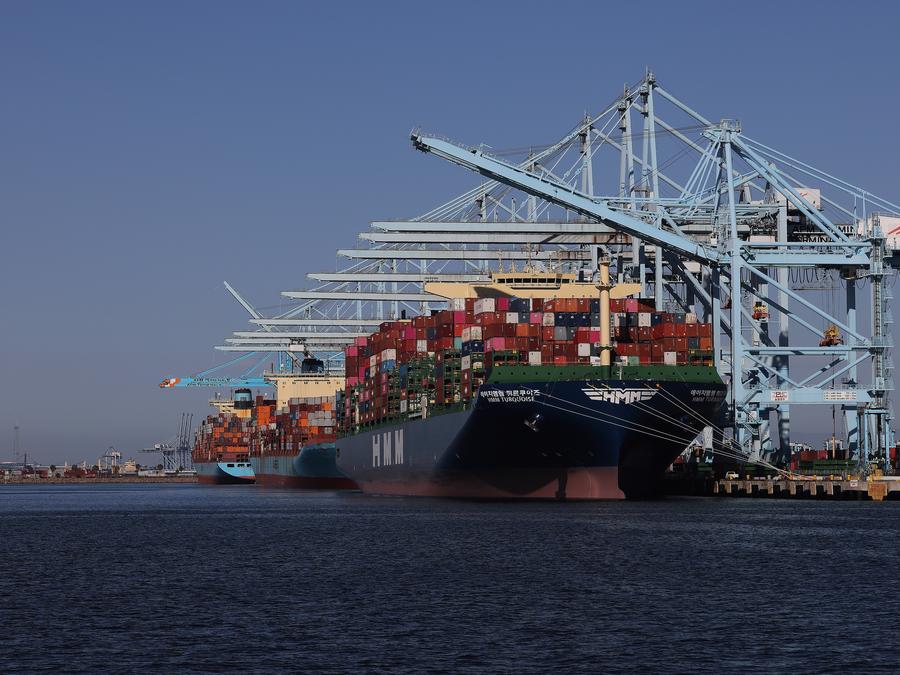
The recent U.S. Supreme Court ruling against Trump's sweeping tariffs is expected to have a significant impact on two of the nation's busiest trade hubs -- the Port of Long Beach and the Port of Los Angeles -- which together form the largest gateway for international trade in the United States.
by Julia Pierrepont III
LOS ANGELES, Feb. 22 (Xinhua) -- Leaders of Southern California's two major seaports and anxious small-business owners are seeking clarity about the future after the U.S. Supreme Court struck down much of President Donald Trump's tariff program on Friday.
In a 6-3 decision, the court ruled that his tariff policy under the International Emergency Economic Powers Act was illegal.
The ruling is expected to have a significant impact on two of the nation's busiest trade hubs -- the Port of Long Beach and the Port of Los Angeles -- which together form the largest gateway for international trade in the United States.
Noel Hacegaba, chief executive officer of the Port of Long Beach, said in a statement on Friday that they hope the "ruling brings greater certainty to the supply chain."
Both ports were heavily affected by trade policies enacted during the Trump administration, particularly tariffs imposed on goods from China and other trading partners, which created ripple effects across nearly every aspect of port operations, from cargo volumes to employment and long-term planning.
The ports and many businesses that rely on predictable shipping schedules and stable costs faced rising expenses and uncertainty over future supply chains. Importers rushed to bring goods into the country ahead of tariff deadlines announced by Washington last year, leading to temporary surges in cargo that overwhelmed port facilities.
At other times last year, cargo volumes declined as companies sought alternative suppliers or reduced imports due to rising costs. This volatility complicated planning for port authorities and logistics companies, strained infrastructure, and created logistical challenges. The unpredictability also undermined the ports' role as reliable facilitators of global trade.
Gene Seroka, executive director of the Port of Los Angeles, described the ruling on Friday as significant but cautioned that major questions remain.
"The decision impacts about two-thirds of the tariffs that have been collected to date and opens new avenues of uncertainty," Seroka said.
On Saturday, Trump said he wanted a global tariff of 15 percent, up from the 10 percent he had announced a day earlier.
Beyond the unpredictability of tariff rates, the timing poses additional complications for the busiest ports in the country, as the ruling and Trump's new order coincided with the Chinese New Year, when many factories across China and other parts of Asia temporarily close.
With production paused until at least next week, cargo volumes are already experiencing a seasonal slowdown, port officials said, adding that they are prepared to manage fluctuations once factories reopen but acknowledging that shifting trade policies make planning more difficult.
Seroka also expressed concern that procedures and timelines for tariff reimbursements remain uncertain, saying "there is not yet clarity on whether there will be refunds from the U.S. Treasury Department on tariffs already paid."
The Ports of Los Angeles and Long Beach support hundreds of thousands of jobs, both directly and indirectly. Dockworkers, truck drivers, warehouse employees, customs agents and workers in related industries depend on the steady flow of goods through these facilities. When tariffs disrupted trade, the effects rippled through the local economy.
One longtime dockworker at the ports, who requested anonymity, told Xinhua on Saturday that port warehouses are bottlenecked, delaying the movement of goods. Trucking companies are having trouble scheduling pickups, and some shipping lines have changed their routes, bypassing Los Angeles and Long Beach altogether.
"That sucks for us workers caught in the chaos and everyone who depends on us," said the dockworker.
Port officials at both facilities have long argued that predictable trade policy is essential to keeping cargo moving smoothly. In Friday's statement, the Port of Long Beach said it hoped the ruling would restore clarity to the supply chain, noting that the port supports 2.7 million jobs and plays a critical role in U.S. competitiveness, while freight depends on certainty.
Meanwhile, many local small businesses in Southern California that have been devastated by Trump's tariffs have already begun calling for rebates of the illegal tariffs they have paid.
"After Trump's tariffs crippled my business, a government rebate might be the only thing that could save my business at this point," Kent, a local electronics business owner who only gave his first name, told Xinhua on Saturday. ■