
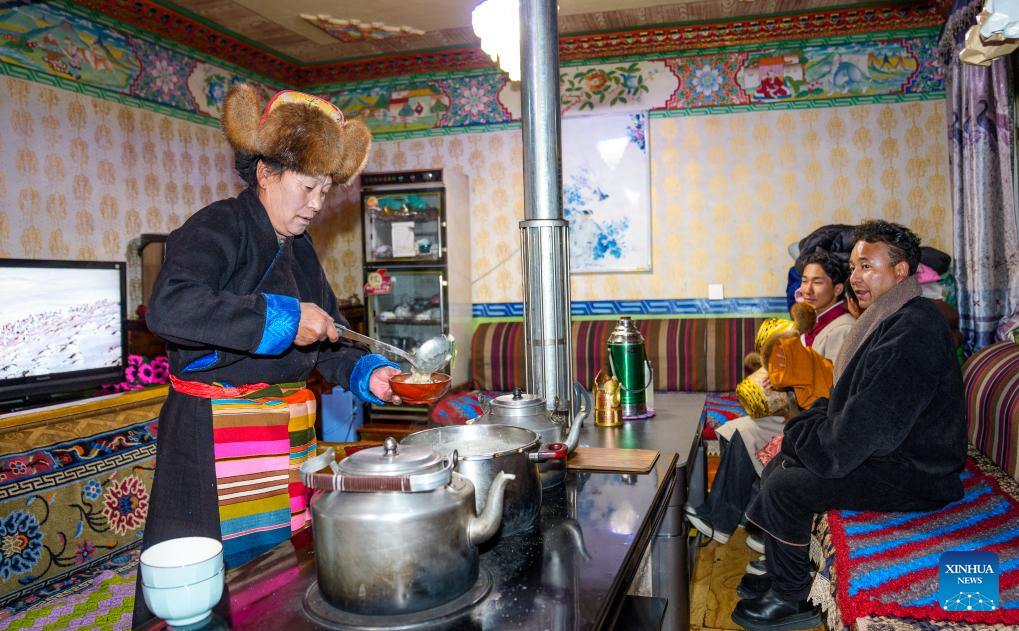
Chocho's wife Tasang (L) prepares "gutu" at their home in Lhasa, southwest China's Xizang Autonomous Region, Feb. 16, 2026.
At the Night of Gutu, which falls on the 29th of the 12th month on Tibetan calendar, Chocho and his family cooked "gutu," a kind of soup made of flour, to celebrate this occasion for the gathering of family and relatives.
"Gu" in Tibetan means nine, which is a lucky number. "Tu" means "pasta." Nine different fillings like wool, charcoal and chili are placed inside the dough drops, and each of these fillings has a meaning.
During the celebrations, hosts also fill "chema," a two-tier rectangular wooden box containing roasted barley and fried wheat grain, insert colorful Tibetan ceremonial flowers made of dyed wheat and barley ears, and adorn doors and windows with new decorative fabrics, creating a festive atmosphere to bid farewell to the old year and welcome the new with hope. (Xinhua/Tenzin Nyida)
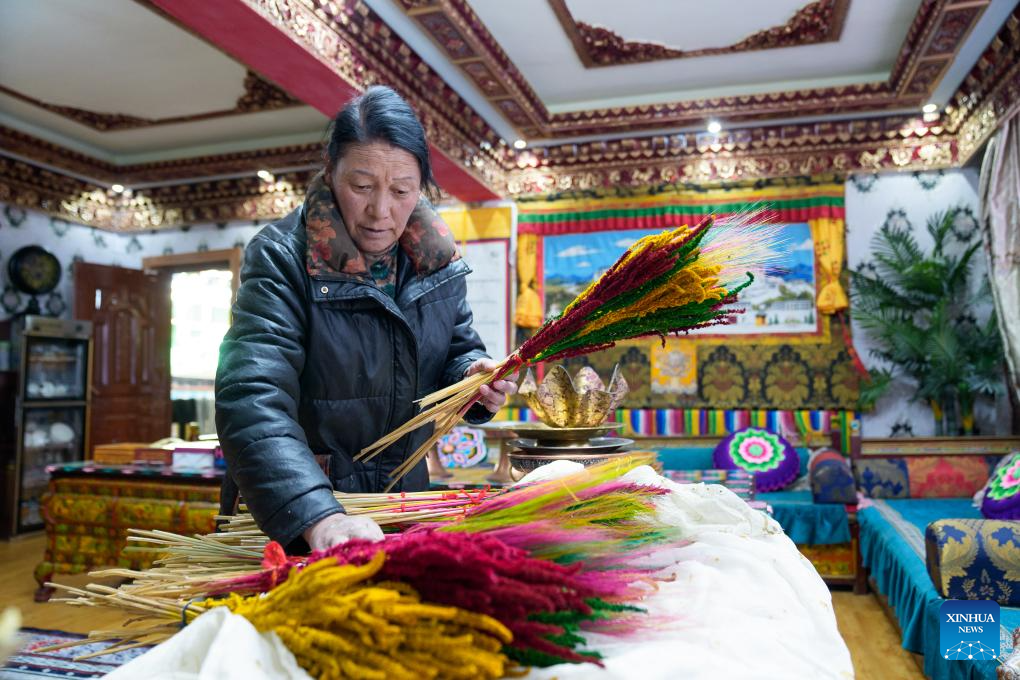
Chocho's wife Tasang arranges Tibetan ceremonial flowers at their home in Lhasa, southwest China's Xizang Autonomous Region, Feb. 16, 2026.
At the Night of Gutu, which falls on the 29th of the 12th month on Tibetan calendar, Chocho and his family cooked "gutu," a kind of soup made of flour, to celebrate this occasion for the gathering of family and relatives.
"Gu" in Tibetan means nine, which is a lucky number. "Tu" means "pasta." Nine different fillings like wool, charcoal and chili are placed inside the dough drops, and each of these fillings has a meaning.
During the celebrations, hosts also fill "chema," a two-tier rectangular wooden box containing roasted barley and fried wheat grain, insert colorful Tibetan ceremonial flowers made of dyed wheat and barley ears, and adorn doors and windows with new decorative fabrics, creating a festive atmosphere to bid farewell to the old year and welcome the new with hope. (Xinhua/Tenzin Nyida)
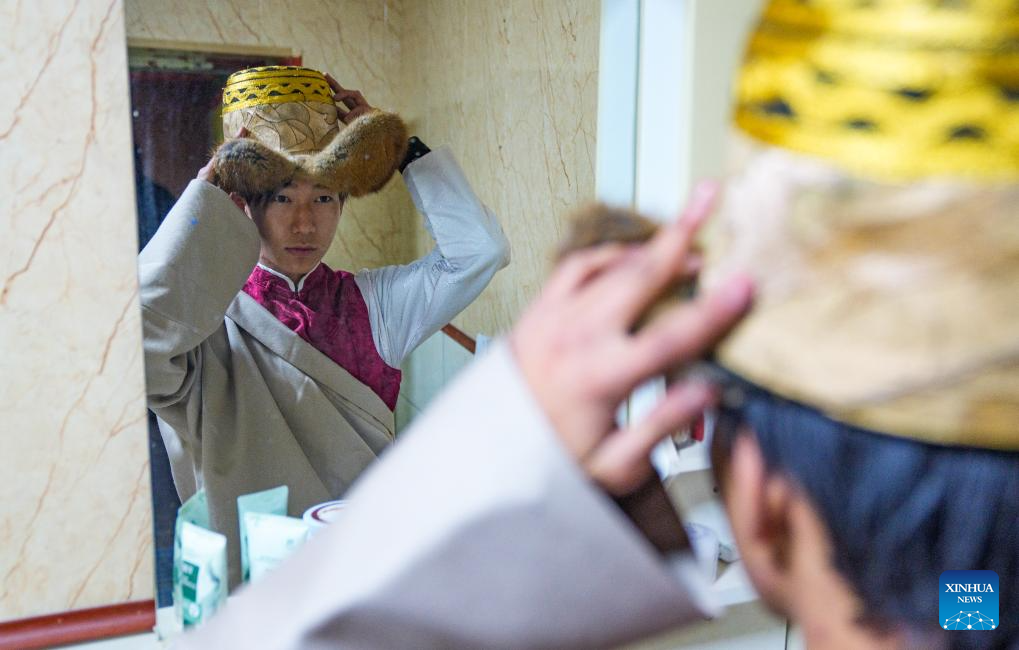
Chocho's grandson Losang Druta wears a traditional Tibetan outfit with a hat to enjoy "gutu" with his family at their home in Lhasa, southwest China's Xizang Autonomous Region, Feb. 16, 2026.
At the Night of Gutu, which falls on the 29th of the 12th month on Tibetan calendar, Chocho and his family cooked "gutu," a kind of soup made of flour, to celebrate this occasion for the gathering of family and relatives.
"Gu" in Tibetan means nine, which is a lucky number. "Tu" means "pasta." Nine different fillings like wool, charcoal and chili are placed inside the dough drops, and each of these fillings has a meaning.
During the celebrations, hosts also fill "chema," a two-tier rectangular wooden box containing roasted barley and fried wheat grain, insert colorful Tibetan ceremonial flowers made of dyed wheat and barley ears, and adorn doors and windows with new decorative fabrics, creating a festive atmosphere to bid farewell to the old year and welcome the new with hope. (Xinhua/Tenzin Nyida)
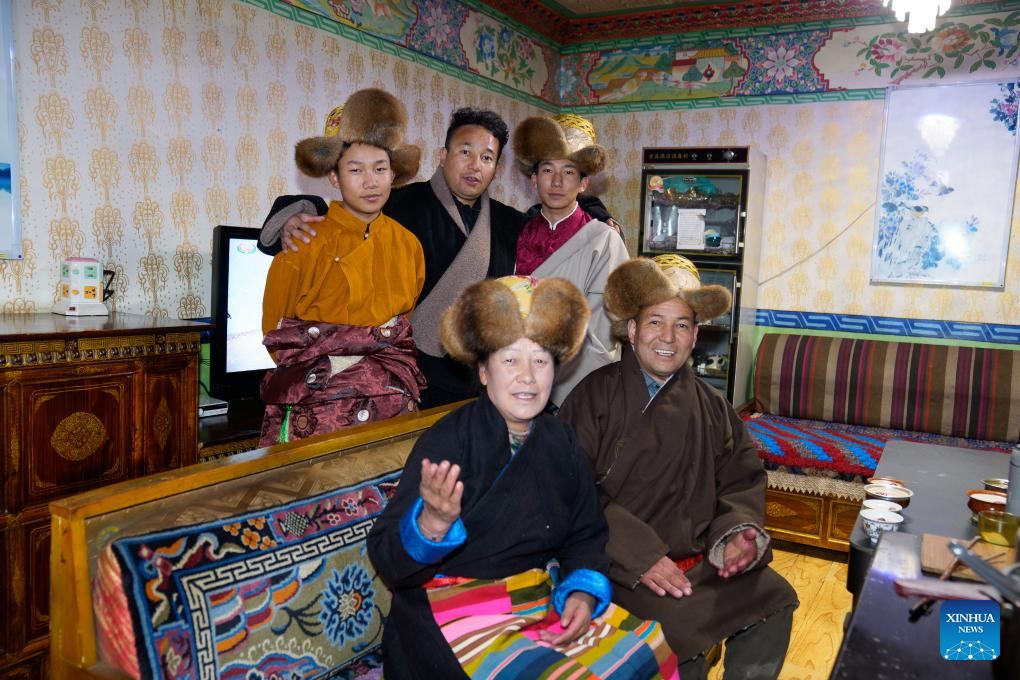
Chocho (1st R) and his family take a family photo at their home in Lhasa, southwest China's Xizang Autonomous Region, Feb. 16, 2026.
At the Night of Gutu, which falls on the 29th of the 12th month on Tibetan calendar, Chocho and his family cooked "gutu," a kind of soup made of flour, to celebrate this occasion for the gathering of family and relatives.
"Gu" in Tibetan means nine, which is a lucky number. "Tu" means "pasta." Nine different fillings like wool, charcoal and chili are placed inside the dough drops, and each of these fillings has a meaning.
During the celebrations, hosts also fill "chema," a two-tier rectangular wooden box containing roasted barley and fried wheat grain, insert colorful Tibetan ceremonial flowers made of dyed wheat and barley ears, and adorn doors and windows with new decorative fabrics, creating a festive atmosphere to bid farewell to the old year and welcome the new with hope. (Xinhua/Tenzin Nyida)
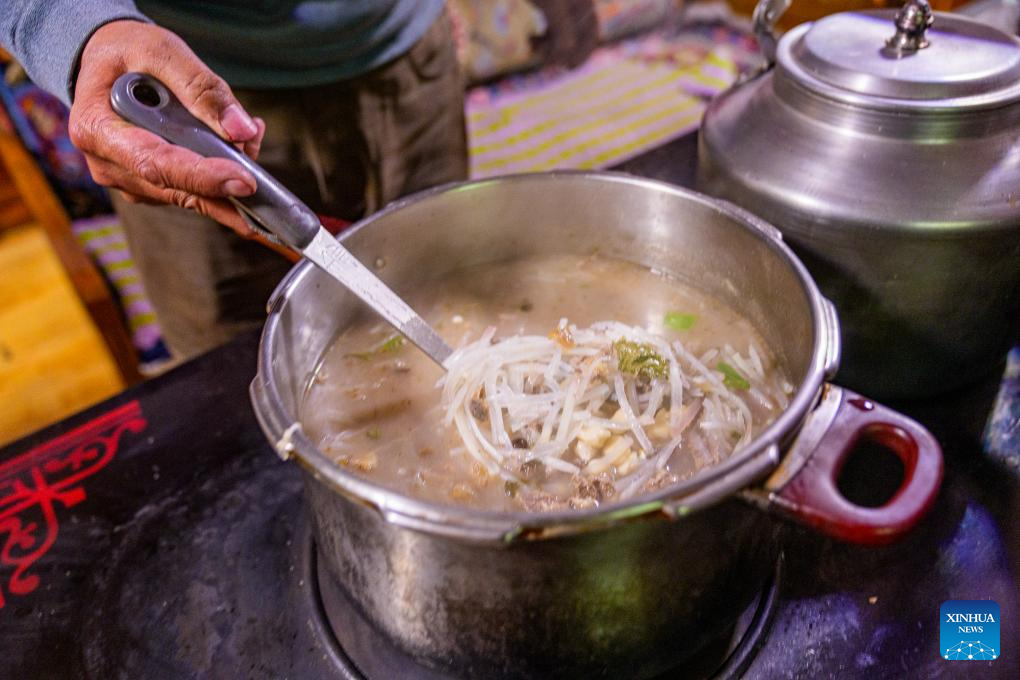
Chocho stirs "gutu" at his home in Lhasa, southwest China's Xizang Autonomous Region, Feb. 16, 2026.
At the Night of Gutu, which falls on the 29th of the 12th month on Tibetan calendar, Chocho and his family cooked "gutu," a kind of soup made of flour, to celebrate this occasion for the gathering of family and relatives.
"Gu" in Tibetan means nine, which is a lucky number. "Tu" means "pasta." Nine different fillings like wool, charcoal and chili are placed inside the dough drops, and each of these fillings has a meaning.
During the celebrations, hosts also fill "chema," a two-tier rectangular wooden box containing roasted barley and fried wheat grain, insert colorful Tibetan ceremonial flowers made of dyed wheat and barley ears, and adorn doors and windows with new decorative fabrics, creating a festive atmosphere to bid farewell to the old year and welcome the new with hope. (Xinhua/Tenzin Nyida)
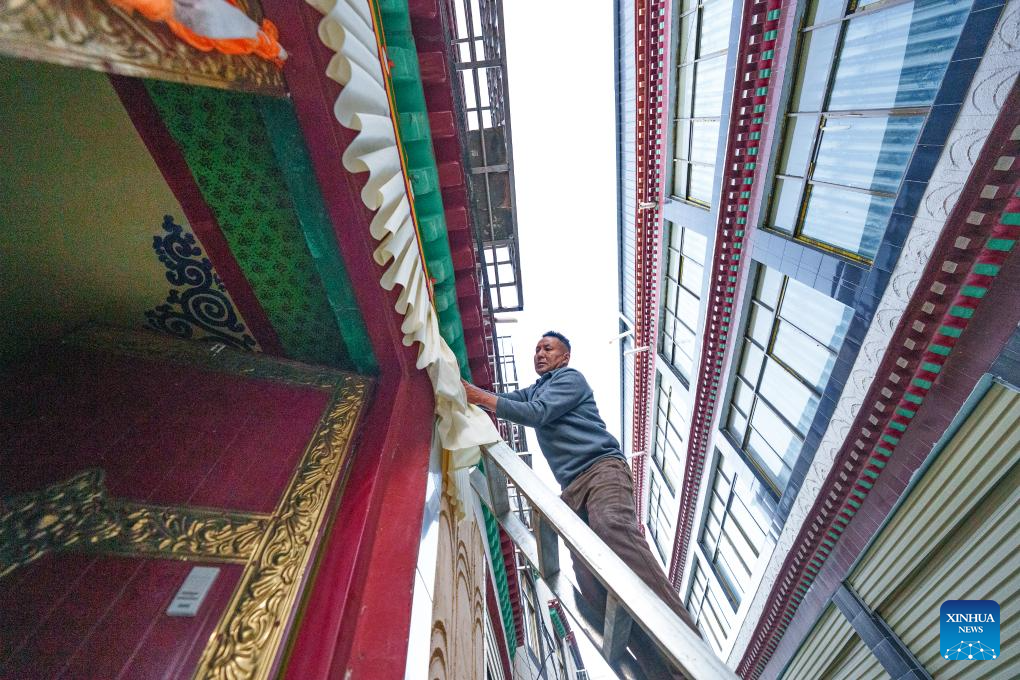
Chocho adorns doors and windows with new Tibetan decorative fabrics as a tradition to celebrate the Tibetan New Year in Lhasa, southwest China's Xizang Autonomous Region, Feb. 16, 2026.
At the Night of Gutu, which falls on the 29th of the 12th month on Tibetan calendar, Chocho and his family cooked "gutu," a kind of soup made of flour, to celebrate this occasion for the gathering of family and relatives.
"Gu" in Tibetan means nine, which is a lucky number. "Tu" means "pasta." Nine different fillings like wool, charcoal and chili are placed inside the dough drops, and each of these fillings has a meaning.
During the celebrations, hosts also fill "chema," a two-tier rectangular wooden box containing roasted barley and fried wheat grain, insert colorful Tibetan ceremonial flowers made of dyed wheat and barley ears, and adorn doors and windows with new decorative fabrics, creating a festive atmosphere to bid farewell to the old year and welcome the new with hope. (Xinhua/Tenzin Nyida)
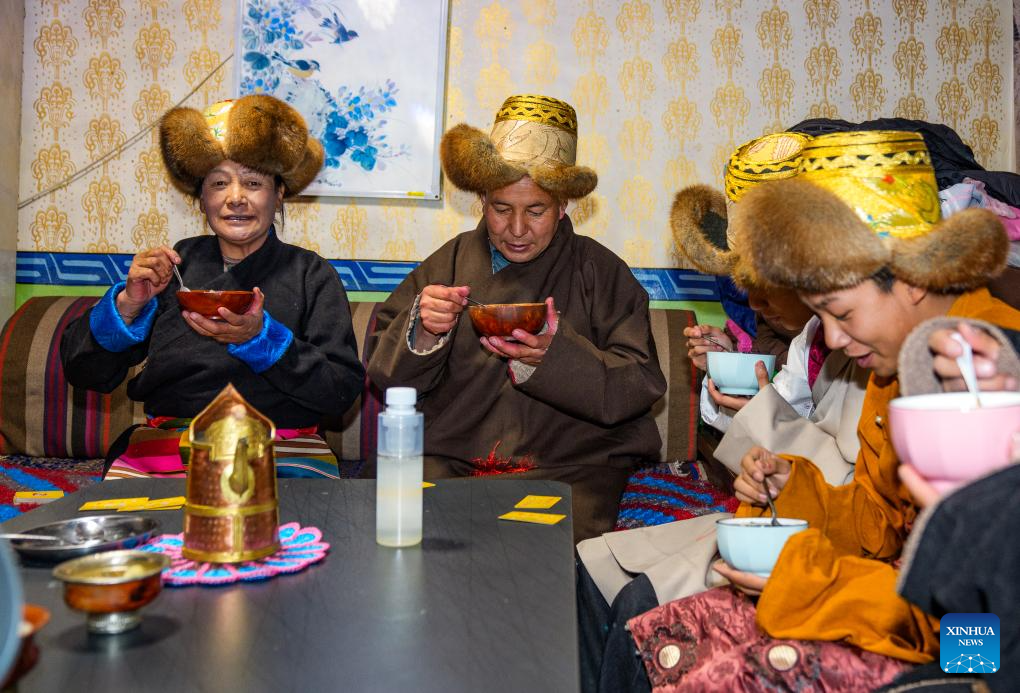
Chocho's family members enjoy "gutu" at their home in Lhasa, southwest China's Xizang Autonomous Region, Feb. 16, 2026.
At the Night of Gutu, which falls on the 29th of the 12th month on Tibetan calendar, Chocho and his family cooked "gutu," a kind of soup made of flour, to celebrate this occasion for the gathering of family and relatives.
"Gu" in Tibetan means nine, which is a lucky number. "Tu" means "pasta." Nine different fillings like wool, charcoal and chili are placed inside the dough drops, and each of these fillings has a meaning.
During the celebrations, hosts also fill "chema," a two-tier rectangular wooden box containing roasted barley and fried wheat grain, insert colorful Tibetan ceremonial flowers made of dyed wheat and barley ears, and adorn doors and windows with new decorative fabrics, creating a festive atmosphere to bid farewell to the old year and welcome the new with hope. (Xinhua/Tenzin Nyida)
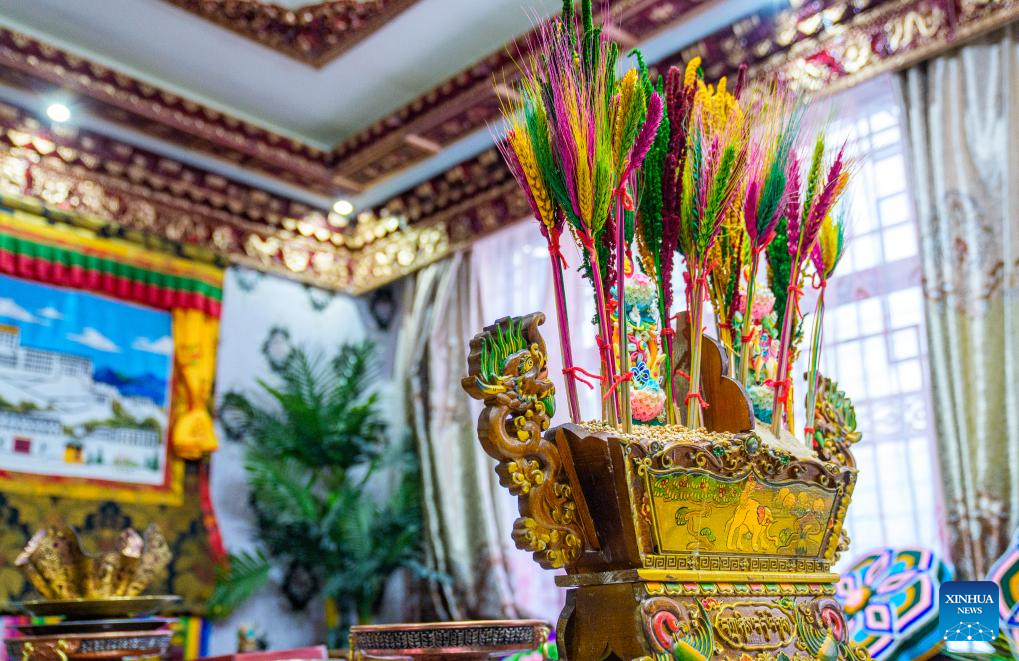
A finished "chema" is displayed at Chocho's home in Lhasa, southwest China's Xizang Autonomous Region, Feb. 16, 2026.
At the Night of Gutu, which falls on the 29th of the 12th month on Tibetan calendar, Chocho and his family cooked "gutu," a kind of soup made of flour, to celebrate this occasion for the gathering of family and relatives.
"Gu" in Tibetan means nine, which is a lucky number. "Tu" means "pasta." Nine different fillings like wool, charcoal and chili are placed inside the dough drops, and each of these fillings has a meaning.
During the celebrations, hosts also fill "chema," a two-tier rectangular wooden box containing roasted barley and fried wheat grain, insert colorful Tibetan ceremonial flowers made of dyed wheat and barley ears, and adorn doors and windows with new decorative fabrics, creating a festive atmosphere to bid farewell to the old year and welcome the new with hope. (Xinhua/Tenzin Nyida)
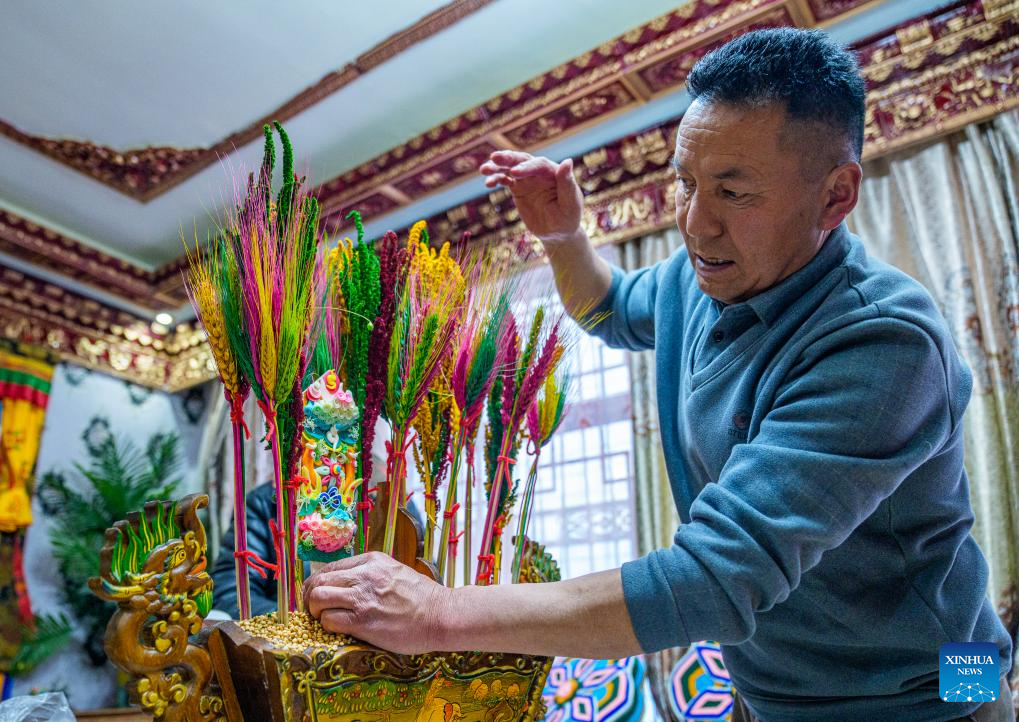
Chocho prepares a "chema" at his home in Lhasa, southwest China's Xizang Autonomous Region, Feb. 16, 2026.
At the Night of Gutu, which falls on the 29th of the 12th month on Tibetan calendar, Chocho and his family cooked "gutu," a kind of soup made of flour, to celebrate this occasion for the gathering of family and relatives.
"Gu" in Tibetan means nine, which is a lucky number. "Tu" means "pasta." Nine different fillings like wool, charcoal and chili are placed inside the dough drops, and each of these fillings has a meaning.
During the celebrations, hosts also fill "chema," a two-tier rectangular wooden box containing roasted barley and fried wheat grain, insert colorful Tibetan ceremonial flowers made of dyed wheat and barley ears, and adorn doors and windows with new decorative fabrics, creating a festive atmosphere to bid farewell to the old year and welcome the new with hope. (Xinhua/Tenzin Nyida)
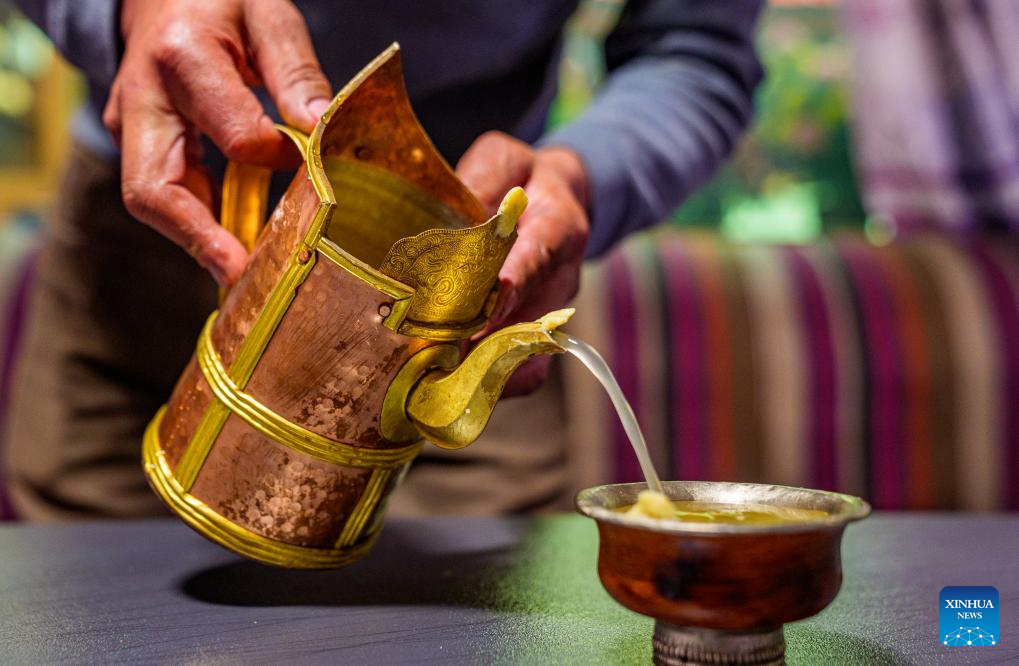
Chocho prepares Tibetan barley liquor at his home in Lhasa, southwest China's Xizang Autonomous Region, Feb. 16, 2026.
At the Night of Gutu, which falls on the 29th of the 12th month on Tibetan calendar, Chocho and his family cooked "gutu," a kind of soup made of flour, to celebrate this occasion for the gathering of family and relatives.
"Gu" in Tibetan means nine, which is a lucky number. "Tu" means "pasta." Nine different fillings like wool, charcoal and chili are placed inside the dough drops, and each of these fillings has a meaning.
During the celebrations, hosts also fill "chema," a two-tier rectangular wooden box containing roasted barley and fried wheat grain, insert colorful Tibetan ceremonial flowers made of dyed wheat and barley ears, and adorn doors and windows with new decorative fabrics, creating a festive atmosphere to bid farewell to the old year and welcome the new with hope. (Xinhua/Tenzin Nyida)
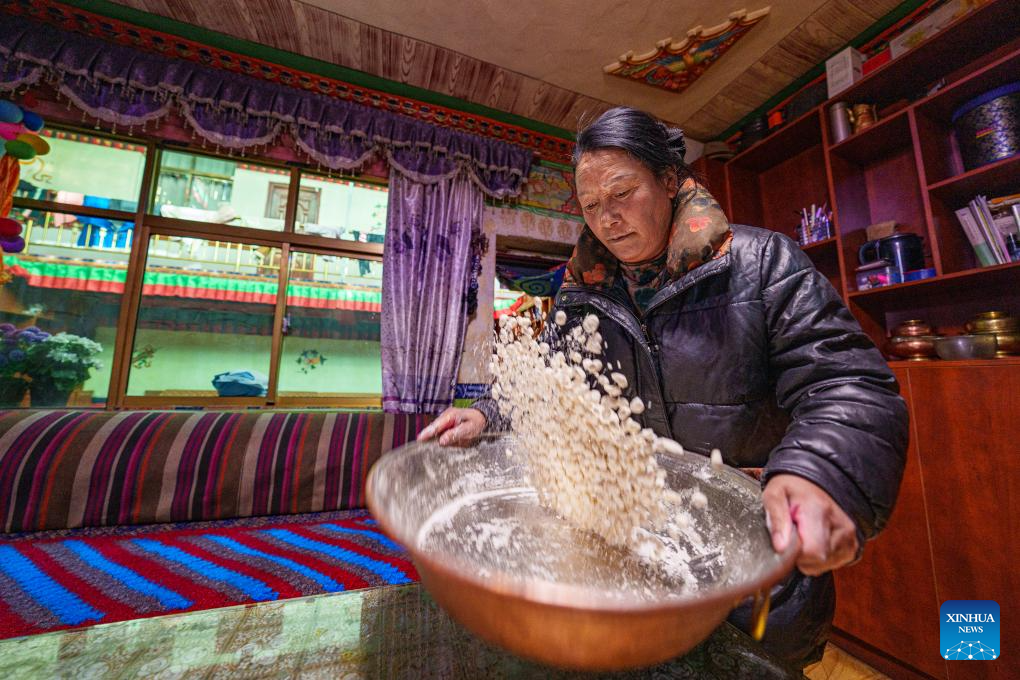
Chocho's wife Tasang prepares ingredients of "gutu" at home in Lhasa, southwest China's Xizang Autonomous Region, Feb. 16, 2026.
At the Night of Gutu, which falls on the 29th of the 12th month on Tibetan calendar, Chocho and his family cooked "gutu," a kind of soup made of flour, to celebrate this occasion for the gathering of family and relatives.
"Gu" in Tibetan means nine, which is a lucky number. "Tu" means "pasta." Nine different fillings like wool, charcoal and chili are placed inside the dough drops, and each of these fillings has a meaning.
During the celebrations, hosts also fill "chema," a two-tier rectangular wooden box containing roasted barley and fried wheat grain, insert colorful Tibetan ceremonial flowers made of dyed wheat and barley ears, and adorn doors and windows with new decorative fabrics, creating a festive atmosphere to bid farewell to the old year and welcome the new with hope. (Xinhua/Tenzin Nyida)
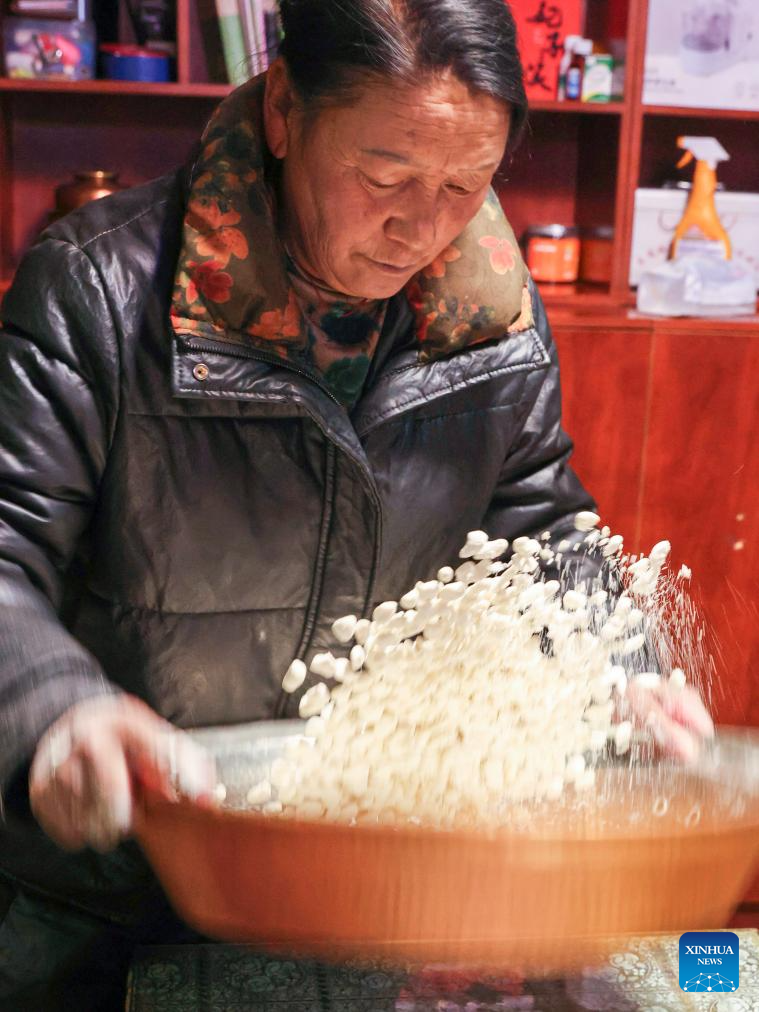
Chocho's wife Tasang prepares ingredients of "gutu" at home in Lhasa, southwest China's Xizang Autonomous Region, Feb. 16, 2026.
At the Night of Gutu, which falls on the 29th of the 12th month on Tibetan calendar, Chocho and his family cooked "gutu," a kind of soup made of flour, to celebrate this occasion for the gathering of family and relatives.
"Gu" in Tibetan means nine, which is a lucky number. "Tu" means "pasta." Nine different fillings like wool, charcoal and chili are placed inside the dough drops, and each of these fillings has a meaning.
During the celebrations, hosts also fill "chema," a two-tier rectangular wooden box containing roasted barley and fried wheat grain, insert colorful Tibetan ceremonial flowers made of dyed wheat and barley ears, and adorn doors and windows with new decorative fabrics, creating a festive atmosphere to bid farewell to the old year and welcome the new with hope. (Xinhua/Zhang Licong)


