
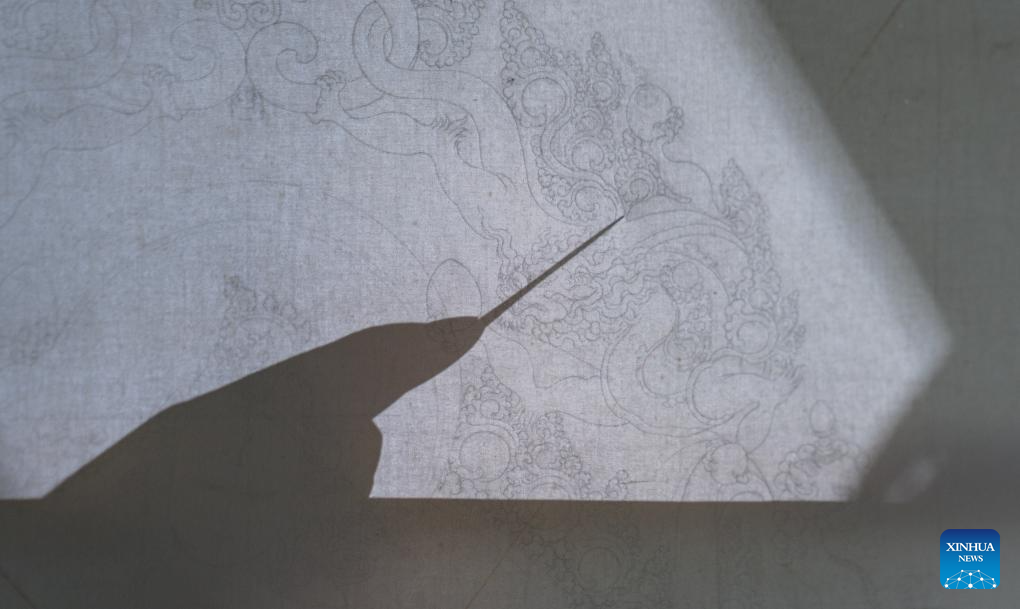
Norbu Sidar draws the details of a thangka at the Xizang Academy of Thangka in Lhasa, southwest China's Xizang Autonomous Region, Feb. 10, 2026. On the afternoon of Feb. 10, sunlight streamed through the windows of the Xizang Academy of Thangka, illuminating an unfinished thangka painting. Norbu Sidar stood beside a young apprentice. He reached out, gently placing his finger on a specific spot on the canvas, and quietly guided the apprentice on the direction of the lines.
Thangka, renowned for its meticulous composition, vibrant colors, and profound cultural connotations, was listed among the first batch of China's national intangible cultural heritages in 2006. Recording Tibetan history, culture, medicine, astronomy, and other knowledge, it carries the spiritual beliefs and aesthetic wisdom of people in Xizang throughout the times.
Norbu Sidar is a national-level inheritor of the Tibetan thangka. As a child, he learned thangka painting techniques from his grandfather. He recalled, "Time was most precious when I was little. I could only learn to paint thangka in my spare time after helping the family with farm and livestock work." From 2005 to 2015, he spent ten years as a restoration expert undertaking the mural restoration project at the Potala Palace. In 2016, he donated the 18 thangka works he had copied at the Potala Palace over the decade to the Palace. "These ten years have been the most meaningful part of my life," he recalled.
In 1992, Norbu Sidar began taking on students. Ten years later, he led the founding of the Xizang Academy of Thangka. Today, as a master's supervisor at the School of Arts of Xizang University, he guides graduate students in studying the history of thangka and encourages young people to experiment with new forms of expression. To date, over 400 students are, like him, contributing to the development of Tibetan thangka art.
After being elected as a member of the National Committee of the Chinese People's Political Consultative Conference, Norbu Sidar felt he had the responsibility to do more to make thangka, the artistic treasure in Xizang, recognized, supported and passed down through generations. (Xinhua/Tenzin Nyida)
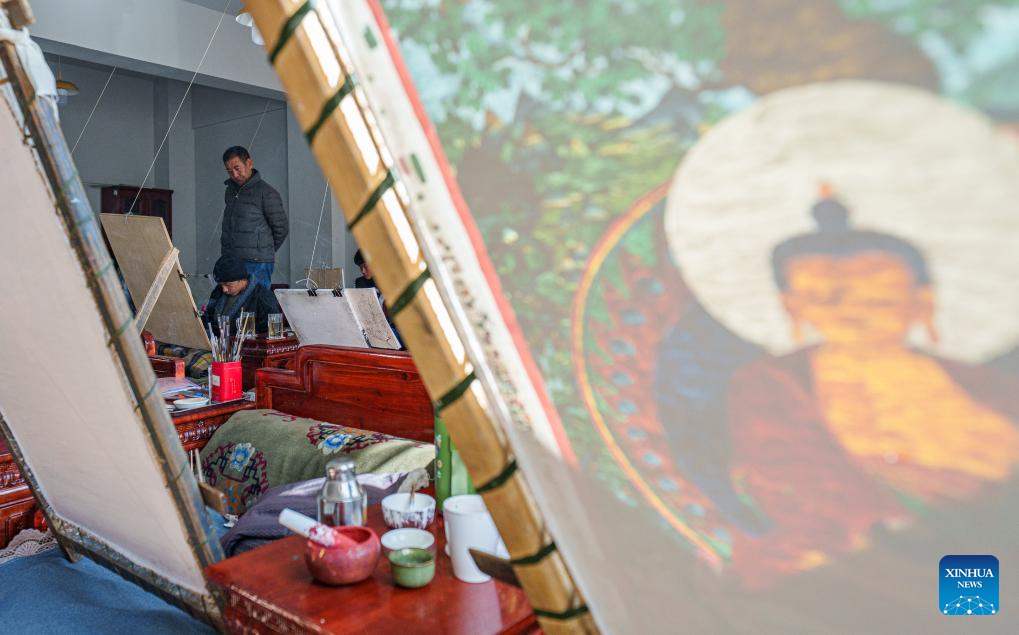
Norbu Sidar looks on as his apprentice draws a thangka at the Xizang Academy of Thangka in Lhasa, southwest China's Xizang Autonomous Region, Feb. 10, 2026. On the afternoon of Feb. 10, sunlight streamed through the windows of the Xizang Academy of Thangka, illuminating an unfinished thangka painting. Norbu Sidar stood beside a young apprentice. He reached out, gently placing his finger on a specific spot on the canvas, and quietly guided the apprentice on the direction of the lines.
Thangka, renowned for its meticulous composition, vibrant colors, and profound cultural connotations, was listed among the first batch of China's national intangible cultural heritages in 2006. Recording Tibetan history, culture, medicine, astronomy, and other knowledge, it carries the spiritual beliefs and aesthetic wisdom of people in Xizang throughout the times.
Norbu Sidar is a national-level inheritor of the Tibetan thangka. As a child, he learned thangka painting techniques from his grandfather. He recalled, "Time was most precious when I was little. I could only learn to paint thangka in my spare time after helping the family with farm and livestock work." From 2005 to 2015, he spent ten years as a restoration expert undertaking the mural restoration project at the Potala Palace. In 2016, he donated the 18 thangka works he had copied at the Potala Palace over the decade to the Palace. "These ten years have been the most meaningful part of my life," he recalled.
In 1992, Norbu Sidar began taking on students. Ten years later, he led the founding of the Xizang Academy of Thangka. Today, as a master's supervisor at the School of Arts of Xizang University, he guides graduate students in studying the history of thangka and encourages young people to experiment with new forms of expression. To date, over 400 students are, like him, contributing to the development of Tibetan thangka art.
After being elected as a member of the National Committee of the Chinese People's Political Consultative Conference, Norbu Sidar felt he had the responsibility to do more to make thangka, the artistic treasure in Xizang, recognized, supported and passed down through generations. (Xinhua/Tenzin Nyida)
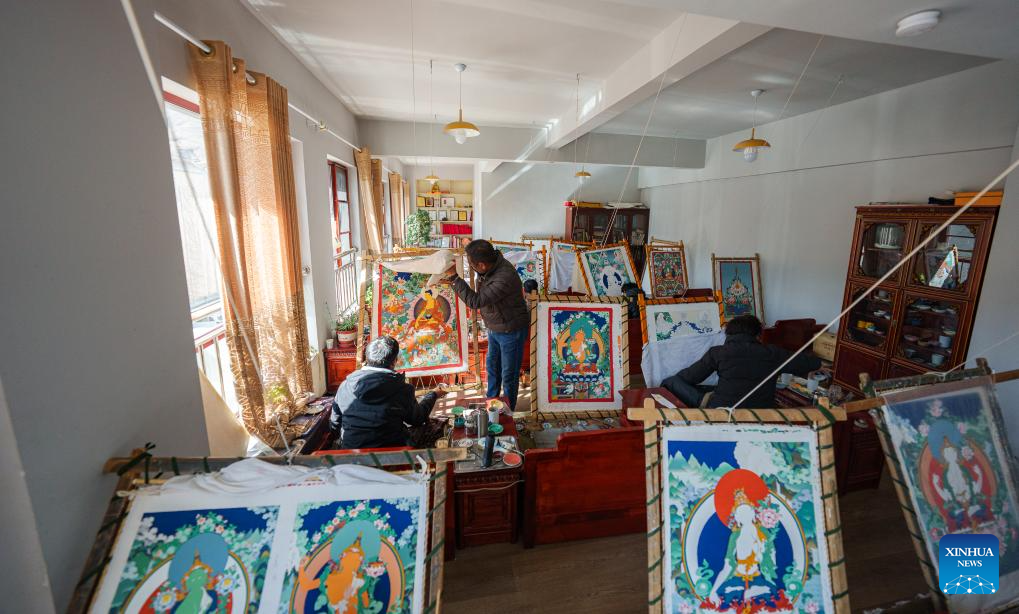
Norbu Sidar checks the details of a piece of his apprentice's thangka work at the Xizang Academy of Thangka in Lhasa, southwest China's Xizang Autonomous Region, Feb. 10, 2026. On the afternoon of Feb. 10, sunlight streamed through the windows of the Xizang Academy of Thangka, illuminating an unfinished thangka painting. Norbu Sidar stood beside a young apprentice. He reached out, gently placing his finger on a specific spot on the canvas, and quietly guided the apprentice on the direction of the lines.
Thangka, renowned for its meticulous composition, vibrant colors, and profound cultural connotations, was listed among the first batch of China's national intangible cultural heritages in 2006. Recording Tibetan history, culture, medicine, astronomy, and other knowledge, it carries the spiritual beliefs and aesthetic wisdom of people in Xizang throughout the times.
Norbu Sidar is a national-level inheritor of the Tibetan thangka. As a child, he learned thangka painting techniques from his grandfather. He recalled, "Time was most precious when I was little. I could only learn to paint thangka in my spare time after helping the family with farm and livestock work." From 2005 to 2015, he spent ten years as a restoration expert undertaking the mural restoration project at the Potala Palace. In 2016, he donated the 18 thangka works he had copied at the Potala Palace over the decade to the Palace. "These ten years have been the most meaningful part of my life," he recalled.
In 1992, Norbu Sidar began taking on students. Ten years later, he led the founding of the Xizang Academy of Thangka. Today, as a master's supervisor at the School of Arts of Xizang University, he guides graduate students in studying the history of thangka and encourages young people to experiment with new forms of expression. To date, over 400 students are, like him, contributing to the development of Tibetan thangka art.
After being elected as a member of the National Committee of the Chinese People's Political Consultative Conference, Norbu Sidar felt he had the responsibility to do more to make thangka, the artistic treasure in Xizang, recognized, supported and passed down through generations. (Xinhua/Tenzin Nyida)
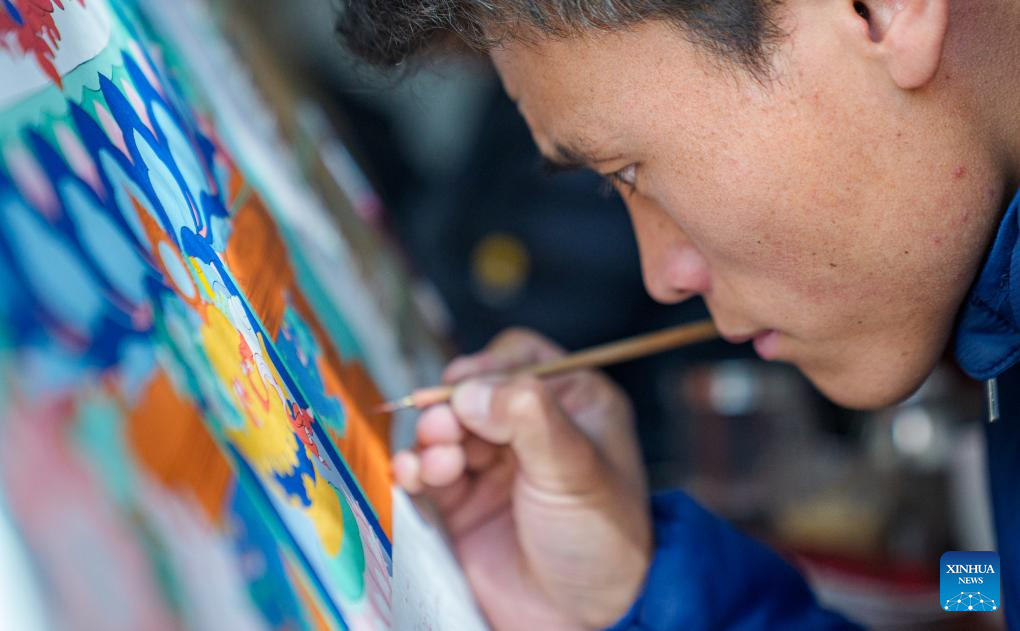
An apprentice of Norbu Sidar draws a thangka at the Xizang Academy of Thangka in Lhasa, southwest China's Xizang Autonomous Region, Feb. 10, 2026. On the afternoon of Feb. 10, sunlight streamed through the windows of the Xizang Academy of Thangka, illuminating an unfinished thangka painting. Norbu Sidar stood beside a young apprentice. He reached out, gently placing his finger on a specific spot on the canvas, and quietly guided the apprentice on the direction of the lines.
Thangka, renowned for its meticulous composition, vibrant colors, and profound cultural connotations, was listed among the first batch of China's national intangible cultural heritages in 2006. Recording Tibetan history, culture, medicine, astronomy, and other knowledge, it carries the spiritual beliefs and aesthetic wisdom of people in Xizang throughout the times.
Norbu Sidar is a national-level inheritor of the Tibetan thangka. As a child, he learned thangka painting techniques from his grandfather. He recalled, "Time was most precious when I was little. I could only learn to paint thangka in my spare time after helping the family with farm and livestock work." From 2005 to 2015, he spent ten years as a restoration expert undertaking the mural restoration project at the Potala Palace. In 2016, he donated the 18 thangka works he had copied at the Potala Palace over the decade to the Palace. "These ten years have been the most meaningful part of my life," he recalled.
In 1992, Norbu Sidar began taking on students. Ten years later, he led the founding of the Xizang Academy of Thangka. Today, as a master's supervisor at the School of Arts of Xizang University, he guides graduate students in studying the history of thangka and encourages young people to experiment with new forms of expression. To date, over 400 students are, like him, contributing to the development of Tibetan thangka art.
After being elected as a member of the National Committee of the Chinese People's Political Consultative Conference, Norbu Sidar felt he had the responsibility to do more to make thangka, the artistic treasure in Xizang, recognized, supported and passed down through generations. (Xinhua/Tenzin Nyida)
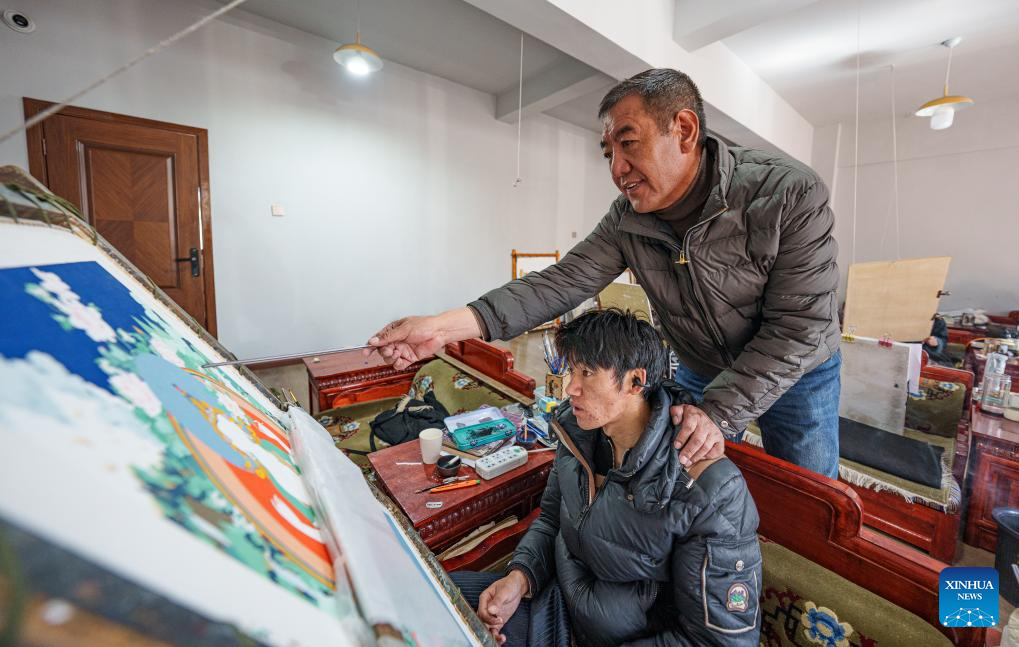
Norbu Sidar instructs an apprentice at the Xizang Academy of Thangka in Lhasa, southwest China's Xizang Autonomous Region, Feb. 10, 2026. On the afternoon of Feb. 10, sunlight streamed through the windows of the Xizang Academy of Thangka, illuminating an unfinished thangka painting. Norbu Sidar stood beside a young apprentice. He reached out, gently placing his finger on a specific spot on the canvas, and quietly guided the apprentice on the direction of the lines.
Thangka, renowned for its meticulous composition, vibrant colors, and profound cultural connotations, was listed among the first batch of China's national intangible cultural heritages in 2006. Recording Tibetan history, culture, medicine, astronomy, and other knowledge, it carries the spiritual beliefs and aesthetic wisdom of people in Xizang throughout the times.
Norbu Sidar is a national-level inheritor of the Tibetan thangka. As a child, he learned thangka painting techniques from his grandfather. He recalled, "Time was most precious when I was little. I could only learn to paint thangka in my spare time after helping the family with farm and livestock work." From 2005 to 2015, he spent ten years as a restoration expert undertaking the mural restoration project at the Potala Palace. In 2016, he donated the 18 thangka works he had copied at the Potala Palace over the decade to the Palace. "These ten years have been the most meaningful part of my life," he recalled.
In 1992, Norbu Sidar began taking on students. Ten years later, he led the founding of the Xizang Academy of Thangka. Today, as a master's supervisor at the School of Arts of Xizang University, he guides graduate students in studying the history of thangka and encourages young people to experiment with new forms of expression. To date, over 400 students are, like him, contributing to the development of Tibetan thangka art.
After being elected as a member of the National Committee of the Chinese People's Political Consultative Conference, Norbu Sidar felt he had the responsibility to do more to make thangka, the artistic treasure in Xizang, recognized, supported and passed down through generations. (Xinhua/Tenzin Nyida)
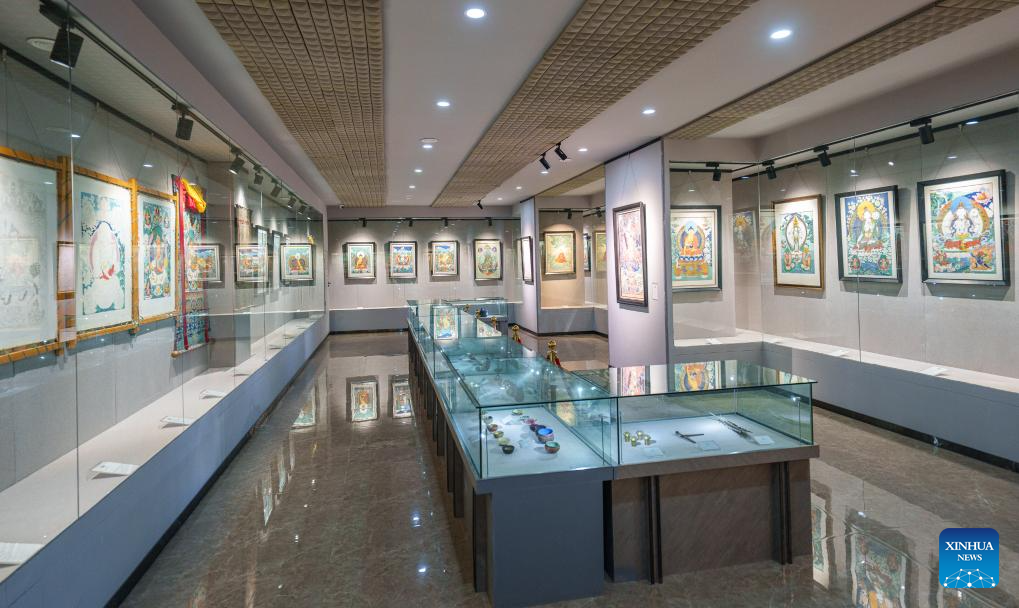
Thangka works are displayed at the exhibiton hall of the Xizang Academy of Thangka in Lhasa, southwest China's Xizang Autonomous Region, Feb. 10, 2026. On the afternoon of Feb. 10, sunlight streamed through the windows of the Xizang Academy of Thangka, illuminating an unfinished thangka painting. Norbu Sidar stood beside a young apprentice. He reached out, gently placing his finger on a specific spot on the canvas, and quietly guided the apprentice on the direction of the lines.
Thangka, renowned for its meticulous composition, vibrant colors, and profound cultural connotations, was listed among the first batch of China's national intangible cultural heritages in 2006. Recording Tibetan history, culture, medicine, astronomy, and other knowledge, it carries the spiritual beliefs and aesthetic wisdom of people in Xizang throughout the times.
Norbu Sidar is a national-level inheritor of the Tibetan thangka. As a child, he learned thangka painting techniques from his grandfather. He recalled, "Time was most precious when I was little. I could only learn to paint thangka in my spare time after helping the family with farm and livestock work." From 2005 to 2015, he spent ten years as a restoration expert undertaking the mural restoration project at the Potala Palace. In 2016, he donated the 18 thangka works he had copied at the Potala Palace over the decade to the Palace. "These ten years have been the most meaningful part of my life," he recalled.
In 1992, Norbu Sidar began taking on students. Ten years later, he led the founding of the Xizang Academy of Thangka. Today, as a master's supervisor at the School of Arts of Xizang University, he guides graduate students in studying the history of thangka and encourages young people to experiment with new forms of expression. To date, over 400 students are, like him, contributing to the development of Tibetan thangka art.
After being elected as a member of the National Committee of the Chinese People's Political Consultative Conference, Norbu Sidar felt he had the responsibility to do more to make thangka, the artistic treasure in Xizang, recognized, supported and passed down through generations. (Xinhua/Tenzin Nyida)
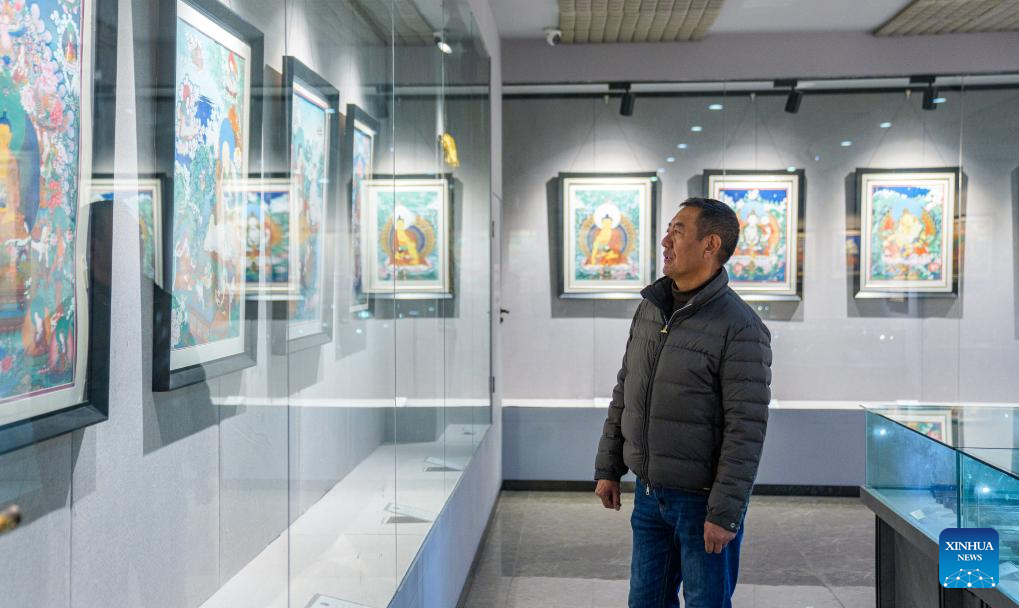
Norbu Sidar looks at his own thangka works at the exhibition hall of the Xizang Academy of Thangka in Lhasa, southwest China's Xizang Autonomous Region, Feb. 10, 2026. On the afternoon of Feb. 10, sunlight streamed through the windows of the Xizang Academy of Thangka, illuminating an unfinished thangka painting. Norbu Sidar stood beside a young apprentice. He reached out, gently placing his finger on a specific spot on the canvas, and quietly guided the apprentice on the direction of the lines.
Thangka, renowned for its meticulous composition, vibrant colors, and profound cultural connotations, was listed among the first batch of China's national intangible cultural heritages in 2006. Recording Tibetan history, culture, medicine, astronomy, and other knowledge, it carries the spiritual beliefs and aesthetic wisdom of people in Xizang throughout the times.
Norbu Sidar is a national-level inheritor of the Tibetan thangka. As a child, he learned thangka painting techniques from his grandfather. He recalled, "Time was most precious when I was little. I could only learn to paint thangka in my spare time after helping the family with farm and livestock work." From 2005 to 2015, he spent ten years as a restoration expert undertaking the mural restoration project at the Potala Palace. In 2016, he donated the 18 thangka works he had copied at the Potala Palace over the decade to the Palace. "These ten years have been the most meaningful part of my life," he recalled.
In 1992, Norbu Sidar began taking on students. Ten years later, he led the founding of the Xizang Academy of Thangka. Today, as a master's supervisor at the School of Arts of Xizang University, he guides graduate students in studying the history of thangka and encourages young people to experiment with new forms of expression. To date, over 400 students are, like him, contributing to the development of Tibetan thangka art.
After being elected as a member of the National Committee of the Chinese People's Political Consultative Conference, Norbu Sidar felt he had the responsibility to do more to make thangka, the artistic treasure in Xizang, recognized, supported and passed down through generations. (Xinhua/Tenzin Nyida)
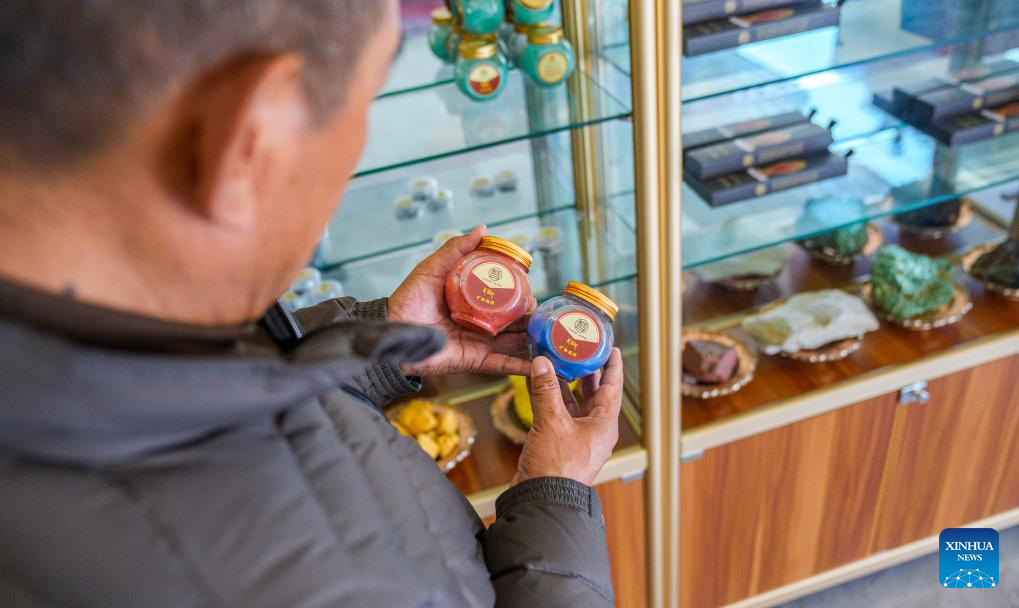
Norbu Sidar checks pigment made of minerals at the Xizang Academy of Thangka in Lhasa, southwest China's Xizang Autonomous Region, Feb. 10, 2026. On the afternoon of Feb. 10, sunlight streamed through the windows of the Xizang Academy of Thangka, illuminating an unfinished thangka painting. Norbu Sidar stood beside a young apprentice. He reached out, gently placing his finger on a specific spot on the canvas, and quietly guided the apprentice on the direction of the lines.
Thangka, renowned for its meticulous composition, vibrant colors, and profound cultural connotations, was listed among the first batch of China's national intangible cultural heritages in 2006. Recording Tibetan history, culture, medicine, astronomy, and other knowledge, it carries the spiritual beliefs and aesthetic wisdom of people in Xizang throughout the times.
Norbu Sidar is a national-level inheritor of the Tibetan thangka. As a child, he learned thangka painting techniques from his grandfather. He recalled, "Time was most precious when I was little. I could only learn to paint thangka in my spare time after helping the family with farm and livestock work." From 2005 to 2015, he spent ten years as a restoration expert undertaking the mural restoration project at the Potala Palace. In 2016, he donated the 18 thangka works he had copied at the Potala Palace over the decade to the Palace. "These ten years have been the most meaningful part of my life," he recalled.
In 1992, Norbu Sidar began taking on students. Ten years later, he led the founding of the Xizang Academy of Thangka. Today, as a master's supervisor at the School of Arts of Xizang University, he guides graduate students in studying the history of thangka and encourages young people to experiment with new forms of expression. To date, over 400 students are, like him, contributing to the development of Tibetan thangka art.
After being elected as a member of the National Committee of the Chinese People's Political Consultative Conference, Norbu Sidar felt he had the responsibility to do more to make thangka, the artistic treasure in Xizang, recognized, supported and passed down through generations. (Xinhua/Tenzin Nyida)
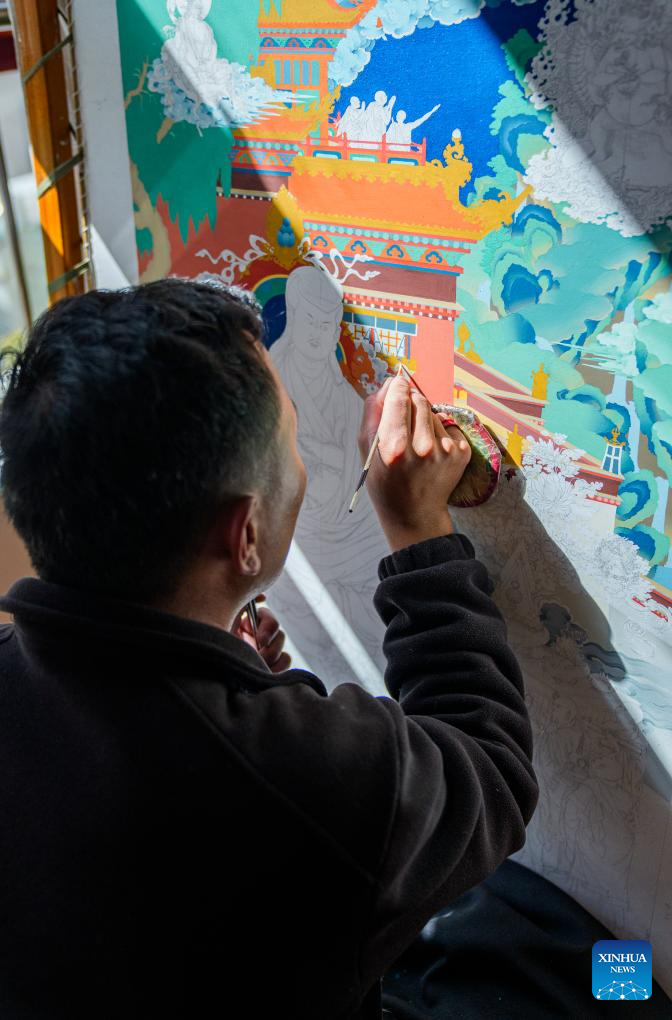
An apprentice of Norbu Sidar draws a thangka at the Xizang Academy of Thangka in Lhasa, southwest China's Xizang Autonomous Region, Feb. 10, 2026. On the afternoon of Feb. 10, sunlight streamed through the windows of the Xizang Academy of Thangka, illuminating an unfinished thangka painting. Norbu Sidar stood beside a young apprentice. He reached out, gently placing his finger on a specific spot on the canvas, and quietly guided the apprentice on the direction of the lines.
Thangka, renowned for its meticulous composition, vibrant colors, and profound cultural connotations, was listed among the first batch of China's national intangible cultural heritages in 2006. Recording Tibetan history, culture, medicine, astronomy, and other knowledge, it carries the spiritual beliefs and aesthetic wisdom of people in Xizang throughout the times.
Norbu Sidar is a national-level inheritor of the Tibetan thangka. As a child, he learned thangka painting techniques from his grandfather. He recalled, "Time was most precious when I was little. I could only learn to paint thangka in my spare time after helping the family with farm and livestock work." From 2005 to 2015, he spent ten years as a restoration expert undertaking the mural restoration project at the Potala Palace. In 2016, he donated the 18 thangka works he had copied at the Potala Palace over the decade to the Palace. "These ten years have been the most meaningful part of my life," he recalled.
In 1992, Norbu Sidar began taking on students. Ten years later, he led the founding of the Xizang Academy of Thangka. Today, as a master's supervisor at the School of Arts of Xizang University, he guides graduate students in studying the history of thangka and encourages young people to experiment with new forms of expression. To date, over 400 students are, like him, contributing to the development of Tibetan thangka art.
After being elected as a member of the National Committee of the Chinese People's Political Consultative Conference, Norbu Sidar felt he had the responsibility to do more to make thangka, the artistic treasure in Xizang, recognized, supported and passed down through generations. (Xinhua/Tenzin Nyida)
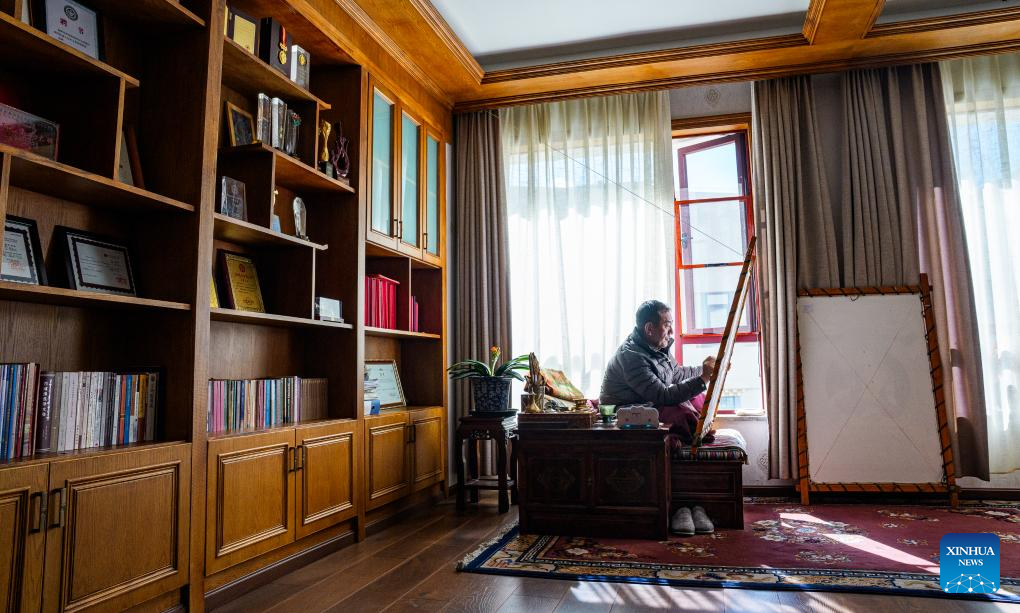
Norbu Sidar draws the pattern of a thangka at his office at the Xizang Academy of Thangka in Lhasa, southwest China's Xizang Autonomous Region, Feb. 10, 2026. On the afternoon of Feb. 10, sunlight streamed through the windows of the Xizang Academy of Thangka, illuminating an unfinished thangka painting. Norbu Sidar stood beside a young apprentice. He reached out, gently placing his finger on a specific spot on the canvas, and quietly guided the apprentice on the direction of the lines.
Thangka, renowned for its meticulous composition, vibrant colors, and profound cultural connotations, was listed among the first batch of China's national intangible cultural heritages in 2006. Recording Tibetan history, culture, medicine, astronomy, and other knowledge, it carries the spiritual beliefs and aesthetic wisdom of people in Xizang throughout the times.
Norbu Sidar is a national-level inheritor of the Tibetan thangka. As a child, he learned thangka painting techniques from his grandfather. He recalled, "Time was most precious when I was little. I could only learn to paint thangka in my spare time after helping the family with farm and livestock work." From 2005 to 2015, he spent ten years as a restoration expert undertaking the mural restoration project at the Potala Palace. In 2016, he donated the 18 thangka works he had copied at the Potala Palace over the decade to the Palace. "These ten years have been the most meaningful part of my life," he recalled.
In 1992, Norbu Sidar began taking on students. Ten years later, he led the founding of the Xizang Academy of Thangka. Today, as a master's supervisor at the School of Arts of Xizang University, he guides graduate students in studying the history of thangka and encourages young people to experiment with new forms of expression. To date, over 400 students are, like him, contributing to the development of Tibetan thangka art.
After being elected as a member of the National Committee of the Chinese People's Political Consultative Conference, Norbu Sidar felt he had the responsibility to do more to make thangka, the artistic treasure in Xizang, recognized, supported and passed down through generations. (Xinhua/Tenzin Nyida)
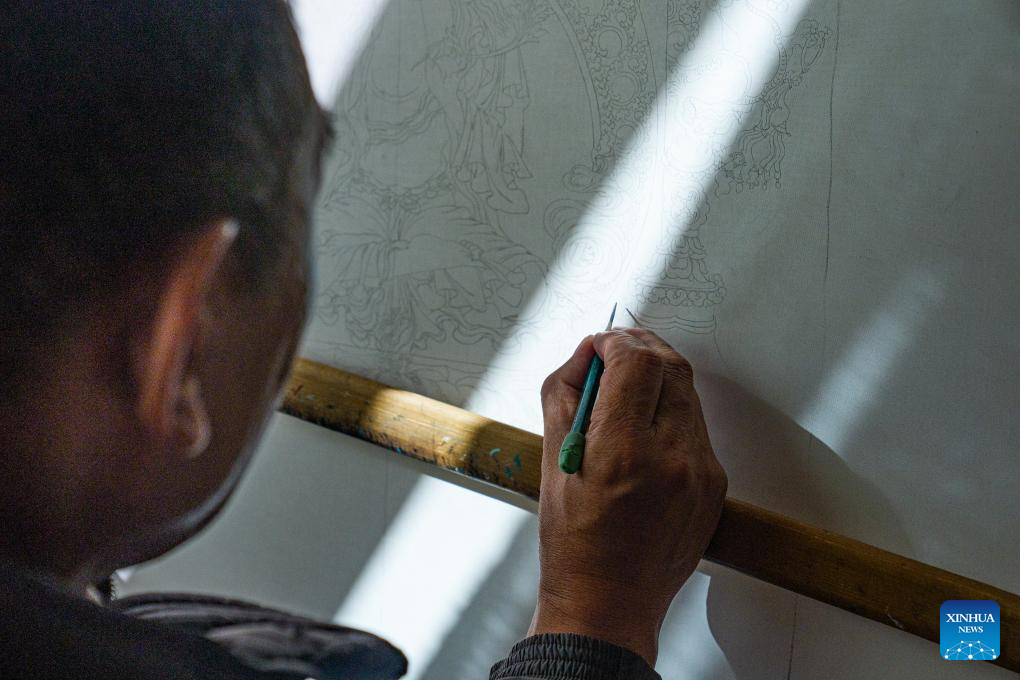
Norbu Sidar draws the pattern of a thangka at his office at the Xizang Academy of Thangka in Lhasa, southwest China's Xizang Autonomous Region, Feb. 10, 2026. On the afternoon of Feb. 10, sunlight streamed through the windows of the Xizang Academy of Thangka, illuminating an unfinished thangka painting. Norbu Sidar stood beside a young apprentice. He reached out, gently placing his finger on a specific spot on the canvas, and quietly guided the apprentice on the direction of the lines.
Thangka, renowned for its meticulous composition, vibrant colors, and profound cultural connotations, was listed among the first batch of China's national intangible cultural heritages in 2006. Recording Tibetan history, culture, medicine, astronomy, and other knowledge, it carries the spiritual beliefs and aesthetic wisdom of people in Xizang throughout the times.
Norbu Sidar is a national-level inheritor of the Tibetan thangka. As a child, he learned thangka painting techniques from his grandfather. He recalled, "Time was most precious when I was little. I could only learn to paint thangka in my spare time after helping the family with farm and livestock work." From 2005 to 2015, he spent ten years as a restoration expert undertaking the mural restoration project at the Potala Palace. In 2016, he donated the 18 thangka works he had copied at the Potala Palace over the decade to the Palace. "These ten years have been the most meaningful part of my life," he recalled.
In 1992, Norbu Sidar began taking on students. Ten years later, he led the founding of the Xizang Academy of Thangka. Today, as a master's supervisor at the School of Arts of Xizang University, he guides graduate students in studying the history of thangka and encourages young people to experiment with new forms of expression. To date, over 400 students are, like him, contributing to the development of Tibetan thangka art.
After being elected as a member of the National Committee of the Chinese People's Political Consultative Conference, Norbu Sidar felt he had the responsibility to do more to make thangka, the artistic treasure in Xizang, recognized, supported and passed down through generations. (Xinhua/Tenzin Nyida)
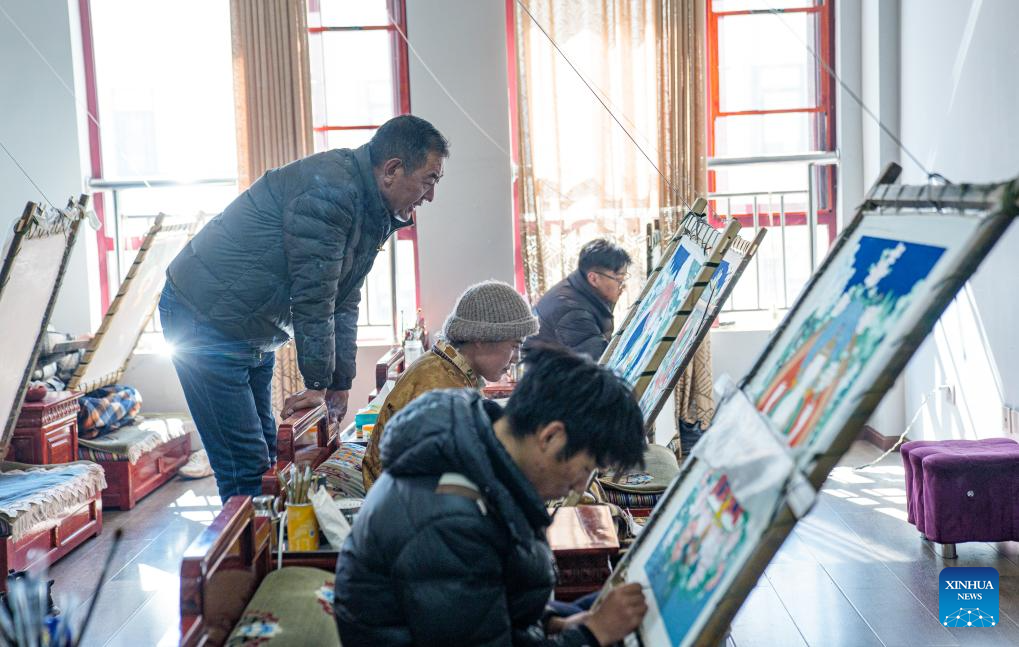
Norbu Sidar instructs his apprentice at the Xizang Academy of Thangka in Lhasa, southwest China's Xizang Autonomous Region, Feb. 10, 2026. On the afternoon of Feb. 10, sunlight streamed through the windows of the Xizang Academy of Thangka, illuminating an unfinished thangka painting. Norbu Sidar stood beside a young apprentice. He reached out, gently placing his finger on a specific spot on the canvas, and quietly guided the apprentice on the direction of the lines.
Thangka, renowned for its meticulous composition, vibrant colors, and profound cultural connotations, was listed among the first batch of China's national intangible cultural heritages in 2006. Recording Tibetan history, culture, medicine, astronomy, and other knowledge, it carries the spiritual beliefs and aesthetic wisdom of people in Xizang throughout the times.
Norbu Sidar is a national-level inheritor of the Tibetan thangka. As a child, he learned thangka painting techniques from his grandfather. He recalled, "Time was most precious when I was little. I could only learn to paint thangka in my spare time after helping the family with farm and livestock work." From 2005 to 2015, he spent ten years as a restoration expert undertaking the mural restoration project at the Potala Palace. In 2016, he donated the 18 thangka works he had copied at the Potala Palace over the decade to the Palace. "These ten years have been the most meaningful part of my life," he recalled.
In 1992, Norbu Sidar began taking on students. Ten years later, he led the founding of the Xizang Academy of Thangka. Today, as a master's supervisor at the School of Arts of Xizang University, he guides graduate students in studying the history of thangka and encourages young people to experiment with new forms of expression. To date, over 400 students are, like him, contributing to the development of Tibetan thangka art.
After being elected as a member of the National Committee of the Chinese People's Political Consultative Conference, Norbu Sidar felt he had the responsibility to do more to make thangka, the artistic treasure in Xizang, recognized, supported and passed down through generations. (Xinhua/Tenzin Nyida)
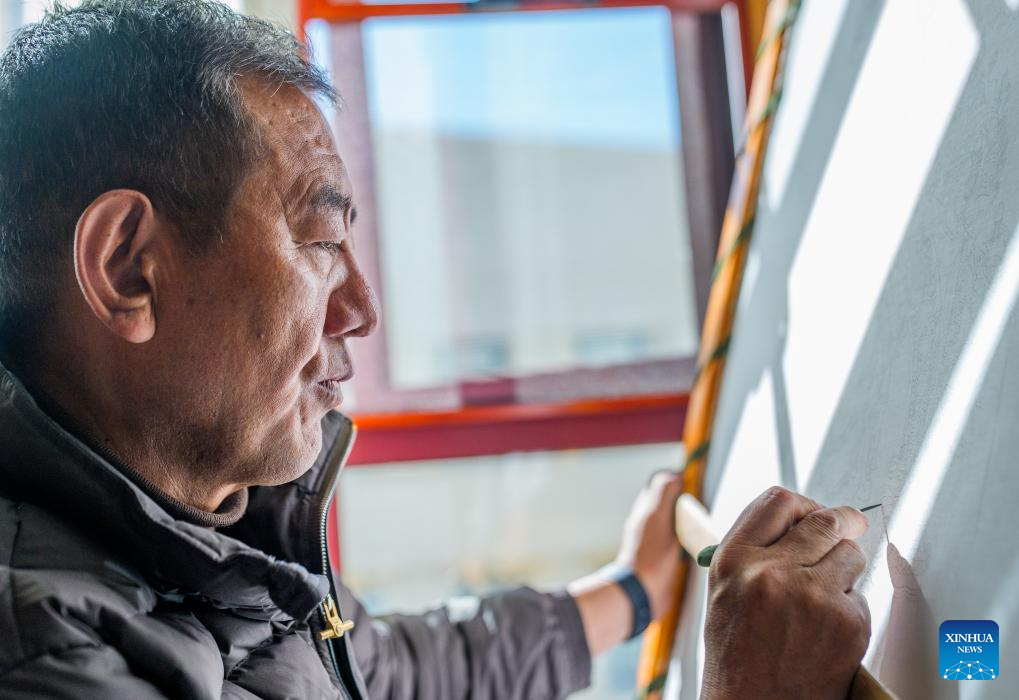
Norbu Sidar draws the pattern of a thangka at his office at the Xizang Academy of Thangka in Lhasa, southwest China's Xizang Autonomous Region, Feb. 10, 2026. On the afternoon of Feb. 10, sunlight streamed through the windows of the Xizang Academy of Thangka, illuminating an unfinished thangka painting. Norbu Sidar stood beside a young apprentice. He reached out, gently placing his finger on a specific spot on the canvas, and quietly guided the apprentice on the direction of the lines.
Thangka, renowned for its meticulous composition, vibrant colors, and profound cultural connotations, was listed among the first batch of China's national intangible cultural heritages in 2006. Recording Tibetan history, culture, medicine, astronomy, and other knowledge, it carries the spiritual beliefs and aesthetic wisdom of people in Xizang throughout the times.
Norbu Sidar is a national-level inheritor of the Tibetan thangka. As a child, he learned thangka painting techniques from his grandfather. He recalled, "Time was most precious when I was little. I could only learn to paint thangka in my spare time after helping the family with farm and livestock work." From 2005 to 2015, he spent ten years as a restoration expert undertaking the mural restoration project at the Potala Palace. In 2016, he donated the 18 thangka works he had copied at the Potala Palace over the decade to the Palace. "These ten years have been the most meaningful part of my life," he recalled.
In 1992, Norbu Sidar began taking on students. Ten years later, he led the founding of the Xizang Academy of Thangka. Today, as a master's supervisor at the School of Arts of Xizang University, he guides graduate students in studying the history of thangka and encourages young people to experiment with new forms of expression. To date, over 400 students are, like him, contributing to the development of Tibetan thangka art.
After being elected as a member of the National Committee of the Chinese People's Political Consultative Conference, Norbu Sidar felt he had the responsibility to do more to make thangka, the artistic treasure in Xizang, recognized, supported and passed down through generations. (Xinhua/Tenzin Nyida)
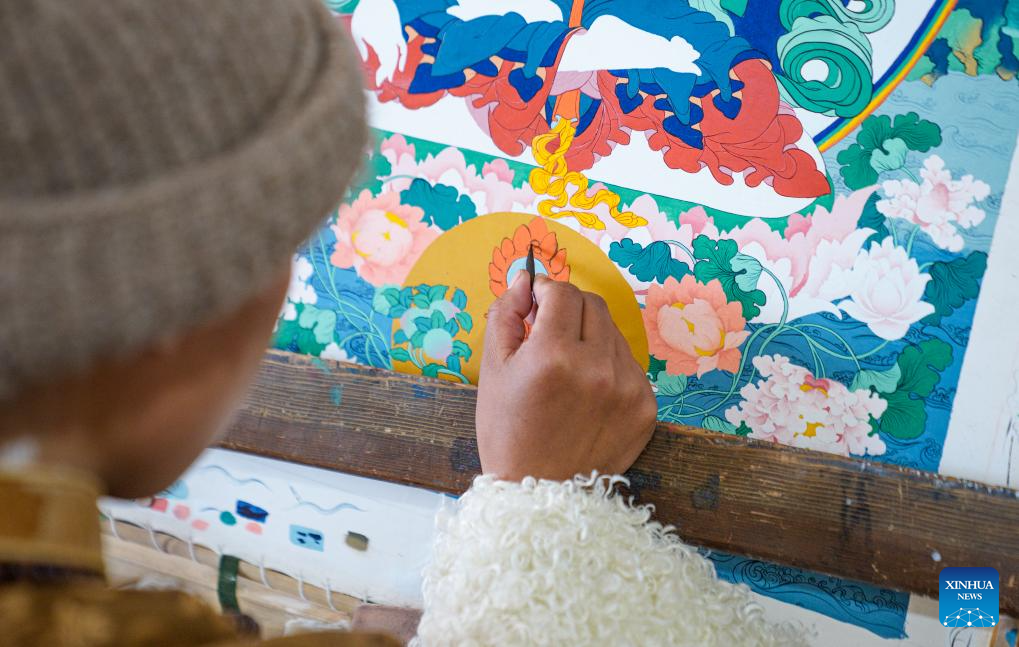
An apprentice of Norbu Sidar draws a thangka at the Xizang Academy of Thangka in Lhasa, southwest China's Xizang Autonomous Region, Feb. 10, 2026. On the afternoon of Feb. 10, sunlight streamed through the windows of the Xizang Academy of Thangka, illuminating an unfinished thangka painting. Norbu Sidar stood beside a young apprentice. He reached out, gently placing his finger on a specific spot on the canvas, and quietly guided the apprentice on the direction of the lines.
Thangka, renowned for its meticulous composition, vibrant colors, and profound cultural connotations, was listed among the first batch of China's national intangible cultural heritages in 2006. Recording Tibetan history, culture, medicine, astronomy, and other knowledge, it carries the spiritual beliefs and aesthetic wisdom of people in Xizang throughout the times.
Norbu Sidar is a national-level inheritor of the Tibetan thangka. As a child, he learned thangka painting techniques from his grandfather. He recalled, "Time was most precious when I was little. I could only learn to paint thangka in my spare time after helping the family with farm and livestock work." From 2005 to 2015, he spent ten years as a restoration expert undertaking the mural restoration project at the Potala Palace. In 2016, he donated the 18 thangka works he had copied at the Potala Palace over the decade to the Palace. "These ten years have been the most meaningful part of my life," he recalled.
In 1992, Norbu Sidar began taking on students. Ten years later, he led the founding of the Xizang Academy of Thangka. Today, as a master's supervisor at the School of Arts of Xizang University, he guides graduate students in studying the history of thangka and encourages young people to experiment with new forms of expression. To date, over 400 students are, like him, contributing to the development of Tibetan thangka art.
After being elected as a member of the National Committee of the Chinese People's Political Consultative Conference, Norbu Sidar felt he had the responsibility to do more to make thangka, the artistic treasure in Xizang, recognized, supported and passed down through generations. (Xinhua/Tenzin Nyida)
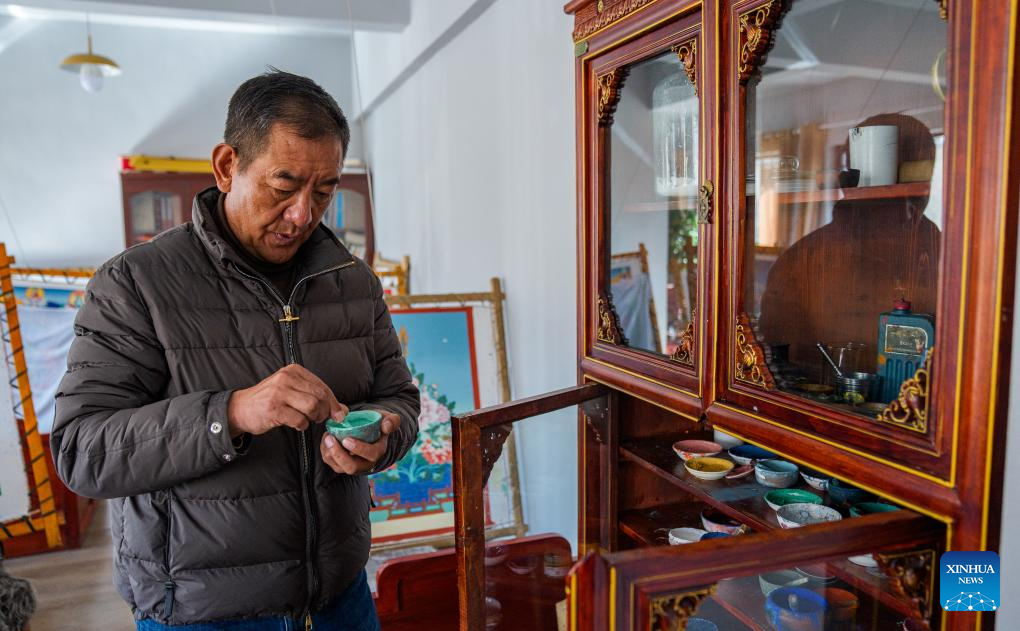
Norbu Sidar checks pigment at the Xizang Academy of Thangka in Lhasa, southwest China's Xizang Autonomous Region, Feb. 10, 2026. On the afternoon of Feb. 10, sunlight streamed through the windows of the Xizang Academy of Thangka, illuminating an unfinished thangka painting. Norbu Sidar stood beside a young apprentice. He reached out, gently placing his finger on a specific spot on the canvas, and quietly guided the apprentice on the direction of the lines.
Thangka, renowned for its meticulous composition, vibrant colors, and profound cultural connotations, was listed among the first batch of China's national intangible cultural heritages in 2006. Recording Tibetan history, culture, medicine, astronomy, and other knowledge, it carries the spiritual beliefs and aesthetic wisdom of people in Xizang throughout the times.
Norbu Sidar is a national-level inheritor of the Tibetan thangka. As a child, he learned thangka painting techniques from his grandfather. He recalled, "Time was most precious when I was little. I could only learn to paint thangka in my spare time after helping the family with farm and livestock work." From 2005 to 2015, he spent ten years as a restoration expert undertaking the mural restoration project at the Potala Palace. In 2016, he donated the 18 thangka works he had copied at the Potala Palace over the decade to the Palace. "These ten years have been the most meaningful part of my life," he recalled.
In 1992, Norbu Sidar began taking on students. Ten years later, he led the founding of the Xizang Academy of Thangka. Today, as a master's supervisor at the School of Arts of Xizang University, he guides graduate students in studying the history of thangka and encourages young people to experiment with new forms of expression. To date, over 400 students are, like him, contributing to the development of Tibetan thangka art.
After being elected as a member of the National Committee of the Chinese People's Political Consultative Conference, Norbu Sidar felt he had the responsibility to do more to make thangka, the artistic treasure in Xizang, recognized, supported and passed down through generations. (Xinhua/Tenzin Nyida)
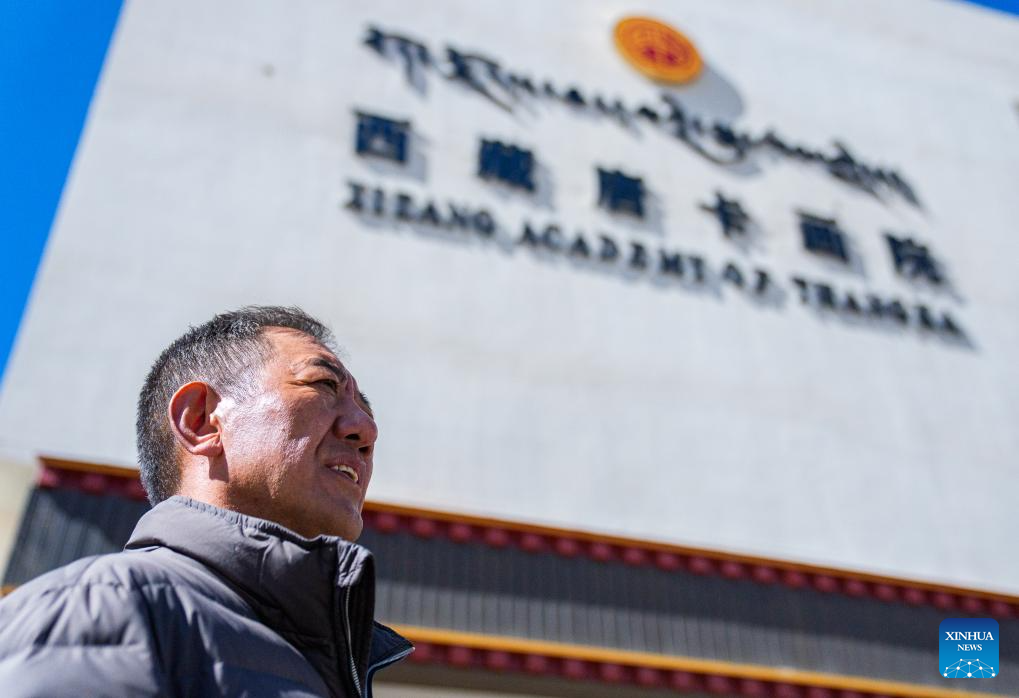
Norbu Sidar stands in front of the Xizang Academy of Thangka in Lhasa, southwest China's Xizang Autonomous Region, Feb. 10, 2026. On the afternoon of Feb. 10, sunlight streamed through the windows of the Xizang Academy of Thangka, illuminating an unfinished thangka painting. Norbu Sidar stood beside a young apprentice. He reached out, gently placing his finger on a specific spot on the canvas, and quietly guided the apprentice on the direction of the lines.
Thangka, renowned for its meticulous composition, vibrant colors, and profound cultural connotations, was listed among the first batch of China's national intangible cultural heritages in 2006. Recording Tibetan history, culture, medicine, astronomy, and other knowledge, it carries the spiritual beliefs and aesthetic wisdom of people in Xizang throughout the times.
Norbu Sidar is a national-level inheritor of the Tibetan thangka. As a child, he learned thangka painting techniques from his grandfather. He recalled, "Time was most precious when I was little. I could only learn to paint thangka in my spare time after helping the family with farm and livestock work." From 2005 to 2015, he spent ten years as a restoration expert undertaking the mural restoration project at the Potala Palace. In 2016, he donated the 18 thangka works he had copied at the Potala Palace over the decade to the Palace. "These ten years have been the most meaningful part of my life," he recalled.
In 1992, Norbu Sidar began taking on students. Ten years later, he led the founding of the Xizang Academy of Thangka. Today, as a master's supervisor at the School of Arts of Xizang University, he guides graduate students in studying the history of thangka and encourages young people to experiment with new forms of expression. To date, over 400 students are, like him, contributing to the development of Tibetan thangka art.
After being elected as a member of the National Committee of the Chinese People's Political Consultative Conference, Norbu Sidar felt he had the responsibility to do more to make thangka, the artistic treasure in Xizang, recognized, supported and passed down through generations. (Xinhua/Tenzin Nyida)
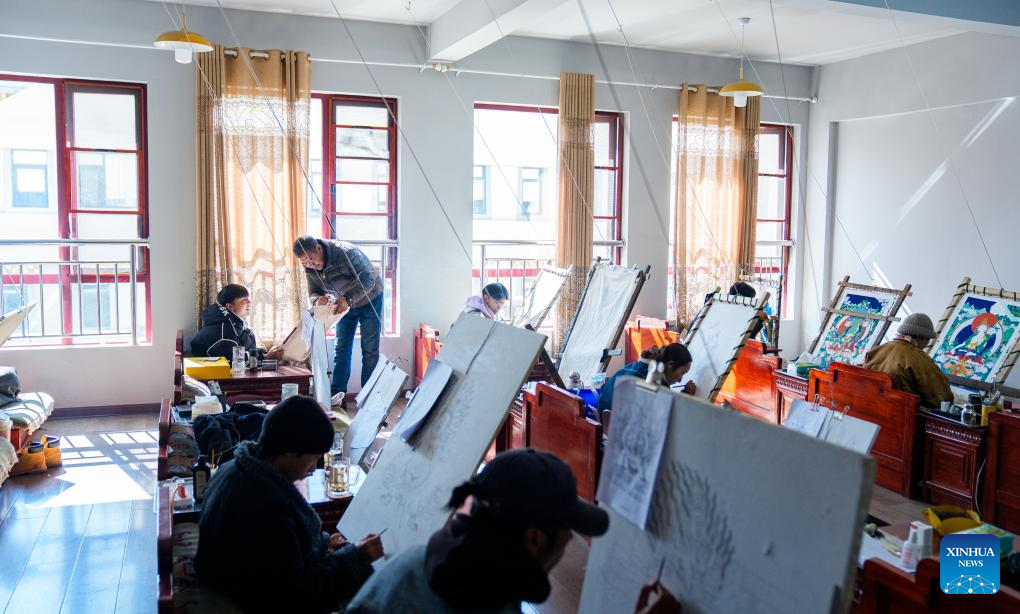
Norbu Sidar instructs his apprentice at the Xizang Academy of Thangka in Lhasa, southwest China's Xizang Autonomous Region, Feb. 10, 2026. On the afternoon of Feb. 10, sunlight streamed through the windows of the Xizang Academy of Thangka, illuminating an unfinished thangka painting. Norbu Sidar stood beside a young apprentice. He reached out, gently placing his finger on a specific spot on the canvas, and quietly guided the apprentice on the direction of the lines.
Thangka, renowned for its meticulous composition, vibrant colors, and profound cultural connotations, was listed among the first batch of China's national intangible cultural heritages in 2006. Recording Tibetan history, culture, medicine, astronomy, and other knowledge, it carries the spiritual beliefs and aesthetic wisdom of people in Xizang throughout the times.
Norbu Sidar is a national-level inheritor of the Tibetan thangka. As a child, he learned thangka painting techniques from his grandfather. He recalled, "Time was most precious when I was little. I could only learn to paint thangka in my spare time after helping the family with farm and livestock work." From 2005 to 2015, he spent ten years as a restoration expert undertaking the mural restoration project at the Potala Palace. In 2016, he donated the 18 thangka works he had copied at the Potala Palace over the decade to the Palace. "These ten years have been the most meaningful part of my life," he recalled.
In 1992, Norbu Sidar began taking on students. Ten years later, he led the founding of the Xizang Academy of Thangka. Today, as a master's supervisor at the School of Arts of Xizang University, he guides graduate students in studying the history of thangka and encourages young people to experiment with new forms of expression. To date, over 400 students are, like him, contributing to the development of Tibetan thangka art.
After being elected as a member of the National Committee of the Chinese People's Political Consultative Conference, Norbu Sidar felt he had the responsibility to do more to make thangka, the artistic treasure in Xizang, recognized, supported and passed down through generations. (Xinhua/Tenzin Nyida)
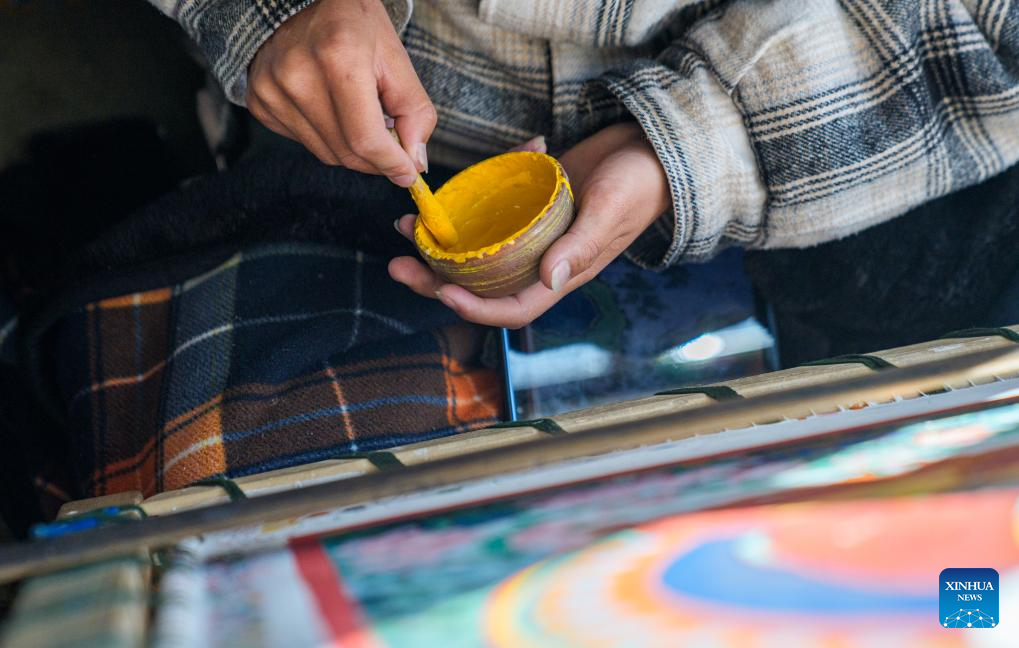
An apprentice of Norbu Sidar prepares pigment at the Xizang Academy of Thangka in Lhasa, southwest China's Xizang Autonomous Region, Feb. 10, 2026. On the afternoon of Feb. 10, sunlight streamed through the windows of the Xizang Academy of Thangka, illuminating an unfinished thangka painting. Norbu Sidar stood beside a young apprentice. He reached out, gently placing his finger on a specific spot on the canvas, and quietly guided the apprentice on the direction of the lines.
Thangka, renowned for its meticulous composition, vibrant colors, and profound cultural connotations, was listed among the first batch of China's national intangible cultural heritages in 2006. Recording Tibetan history, culture, medicine, astronomy, and other knowledge, it carries the spiritual beliefs and aesthetic wisdom of people in Xizang throughout the times.
Norbu Sidar is a national-level inheritor of the Tibetan thangka. As a child, he learned thangka painting techniques from his grandfather. He recalled, "Time was most precious when I was little. I could only learn to paint thangka in my spare time after helping the family with farm and livestock work." From 2005 to 2015, he spent ten years as a restoration expert undertaking the mural restoration project at the Potala Palace. In 2016, he donated the 18 thangka works he had copied at the Potala Palace over the decade to the Palace. "These ten years have been the most meaningful part of my life," he recalled.
In 1992, Norbu Sidar began taking on students. Ten years later, he led the founding of the Xizang Academy of Thangka. Today, as a master's supervisor at the School of Arts of Xizang University, he guides graduate students in studying the history of thangka and encourages young people to experiment with new forms of expression. To date, over 400 students are, like him, contributing to the development of Tibetan thangka art.
After being elected as a member of the National Committee of the Chinese People's Political Consultative Conference, Norbu Sidar felt he had the responsibility to do more to make thangka, the artistic treasure in Xizang, recognized, supported and passed down through generations. (Xinhua/Tenzin Nyida)
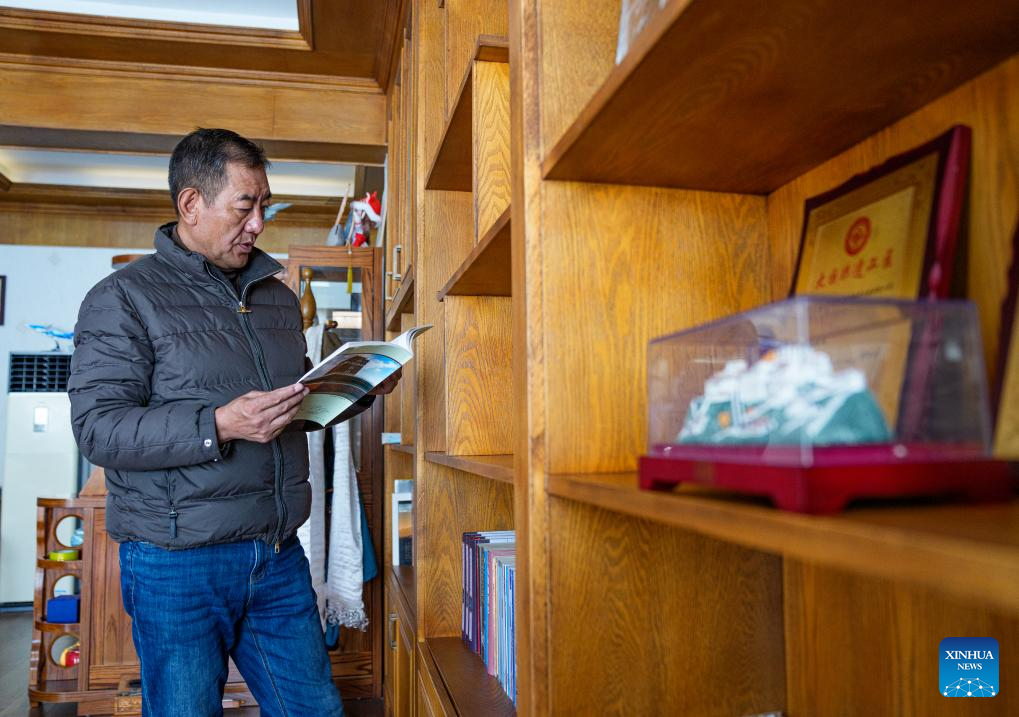
Norbu Sidar reads books at his office at the Xizang Academy of Thangka in Lhasa, southwest China's Xizang Autonomous Region, Feb. 10, 2026. On the afternoon of Feb. 10, sunlight streamed through the windows of the Xizang Academy of Thangka, illuminating an unfinished thangka painting. Norbu Sidar stood beside a young apprentice. He reached out, gently placing his finger on a specific spot on the canvas, and quietly guided the apprentice on the direction of the lines.
Thangka, renowned for its meticulous composition, vibrant colors, and profound cultural connotations, was listed among the first batch of China's national intangible cultural heritages in 2006. Recording Tibetan history, culture, medicine, astronomy, and other knowledge, it carries the spiritual beliefs and aesthetic wisdom of people in Xizang throughout the times.
Norbu Sidar is a national-level inheritor of the Tibetan thangka. As a child, he learned thangka painting techniques from his grandfather. He recalled, "Time was most precious when I was little. I could only learn to paint thangka in my spare time after helping the family with farm and livestock work." From 2005 to 2015, he spent ten years as a restoration expert undertaking the mural restoration project at the Potala Palace. In 2016, he donated the 18 thangka works he had copied at the Potala Palace over the decade to the Palace. "These ten years have been the most meaningful part of my life," he recalled.
In 1992, Norbu Sidar began taking on students. Ten years later, he led the founding of the Xizang Academy of Thangka. Today, as a master's supervisor at the School of Arts of Xizang University, he guides graduate students in studying the history of thangka and encourages young people to experiment with new forms of expression. To date, over 400 students are, like him, contributing to the development of Tibetan thangka art.
After being elected as a member of the National Committee of the Chinese People's Political Consultative Conference, Norbu Sidar felt he had the responsibility to do more to make thangka, the artistic treasure in Xizang, recognized, supported and passed down through generations. (Xinhua/Tenzin Nyida)


