
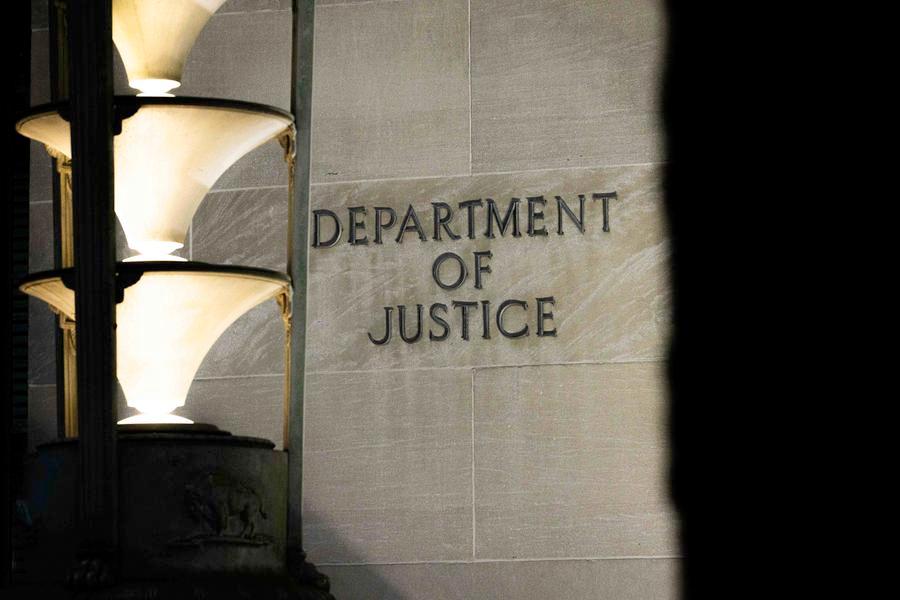
* On Jan. 30, the U.S. Department of Justice (DOJ) released the remaining Epstein files, including over 3 million pages, more than 2,000 video segments and 180,000 images.
* Over the past several months, the release of the Epstein case files has been repeatedly delayed and fraught with complications. This has not only amplified public skepticism toward what many see as the "delayed, selective transparency" of the U.S. government, but also further eroded external trust in the Trump administration and the broader U.S. political system.
* Despite heightened attention from Congress and intensified public criticism, the latest revelations appear to have caused little stir in U.S. politics, which has grown almost immune to scandal and operates with a notable lack of shame and oversight.
WASHINGTON, Feb. 11 (Xinhua) -- The recent release of files related to late U.S. financier and convicted sex offender Jeffrey Epstein has rattled U.S. politics and triggered turbulence in many European countries.
Not only did it expose the corruption and privilege of the powerful elite, along with their disregard for morality, it also shattered the self-proclaimed universal values of Western society.
More importantly, it compelled a sobering reassessment of the Western justice system's fairness, revealing a structure that seems to grant impunity to the rich and powerful.
TURMOIL ACROSS THE WEST
On Jan. 30, the U.S. Department of Justice (DOJ) released the remaining Epstein files, including over 3 million pages, more than 2,000 video segments and 180,000 images. In total, the DOJ has released nearly 3.5 million pages of documents related to the case.
In the United States, the latest documents include references to President Donald Trump and several figures from his inner circle. According to multiple U.S. media reports, Trump's name appears more than 1,000 times.
"While some of the references are benign, others include newly disclosed unverified sexual assault claims against Trump as well as fresh details about how some of Epstein's victims described their interactions with the future president," CNN reported.
Trump, meanwhile, said the allegations are nothing but a "conspiracy" targeting him.
U.S. Commerce Secretary Howard Lutnick and Kevin Warsh, who was nominated by Trump to chair the Federal Reserve, entrepreneur Elon Musk, who has close ties to Trump, and Stephen Bannon, an advisor during Trump's first term, are also mentioned in the latest documents.
Several Democratic lawmakers, along with Republican Congressman Thomas Massie, one of the advocates behind the Epstein Files Transparency Act, have already called for the commerce secretary to resign.
In a Senate Appropriations subcommittee hearing on Tuesday, Lutnick admitted that he and his family had lunch with Epstein on the latter's private island in 2012, but denied having any relationship with him.
"I did not have any relationship with him. I barely had anything to do with that person," he said in his testimony.
In Europe, the latest files have triggered even greater turbulence. In Britain, Morgan McSweeney resigned as chief of staff to Prime Minister Keir Starmer following controversy over the appointment of Peter Mandelson as ambassador to the United States.
Norway's Foreign Ministry said on Sunday that Mona Juul had stepped down as Norway's ambassador to Jordan, also accredited to Iraq, after revelations about her contact with Epstein.
Former French Culture Minister Jack Lang resigned as president of the Arab World Institute, a Paris-based cultural and academic institution, over alleged past financial links to Epstein.
The impact extends beyond politics. Microsoft co-founder Bill Gates, the late pop king Michael Jackson, among others, were also mentioned in the files.
"This is actually a glimpse into the darkened hearts of the very rich and powerful who have become so blinded by their greed, power and sense of entitlement that not only can they 'do no wrong' but that, given their power and status, they have the 'right' to use others for their own purposes regardless of the impact of such manipulation on their victims," Greg Cusack, a former member of the Iowa House of Representatives, told Xinhua.
TRANSPARENCY TO WHAT DEGREE?
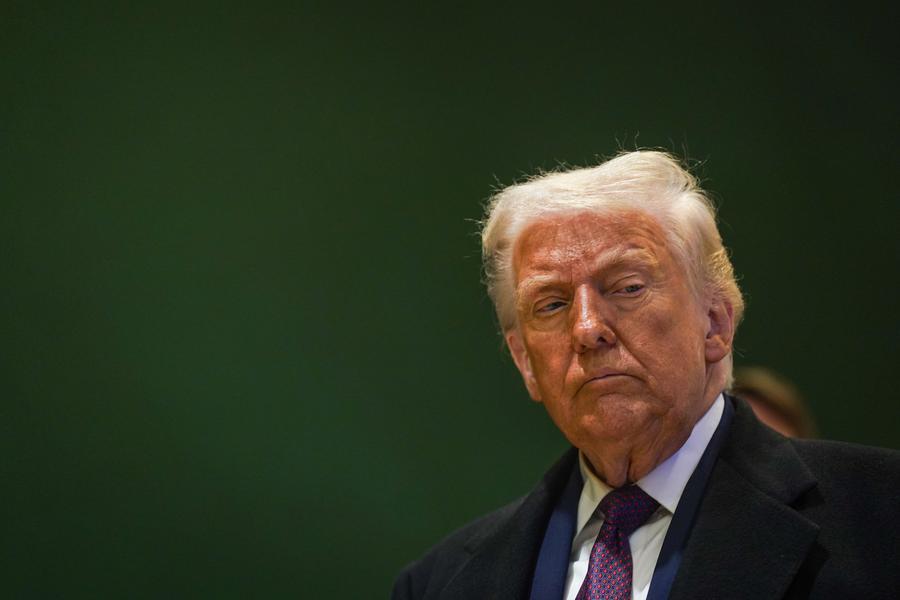
The Trump administration's handling of the document release has triggered widespread skepticism and criticism. The administration delayed the release for months, heavily redacted numerous files, and even the latest release did not include all materials, prompting the question: transparency to what degree?
Releasing the Epstein-related files was a campaign promise Trump made during his re-election bid in 2024. However, after taking office in January 2025, his administration failed to fulfill this commitment.
It was not until the U.S. Congress passed the Epstein Files Transparency Act with an overwhelming majority in mid-November that the DOJ began releasing the documents in batches, starting from the Dec. 19 deadline.
Following the latest release, Democratic Congressman Ro Khanna, who co-sponsored the bill alongside Republican lawmakers, said in a press release that while the DOJ claimed to have collected over 6 million potentially relevant pages, only about 3.5 million pages were released after review and redaction.
Khanna noted that he would closely examine whether the DOJ had disclosed materials he has long advocated for public release, including FBI victim interview records, draft indictments and prosecution memos from the 2007 Florida investigation, as well as hundreds of thousands of emails and files from Epstein's computers.
In addition, redaction errors by the DOJ exposed a significant amount of victim information, sparking public outrage. Following the release, the names and personal details of nearly 100 victims were made public. This blunder has prompted victims to ask: who exactly is being protected by these redactions?
Over the past several months, the release of the Epstein case files has been repeatedly delayed and fraught with complications. This has not only amplified public skepticism toward what many see as the "delayed, selective transparency" of the U.S. government, but also further eroded external trust in the Trump administration and the broader U.S. political system.
JUSTICE SYSTEM IN DOUBT
Western governments uphold judicial fairness as a core value and have repeatedly cited it to lecture other countries on issues such as human rights and corruption. Yet the "minor stir" following the release of the Epstein files reveals how Western judicial systems can protect the elite and exposes the hypocrisy of their proclaimed values.
Despite a massive document dump related to the Epstein case, the DOJ has said that it does not currently expect more arrests based on the disclosures.
"There's a lot of correspondence. There's a lot of emails. There's a lot of photographs. There's a lot of horrible photographs that appear to be taken by Mr. Epstein or people around him," Deputy U.S. Attorney General Todd Blanche told CNN. "But that doesn't allow us necessarily to prosecute somebody."
Some disagree. Members of Congress who reviewed unredacted documents on Monday reported finding proof that at least six individuals had been kept hidden from the public without clear legal justification, reigniting accusations that the Trump Administration protected influential individuals from investigation.
Republican Congressman Thomas Massie and Democratic Congressman Ro Khanna said the DOJ redacted the names of at least six men who are "likely incriminated."
Despite heightened attention from Congress and intensified public criticism, the latest revelations appear to have caused little stir in U.S. politics, which has grown almost immune to scandal and operates with a notable lack of shame and oversight.
"As Europe moves to address its shame, it's highlighting the comparative lack of accountability in the U.S.," the Politico reported.
While Trump said on Feb. 3 that it's time for the country to move on from the Epstein files, U.S. public opinion appears unprepared to "turn the page," because many feel that justice has not been served.
"Americans are not ready to move on from the Epstein story because there remain unanswered questions. The big issue is culpability for bad behavior. What will happen to those named in the files," Brookings Institution Senior Fellow Darrell West told Xinhua.
"The administration has said there will be no further releases, no investigations, and no indictments. But the scope of the bad behavior leads many to question that approach," West said. ■