"It looks like people have less money in their pockets and are very worried about losing their jobs," said Dean Baker, co-founder of the Center for Economic and Policy Research.
"All the data suggest it's getting harder to find a new job. So in that environment, it is not surprising that spending is slowing," Baker said.
by Matthew Rusling
WASHINGTON, Feb. 10 (Xinhua) -- Lackluster U.S. retail sales in December have underscored growing economic pessimism among American consumers, some economists said.
U.S. retail sales were flat in December, according to data published Tuesday by the Commerce Department, missing analysts' expectations of a 0.4 percent increase.
Retail sales increased 2.4 percent year on year, a sharp drop from 3.3 percent the previous month.
"It looks like people have less money in their pockets and are very worried about losing their jobs," Dean Baker, co-founder of the Center for Economic and Policy Research, told Xinhua.
"All the data suggest it's getting harder to find a new job. So in that environment, it is not surprising that spending is slowing," Baker said.
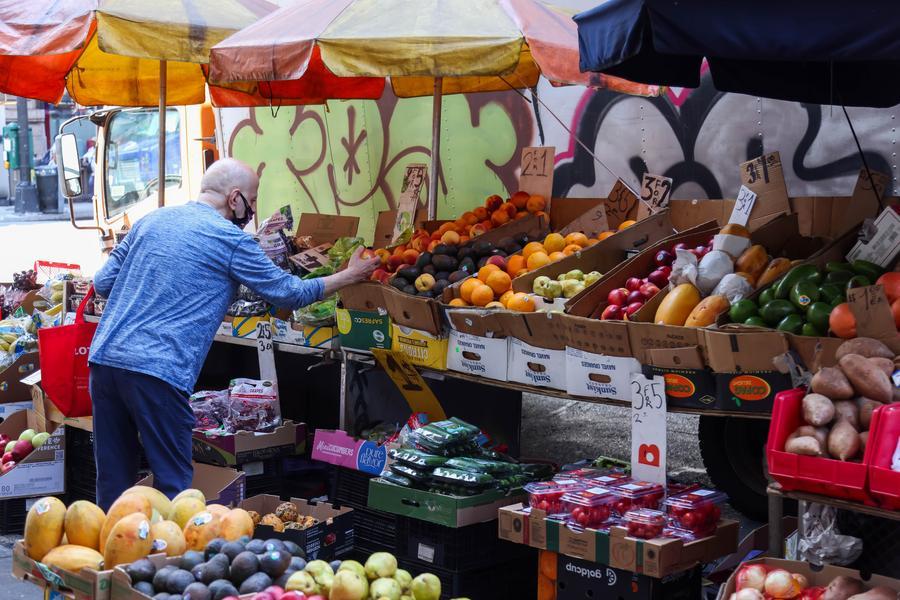
Indeed, hiring has been dramatically slow over the past year. The inflation that took hold during the previous administration shows no sign of significantly dropping. The costs of mortgages, homes and rent remain sky high, and the price of food has put a sting in the wallets of many lower-earning consumers.
These factors have added up to send consumer sentiment to about 20 percent below January 2025, according to a survey of consumers from the University of Michigan, which released its preliminary report for February on Friday.
However, sentiment surged for consumers with the largest stock portfolios, while it stagnated and remained at dismal levels for consumers without stock holdings, the report said.
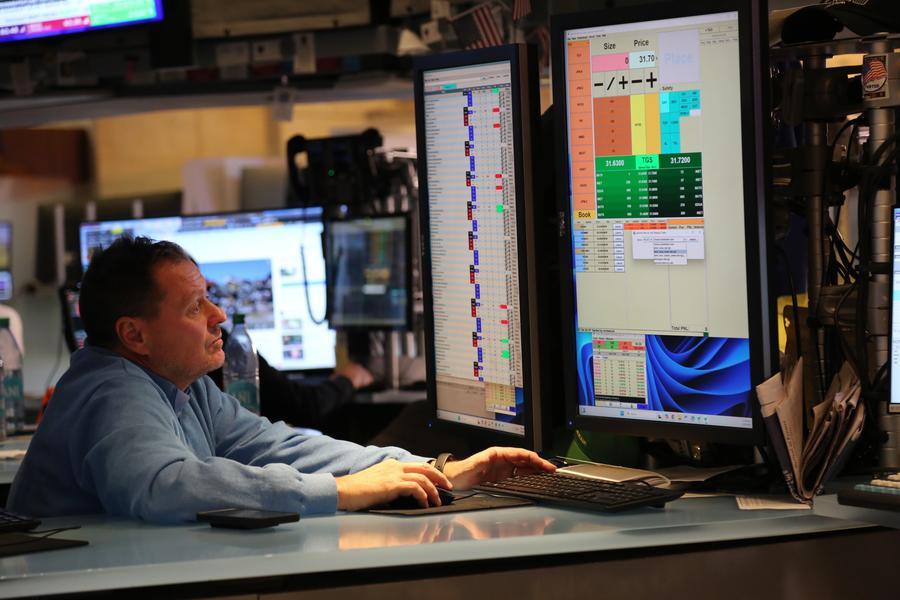
"The stock market has been the main factor driving consumption in the last two years. If we see a major correction, that will be a big hit to consumption, but even without one, we are likely to see continued slow growth," Baker said.
"The story is that people who don't own lots of stock are pretty pessimistic about the economy, whereas those with stock are happy," Baker said.
Economists have referred to this as the K-shaped economy -- those at the top are doing well, while those in the middle and below are faring poorly.
"This is a K-shaped economy with strong spending from the top and much more cautious spending from middle-and lower-income consumers," said Heather Long, chief economist at Navy Federal Credit Union.
"Some look at the U.S. economy today and see resilience: markets near highs, unemployment steady, spending holding up," said Fortune magazine in an article published Tuesday. "Others see something darker: affordability pressure, a stagnant labor market, and a growing sense that the system is rigged."
At the same time, consumer confidence has stumbled to the lowest level in roughly 12 years, according to last month's report by the Conference Board.
The index decreased 9.7 points to 84.5, the lowest level since 2014 and even lower than the 2020 recession during the COVID crisis.
Last month's expectations index from the Conference Board also dropped 9.5 points to 65.1, well under the threshold of 80, which usually points to a recession.
"Most Americans continue to hold negative views of the U.S. economy," said a Pew Research Center survey published on Feb. 4.
"About three-in-10 U.S. adults (28 percent) rate economic conditions in the country as excellent or good, while roughly seven-in-10 (72 percent) rate them as only fair or poor," Pew said. ■