
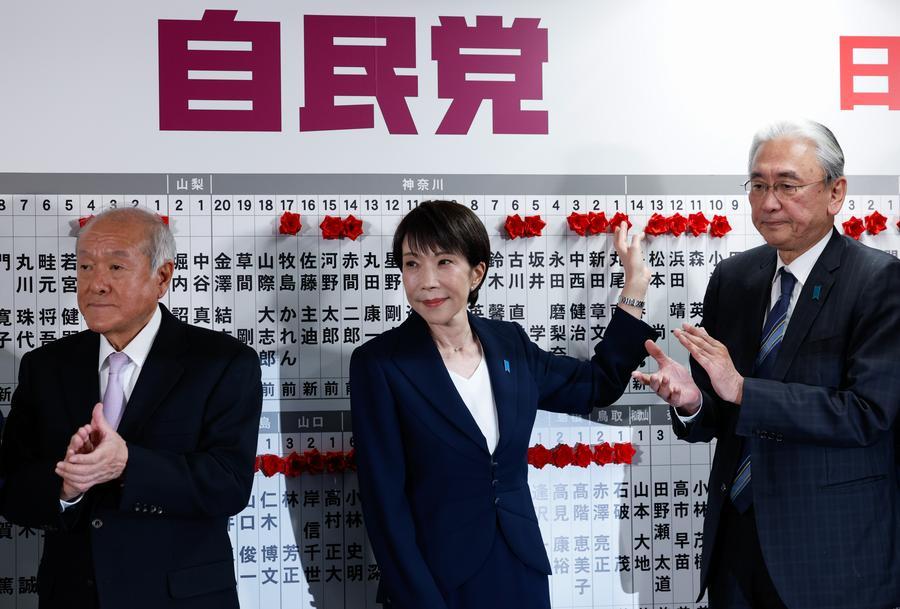
A hastily staged election has consolidated the LDP's grip on power, but it has sidelined real policy debate and left Japan's deep economic and social problems unresolved as the government pushes the country further to the right.
TOKYO, Feb. 10 (Xinhua) -- Following Sunday's lower house election, Japan's ruling Liberal Democratic Party (LDP) gained a significant boost in seats and secured a two-thirds majority alone in the House of Representatives.
Experts observe that LDP President and Prime Minister Sanae Takaichi seized the moment before the harmful consequences of her policies were fully exposed, consolidating her ruling base through a "lightning-fast" and "entertainment-oriented" election.
However, Japan's deep-seated economic and livelihood challenges remain unresolved amid mounting concerns over Takaichi's accelerated push for a political rightward drift. For the Takaichi administration, the real test may have only just begun.
"ENTERTAINMENT-ORIENTED" ELECTION
The ruling LDP won 316 of the 465 seats in the House of Representatives, exceeding the two-thirds threshold. Its coalition partner, the Japan Innovation Party (JIP), secured 36 seats, taking their combined total to 352 seats.
On the opposition side, the Centrist Reform Alliance (CRA), newly formed before the election by the Constitutional Democratic Party of Japan (CDPJ) and the Komeito party, saw its seat count drastically reduced to 49 from the pre-election tally of 172.
Among left-wing parties, the Japanese Communist Party saw its representation halved to four, while Reiwa Shinsengumi fell from eight seats to one. Meanwhile, the far-right Sanseito increased its presence from two seats to 15.
Overall, right-wing parties and forces expanded notably, with their gains largely coming at the expense of centrist and left-wing groups.
Experts noted that the trend of "political entertainment" became even more pronounced in this election, as Takaichi and the LDP carefully shaped campaign narratives and avoided controversial issues, gaining a traffic advantage through mobile and online platforms.
Amid prolonged economic stagnation and mounting livelihood problems, some politicians have repeatedly played up so-called external threats, stirring public sentiment and spreading radical rhetoric to attract attention and online traffic, said experts.
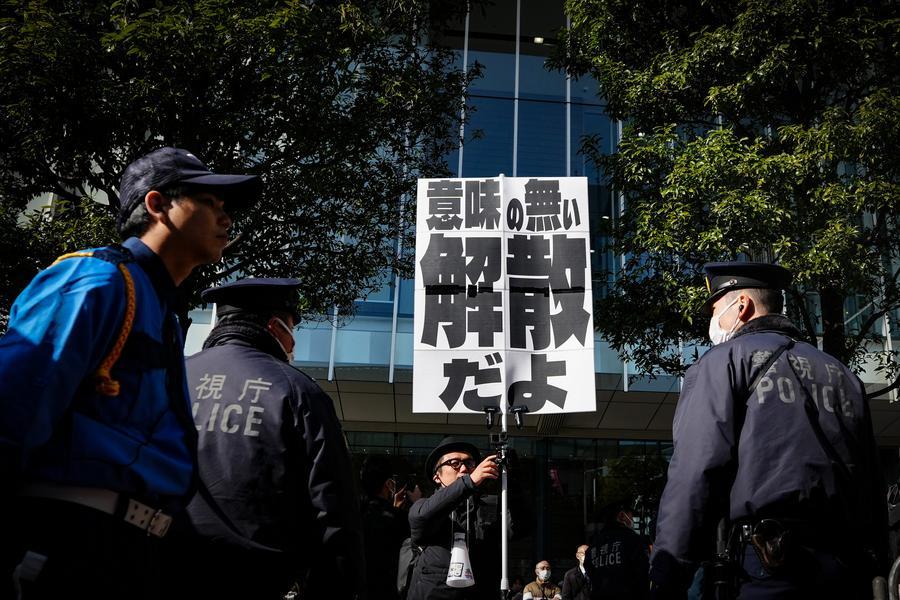
In addition, only 16 days elapsed between the dissolution of the House of Representatives on Jan. 23 and the election vote on Feb. 8, the shortest in Japan's postwar history. Under such a short timeline, the CDPJ was forced into a rushed campaign, and its newly formed alliance with Komeito failed to gain sufficient voter recognition.
The extreme shortening of the election cycle made it difficult for voters to fully distinguish between policy positions, leading many to make choices largely based on exposure and visibility, said Hiroshi Shiratori, a professor at Hosei University in Tokyo.
POSSIBLE CHAIN REACTIONS
Analysts believe that after political maneuvering, Takaichi swiftly dissolved the lower house and called an early election, a move that could trigger a series of chain reactions across Japan's political landscape.
The election results have enabled Takaichi to further consolidate her governing base. Within the ruling coalition, the LDP's more than two-thirds majority weakens the "kingmaker" position of its partner JIP, thereby reducing potential pressure from within the coalition.
Within the LDP itself, Takaichi had previously been viewed as having risen to power with support from party heavyweight Taro Aso and the former Abe faction. With the party's victory in her "high-stakes election gamble," Takaichi's standing within her own party is likely to be strengthened.
She may also use this opportunity to cultivate her own intra-party base, as many newly elected lawmakers are seen as potential proteges.
The opposition, meanwhile, has suffered a major blow. Several heavyweight lawmakers from the CRA lost their seats. The alliance's co-leaders, Yoshihiko Noda and Tetsuo Saito, announced on Monday that they would resign to take responsibility for the crushing defeat.
Looking ahead, centrist and left-wing opposition forces may face a new round of fragmentation and realignment.
"MORE DANGEROUS" PROSPECT
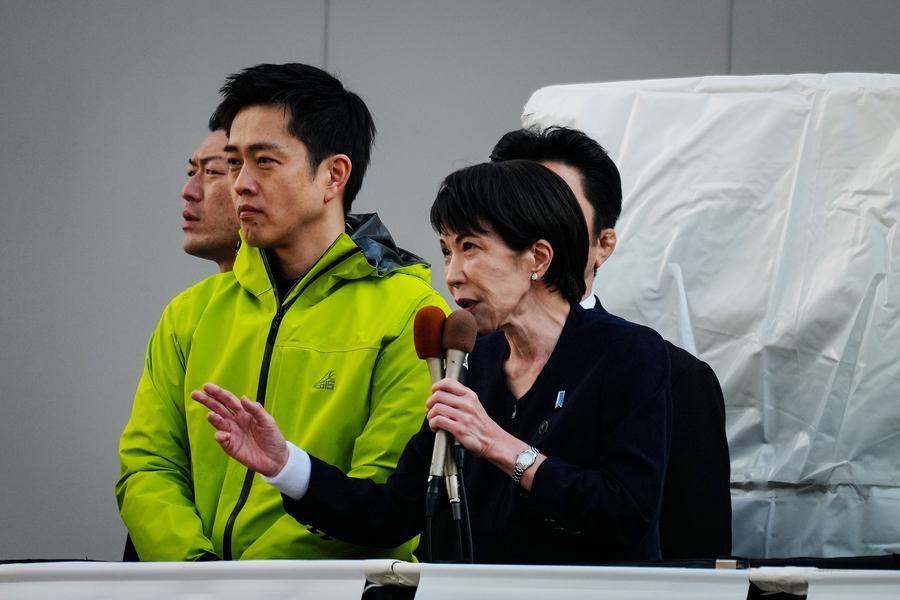
Experts caution that although Takaichi succeeded in her "lightning-fast" election strategy, the harmful nature of some of her policy proposals is likely to become increasingly evident in the period ahead, with lasting negative consequences that could make Japan "more dangerous."
First, Takaichi may take the election outcome as a political endorsement to accelerate Japan's shift toward the right, a prospect that has raised widespread concern.
In a television program on Monday evening, she said that the scope of defense equipment exports would be "further expanded," and that priority would be given to strengthening national intelligence capabilities and establishing a national intelligence agency.
Japanese media have also noted that with the LDP holding more than two-thirds of the seats in the lower house, surpassing the threshold to initiate constitutional amendment proposals, Takaichi may seek to accelerate efforts to revise the pacifist Constitution.
Yet the ruling coalition remains a minority in the House of Councillors, or the upper house, and whether it can secure the required two-thirds support there remains uncertain.
Kanako Takayama, a professor at Kyoto University, noted that many of the Takaichi administration's policies cause substantive harm to national interests and lack long-term sustainability
Pushing through legal changes based solely on a "seat advantage," without the public being fully informed, would essentially amount to trampling on democracy, she said.
Experts further point out that Japan's right-wing forces, represented by Takaichi, have exaggerated so-called regional threats as a pretext to accelerate military expansion, heightening regional tensions. The economic costs of such provocations are already rebounding on Japan itself and are likely to intensify.
Second, this "entertainment-oriented" election offered little help in addressing Japan's economic and social livelihood challenges.
The business community argues that Takaichi's economic policies rely heavily on expanding fiscal spending and issuing debt, which could exacerbate yen depreciation and inflationary pressures.
Amid rising inflation and increasing living costs, Takaichi's campaign remarks, which portrayed yen depreciation as beneficial to foreign-currency asset returns, stood in stark contrast to the everyday hardships faced by the public.
Japanese military journalist Makoto Konishi said that the current Takaichi administration appears intent on setting off a "final burst of fireworks," warning that relentlessly boosting military spending would inevitably mean deep cuts to welfare and healthcare, potentially provoking strong public backlash.
Third, in the eyes of many Japanese, while Takaichi has capitalized on the political novelty of being Japan's first female prime minister to gain popularity, her governing style has increasingly appeared arrogant, with numerous controversial remarks and actions during the campaign.
Her sudden absence from a major televised party leaders' debate, citing a "hand injury," drew skepticism and was widely seen as an attempt to avoid addressing scandals related to political funding.
Kazuhiko Togo, an international politics scholar and former diplomat, said it remains a cause for concern whether Takaichi, now on firmer political footing, will show due tolerance for different views, especially informed and constructive opinions.
After this election, he said, the Takaichi administration will face its true test. ■