BEIJING, Feb. 7 (Xinhua) -- In recent Western reports, claims that China's economy has reached its peak have appeared with growing frequency, often linked to concerns over structural constraints. At the same time, the release of annual economic data across countries has highlighted a broader reality: Global recovery remains uneven, and growth trajectories continue to diverge. Against this backdrop, China's 2025 economic performance is best assessed through data rather than assumptions.
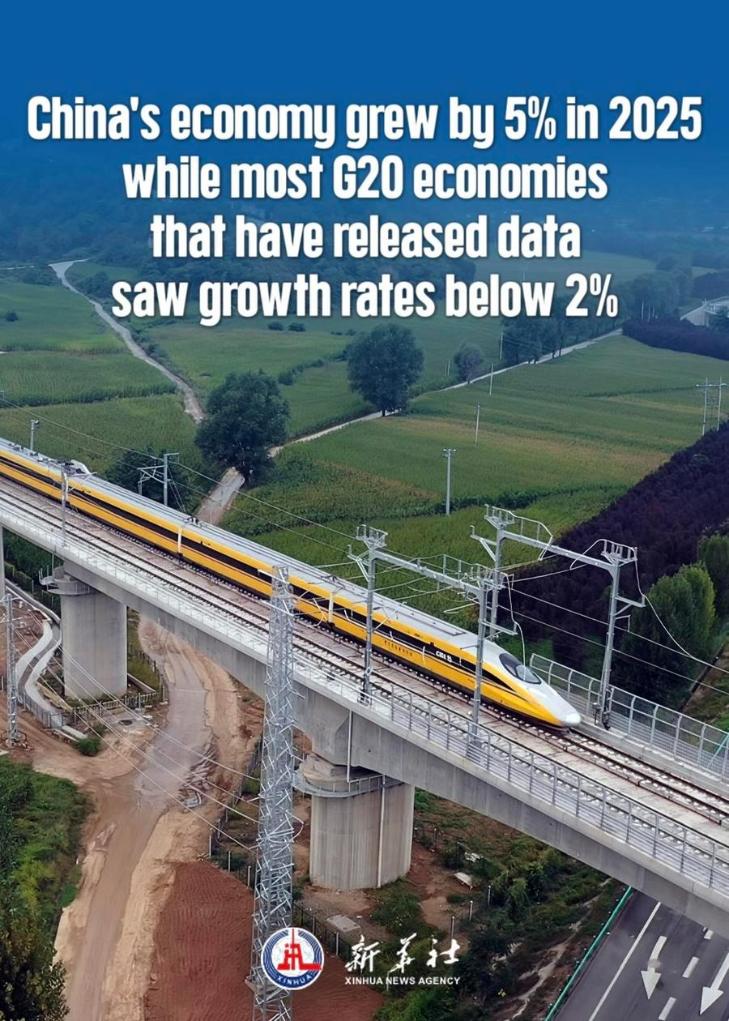
China's GDP expanded by 5 percent year on year in 2025. Among G20 economies that have published data so far, most recorded growth below 2 percent, with Germany, France, and Italy posting rates under 1 percent.
Against a backdrop of global economic pressure and increasingly uneven recovery, such expansion for an economy of China's size is no small feat, underscoring the country's economic resilience and potential.
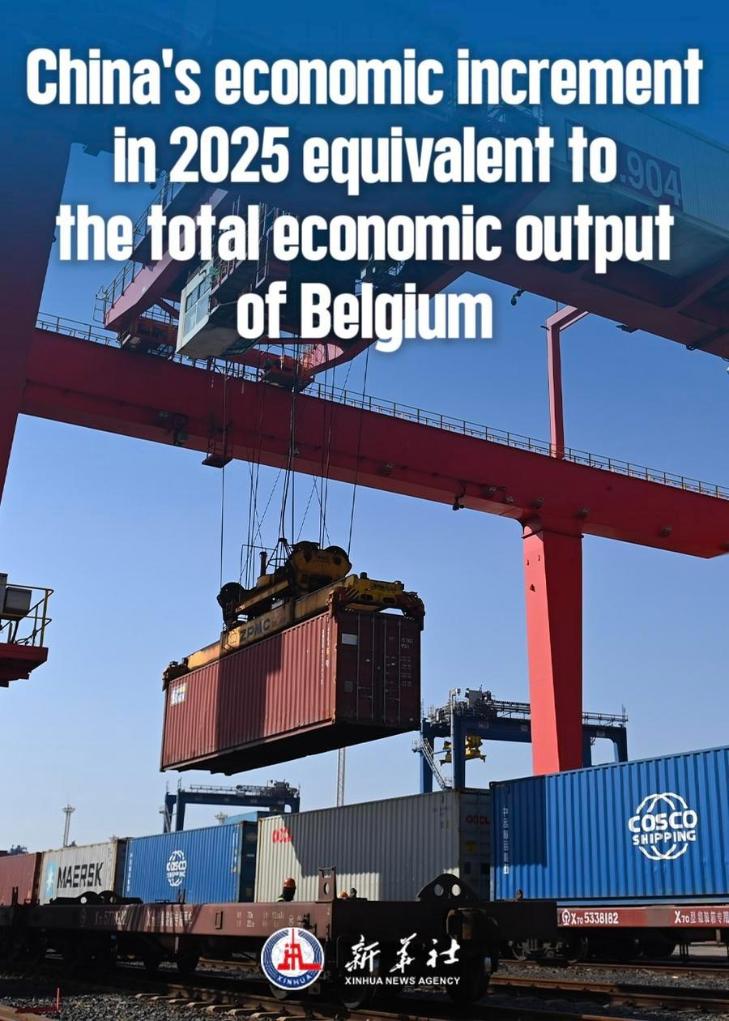
In absolute terms, China added a sizable amount of economic activity in 2025. The increase in its economy was roughly equal to the total economic output of Belgium. For an economy already among the world's largest, such an annual increase makes a substantial contribution to global growth.
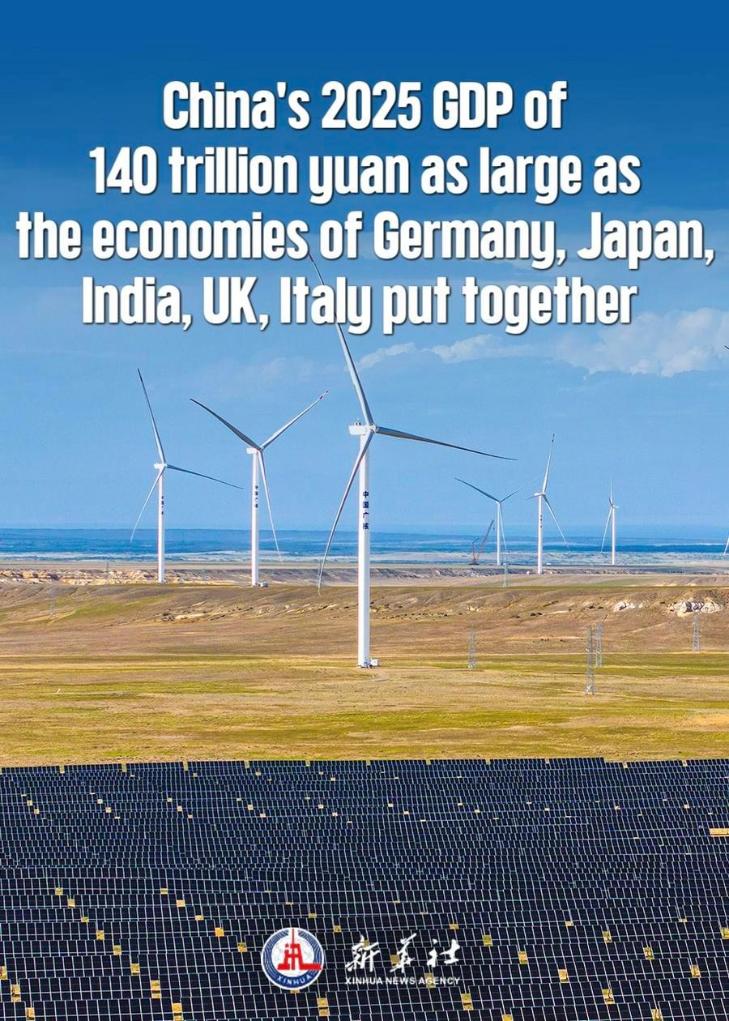
China's economy continued to expand in size. Total GDP surpassed 140 trillion yuan (about 20.16 trillion U.S. dollars) in 2025, equivalent to the combined economies of Germany, Japan, India, Britain and Italy. As a super-large economy, this scale provides China with a solid foundation to withstand risks and maintain long-term positive momentum.
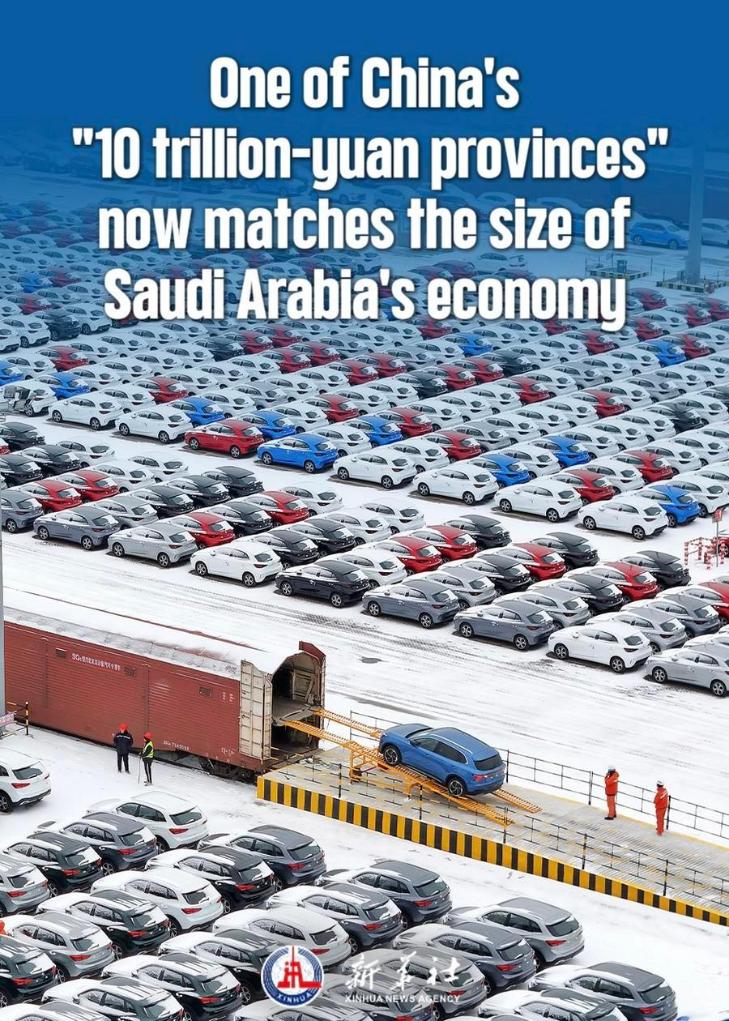
Regionally, economic activity remained broadly based. In 2025, Chinese provinces of Shandong, Guangdong and Jiangsu each reported GDP exceeding 10 trillion yuan (about 1.44 trillion dollars), roughly equivalent to the economy of Saudi Arabia, highlighting the substantial economic scale of China's provincial-level economies.
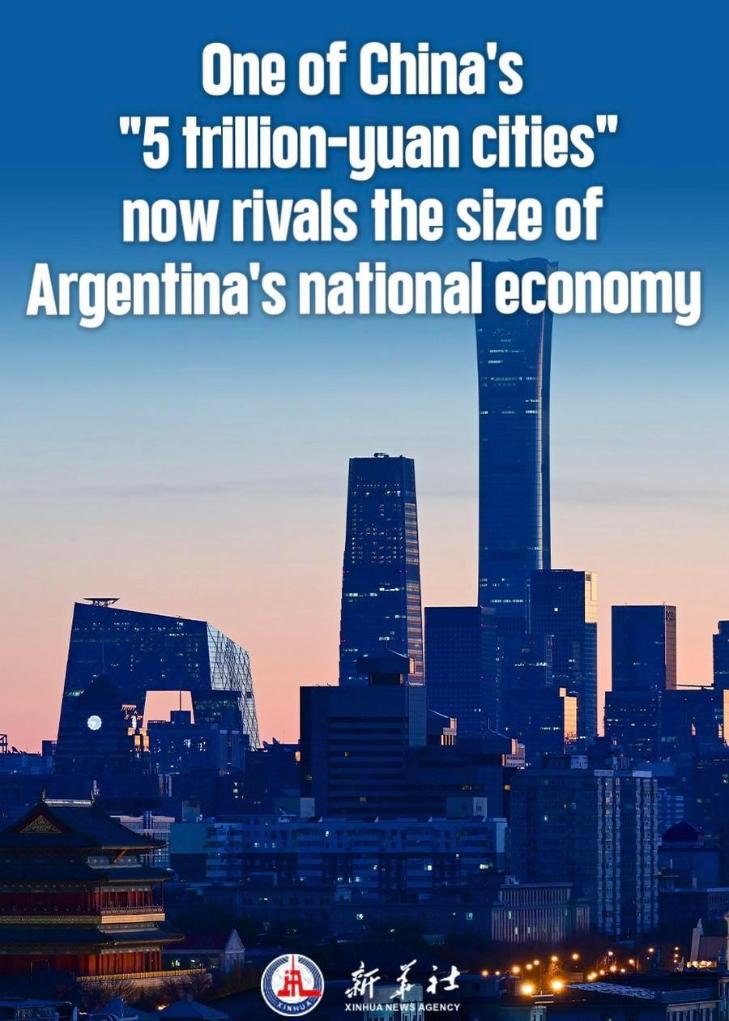
Beijing and Shanghai have each recorded GDP exceeding 5 trillion yuan (about 720 billion dollars), roughly equivalent to the size of Argentina's economy, highlighting the substantial gains from China's urbanization, industrial clustering and high-quality development.
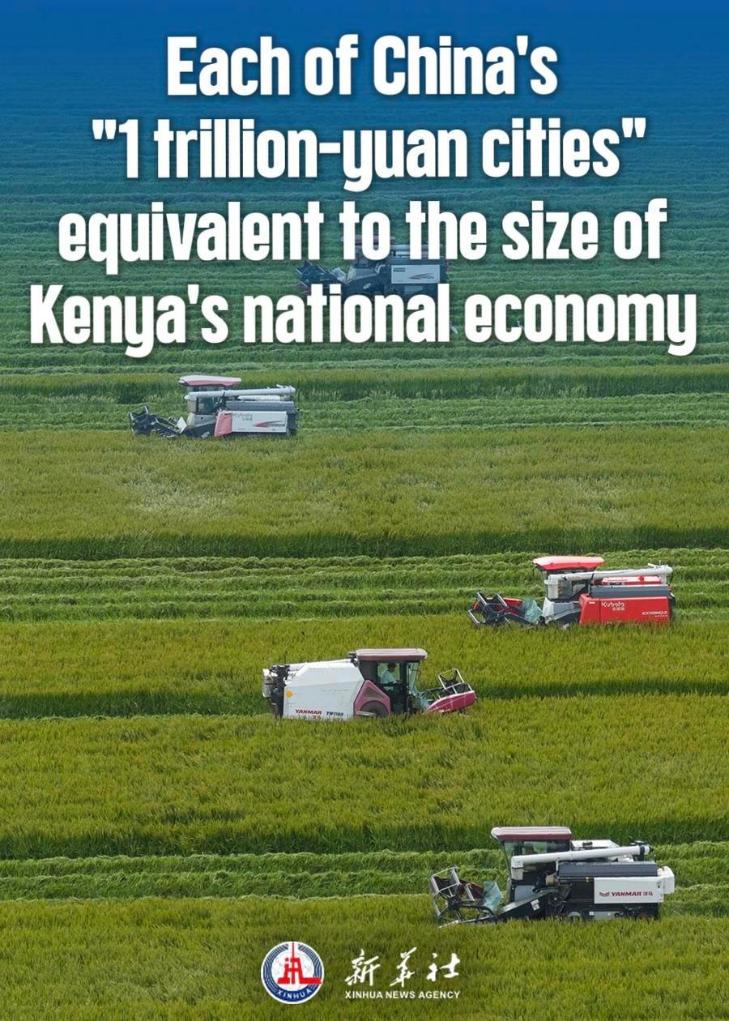
China now has 29 cities with GDP topping 1 trillion yuan (about 144 billion dollars), with each roughly comparable to the size of Kenya's national economy, underscoring the strong momentum and solid foundations of China's urban and regional economies.
Behind comparisons of growth rates and absolute increases, and of national totals as well as provincial and city-level figures, lies the deep support of China's vast market, the solid foundation of its complete industrial system, and the accelerating release of innovation-driven potential.
At a time when the global economy is in need of stability, certainty and new sources of growth, China's economy is advancing on a steady footing while contributing an expanding share to the world economy, providing sustained confidence and momentum for global growth.■