
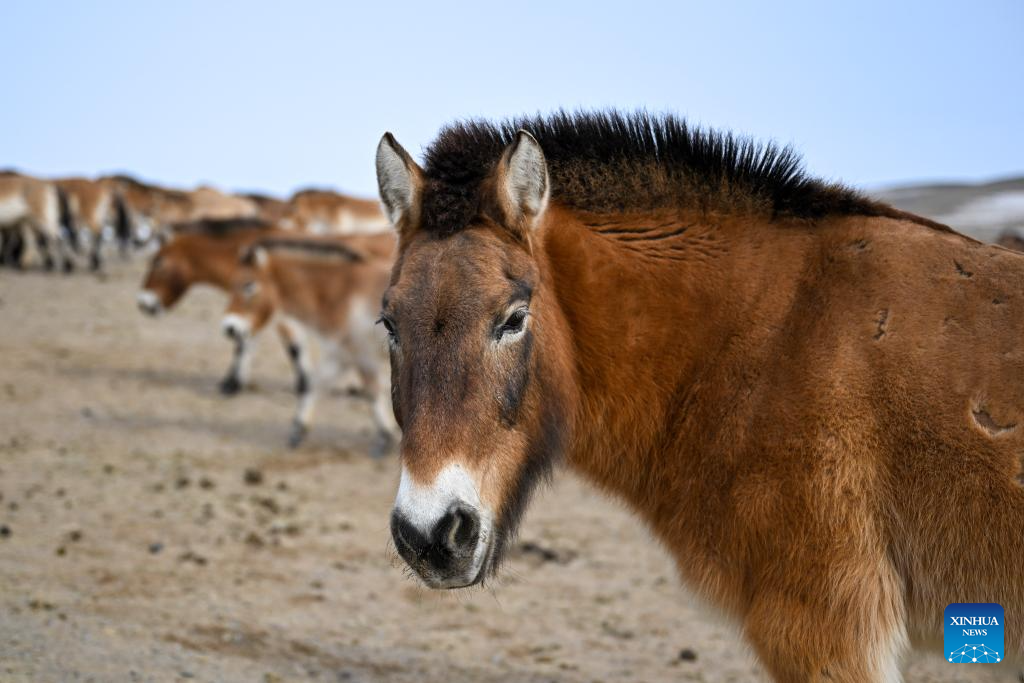
This photo taken on Feb. 4, 2026 shows Przewalski's horses at the Karamaile Mountain Nature Reserve, northwest China's Xinjiang Uygur Autonomous Region. The Przewalski's horse, a globally endangered species under first-class national protection in China, was once extinct in the wild within the country. In 1985, China launched a reintroduction program, bringing the horses back from abroad for breeding. After more than 40 years of scientific protection and breeding, the population of Przewalski's horses in China has surpassed 900, accounting for one-third of the global total.
At the Karamaile Mountain Nature Reserve, conservation workers work year-round as guardians of the Przewalski's horses. As the Spring Festival approaches, they continue conducting regular monitoring of the horses, identifying potential risks in the wild, and ensuring the horses can safely make it through the winter. (Xinhua/Ding Lei)
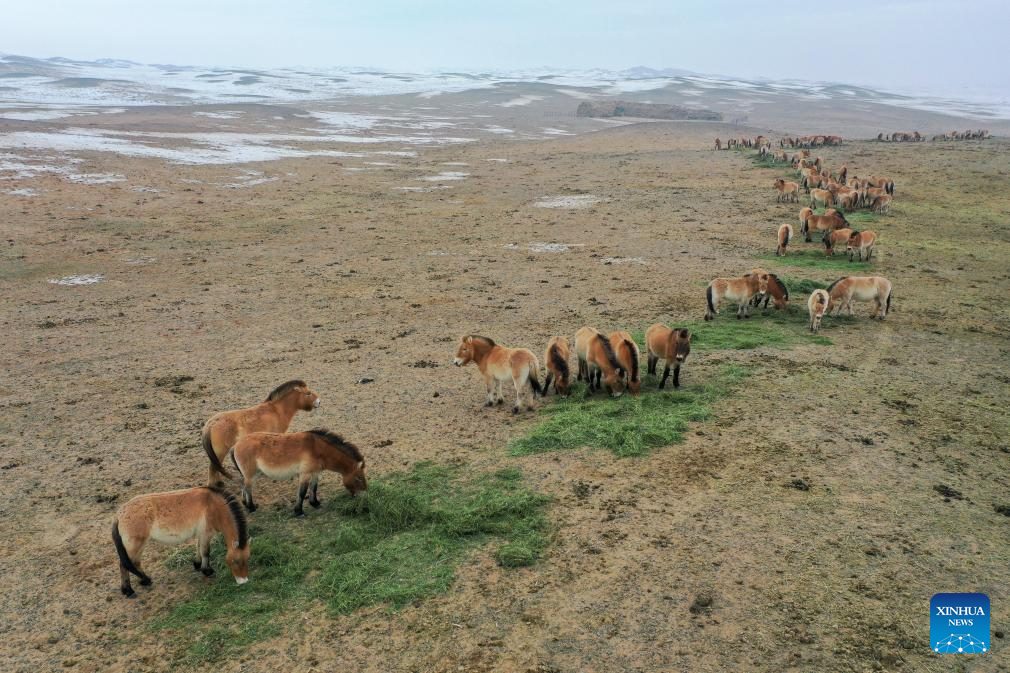
An aerial drone photo taken on Feb. 4, 2026 shows Przewalski's horses at the Karamaile Mountain Nature Reserve, northwest China's Xinjiang Uygur Autonomous Region. The Przewalski's horse, a globally endangered species under first-class national protection in China, was once extinct in the wild within the country. In 1985, China launched a reintroduction program, bringing the horses back from abroad for breeding. After more than 40 years of scientific protection and breeding, the population of Przewalski's horses in China has surpassed 900, accounting for one-third of the global total.
At the Karamaile Mountain Nature Reserve, conservation workers work year-round as guardians of the Przewalski's horses. As the Spring Festival approaches, they continue conducting regular monitoring of the horses, identifying potential risks in the wild, and ensuring the horses can safely make it through the winter. (Xinhua/Ding Lei)
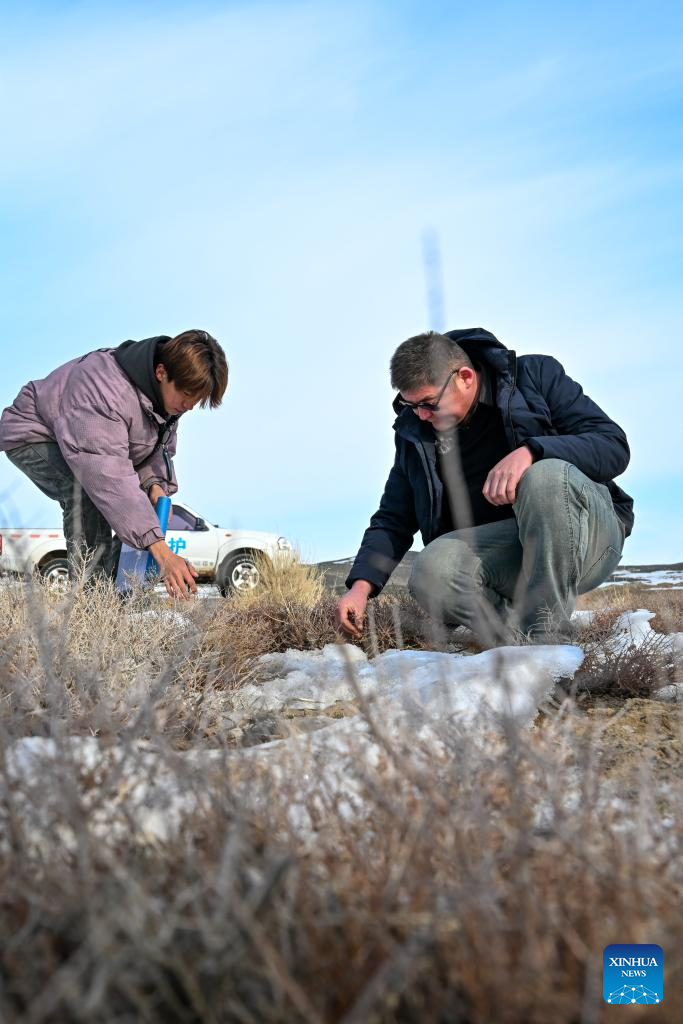
Staff members of a Przewalski's horse monitoring station check the vegetation condition at the Karamaile Mountain Nature Reserve, northwest China's Xinjiang Uygur Autonomous Region, Feb. 4, 2026. The Przewalski's horse, a globally endangered species under first-class national protection in China, was once extinct in the wild within the country. In 1985, China launched a reintroduction program, bringing the horses back from abroad for breeding. After more than 40 years of scientific protection and breeding, the population of Przewalski's horses in China has surpassed 900, accounting for one-third of the global total.
At the Karamaile Mountain Nature Reserve, conservation workers work year-round as guardians of the Przewalski's horses. As the Spring Festival approaches, they continue conducting regular monitoring of the horses, identifying potential risks in the wild, and ensuring the horses can safely make it through the winter. (Xinhua/Ding Lei)
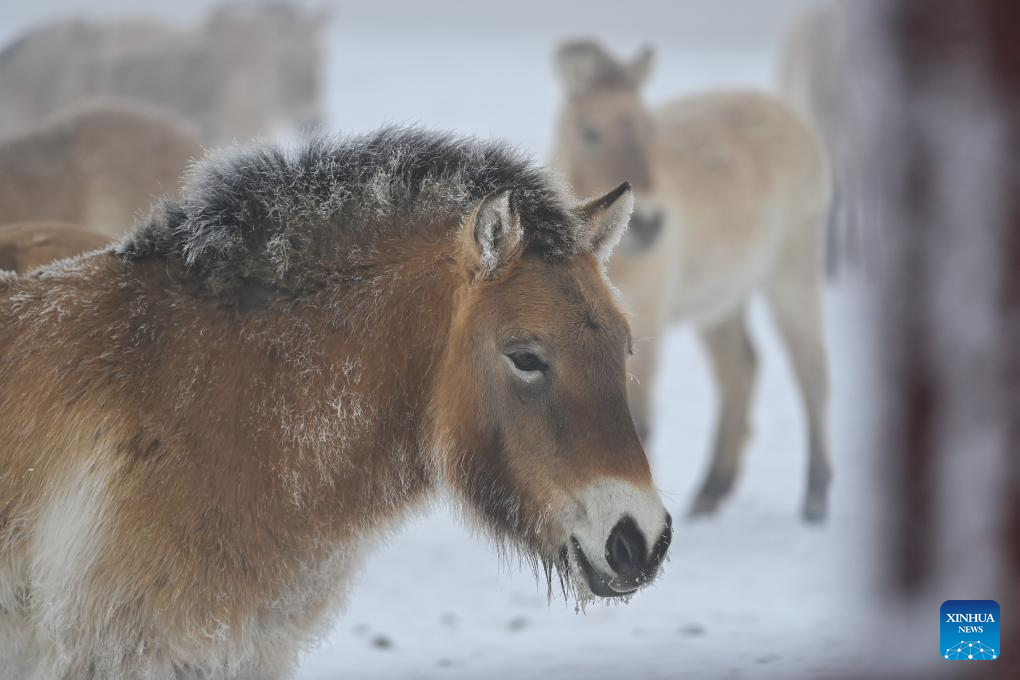
This photo taken on Feb. 6, 2026 shows Przewalski's horses at the Karamaile Mountain Nature Reserve, northwest China's Xinjiang Uygur Autonomous Region. The Przewalski's horse, a globally endangered species under first-class national protection in China, was once extinct in the wild within the country. In 1985, China launched a reintroduction program, bringing the horses back from abroad for breeding. After more than 40 years of scientific protection and breeding, the population of Przewalski's horses in China has surpassed 900, accounting for one-third of the global total.
At the Karamaile Mountain Nature Reserve, conservation workers work year-round as guardians of the Przewalski's horses. As the Spring Festival approaches, they continue conducting regular monitoring of the horses, identifying potential risks in the wild, and ensuring the horses can safely make it through the winter. (Xinhua/Ding Lei)
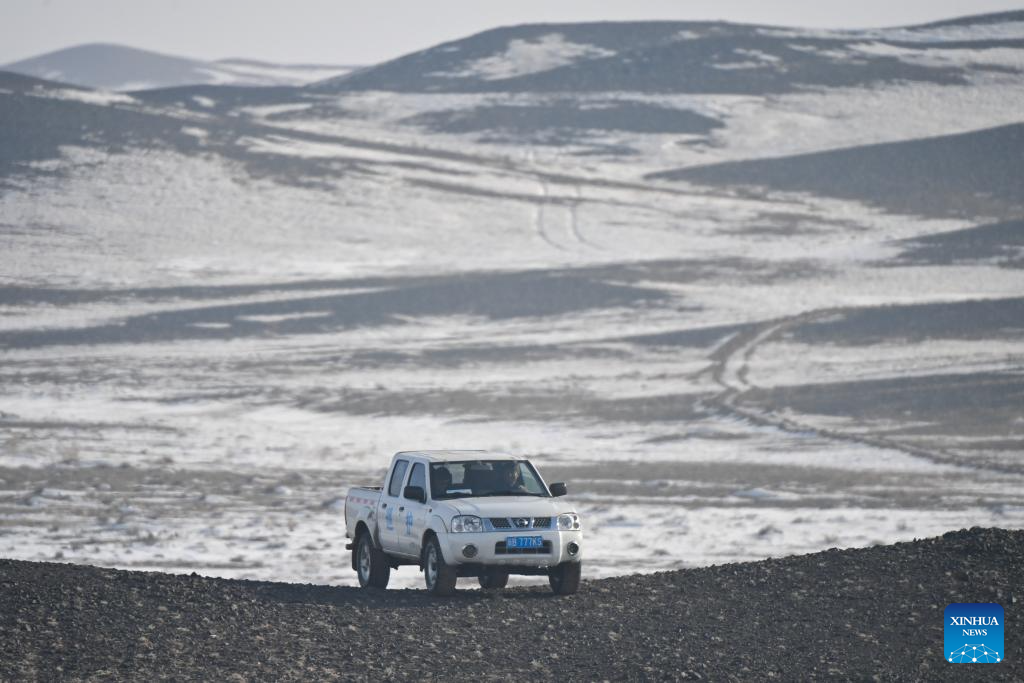
Staff members drive to search for Przewalski's horses at the Karamaile Mountain Nature Reserve, northwest China's Xinjiang Uygur Autonomous Region, Feb. 4, 2026. The Przewalski's horse, a globally endangered species under first-class national protection in China, was once extinct in the wild within the country. In 1985, China launched a reintroduction program, bringing the horses back from abroad for breeding. After more than 40 years of scientific protection and breeding, the population of Przewalski's horses in China has surpassed 900, accounting for one-third of the global total.
At the Karamaile Mountain Nature Reserve, conservation workers work year-round as guardians of the Przewalski's horses. As the Spring Festival approaches, they continue conducting regular monitoring of the horses, identifying potential risks in the wild, and ensuring the horses can safely make it through the winter. (Xinhua/Ding Lei)

A staff member of a Przewalski's horse monitoring station records patrol data at the Karamaile Mountain Nature Reserve, northwest China's Xinjiang Uygur Autonomous Region, Feb. 4, 2026. The Przewalski's horse, a globally endangered species under first-class national protection in China, was once extinct in the wild within the country. In 1985, China launched a reintroduction program, bringing the horses back from abroad for breeding. After more than 40 years of scientific protection and breeding, the population of Przewalski's horses in China has surpassed 900, accounting for one-third of the global total.
At the Karamaile Mountain Nature Reserve, conservation workers work year-round as guardians of the Przewalski's horses. As the Spring Festival approaches, they continue conducting regular monitoring of the horses, identifying potential risks in the wild, and ensuring the horses can safely make it through the winter. (Xinhua/Ding Lei)
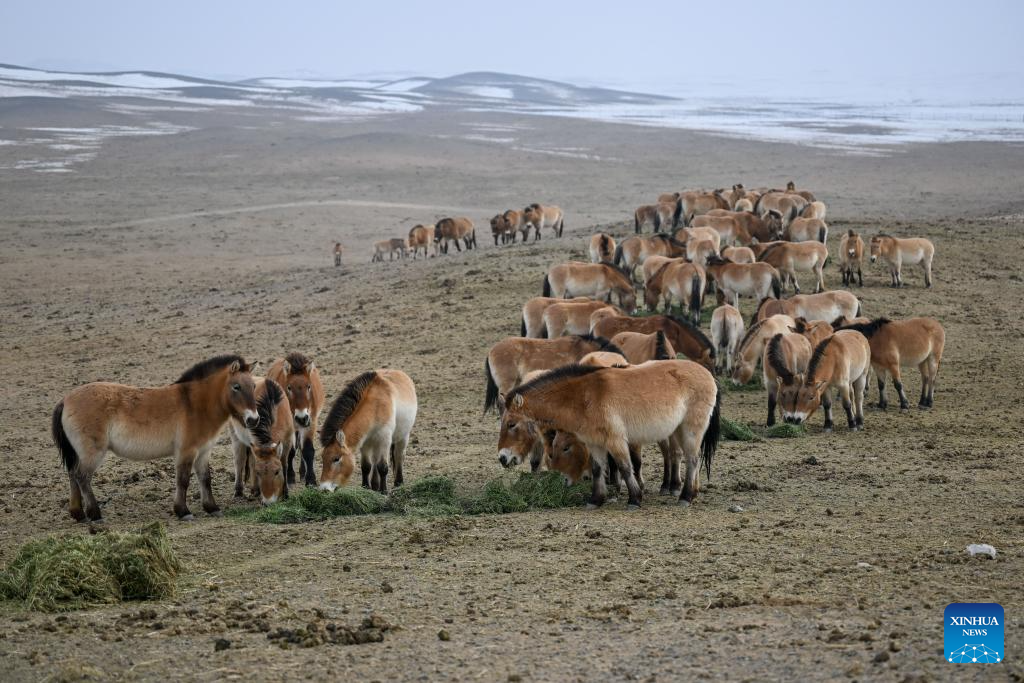
This photo taken on Feb. 4, 2026 shows Przewalski's horses at the Karamaile Mountain Nature Reserve, northwest China's Xinjiang Uygur Autonomous Region. The Przewalski's horse, a globally endangered species under first-class national protection in China, was once extinct in the wild within the country. In 1985, China launched a reintroduction program, bringing the horses back from abroad for breeding. After more than 40 years of scientific protection and breeding, the population of Przewalski's horses in China has surpassed 900, accounting for one-third of the global total.
At the Karamaile Mountain Nature Reserve, conservation workers work year-round as guardians of the Przewalski's horses. As the Spring Festival approaches, they continue conducting regular monitoring of the horses, identifying potential risks in the wild, and ensuring the horses can safely make it through the winter. (Xinhua/Ding Lei)
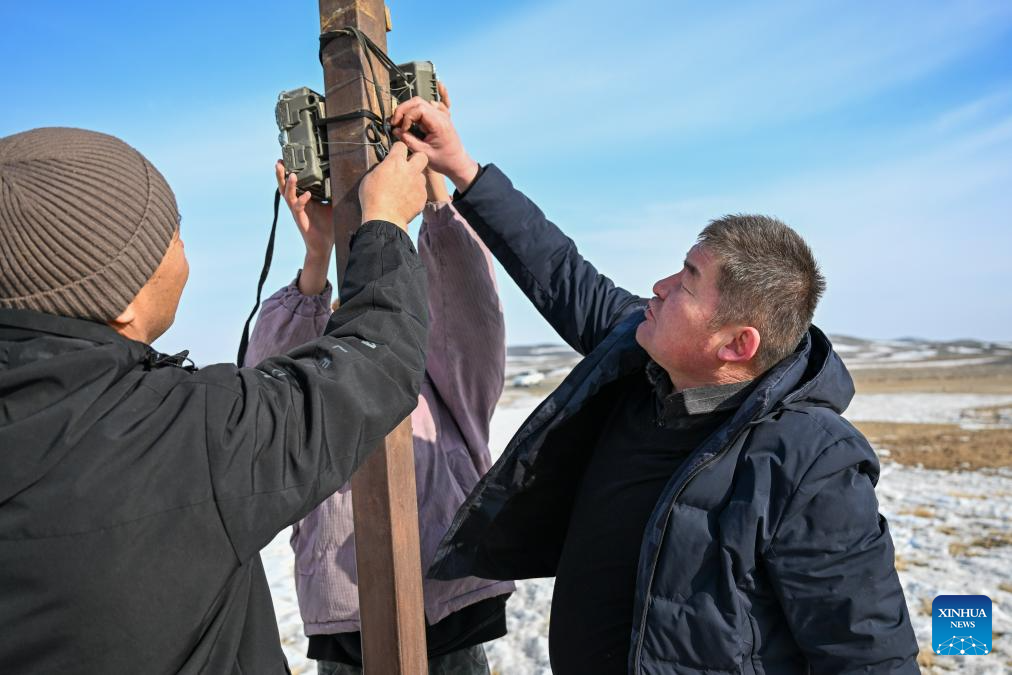
Staff members of a Przewalski's horse monitoring station take infrared cameras at a water source of the Karamaile Mountain Nature Reserve, northwest China's Xinjiang Uygur Autonomous Region, Feb. 4, 2026. The Przewalski's horse, a globally endangered species under first-class national protection in China, was once extinct in the wild within the country. In 1985, China launched a reintroduction program, bringing the horses back from abroad for breeding. After more than 40 years of scientific protection and breeding, the population of Przewalski's horses in China has surpassed 900, accounting for one-third of the global total.
At the Karamaile Mountain Nature Reserve, conservation workers work year-round as guardians of the Przewalski's horses. As the Spring Festival approaches, they continue conducting regular monitoring of the horses, identifying potential risks in the wild, and ensuring the horses can safely make it through the winter. (Xinhua/Ding Lei)

Staff members of a Przewalski's horse monitoring station search for Przewalski's horses at the Karamaile Mountain Nature Reserve, northwest China's Xinjiang Uygur Autonomous Region, Feb. 4, 2026. The Przewalski's horse, a globally endangered species under first-class national protection in China, was once extinct in the wild within the country. In 1985, China launched a reintroduction program, bringing the horses back from abroad for breeding. After more than 40 years of scientific protection and breeding, the population of Przewalski's horses in China has surpassed 900, accounting for one-third of the global total.
At the Karamaile Mountain Nature Reserve, conservation workers work year-round as guardians of the Przewalski's horses. As the Spring Festival approaches, they continue conducting regular monitoring of the horses, identifying potential risks in the wild, and ensuring the horses can safely make it through the winter. (Xinhua/Ding Lei)
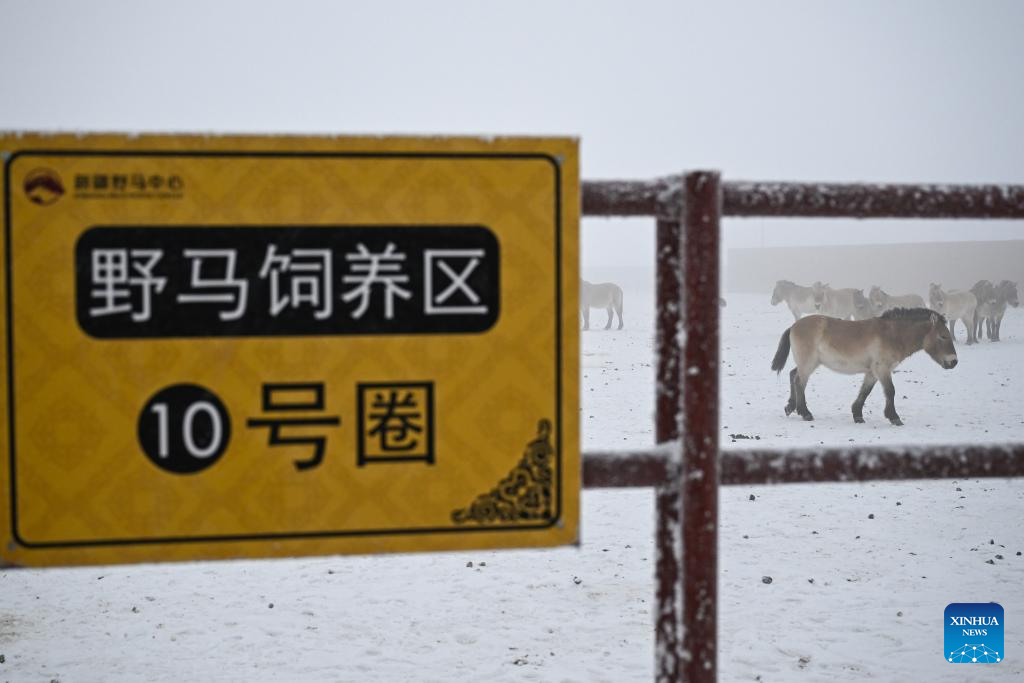
This photo taken on Feb. 6, 2026 shows Przewalski's horses at the Karamaile Mountain Nature Reserve, northwest China's Xinjiang Uygur Autonomous Region. The Przewalski's horse, a globally endangered species under first-class national protection in China, was once extinct in the wild within the country. In 1985, China launched a reintroduction program, bringing the horses back from abroad for breeding. After more than 40 years of scientific protection and breeding, the population of Przewalski's horses in China has surpassed 900, accounting for one-third of the global total.
At the Karamaile Mountain Nature Reserve, conservation workers work year-round as guardians of the Przewalski's horses. As the Spring Festival approaches, they continue conducting regular monitoring of the horses, identifying potential risks in the wild, and ensuring the horses can safely make it through the winter. (Xinhua/Ding Lei)
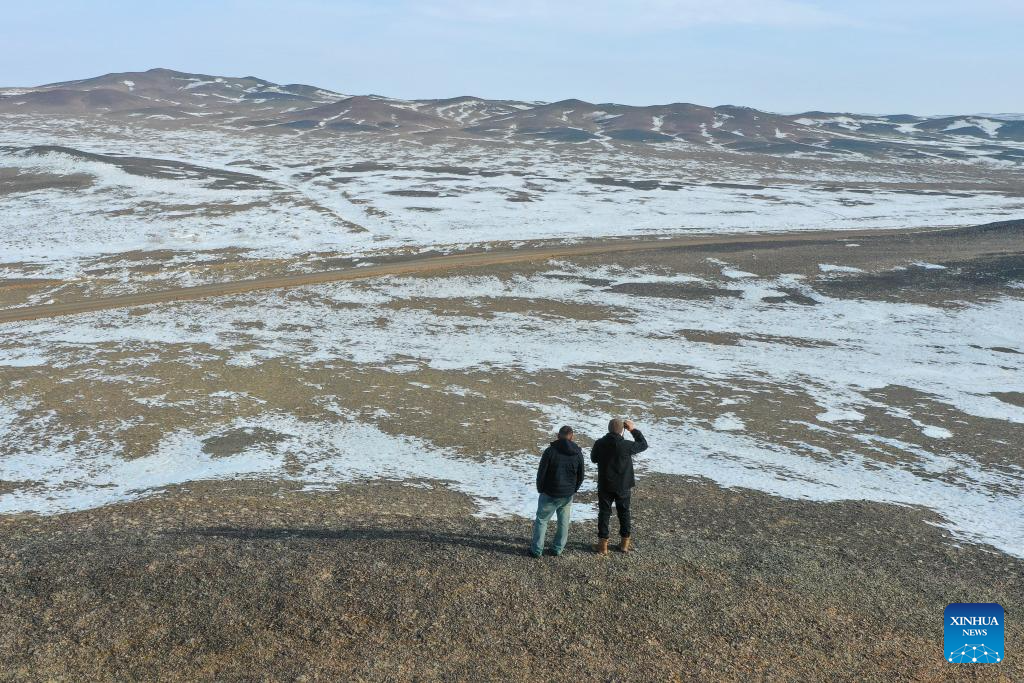
A drone photo taken on Feb. 4, 2026 shows staff members of a Przewalski's horse monitoring station searching for Przewalski's horses at the Karamaile Mountain Nature Reserve, northwest China's Xinjiang Uygur Autonomous Region. The Przewalski's horse, a globally endangered species under first-class national protection in China, was once extinct in the wild within the country. In 1985, China launched a reintroduction program, bringing the horses back from abroad for breeding. After more than 40 years of scientific protection and breeding, the population of Przewalski's horses in China has surpassed 900, accounting for one-third of the global total.
At the Karamaile Mountain Nature Reserve, conservation workers work year-round as guardians of the Przewalski's horses. As the Spring Festival approaches, they continue conducting regular monitoring of the horses, identifying potential risks in the wild, and ensuring the horses can safely make it through the winter. (Xinhua/Ding Lei)
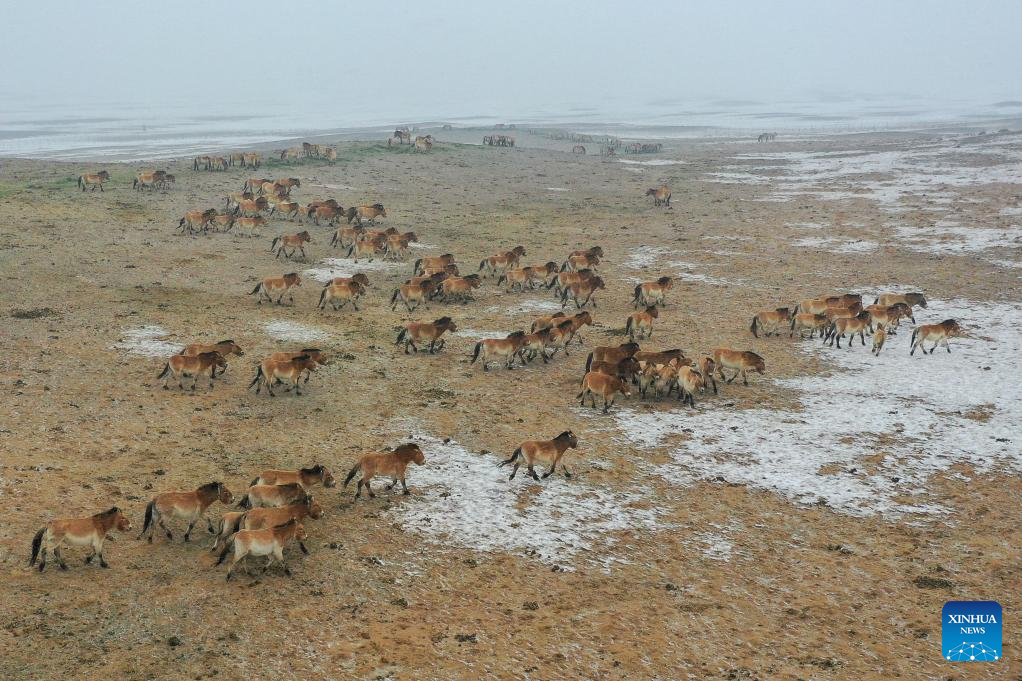
An aerial drone photo taken on Feb. 4, 2026 shows Przewalski's horses at the Karamaile Mountain Nature Reserve, northwest China's Xinjiang Uygur Autonomous Region. The Przewalski's horse, a globally endangered species under first-class national protection in China, was once extinct in the wild within the country. In 1985, China launched a reintroduction program, bringing the horses back from abroad for breeding. After more than 40 years of scientific protection and breeding, the population of Przewalski's horses in China has surpassed 900, accounting for one-third of the global total.
At the Karamaile Mountain Nature Reserve, conservation workers work year-round as guardians of the Przewalski's horses. As the Spring Festival approaches, they continue conducting regular monitoring of the horses, identifying potential risks in the wild, and ensuring the horses can safely make it through the winter. (Xinhua/Ding Lei)
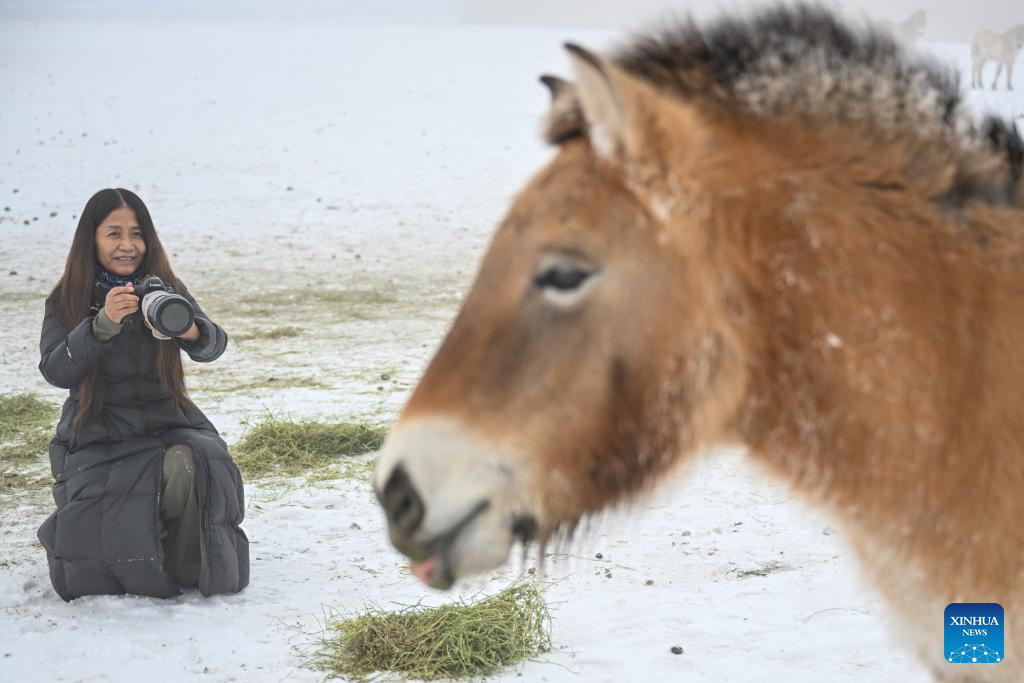
A researcher takes photos of a Przewalski's horse at the Karamaile Mountain Nature Reserve, northwest China's Xinjiang Uygur Autonomous Region, Feb. 6, 2026. The Przewalski's horse, a globally endangered species under first-class national protection in China, was once extinct in the wild within the country. In 1985, China launched a reintroduction program, bringing the horses back from abroad for breeding. After more than 40 years of scientific protection and breeding, the population of Przewalski's horses in China has surpassed 900, accounting for one-third of the global total.
At the Karamaile Mountain Nature Reserve, conservation workers work year-round as guardians of the Przewalski's horses. As the Spring Festival approaches, they continue conducting regular monitoring of the horses, identifying potential risks in the wild, and ensuring the horses can safely make it through the winter. (Xinhua/Ding Lei)
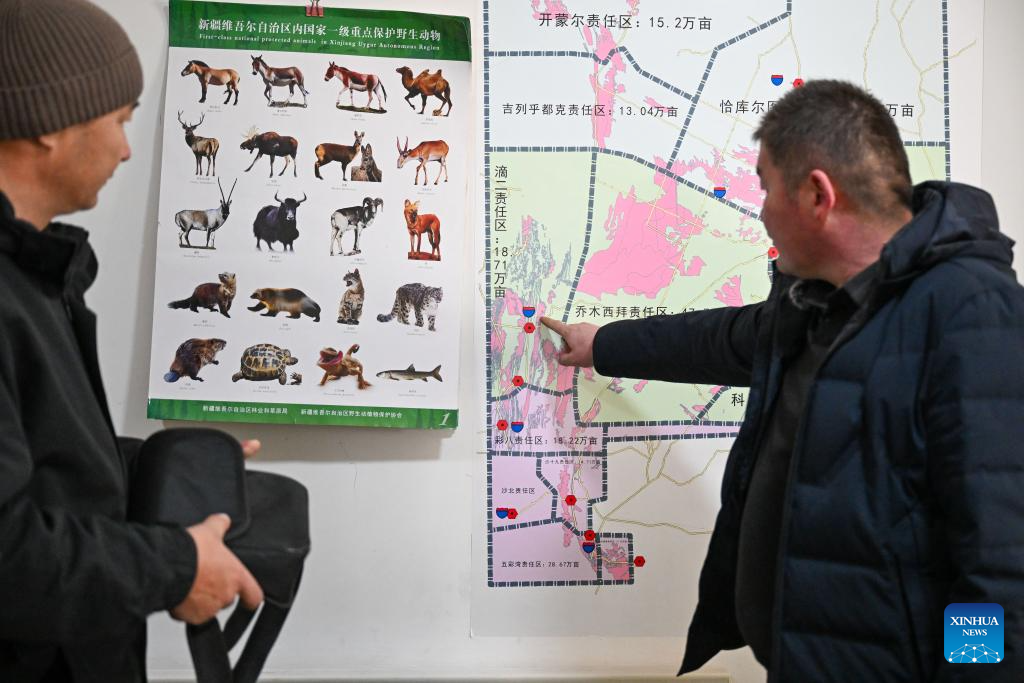
Staff members of a Przewalski's horse monitoring station plan the patrol route at the Karamaile Mountain Nature Reserve, northwest China's Xinjiang Uygur Autonomous Region, Feb. 4, 2026. The Przewalski's horse, a globally endangered species under first-class national protection in China, was once extinct in the wild within the country. In 1985, China launched a reintroduction program, bringing the horses back from abroad for breeding. After more than 40 years of scientific protection and breeding, the population of Przewalski's horses in China has surpassed 900, accounting for one-third of the global total.
At the Karamaile Mountain Nature Reserve, conservation workers work year-round as guardians of the Przewalski's horses. As the Spring Festival approaches, they continue conducting regular monitoring of the horses, identifying potential risks in the wild, and ensuring the horses can safely make it through the winter. (Xinhua/Ding Lei)
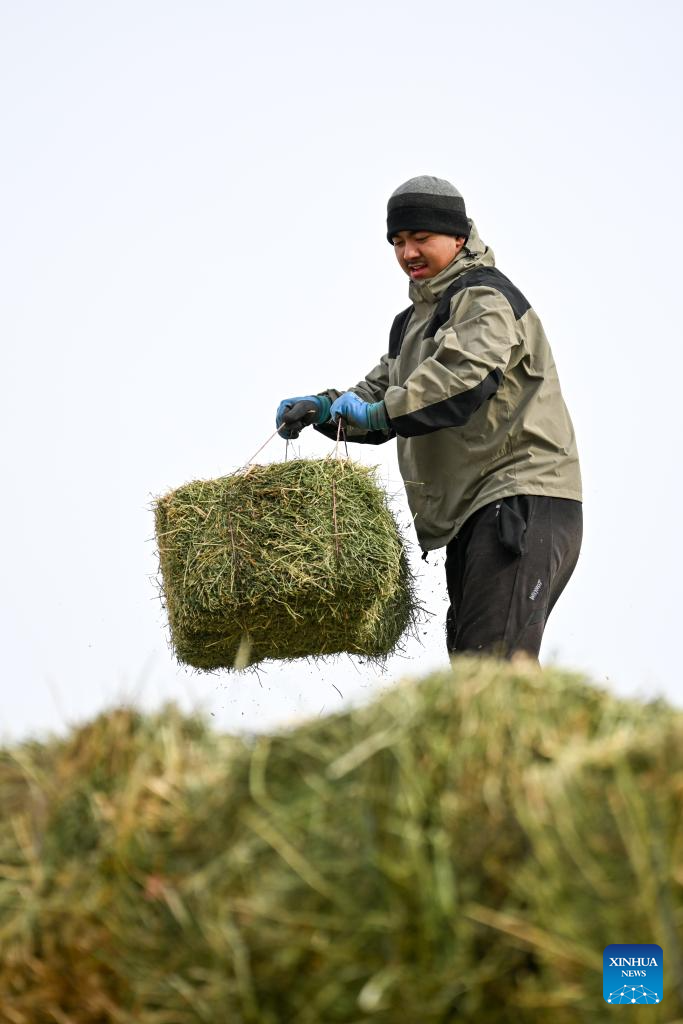
A staff member of a Przewalski's horse monitoring station transports fodder at the Karamaile Mountain Nature Reserve, northwest China's Xinjiang Uygur Autonomous Region, Feb. 4, 2026. The Przewalski's horse, a globally endangered species under first-class national protection in China, was once extinct in the wild within the country. In 1985, China launched a reintroduction program, bringing the horses back from abroad for breeding. After more than 40 years of scientific protection and breeding, the population of Przewalski's horses in China has surpassed 900, accounting for one-third of the global total.
At the Karamaile Mountain Nature Reserve, conservation workers work year-round as guardians of the Przewalski's horses. As the Spring Festival approaches, they continue conducting regular monitoring of the horses, identifying potential risks in the wild, and ensuring the horses can safely make it through the winter. (Xinhua/Ding Lei)
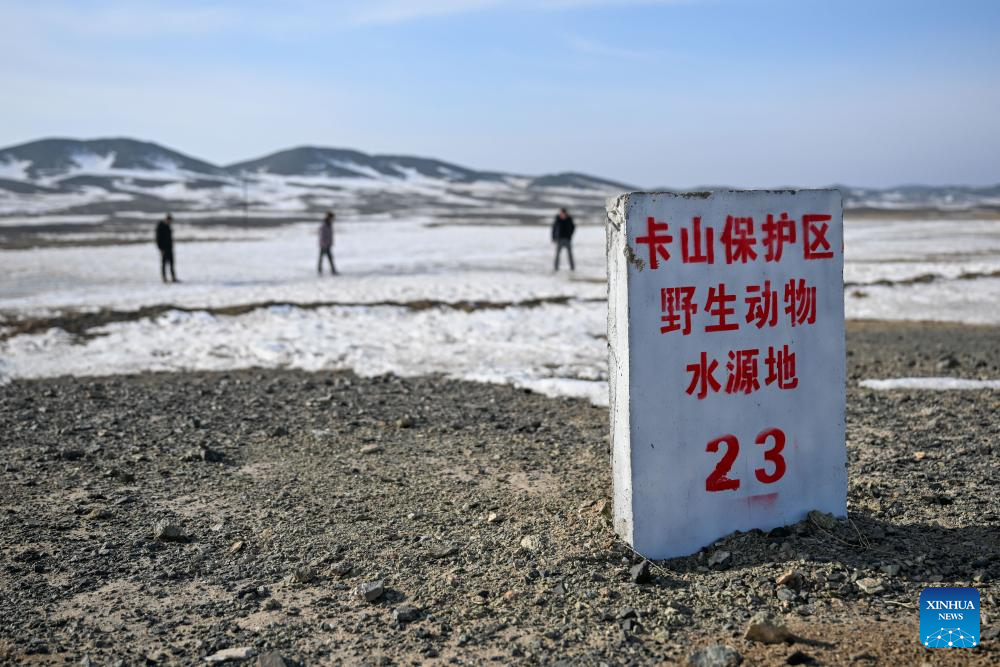
Staff members check the icing condition at a water source of the Karamaile Mountain Nature Reserve, northwest China's Xinjiang Uygur Autonomous Region, Feb. 4, 2026. The Przewalski's horse, a globally endangered species under first-class national protection in China, was once extinct in the wild within the country. In 1985, China launched a reintroduction program, bringing the horses back from abroad for breeding. After more than 40 years of scientific protection and breeding, the population of Przewalski's horses in China has surpassed 900, accounting for one-third of the global total.
At the Karamaile Mountain Nature Reserve, conservation workers work year-round as guardians of the Przewalski's horses. As the Spring Festival approaches, they continue conducting regular monitoring of the horses, identifying potential risks in the wild, and ensuring the horses can safely make it through the winter. (Xinhua/Ding Lei)
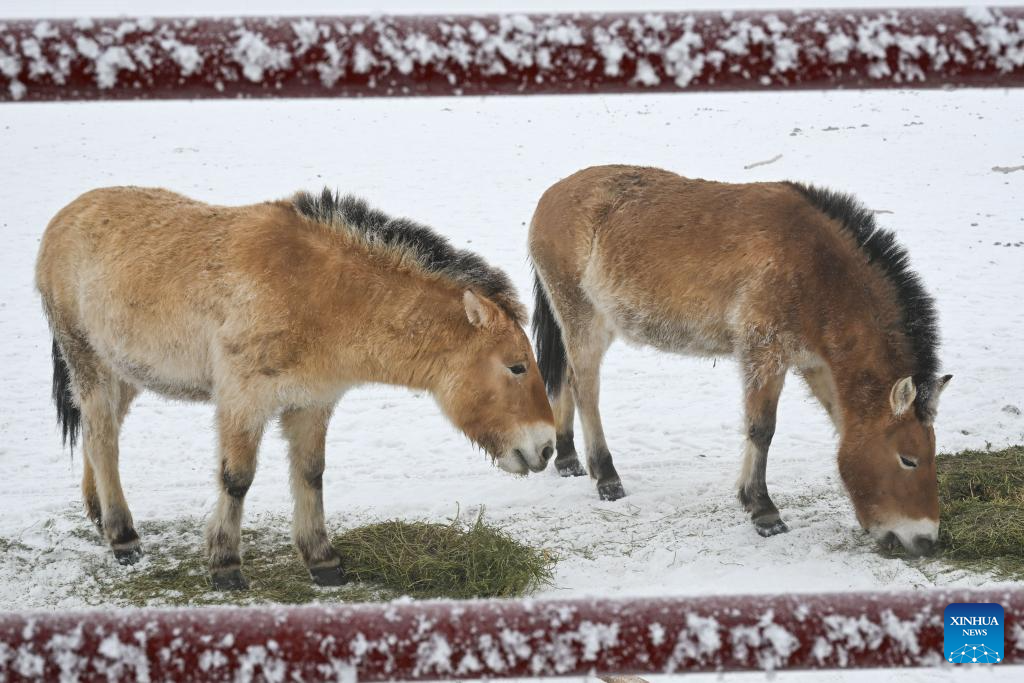
This photo taken on Feb. 6, 2026 shows Przewalski's horses at the Karamaile Mountain Nature Reserve, northwest China's Xinjiang Uygur Autonomous Region. The Przewalski's horse, a globally endangered species under first-class national protection in China, was once extinct in the wild within the country. In 1985, China launched a reintroduction program, bringing the horses back from abroad for breeding. After more than 40 years of scientific protection and breeding, the population of Przewalski's horses in China has surpassed 900, accounting for one-third of the global total.
At the Karamaile Mountain Nature Reserve, conservation workers work year-round as guardians of the Przewalski's horses. As the Spring Festival approaches, they continue conducting regular monitoring of the horses, identifying potential risks in the wild, and ensuring the horses can safely make it through the winter. (Xinhua/Ding Lei)
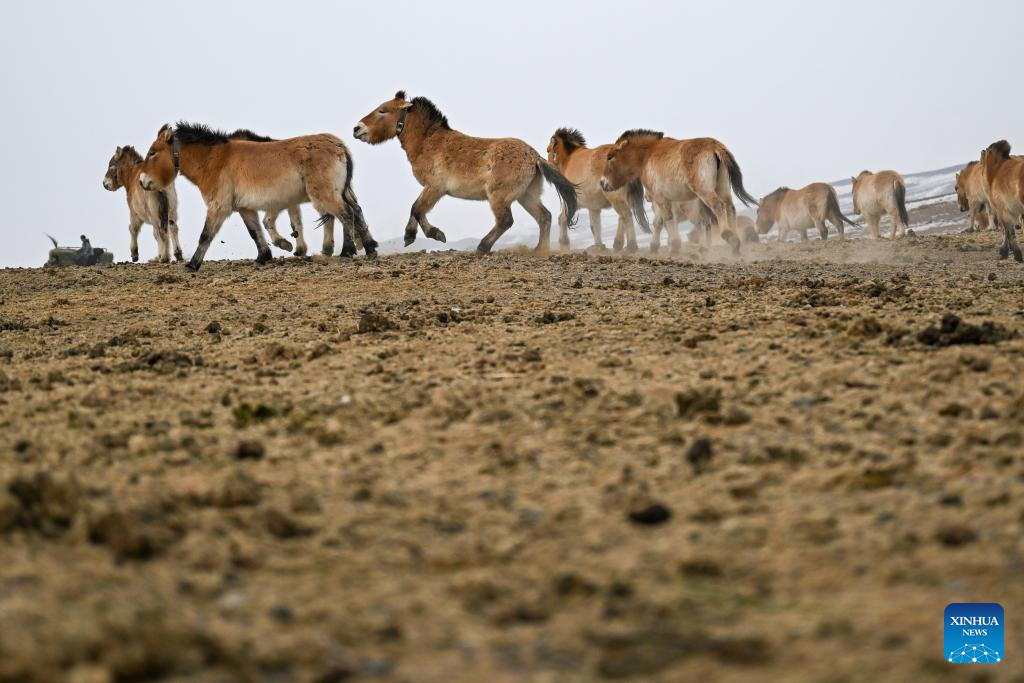
This photo taken on Feb. 4, 2026 shows Przewalski's horses at the Karamaile Mountain Nature Reserve, northwest China's Xinjiang Uygur Autonomous Region. The Przewalski's horse, a globally endangered species under first-class national protection in China, was once extinct in the wild within the country. In 1985, China launched a reintroduction program, bringing the horses back from abroad for breeding. After more than 40 years of scientific protection and breeding, the population of Przewalski's horses in China has surpassed 900, accounting for one-third of the global total.
At the Karamaile Mountain Nature Reserve, conservation workers work year-round as guardians of the Przewalski's horses. As the Spring Festival approaches, they continue conducting regular monitoring of the horses, identifying potential risks in the wild, and ensuring the horses can safely make it through the winter. (Xinhua/Ding Lei)
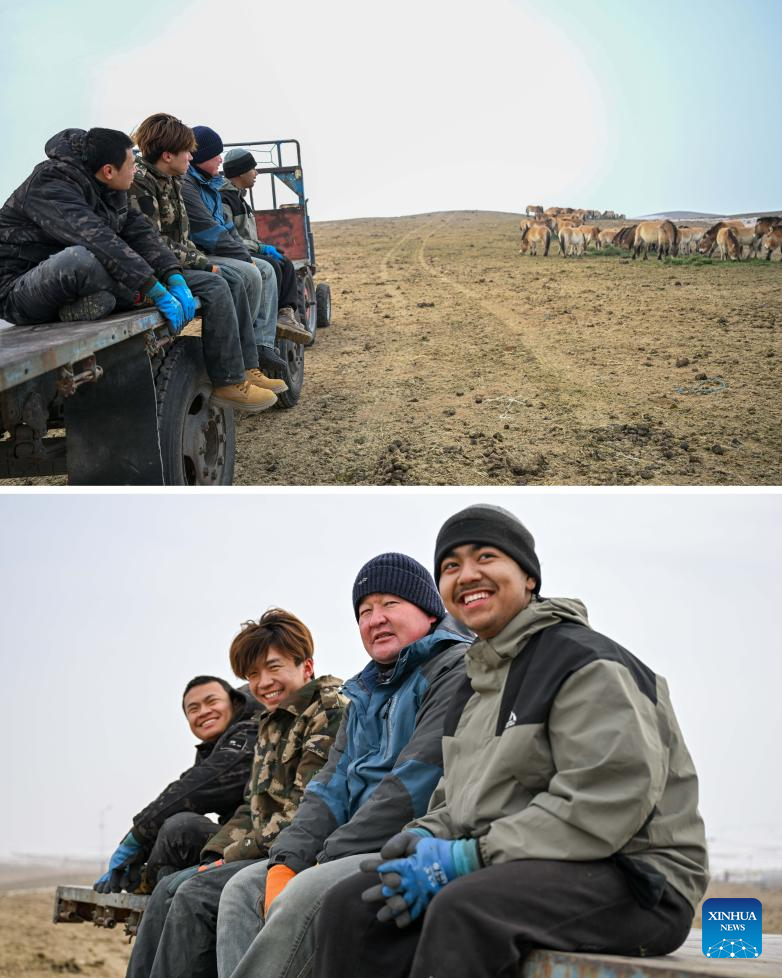
This combo photo taken on Feb. 4, 2026 shows staff members of a Przewalski's horse monitoring station observing the horses' feeding behavior (above), and they taking a rest on a tractor (below) at the Karamaile Mountain Nature Reserve, northwest China's Xinjiang Uygur Autonomous Region. The Przewalski's horse, a globally endangered species under first-class national protection in China, was once extinct in the wild within the country. In 1985, China launched a reintroduction program, bringing the horses back from abroad for breeding. After more than 40 years of scientific protection and breeding, the population of Przewalski's horses in China has surpassed 900, accounting for one-third of the global total.
At the Karamaile Mountain Nature Reserve, conservation workers work year-round as guardians of the Przewalski's horses. As the Spring Festival approaches, they continue conducting regular monitoring of the horses, identifying potential risks in the wild, and ensuring the horses can safely make it through the winter. (Xinhua/Ding Lei)

Staff members of a Przewalski's horse monitoring station work at the operations center of the Karamaile Mountain Nature Reserve, northwest China's Xinjiang Uygur Autonomous Region, Feb. 4, 2026. The Przewalski's horse, a globally endangered species under first-class national protection in China, was once extinct in the wild within the country. In 1985, China launched a reintroduction program, bringing the horses back from abroad for breeding. After more than 40 years of scientific protection and breeding, the population of Przewalski's horses in China has surpassed 900, accounting for one-third of the global total.
At the Karamaile Mountain Nature Reserve, conservation workers work year-round as guardians of the Przewalski's horses. As the Spring Festival approaches, they continue conducting regular monitoring of the horses, identifying potential risks in the wild, and ensuring the horses can safely make it through the winter. (Xinhua/Ding Lei)

Researchers check the monitoring data at the operations center of the Karamaile Mountain Nature Reserve, northwest China's Xinjiang Uygur Autonomous Region, Feb. 5, 2026. The Przewalski's horse, a globally endangered species under first-class national protection in China, was once extinct in the wild within the country. In 1985, China launched a reintroduction program, bringing the horses back from abroad for breeding. After more than 40 years of scientific protection and breeding, the population of Przewalski's horses in China has surpassed 900, accounting for one-third of the global total.
At the Karamaile Mountain Nature Reserve, conservation workers work year-round as guardians of the Przewalski's horses. As the Spring Festival approaches, they continue conducting regular monitoring of the horses, identifying potential risks in the wild, and ensuring the horses can safely make it through the winter. (Xinhua/Ding Lei)


