
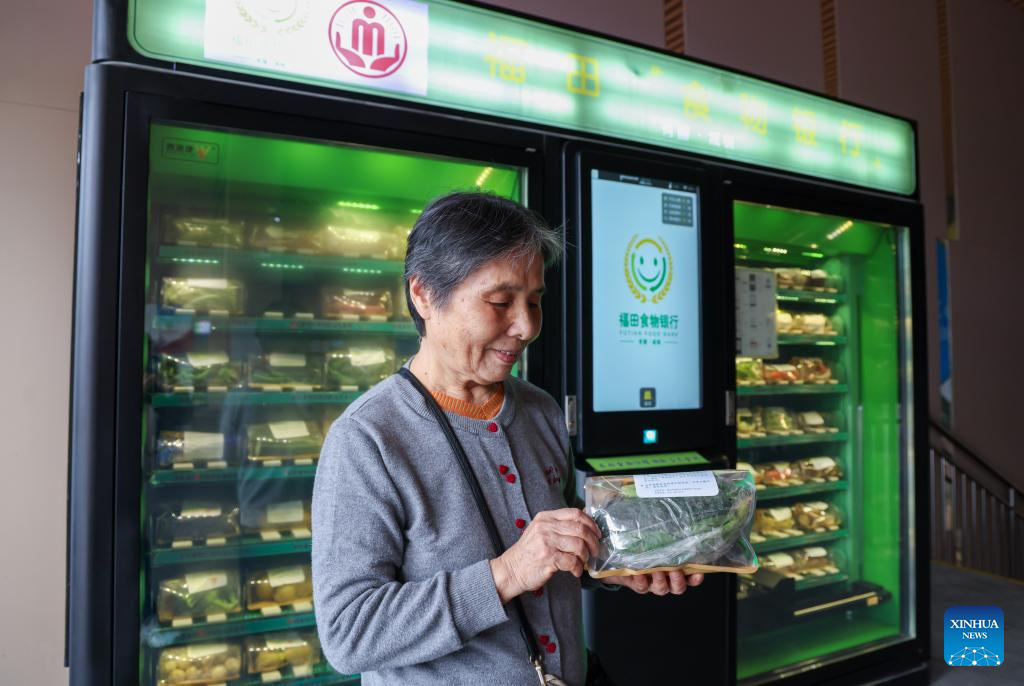
74-year-old Liu Yunnan collects a package of vegetables at a food bank terminal in Yitian Village of Futian District in Shenzhen, south China's Guangdong Province, Dec. 19, 2025. (Xinhua/Liang Xu)
SHENZHEN, Feb. 5 (Xinhua) -- When evening falls in a residential block in Futian District of the city of Shenzhen, south China's Guangdong Province, a phone tends to prove very useful if you are hungry.
A green metal cabinet on a sidewalk can be seen glowing in the fading dusk light. Via a scan of a QR code, its doors slide open and reveal neatly packed food such as vegetables, fruit and bread -- free for the taking. No cashier, no counter and no conversation is required in this process.
This locker is not a convenience store, nor is it a soup kitchen. Instead, it is one of Shenzhen's food bank terminals, part of an expanding welfare effort which redirects surplus but safe-to-eat food to people who need it, while also reducing waste in one of China's most affluent cities.
Since its launch in May 2022, this program has installed 22 smart lockers across all of Futian's subdistricts, with these lockers operating around the clock. According to local figures, more than 400 meals are distributed each day in this manner, with roughly half a million people having benefited over the past three years.
The system is based on a simple but deliberate structure. Access during the day is reserved for those deemed most vulnerable: low-income families, people with disabilities, elderly residents, disadvantaged children and sanitation workers. Once verified by neighborhood authorities, eligible users can reserve one free meal per day and collect it within a three-hour window. After 8 p.m., any unclaimed food becomes available to the general public.
Behind these cabinet doors is a rigorously managed supply chain. Most donations come from nearby supermarkets that have passed safety and quality assessments. Only low-risk items such as vegetables, fruit and bread are accepted. Perishable foods and common allergens, including meat and soy products, are excluded.
"We donate around 20 to 50 portions a day," said Wang Weimin, manager at a Freshippo store, one of the program's major contributors. Most items, he said, are unsold groceries that have been properly stored overnight, inspected the next morning and then handed to volunteers for redistribution.
Before reaching the lockers, the food is sorted again, checked for safety and repackaged under hygienic conditions. Temperatures in the lockers are kept below 10 degrees Celsius, preserving freshness throughout the day. Every step is recorded and subject to regular oversight.
To date, 87 companies have joined the network, including domestic retailers such as Freshippo, Yonghui Superstores and fresh vegetable e-commerce platform Dingdong, as well as imported-goods supermarkets like Olé.
Not all contributions come from corporate shelves. On some mornings, volunteers also receive boxes of steamed buns made by Liu Dailu, a 69-year-old military veteran who once served as a logistics officer in the army.
"At first, I just wanted to recreate a flavor many comrades still talk about," Liu said. The buns, prepared to military standards of size and texture, were initially offered only to fellow veterans. Through the food bank, they now reach a wider circle of recipients.
For Liu, the act of cooking has become something more than a donation. It is a way of threading personal memory into the city's welfare system, one bun at a time.
For others, the lockers provide immediate relief. A man surnamed Hu, who is currently unemployed, said he learned about the program through a short video online. Being able to count on one free meal a day, he said, has helped him get through a difficult period.
"The entire process is online and contactless," said Sun Yue, the program's operations manager. "It protects privacy and reduces the psychological burden that often comes with traditional forms of assistance. Getting help feels simple and natural."
The emphasis on discretion is not new in Futian. In the same year the food bank was launched, the district also introduced the "Futian M Meal" program, with the letter "M" drawn from the Chinese pinyin initials for mei (tasty) and mian (free), offering meals that are both appealing and free of charge to unemployed graduates, newly arrived job seekers and others facing temporary hardship.
The lockers carry a short message printed on their doors: "Every pickup is a small act combating food waste."
The idea of food banks is not new. The world's first food bank was founded in 1967 in Arizona in the United States, with the creation of St. Mary's Food Bank, which began by collecting surplus food and redistributing it to those in need. Since then, the model has spread widely, taking root across the United States, Europe and Japan.
In China, this concept arrived later. The country's first food bank opened in Shanghai's Pudong District at the end of 2014 under the name Green Food Bank.
For some residents, the message on these lockers has become part of daily life. Liu Li, who lives in Futian, sometimes brings his 11-year-old daughter to collect food. "For her, the pickup itself has become a lesson," he said. "About cherishing food and living in a low-carbon way."
According to district estimates, meals redistributed through this program over the past three years have saved about 195 tonnes of food and reduced carbon emissions by approximately 390 tonnes.
This local experiment aligns with broader national policy. Central government directives have called for long-term mechanisms to curb food waste and improve resource efficiency across the entire food supply chain. That emphasis was reiterated this week, when China unveiled its "No. 1 central document" for 2026, which called for intensified efforts to promote food conservation and stronger action against food waste.
Scholars say Futian's approach offers a model for densely populated cities seeking more refined forms of social governance.
"The food bank responds to a global challenge in an innovative way," said Xie Hai, executive director of the Department of Industrial Economy of China Development Institute. "More importantly, it helps cultivate a culture of thrift, environmental awareness and mutual support."
Yi Songguo, a sociology professor at Shenzhen University, said the program makes abstract goals concrete. "It makes food conservation tangible and worthwhile, and turns mutual help into something people can step into with ease," he noted.
Similar initiatives have begun appearing elsewhere in China, including in cities such as Chengdu in southwest China and Wuxi and Hangzhou, both located in east China. In January, meanwhile, authorities in the northwestern Ningxia Hui Autonomous Region announced plans to pilot localized versions of the model.
For Wang Fuxiang, head of Futian's civil affairs bureau, the lockers represent more than redistribution. They show how public welfare resources can be allocated in layers, he said, while allowing a culture of public good to spread naturally.
By reducing waste at its source and extending help where it is most needed, he added, the program aims to do two things at once: subtract what is squandered and add warmth where it matters. ■
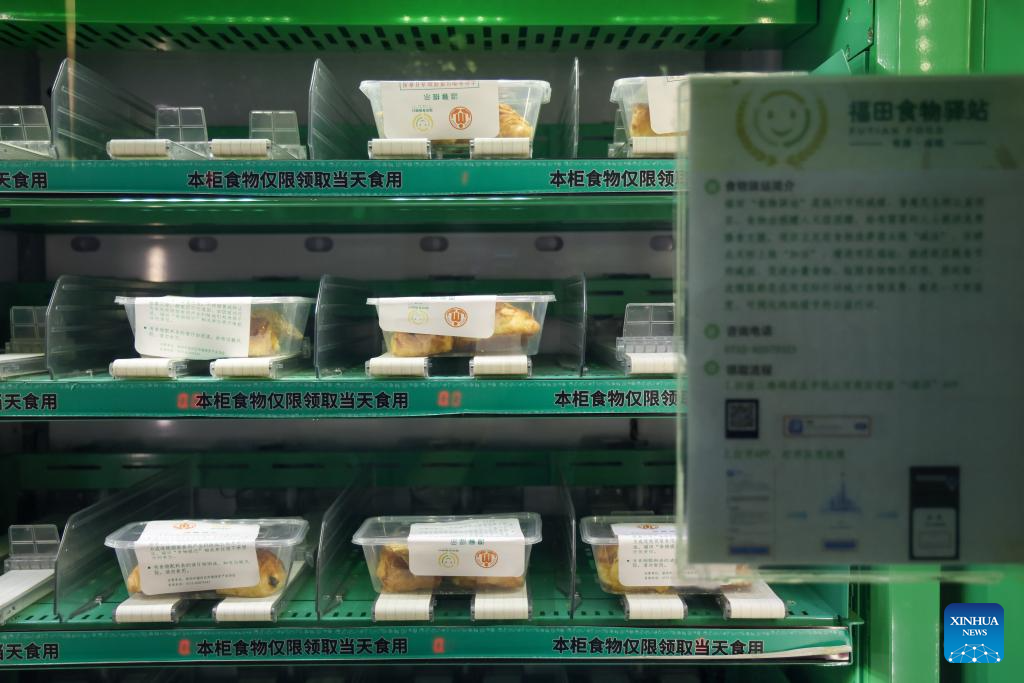
This photo taken on Dec. 20, 2025 shows a food bank terminal at Huanggang Village of Futian District in Shenzhen, south China's Guangdong Province. (Xinhua/Liang Xu)
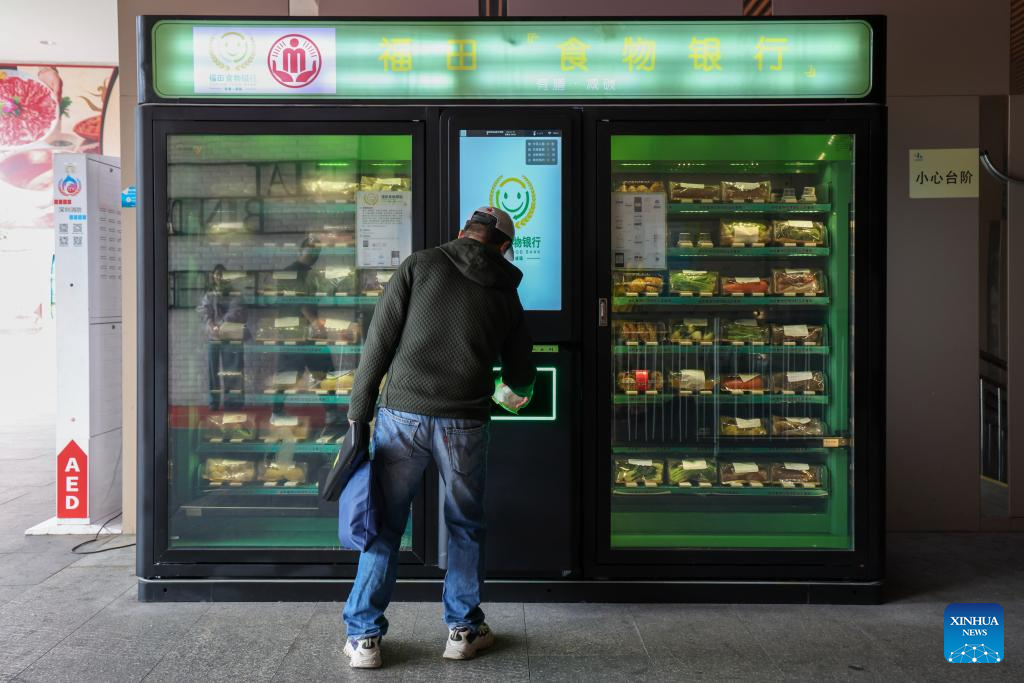
A resident collects food in front of a food bank terminal at Yitian Village of Futian District in Shenzhen, south China's Guangdong Province, Dec. 19, 2025. (Xinhua/Liang Xu)
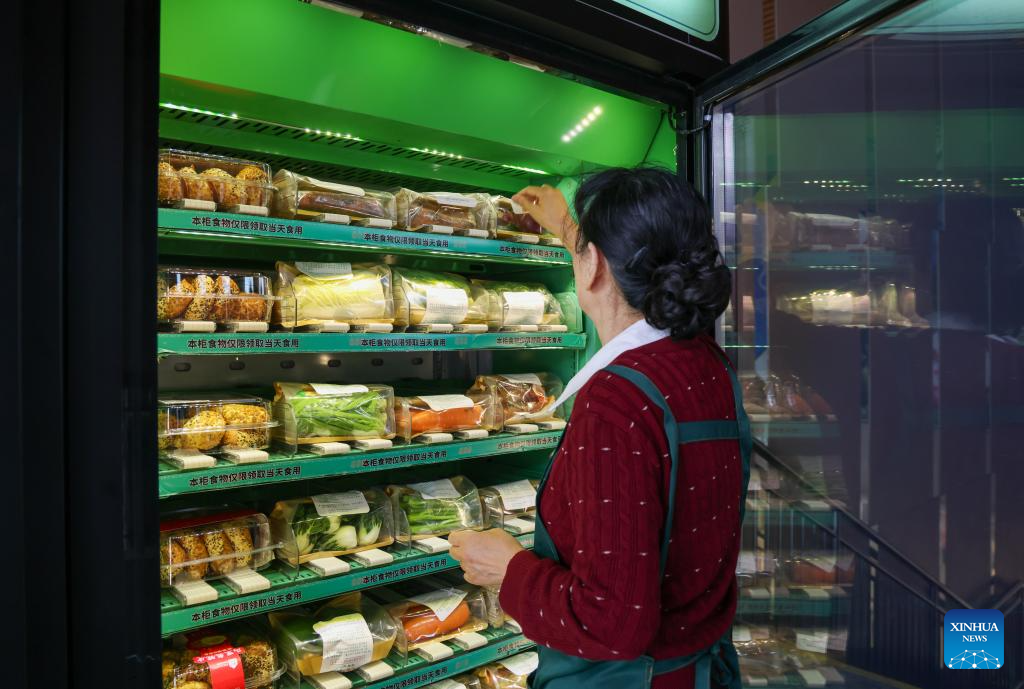
A staff member arranges packaged vegetables in a food bank terminal at Yitian Village of Futian District in Shenzhen, south China's Guangdong Province, Dec. 19, 2025. (Xinhua/Liang Xu)
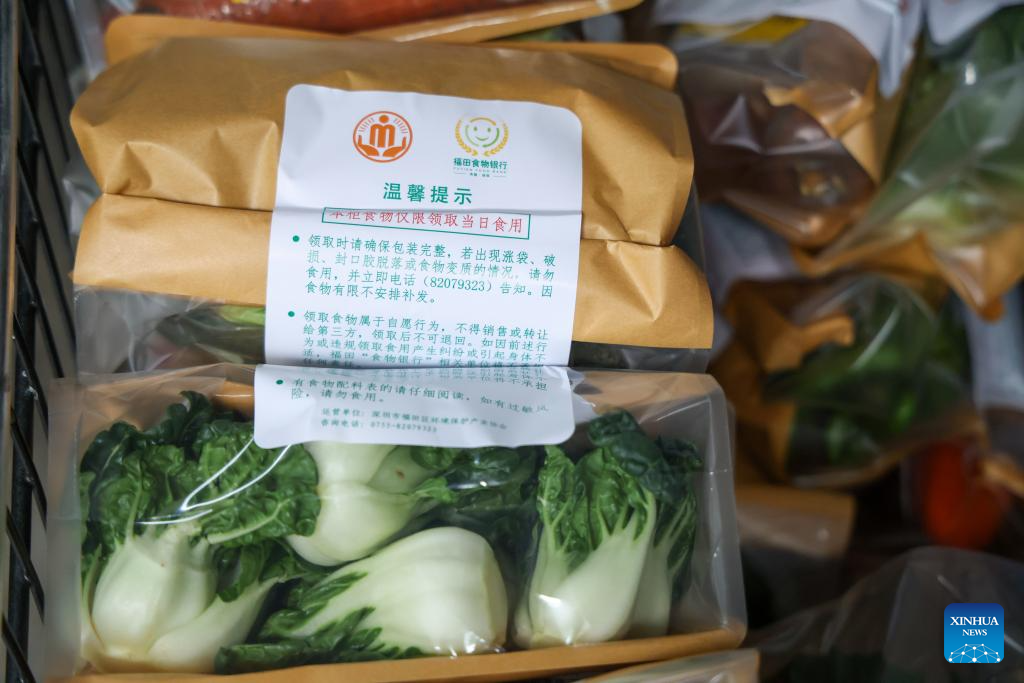
Packaged vegetables are ready to be distributed to the food bank terminal at Yitian Village of Futian District in Shenzhen, south China's Guangdong Province, Dec. 19, 2025. (Xinhua/Liang Xu)
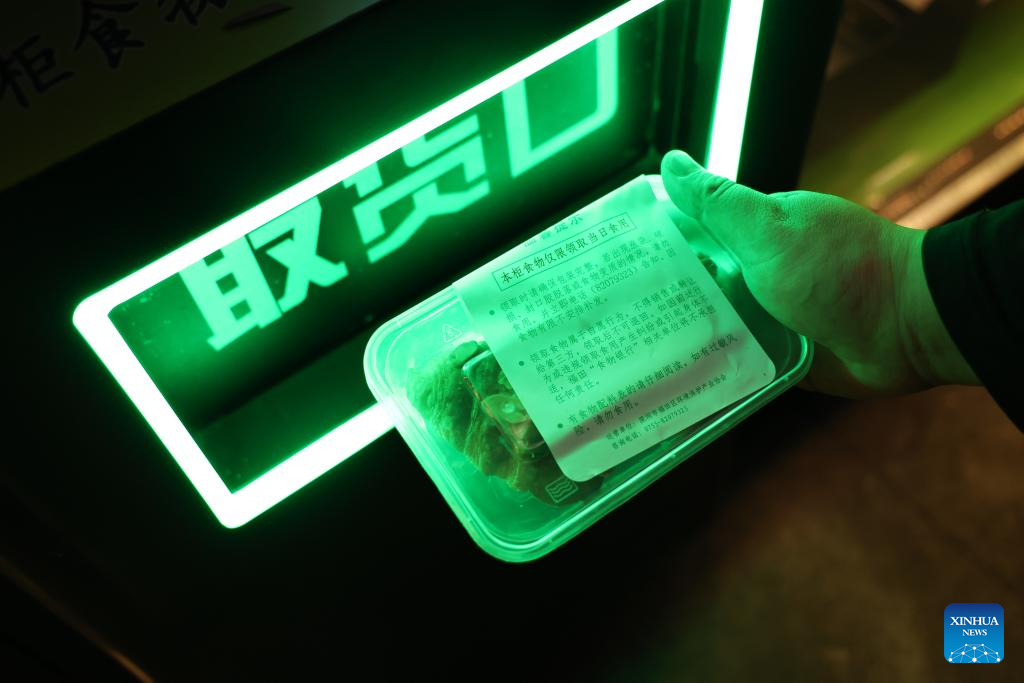
A resident takes a pack of bread from a food bank terminal at Huanggang Village of Futian District in Shenzhen, south China's Guangdong Province, Dec. 20, 2025. TO GO WITH "Feature: Low-key experiment ch anging how food aid works in south China's Shenzhen" (Xinhua/Liang Xu)


