
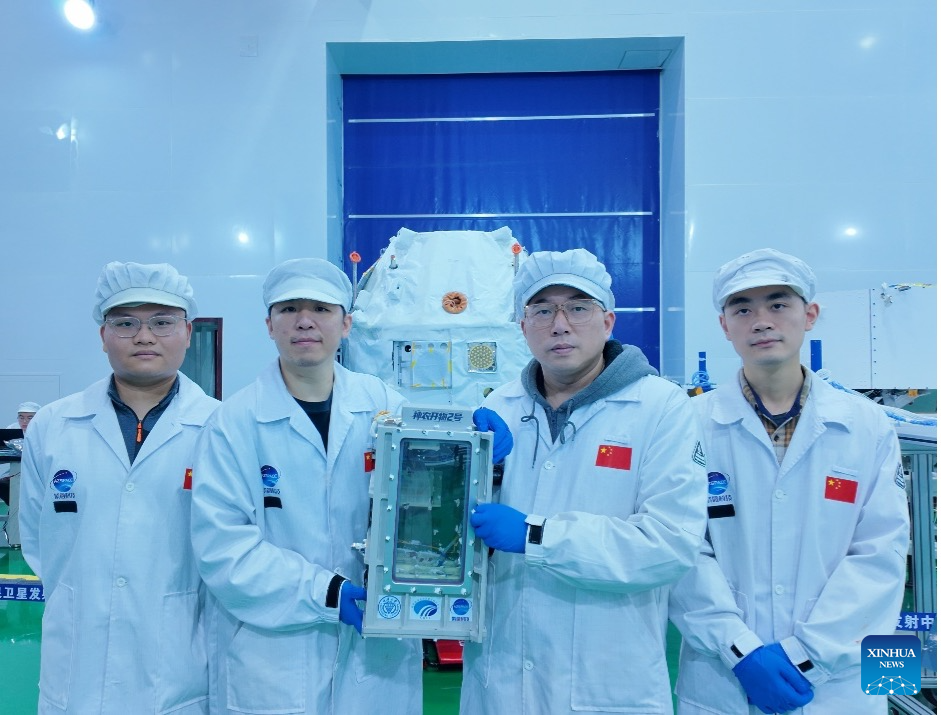
Researchers pose for a photo with the small experimental space ecosystem payload at the Jiuquan Satellite Launch Center in northwest China, Dec. 2, 2025. (Chongqing University/Handout via Xinhua)
CHONGQING, Feb. 2 (Xinhua) -- Researchers at China's Chongqing University announced on Monday that a butterfly has successfully emerged from its pupa while orbiting Earth, yielding valuable data on biological survival in the harsh microgravity environment of space.
The butterfly chrysalis was sealed inside a small experimental space ecosystem payload developed by the university's research team and carried into space aboard the Kuaizhou-11 Y8 carrier rocket on Dec. 13, 2025.
Photos taken in space show the emerged butterfly moving inside the capsule, resting on leaves and fluttering its wings, demonstrating notable adaptation to the microgravity environment.
Recent data transmitted to the research team has confirmed stable pressure, temperature and humidity levels inside the payload's sealed cabin.
In the microgravity environment, the altered behavior of fluids and the hindered transport of materials pose significant challenges to the stable operation of a healthy, miniature, closed-loop ecosystem.
Having overcome the technical bottleneck of magnesium alloy oxidation in high-humidity conditions, the team developed a lightweight yet robust payload structure that weighs just 8.3 kg, forming a safety barrier for the small ecosystem, said Xie Gengxin, the payload's chief designer.
Its design mimics the ecological cycles of Earth, creating a functional miniature ecosystem prototype. This self-sustaining, unmanned system includes plants such as chile pepper, which generate oxygen and potential food for the butterfly, while microorganisms process waste to maintain a stable air composition.
"The successful emergence of the butterfly is not just about having an insect in space; it marks a solid step forward in verifying the feasibility of long-term operation of complex life support systems in orbit," he said.
He noted that the completion of the butterfly's key life process in an extreme environment tests the resilience of terrestrial life and provides valuable insights for future deep-space life support technologies.
In its next step, the research team plans to focus on the in-orbit verification of the structure's endurance, the adaptability of its components to the space environment, and the long-term sealing capability of the payload's sealed cabin. ■
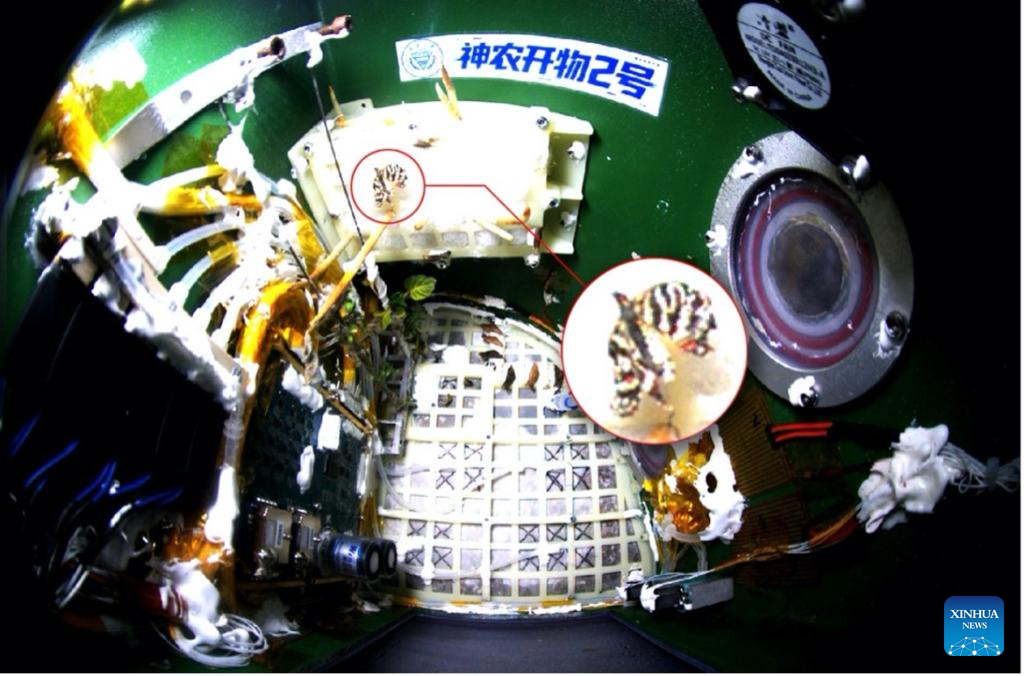
This photo taken in space on Dec. 15, 2025 shows the emerged butterfly. Researchers at China's Chongqing University announced on Monday that a butterfly has successfully emerged from its pupa while orbiting Earth, yielding valuable data on biological survival in the harsh microgravity environment of space.
The butterfly chrysalis was sealed inside a small experimental space ecosystem payload developed by the university's research team and carried into space aboard the Kuaizhou-11 Y8 carrier rocket on Dec. 13, 2025.(Chongqing University/Handout via Xinhua)
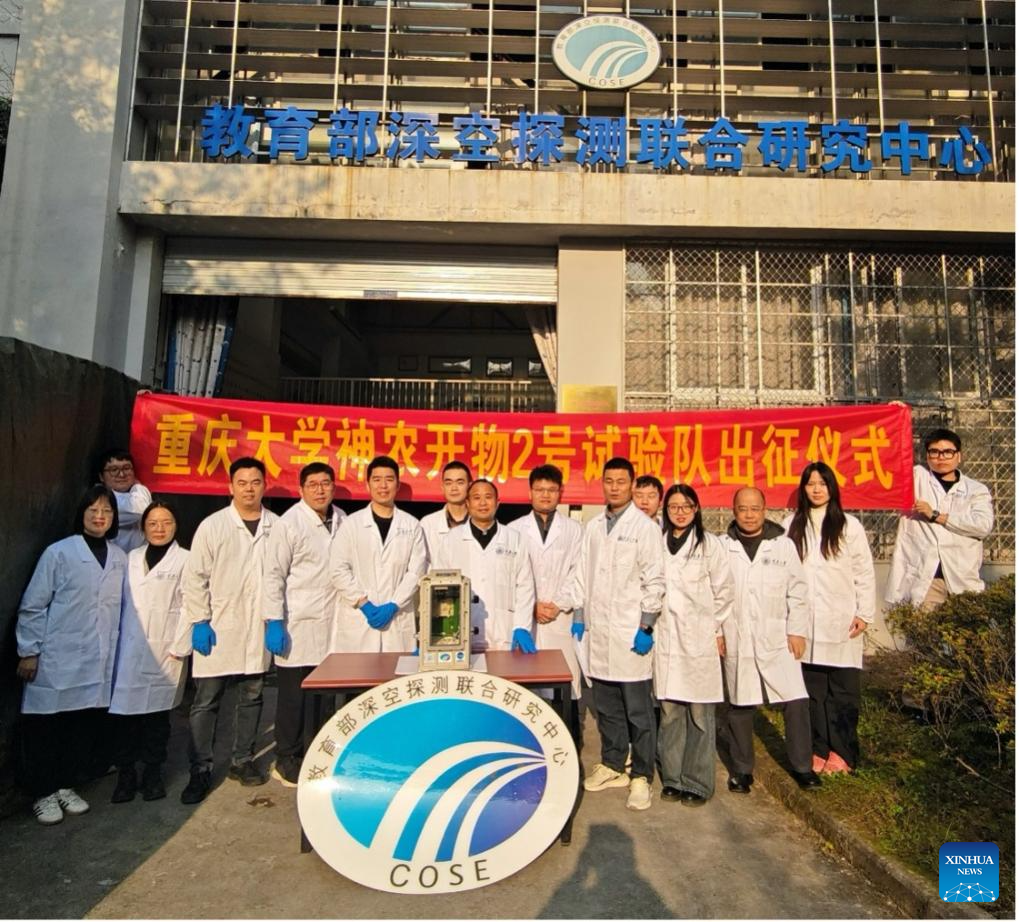
The research team of Chongqing University poses for a group photo in southwest China's Chongqing, on Nov. 28, 2025. Researchers at China's Chongqing University announced on Monday that a butterfly has successfully emerged from its pupa while orbiting Earth, yielding valuable data on biological survival in the harsh microgravity environment of space.
The butterfly chrysalis was sealed inside a small experimental space ecosystem payload developed by the university's research team and carried into space aboard the Kuaizhou-11 Y8 carrier rocket on Dec. 13, 2025.(Chongqing University/Handout via Xinhua)
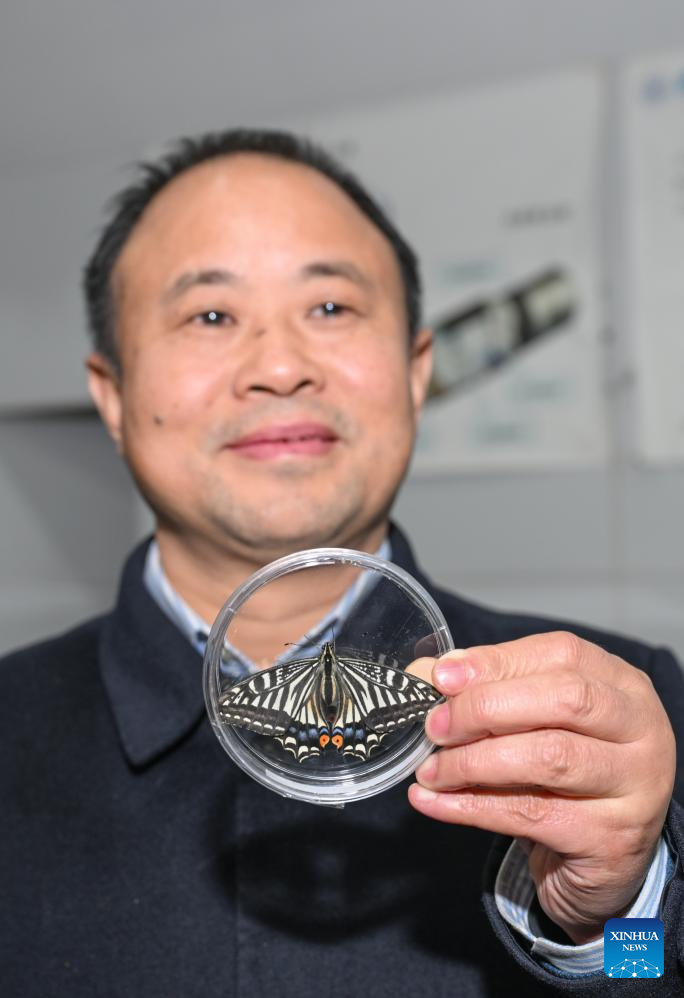
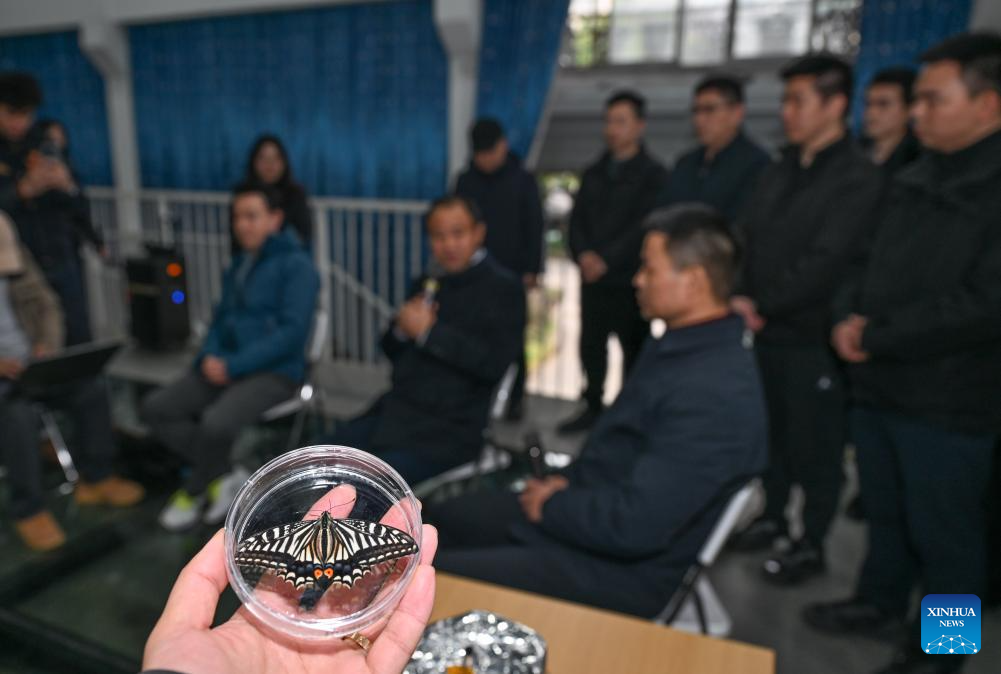
A researcher presents the specimen of a butterfly at the Center of Space Exploration under Ministry of Education, in Chongqing University, southwest China's Chongqing, Feb. 2, 2026. Researchers at China's Chongqing University announced on Monday that a butterfly has successfully emerged from its pupa while orbiting Earth, yielding valuable data on biological survival in the harsh microgravity environment of space.
The butterfly chrysalis was sealed inside a small experimental space ecosystem payload developed by the university's research team and carried into space aboard the Kuaizhou-11 Y8 carrier rocket on Dec. 13, 2025.(Xinhua/Chen Cheng)
This photo taken on Feb. 2, 2026 shows the specimen of a butterfly at the Center of Space Exploration under Ministry of Education, in Chongqing University, southwest China's Chongqing. Researchers at China's Chongqing University announced on Monday that a butterfly has successfully emerged from its pupa while orbiting Earth, yielding valuable data on biological survival in the harsh microgravity environment of space.
The butterfly chrysalis was sealed inside a small experimental space ecosystem payload developed by the university's research team and carried into space aboard the Kuaizhou-11 Y8 carrier rocket on Dec. 13, 2025.(Xinhua/Chen Cheng)
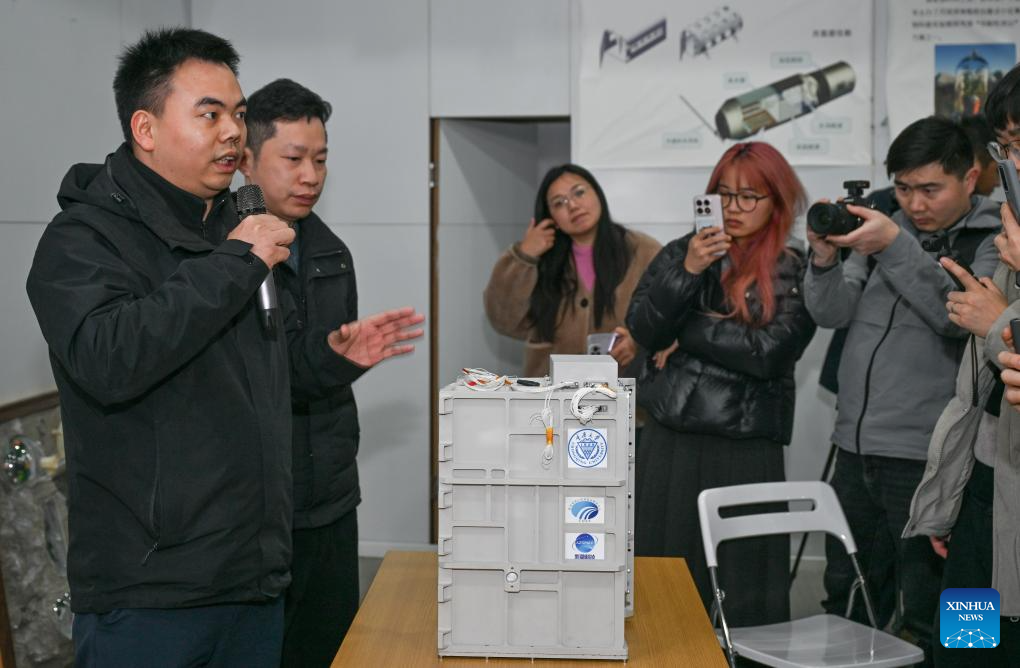
A researcher introduces for the media at the Center of Space Exploration under Ministry of Education, in Chongqing University, southwest China's Chongqing, Feb. 2, 2026. Researchers at China's Chongqing University announced on Monday that a butterfly has successfully emerged from its pupa while orbiting Earth, yielding valuable data on biological survival in the harsh microgravity environment of space.
The butterfly chrysalis was sealed inside a small experimental space ecosystem payload developed by the university's research team and carried into space aboard the Kuaizhou-11 Y8 carrier rocket on Dec. 13, 2025.(Xinhua/Chen Cheng)
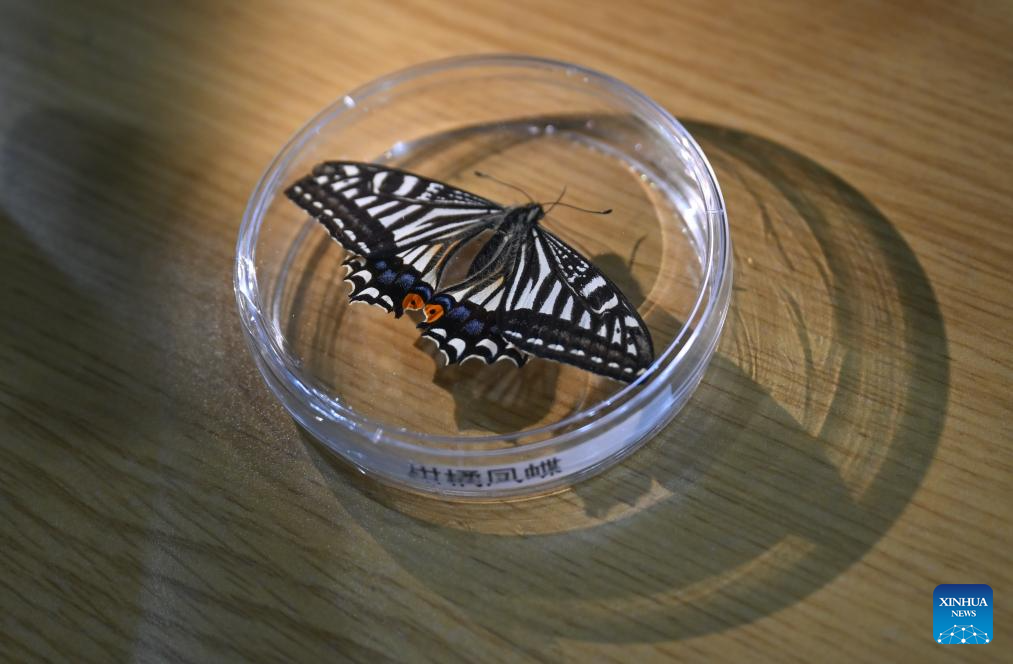
This photo taken on Feb. 2, 2026 shows the specimen of a butterfly at the Center of Space Exploration under Ministry of Education, in Chongqing University, southwest China's Chongqing. Researchers at China's Chongqing University announced on Monday that a butterfly has successfully emerged from its pupa while orbiting Earth, yielding valuable data on biological survival in the harsh microgravity environment of space.
The butterfly chrysalis was sealed inside a small experimental space ecosystem payload developed by the university's research team and carried into space aboard the Kuaizhou-11 Y8 carrier rocket on Dec. 13, 2025.(Xinhua/Chen Cheng)
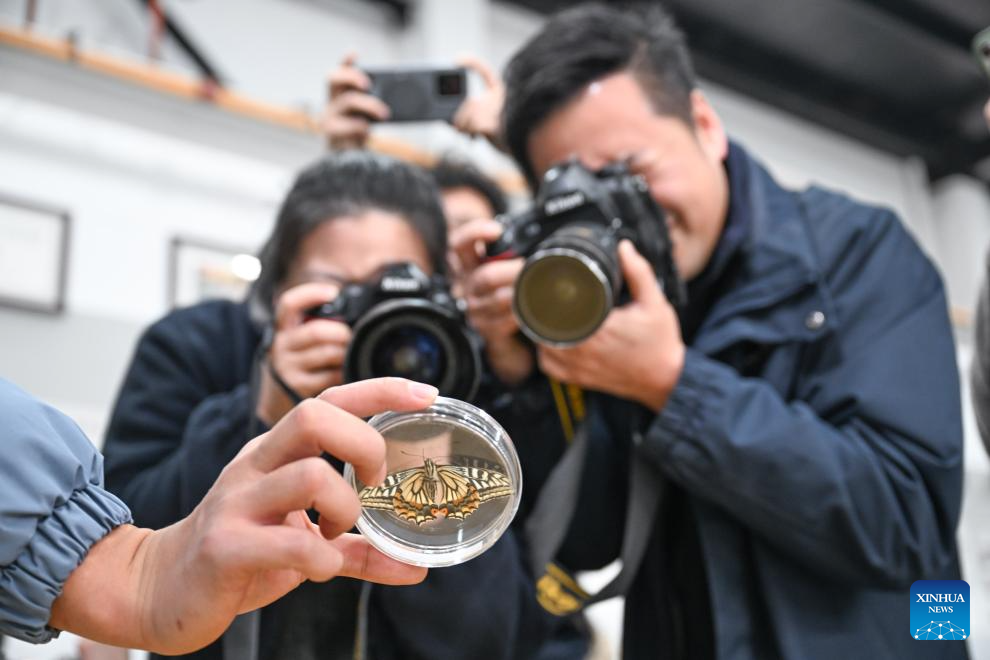
Media workers take photos of the specimen of a butterfly at the Center of Space Exploration under Ministry of Education, in Chongqing University, southwest China's Chongqing, Feb. 2, 2026. Researchers at China's Chongqing University announced on Monday that a butterfly has successfully emerged from its pupa while orbiting Earth, yielding valuable data on biological survival in the harsh microgravity environment of space.
The butterfly chrysalis was sealed inside a small experimental space ecosystem payload developed by the university's research team and carried into space aboard the Kuaizhou-11 Y8 carrier rocket on Dec. 13, 2025.(Xinhua/Chen Cheng)
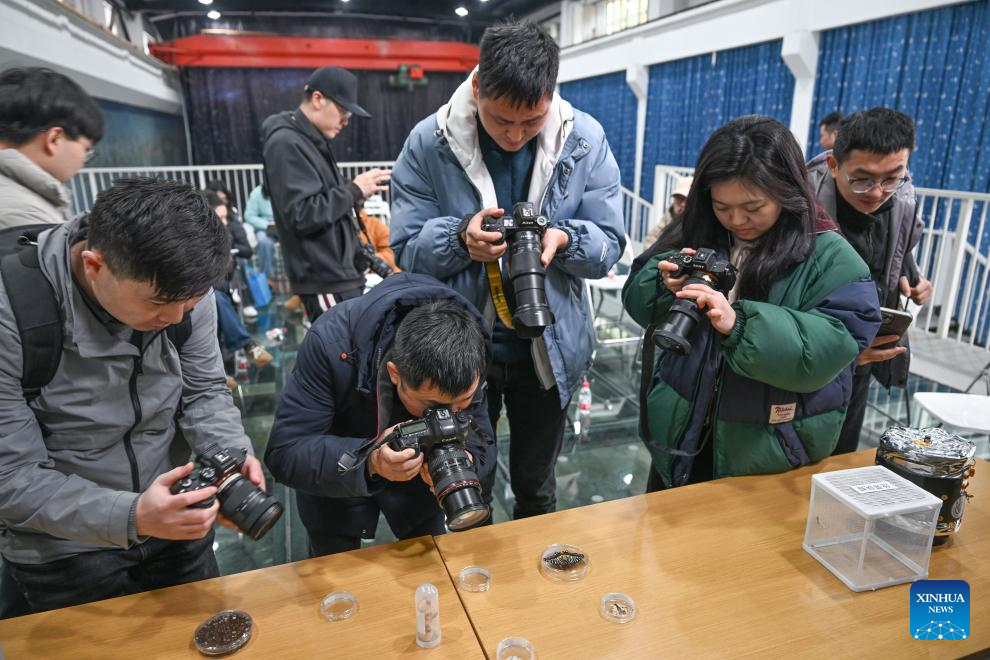
Media workers take photos of the specimen of a butterfly at the Center of Space Exploration under Ministry of Education, in Chongqing University, southwest China's Chongqing, Feb. 2, 2026. Researchers at China's Chongqing University announced on Monday that a butterfly has successfully emerged from its pupa while orbiting Earth, yielding valuable data on biological survival in the harsh microgravity environment of space.
The butterfly chrysalis was sealed inside a small experimental space ecosystem payload developed by the university's research team and carried into space aboard the Kuaizhou-11 Y8 carrier rocket on Dec. 13, 2025.(Xinhua/Chen Cheng)
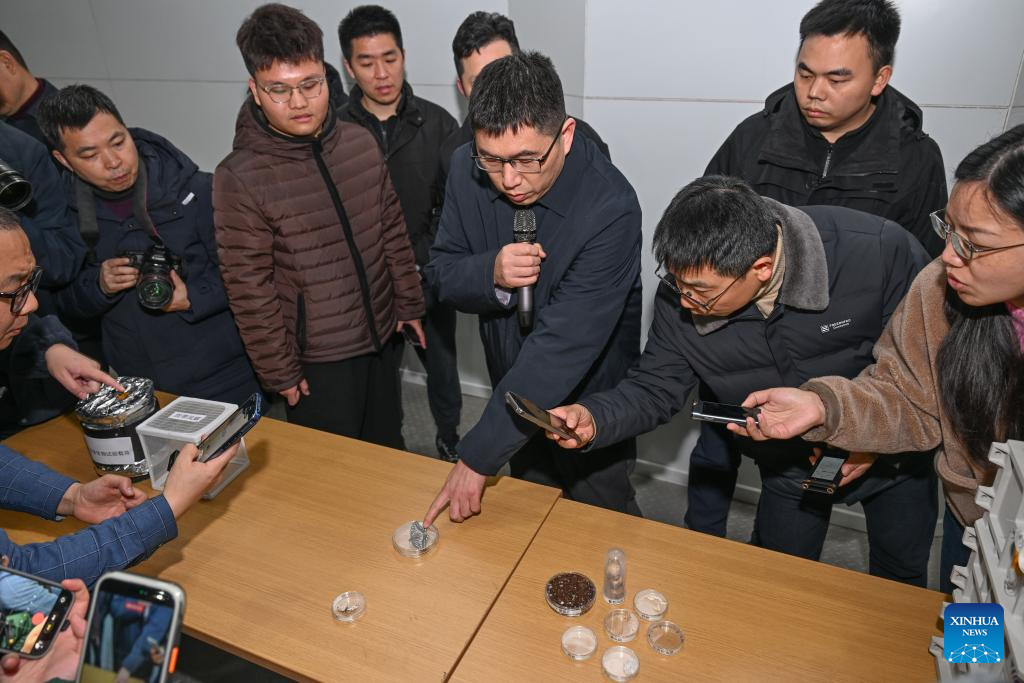
A researcher introduces the specimen at the Center of Space Exploration under Ministry of Education, in Chongqing University, southwest China's Chongqing, Feb. 2, 2026. Researchers at China's Chongqing University announced on Monday that a butterfly has successfully emerged from its pupa while orbiting Earth, yielding valuable data on biological survival in the harsh microgravity environment of space.
The butterfly chrysalis was sealed inside a small experimental space ecosystem payload developed by the university's research team and carried into space aboard the Kuaizhou-11 Y8 carrier rocket on Dec. 13, 2025.(Xinhua/Chen Cheng)


