
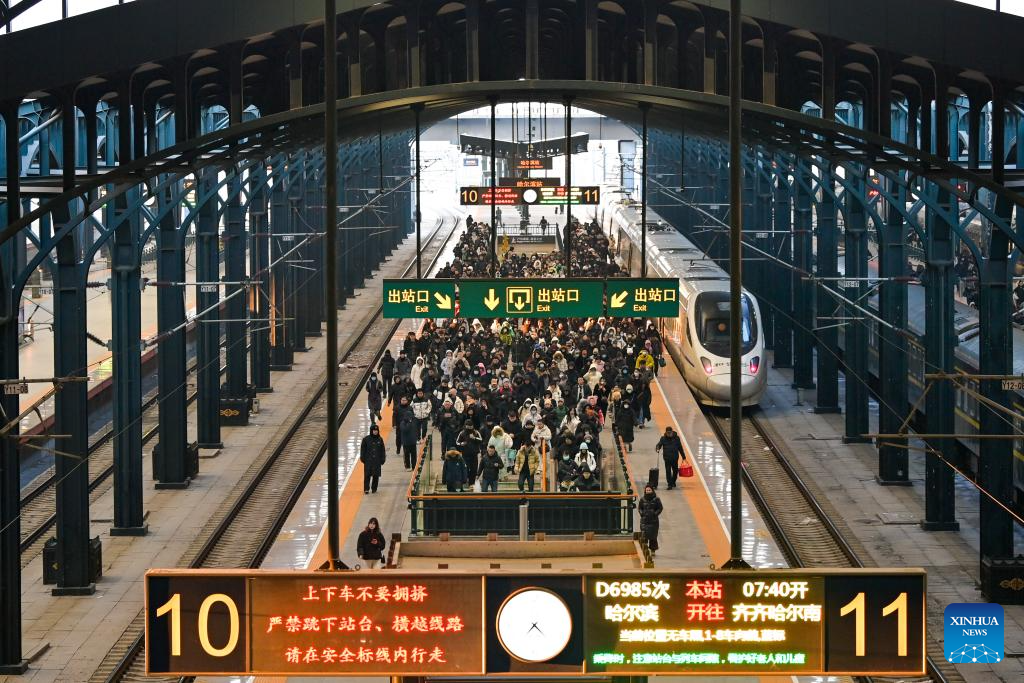
Passengers are pictured at a platform of Harbin Railway Station in Harbin, northeast China's Heilongjiang Province, Feb. 2, 2026. (Photo by Yuan Yong/Xinhua)
BEIJING, Feb. 2 (Xinhua) -- At 12:40 a.m. Monday, train K4069 pulled out of Beijing West Railway Station, becoming the first passenger train to depart from Beijing as part of the 2026 Spring Festival travel rush. On it were travelers either heading home or setting out on leisure travel, as the country's annual tale of movement and reunion began to unfold.
The Spring Festival, also known as Chinese New Year, falls on Feb. 17 this year, and the official holiday lasts nine days. The annual travel surge, known as chunyun and often described as the world's largest human migration, is expected to generate a record 9.5 billion inter-regional passenger trips during the 40-day period running from Monday to March 13 this year.
Of this total, road trips remain the dominant mode of travel, accounting for approximately 80 percent.
An estimated 540 million passenger trips will be handled by the country's railways, while the civil aviation sector will see 95 million passenger trips. Both the overall scale and daily peak traffic of rail and air travel are expected to hit new highs.
While passenger trips are tipped to reach a new peak, journeys are also set to be smoother.
China's expressways now cover 99 percent of cities with a population of over 200,000 and the country's high-speed railway network has exceeded 50,000 km, reaching 97 percent of cities with an urban population of more than 500,000. Aviation services, meanwhile, currently reach 92.6 percent of prefecture-level administrative units.
During this year's travel rush, transport authorities will further leverage the strengths of an integrated transport system and improve comprehensive transport services.
Rail, road, waterway and civil aviation departments will strengthen analysis of passenger demand and increase capacity supply in key areas, on popular routes and during peak hours to the fullest extent possible to meet people's travel needs, said Li Chunlin, deputy head of the National Development and Reform Commission.
Festive cheer, notably, will also accompany travelers.
At Yan'an Station in northwest China's Shaanxi Province, for example, drums thundered and red ribbons fluttered as waist drum performers leapt and danced. A performer also sang the original song titled "High-speed Rail Comes to Our Yan'an" for travelers, filling the waiting hall with a festive Spring Festival atmosphere.
More than 1,000 km southwest of Yan'an, at Chongqing East Railway Station in southwest China, handwritten Spring Festival couplets were handed out to travelers, adding to the holiday spirit.
In addition to travel back to hometowns, "heading north to chase snow" and "going south to seek warmth" have become popular holiday options.
Data from travel services platform Qunar showed that the nine-day holiday is prompting more mid-holiday trips to tourist attractions this year.
Airlines have increased flight frequency to popular destinations and streamlined services to accommodate travelers' needs, such as opening dedicated counters for ski equipment check-in at Beijing Daxing International Airport.
As the Spring Festival approaches, orders for New Year goods have also been rising across shopping and logistics platforms.
Data from delivery service provider Lalamove, known as Huolala in Chinese, revealed that from Jan. 1 to 25, 2026, orders for food and grain-and-oil products rose by more than 40 percent from the same period of 2025, while orders for clothing and fabrics increased by nearly 50 percent and orders for fresh food doubled compared with a year earlier.
In Luoyang, a city in central China's Henan Province with a long history of growing peonies, SF Express's local branch has assigned over 100 couriers to handle peony pickups during the holiday season and will use coordinated air, high-speed rail and cold-chain transport. More than 90 percent of orders are expected to arrive by the following day, allowing people far away to also enjoy these flowers.
Chunyun carries people's hopes for a better life, returns some to their places of birth and mirrors the country's forward momentum, as journeys across the country weave the vivid picture of a mobile China. ■
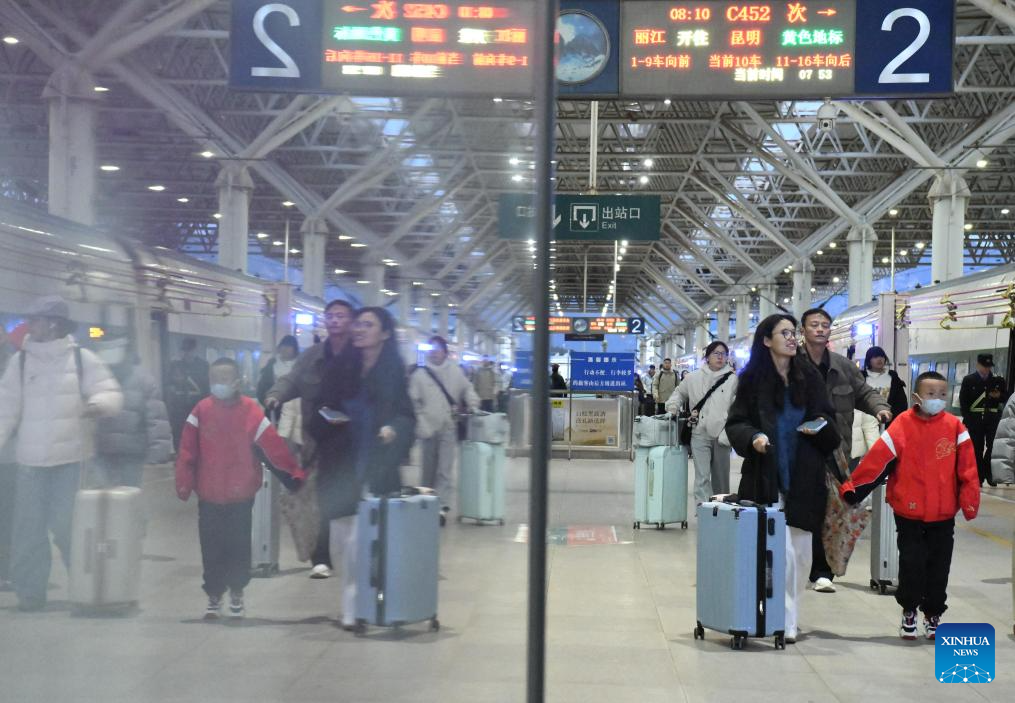
Passengers prepare to board a train at a railway station in Lijiang, southwest China's Yunnan Province, Feb. 2, 2026. (Photo by Zhao Qingzu/Xinhua)

A staff member checks tickets for passengers at Lanzhou Railway Station in Lanzhou, northwest China's Gansu Province, Feb. 2, 2026. (Photo by Hou Chonghui/Xinhua)
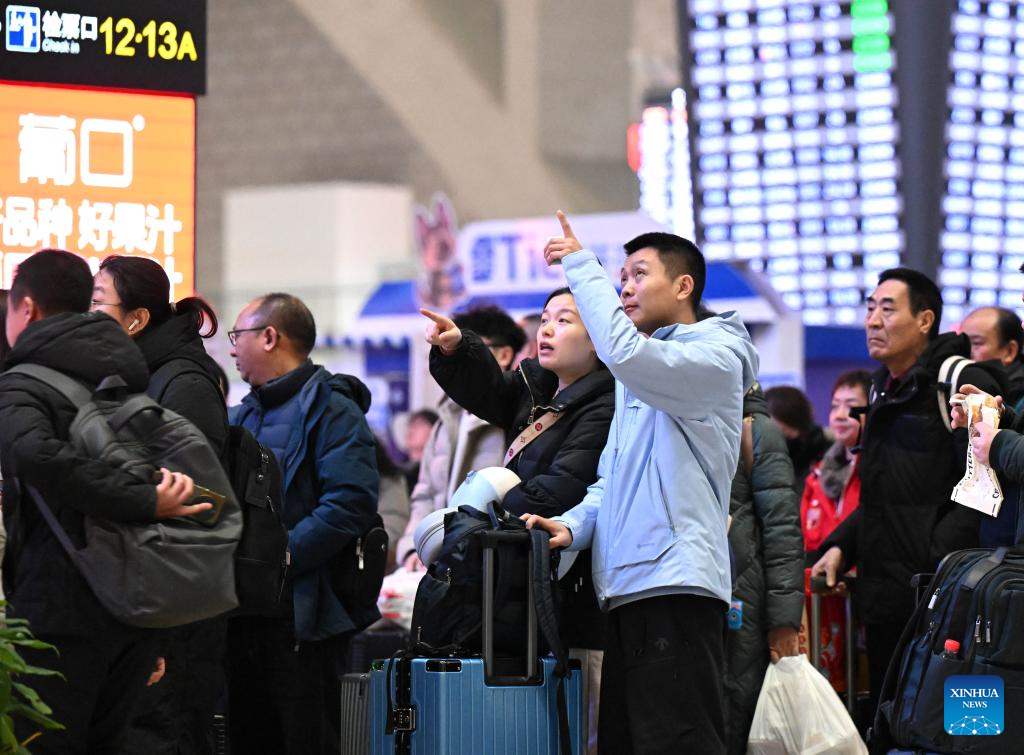
Passengers wait to check in at Shijiazhuang Railway Station in Shijiazhuang, north China's Hebei Province, Feb. 2, 2026. (Photo by Chen Qibao/Xinhua)
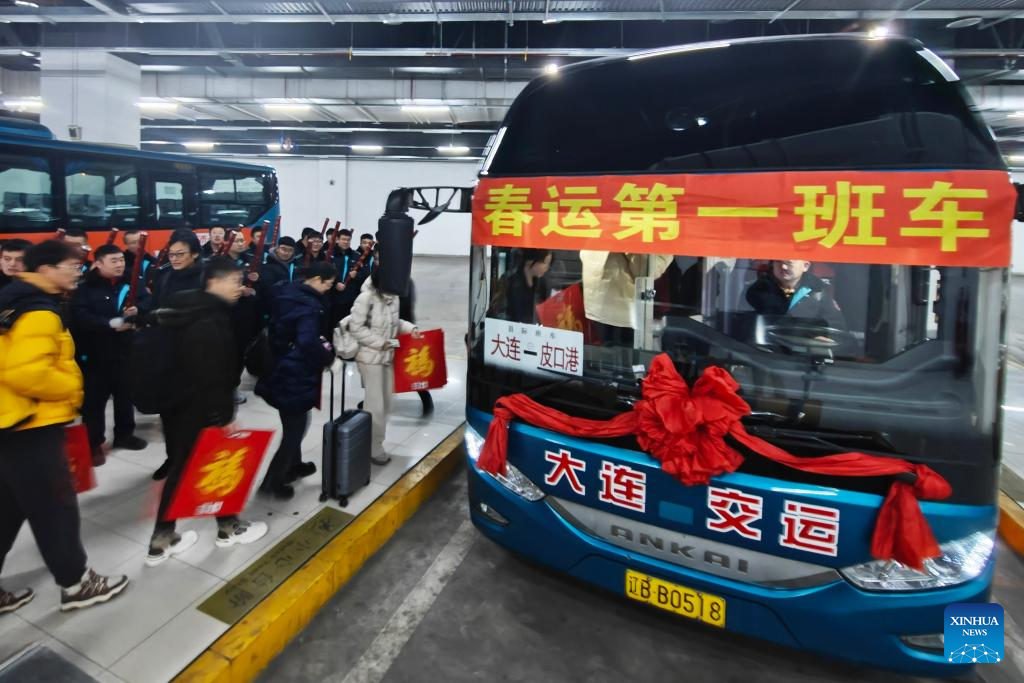
Passengers board a coach at a bus station in Dalian, northeast China's Liaoning Province, Feb. 2, 2026. (Photo by Liu Debin/Xinhua)
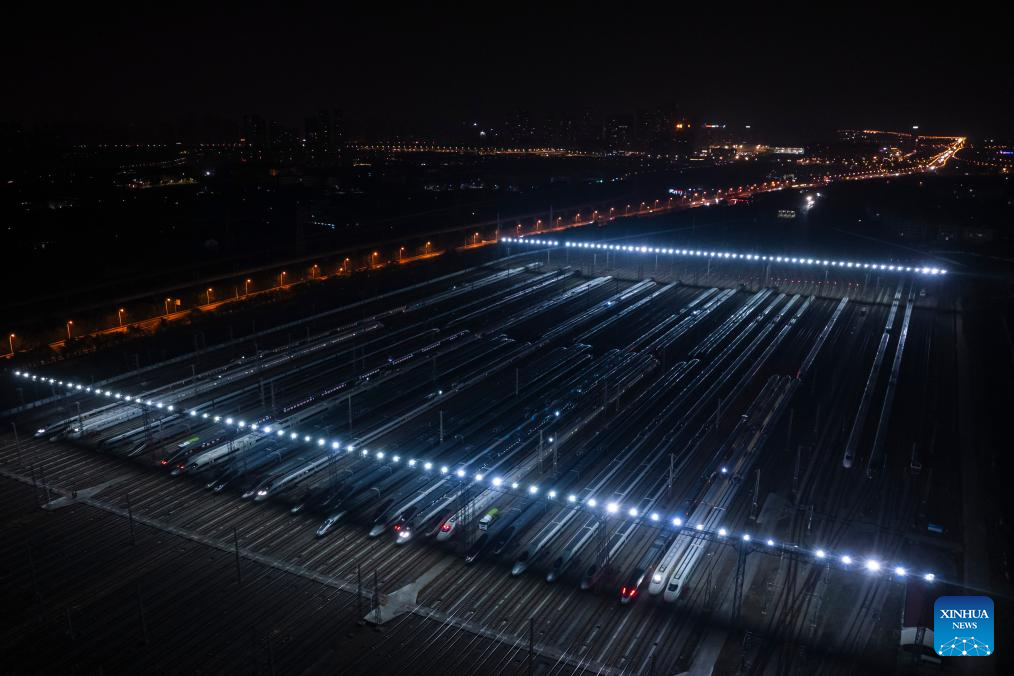
An aerial drone photo taken on Feb. 1, 2026 shows high-speed trains at a train depot in Wuhan, central China's Hubei Province. (Xinhua/Wu Zhizun)

An aerial drone photo taken on Feb. 1, 2026 shows high-speed trains at a train depot in Wuhan, central China's Hubei Province. (Xinhua/Wu Zhizun)
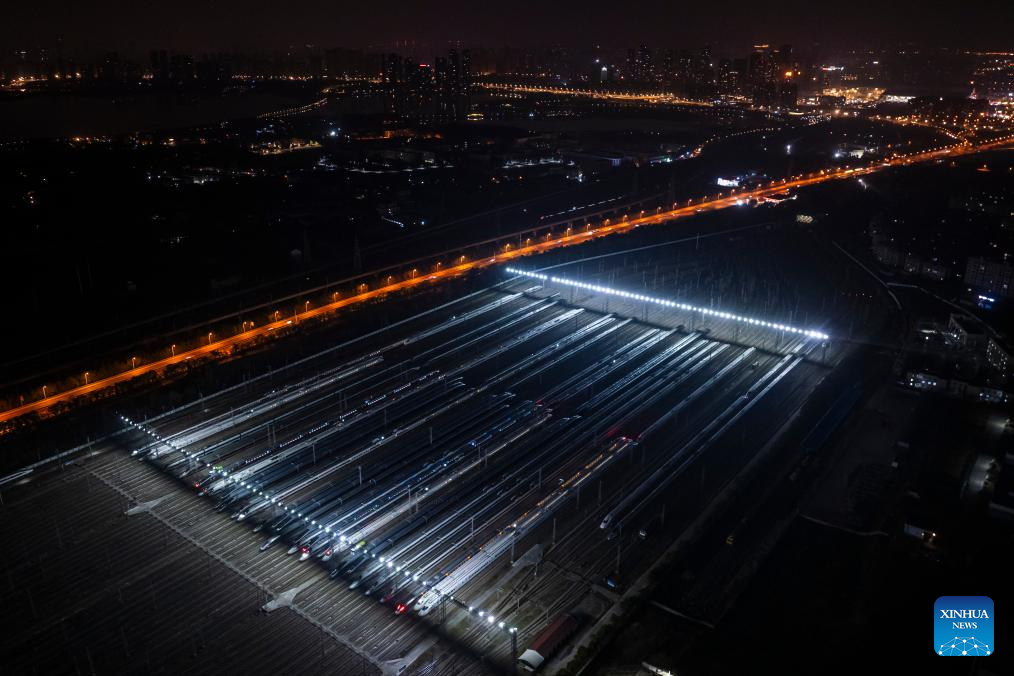
An aerial drone photo taken on Feb. 1, 2026 shows high-speed trains at a train depot in Wuhan, central China's Hubei Province. (Xinhua/Wu Zhizun)
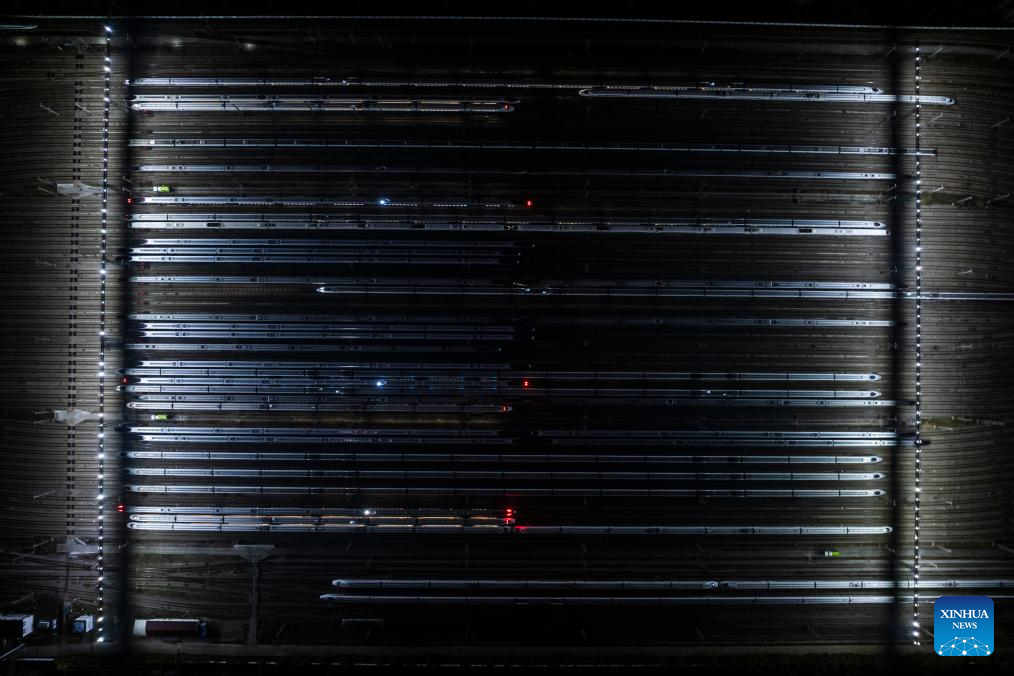
An aerial drone photo taken on Feb. 1, 2026 shows high-speed trains at a train depot in Wuhan, central China's Hubei Province.(Xinhua/Wu Zhizun)
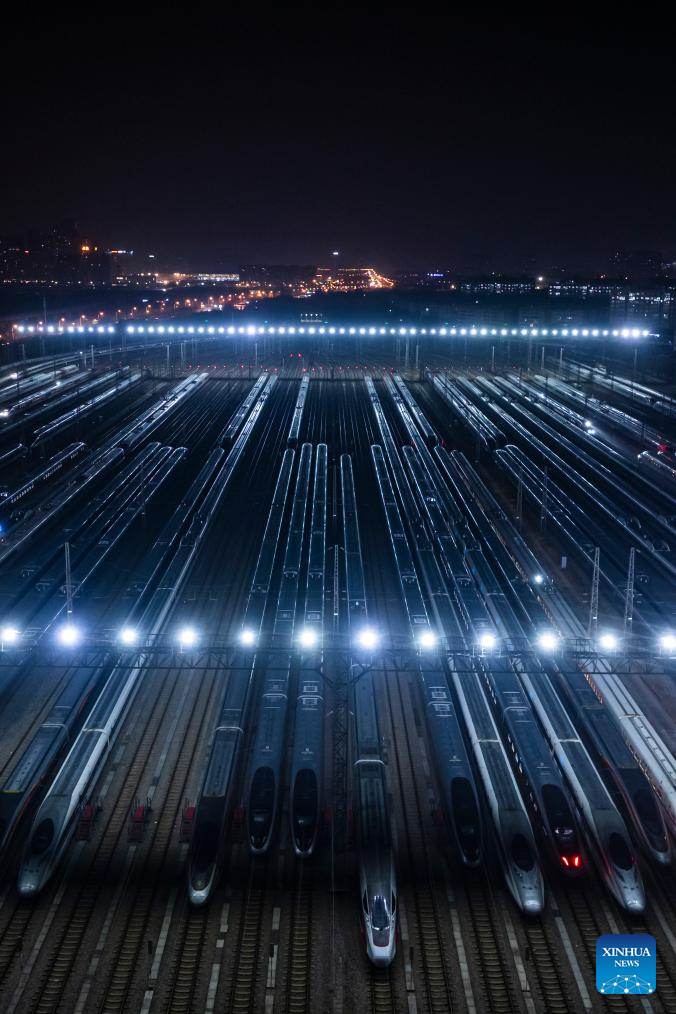
An aerial drone photo taken on Feb. 1, 2026 shows high-speed trains at a train depot in Wuhan, central China's Hubei Province. (Xinhua/Wu Zhizun)
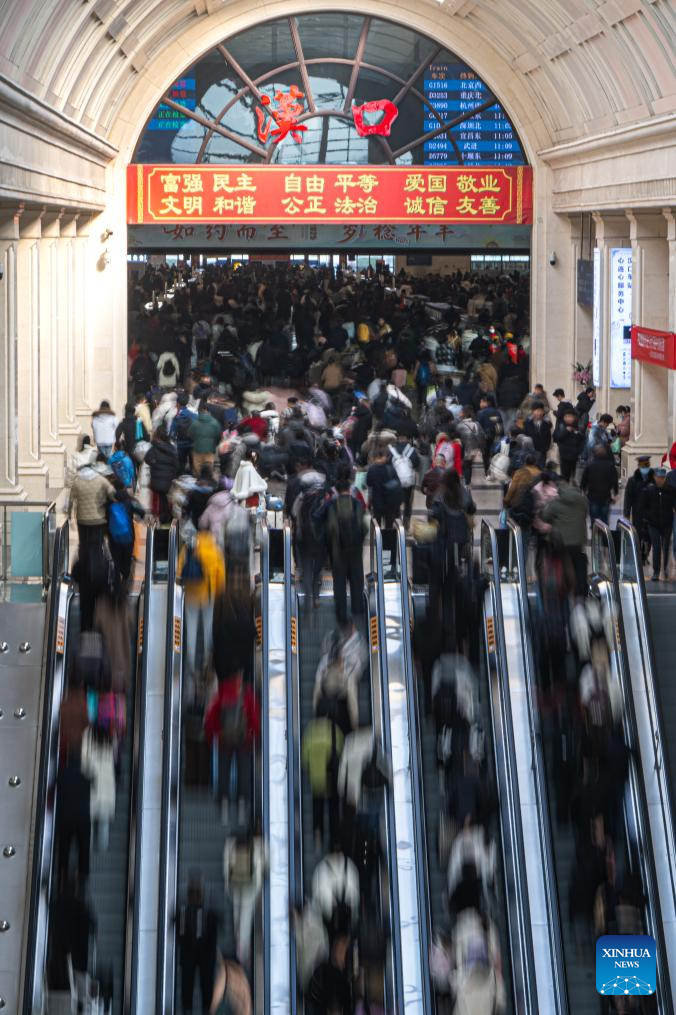
Passengers are seen at Hankou Railway Station in Wuhan, central China's Hubei Province, Feb. 2, 2026.
China ushered in its largest annual population migration on Monday, 15 days ahead of the 2026 Spring Festival, also known as the Chinese New Year.
A total of 9.5 billion passenger trips are expected during this year's travel rush period that will end on March 13, which will be a historic high. (Xinhua/Xiao Yijiu)
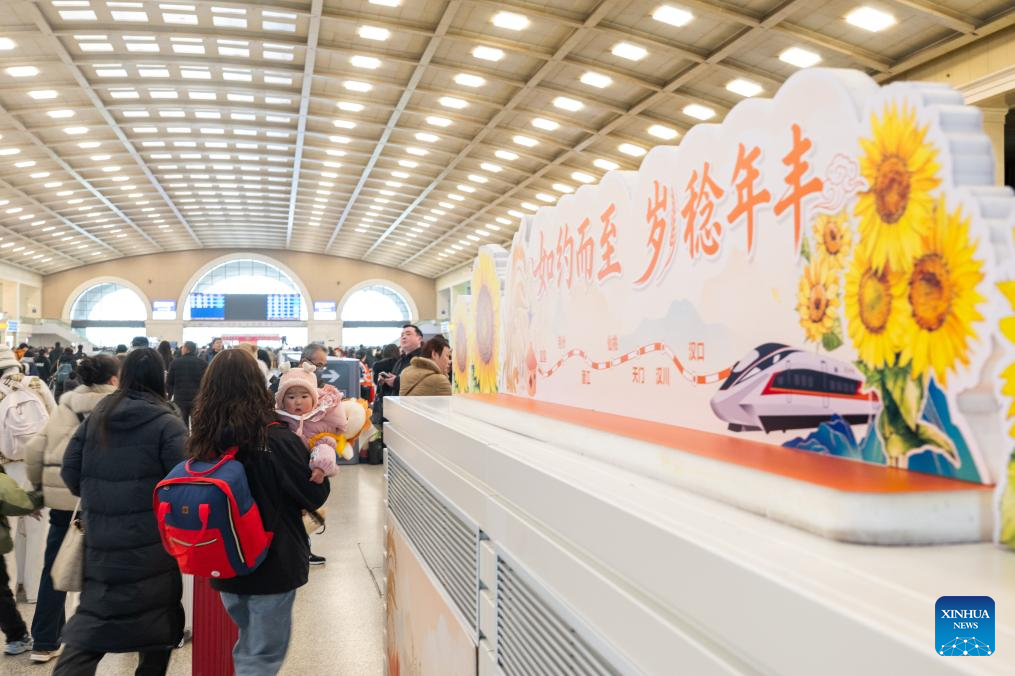
Passengers wait to check in at Hankou Railway Station in Wuhan, central China's Hubei Province, Feb. 2, 2026.
China ushered in its largest annual population migration on Monday, 15 days ahead of the 2026 Spring Festival, also known as the Chinese New Year.
A total of 9.5 billion passenger trips are expected during this year's travel rush period that will end on March 13, which will be a historic high. (Xinhua/Xiao Yijiu)
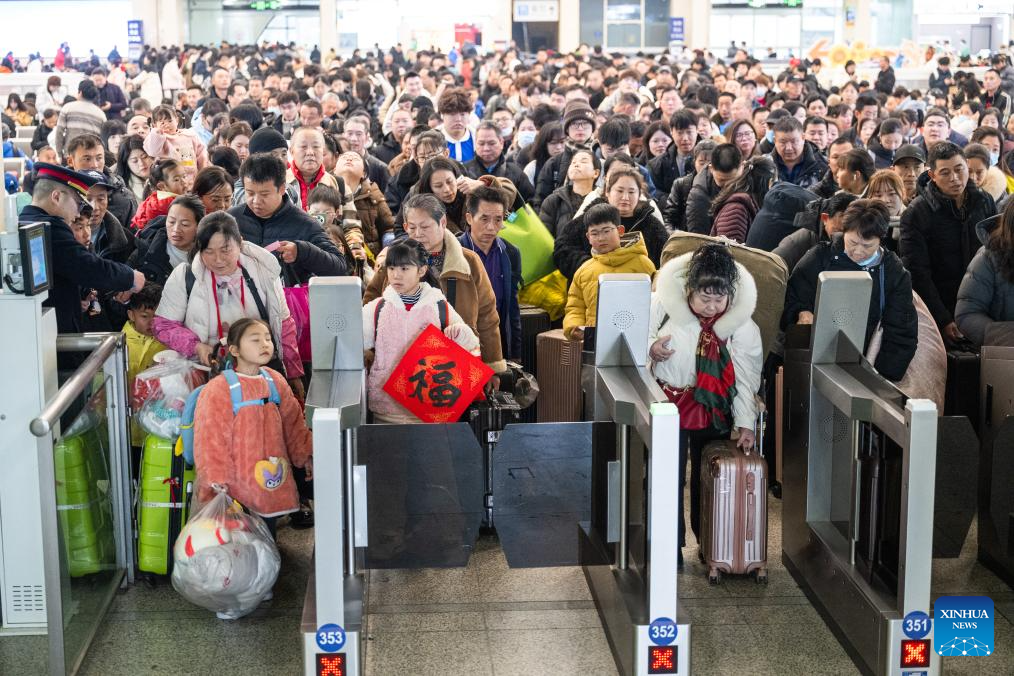
Passengers get their tickets checked at Hankou Railway Station in Wuhan, central China's Hubei Province, Feb. 2, 2026.
China ushered in its largest annual population migration on Monday, 15 days ahead of the 2026 Spring Festival, also known as the Chinese New Year.
A total of 9.5 billion passenger trips are expected during this year's travel rush period that will end on March 13, which will be a historic high. (Xinhua/Xiao Yijiu)
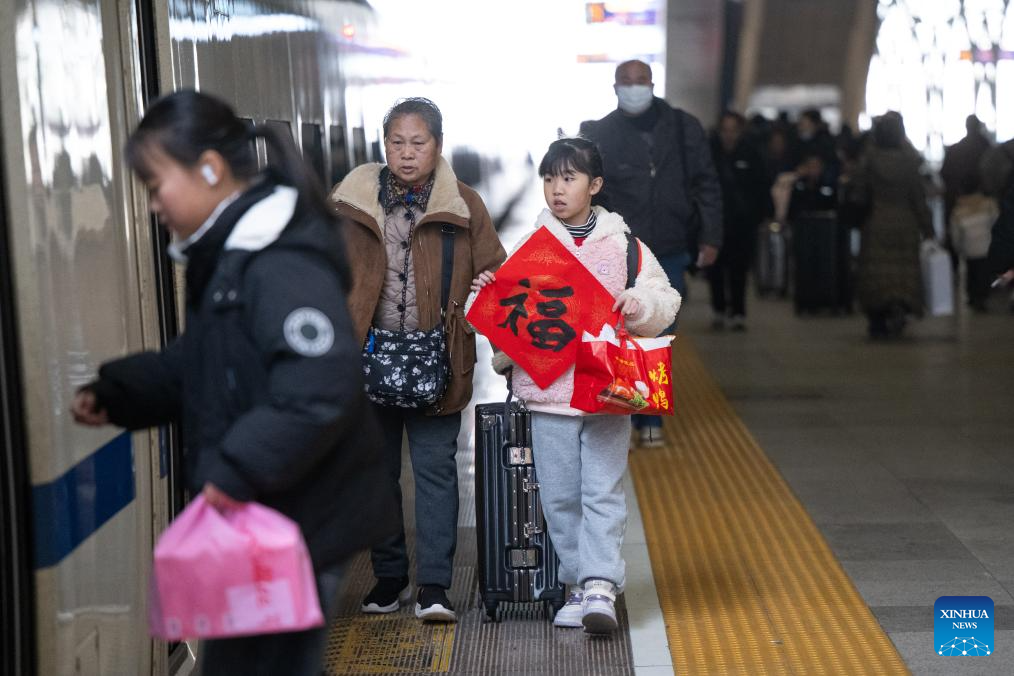
Passengers board a train at Hankou Railway Station in Wuhan, central China's Hubei Province, Feb. 2, 2026.
China ushered in its largest annual population migration on Monday, 15 days ahead of the 2026 Spring Festival, also known as the Chinese New Year.
A total of 9.5 billion passenger trips are expected during this year's travel rush period that will end on March 13, which will be a historic high. (Xinhua/Xiao Yijiu)
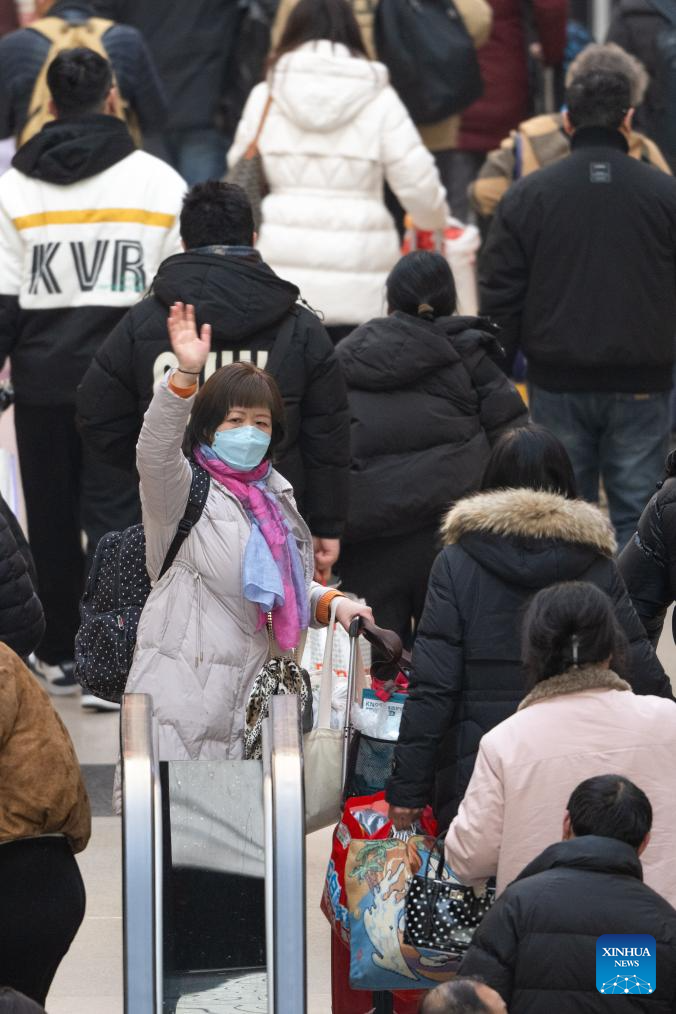
A passenger waves goodbye at Hankou Railway Station in Wuhan, central China's Hubei Province, Feb. 2, 2026.
China ushered in its largest annual population migration on Monday, 15 days ahead of the 2026 Spring Festival, also known as the Chinese New Year.
A total of 9.5 billion passenger trips are expected during this year's travel rush period that will end on March 13, which will be a historic high. (Xinhua/Xiao Yijiu)

A staff member helps a passenger at Hankou Railway Station in Wuhan, central China's Hubei Province, Feb. 2, 2026.
China ushered in its largest annual population migration on Monday, 15 days ahead of the 2026 Spring Festival, also known as the Chinese New Year.
A total of 9.5 billion passenger trips are expected during this year's travel rush period that will end on March 13, which will be a historic high. (Xinhua/Xiao Yijiu)

A volunteer interacts with a child at Sanming North Railway Station in Sanming, southeast China's Fujian Province, Feb. 2, 2026. China ushered in its largest annual population migration on Monday, 15 days ahead of the 2026 Spring Festival, also known as the Chinese New Year.
A total of 9.5 billion passenger trips are expected during this year's travel rush period that will end on March 13, which will be a historic high.
Of this total, road trips remain the dominant mode of travel, accounting for approximately 80 percent.
An estimated 540 million passenger trips will be handled by the country's railways, while the civil aviation sector will see 95 million trips. Both the overall scale and daily peak traffic of rail and air travel are expected to surpass historic high levels this year.
In China, the 40-day travel surge will witness hundreds of millions of people return to their hometowns for family reunions. (Photo by Yan Tan/Xinhua)
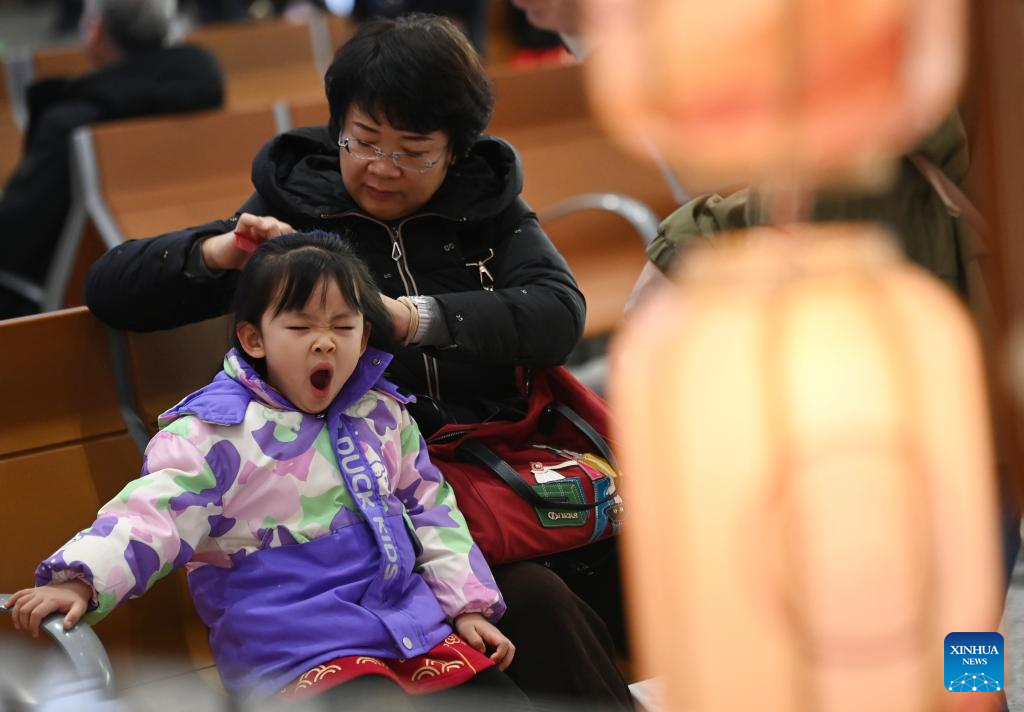
A woman combs a girl's hair at the departure hall of Xi'an Railway Station in Xi'an, northwest China's Shaanxi Province, Feb. 2, 2026. China ushered in its largest annual population migration on Monday, 15 days ahead of the 2026 Spring Festival, also known as the Chinese New Year.
A total of 9.5 billion passenger trips are expected during this year's travel rush period that will end on March 13, which will be a historic high.
Of this total, road trips remain the dominant mode of travel, accounting for approximately 80 percent.
An estimated 540 million passenger trips will be handled by the country's railways, while the civil aviation sector will see 95 million trips. Both the overall scale and daily peak traffic of rail and air travel are expected to surpass historic high levels this year.
In China, the 40-day travel surge will witness hundreds of millions of people return to their hometowns for family reunions. (Xinhua/Li Yibo)
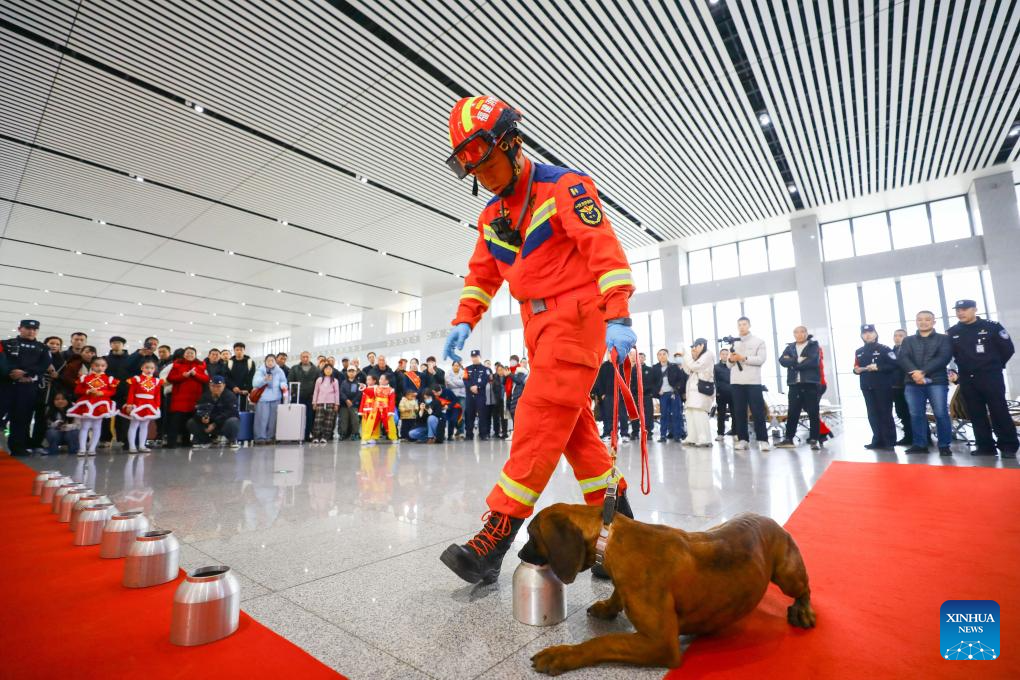
A firefighter performs a demonstration with an explosive ordnance disposal dog at Sanming North Railway Station in Sanming, southeast China's Fujian Province, Feb. 2, 2026. China ushered in its largest annual population migration on Monday, 15 days ahead of the 2026 Spring Festival, also known as the Chinese New Year.
A total of 9.5 billion passenger trips are expected during this year's travel rush period that will end on March 13, which will be a historic high.
Of this total, road trips remain the dominant mode of travel, accounting for approximately 80 percent.
An estimated 540 million passenger trips will be handled by the country's railways, while the civil aviation sector will see 95 million trips. Both the overall scale and daily peak traffic of rail and air travel are expected to surpass historic high levels this year.
In China, the 40-day travel surge will witness hundreds of millions of people return to their hometowns for family reunions. (Photo by Zhang Haigen/Xinhua)
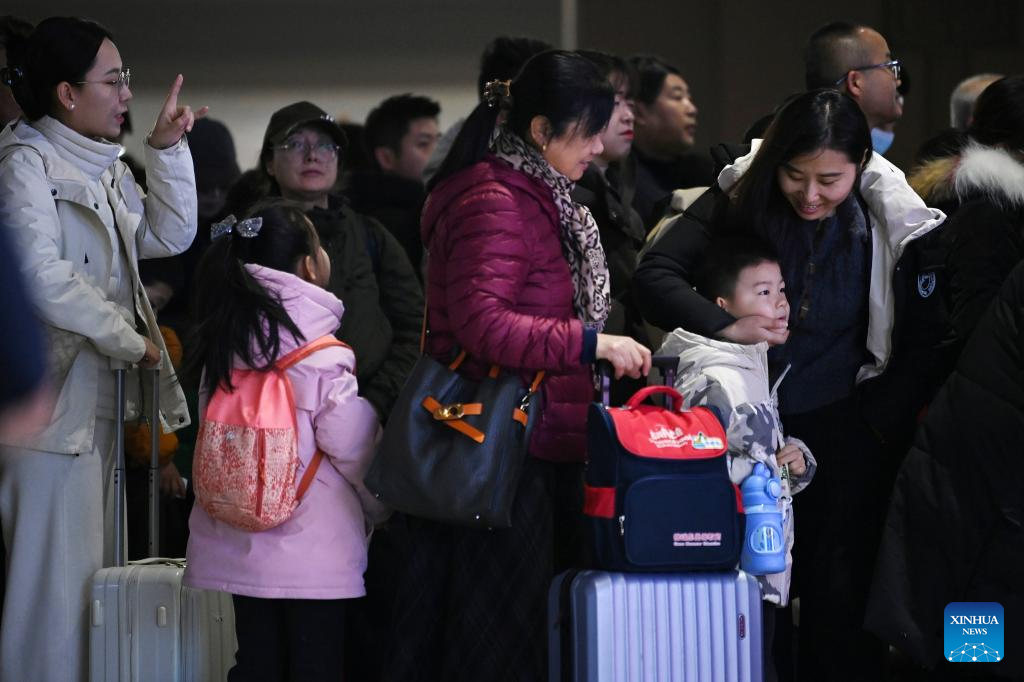
Passengers wait to check in at Xi'an Railway Station in Xi'an, northwest China's Shaanxi Province, Feb. 2, 2026. China ushered in its largest annual population migration on Monday, 15 days ahead of the 2026 Spring Festival, also known as the Chinese New Year.
A total of 9.5 billion passenger trips are expected during this year's travel rush period that will end on March 13, which will be a historic high.
Of this total, road trips remain the dominant mode of travel, accounting for approximately 80 percent.
An estimated 540 million passenger trips will be handled by the country's railways, while the civil aviation sector will see 95 million trips. Both the overall scale and daily peak traffic of rail and air travel are expected to surpass historic high levels this year.
In China, the 40-day travel surge will witness hundreds of millions of people return to their hometowns for family reunions. (Xinhua/Li Yibo)
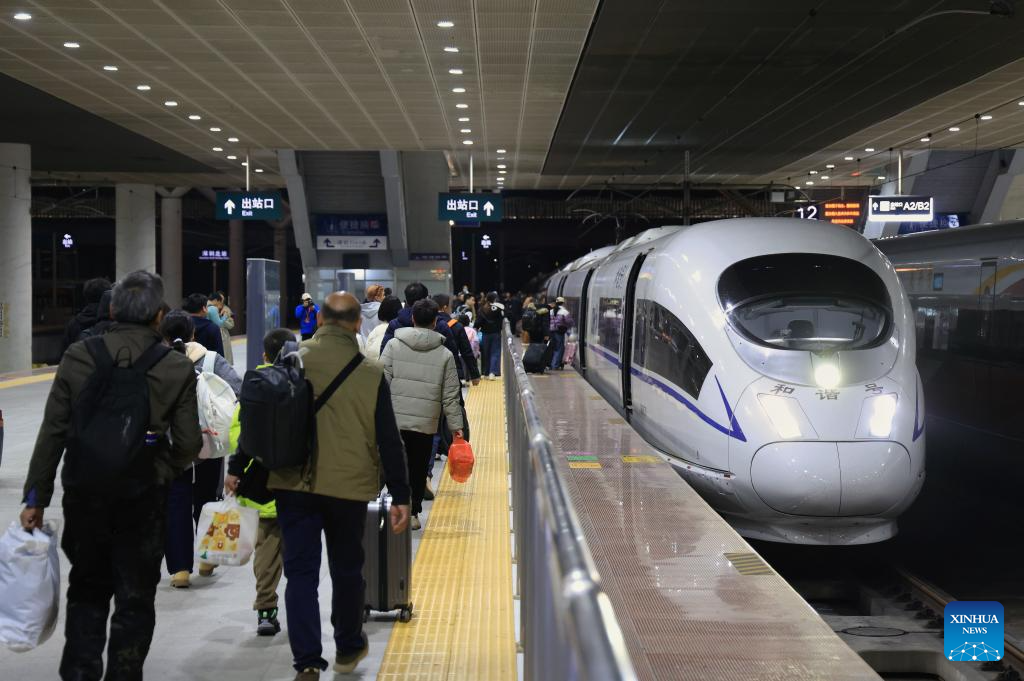
Passengers board a train at Shenzhen North Railway Station in Shenzhen, south China's Guangdong Province, Feb. 2, 2026. China ushered in its largest annual population migration on Monday, 15 days ahead of the 2026 Spring Festival, also known as the Chinese New Year.
A total of 9.5 billion passenger trips are expected during this year's travel rush period that will end on March 13, which will be a historic high.
Of this total, road trips remain the dominant mode of travel, accounting for approximately 80 percent.
An estimated 540 million passenger trips will be handled by the country's railways, while the civil aviation sector will see 95 million trips. Both the overall scale and daily peak traffic of rail and air travel are expected to surpass historic high levels this year.
In China, the 40-day travel surge will witness hundreds of millions of people return to their hometowns for family reunions. (Xinhua/Mao Siqian)
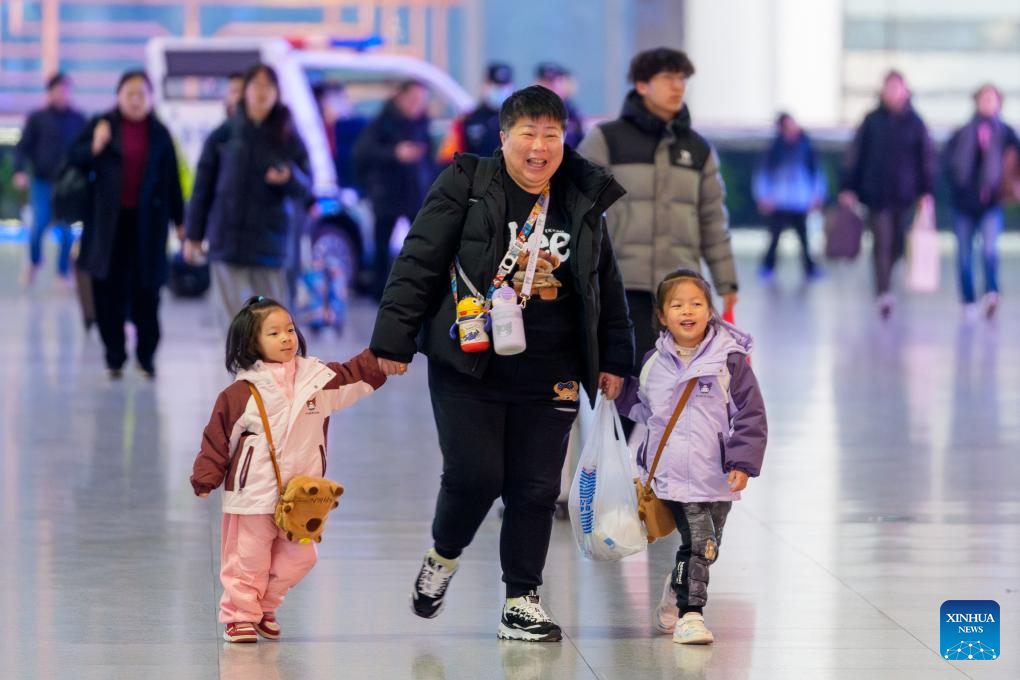
Passengers walk in the waiting hall of Nanjing South Railway Station in Nanjing, east China's Jiangsu Province, Feb. 2, 2026.
China ushered in its largest annual population migration on Monday, 15 days ahead of the 2026 Spring Festival, also known as the Chinese New Year.
A total of 9.5 billion passenger trips are expected during this year's travel rush period that will end on March 13, which will be a historic high.
In China, the 40-day travel surge will witness hundreds of millions of people return to their hometowns for family reunions. (Photo by Du Yi/Xinhua)
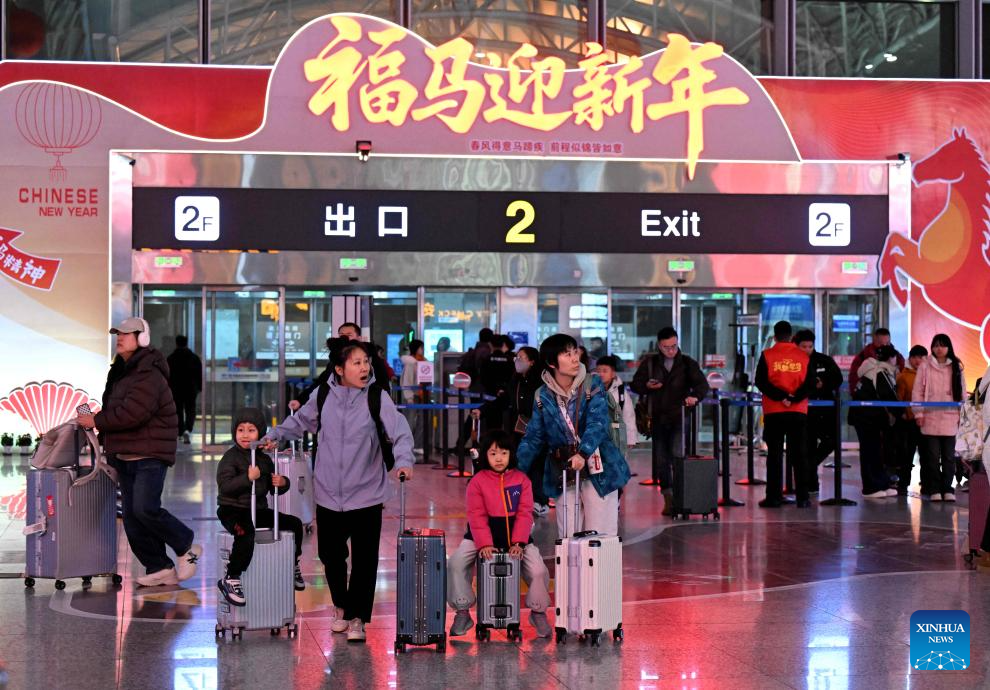
Passengers are seen at Shijiazhuang Zhengding International Airport in Shijiazhuang City, north China's Hebei Province, Feb. 2, 2026.
China ushered in its largest annual population migration on Monday, 15 days ahead of the 2026 Spring Festival, also known as the Chinese New Year.
A total of 9.5 billion passenger trips are expected during this year's travel rush period that will end on March 13, which will be a historic high.
In China, the 40-day travel surge will witness hundreds of millions of people return to their hometowns for family reunions. (Photo by Chen Qibao/Xinhua)
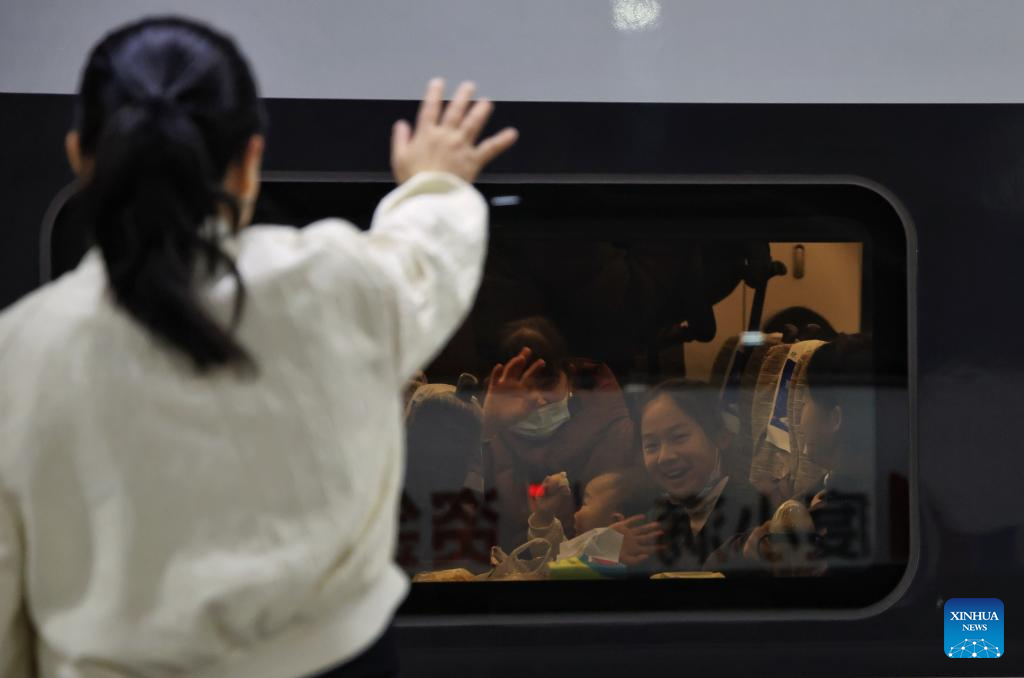
Passengers wave goodbye to their relative at Shenzhen North Railway Station in Shenzhen, south China's Guangdong Province, Feb. 2, 2026. China ushered in its largest annual population migration on Monday, 15 days ahead of the 2026 Spring Festival, also known as the Chinese New Year.
A total of 9.5 billion passenger trips are expected during this year's travel rush period that will end on March 13, which will be a historic high.
Of this total, road trips remain the dominant mode of travel, accounting for approximately 80 percent.
An estimated 540 million passenger trips will be handled by the country's railways, while the civil aviation sector will see 95 million trips. Both the overall scale and daily peak traffic of rail and air travel are expected to surpass historic high levels this year.
In China, the 40-day travel surge will witness hundreds of millions of people return to their hometowns for family reunions. (Xinhua/Mao Siqian)
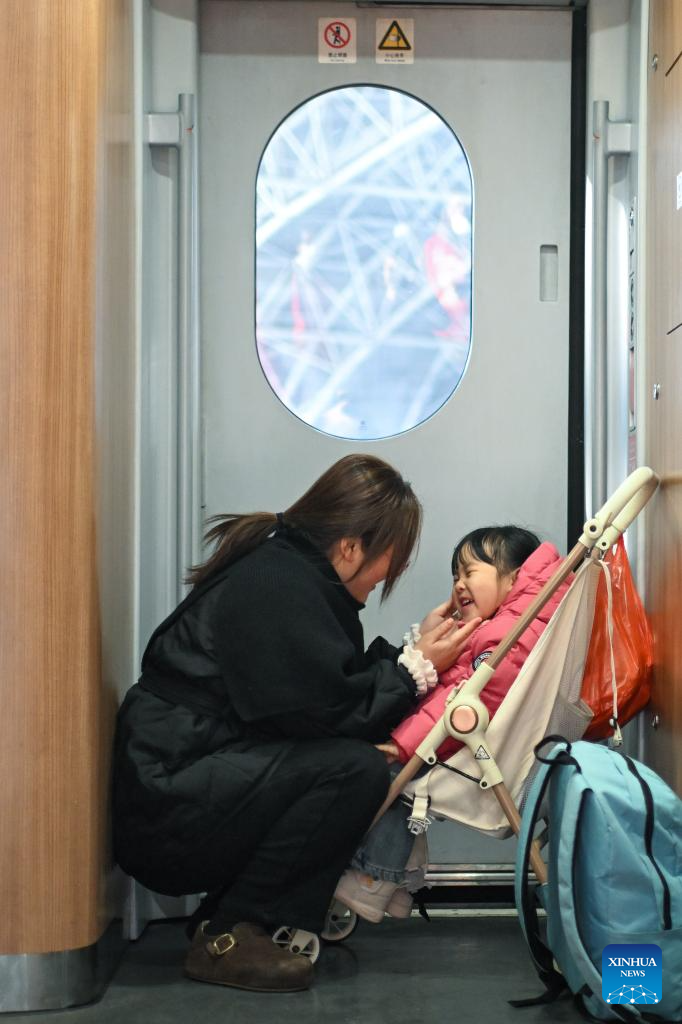
A woman interacts with a child aboard a train at Kunshan South Railway Station in Kunshan City, east China's Jiangsu Province, Feb. 2, 2026.
China ushered in its largest annual population migration on Monday, 15 days ahead of the 2026 Spring Festival, also known as the Chinese New Year.
A total of 9.5 billion passenger trips are expected during this year's travel rush period that will end on March 13, which will be a historic high.
In China, the 40-day travel surge will witness hundreds of millions of people return to their hometowns for family reunions. (Photo by Wang Xuzhong/Xinhua)
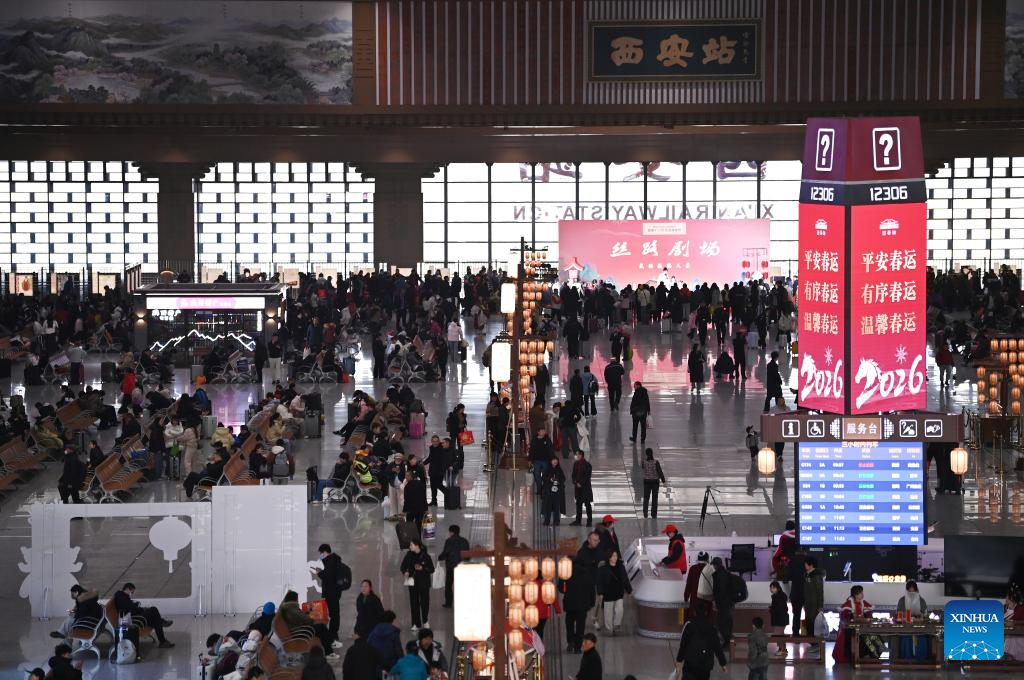
Passengers are pictured at the departure hall of Xi'an Railway Station in Xi'an, northwest China's Shaanxi Province, Feb. 2, 2026. China ushered in its largest annual population migration on Monday, 15 days ahead of the 2026 Spring Festival, also known as the Chinese New Year.
A total of 9.5 billion passenger trips are expected during this year's travel rush period that will end on March 13, which will be a historic high.
Of this total, road trips remain the dominant mode of travel, accounting for approximately 80 percent.
An estimated 540 million passenger trips will be handled by the country's railways, while the civil aviation sector will see 95 million trips. Both the overall scale and daily peak traffic of rail and air travel are expected to surpass historic high levels this year.
In China, the 40-day travel surge will witness hundreds of millions of people return to their hometowns for family reunions. (Xinhua/Li Yibo)
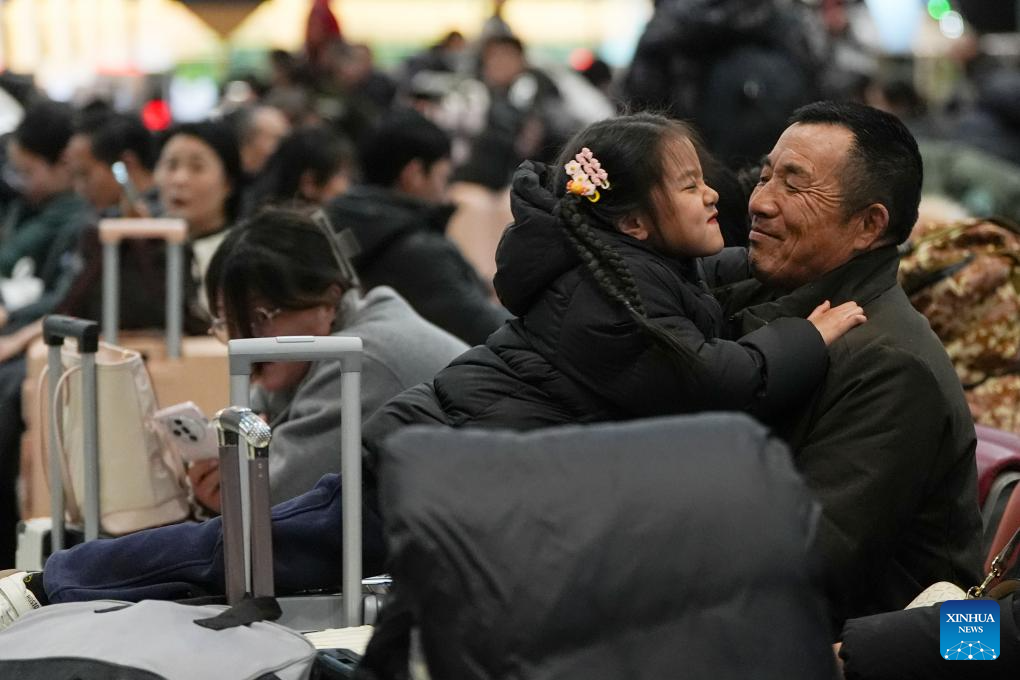
Passengers wait for trains at Beijing West Railway Station in Beijing, capital of China, Feb. 1, 2026.
China ushered in its largest annual population migration on Monday, 15 days ahead of the 2026 Spring Festival, also known as the Chinese New Year.
A total of 9.5 billion passenger trips are expected during this year's travel rush period that will end on March 13, which will be a historic high.
In China, the 40-day travel surge will witness hundreds of millions of people return to their hometowns for family reunions. (Xinhua/Ju Huanzong)
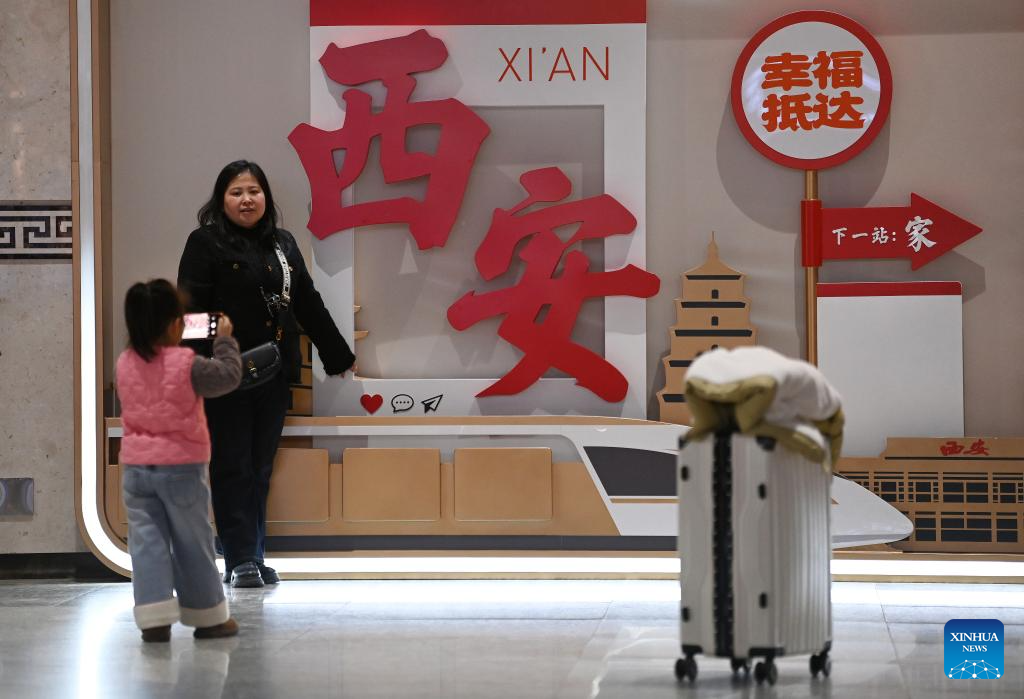
A woman poses for a photo in front of an installation at the departure hall of Xi'an Railway Station in Xi'an, northwest China's Shaanxi Province, Feb. 2, 2026. China ushered in its largest annual population migration on Monday, 15 days ahead of the 2026 Spring Festival, also known as the Chinese New Year.
A total of 9.5 billion passenger trips are expected during this year's travel rush period that will end on March 13, which will be a historic high.
Of this total, road trips remain the dominant mode of travel, accounting for approximately 80 percent.
An estimated 540 million passenger trips will be handled by the country's railways, while the civil aviation sector will see 95 million trips. Both the overall scale and daily peak traffic of rail and air travel are expected to surpass historic high levels this year.
In China, the 40-day travel surge will witness hundreds of millions of people return to their hometowns for family reunions. (Xinhua/Li Yibo)
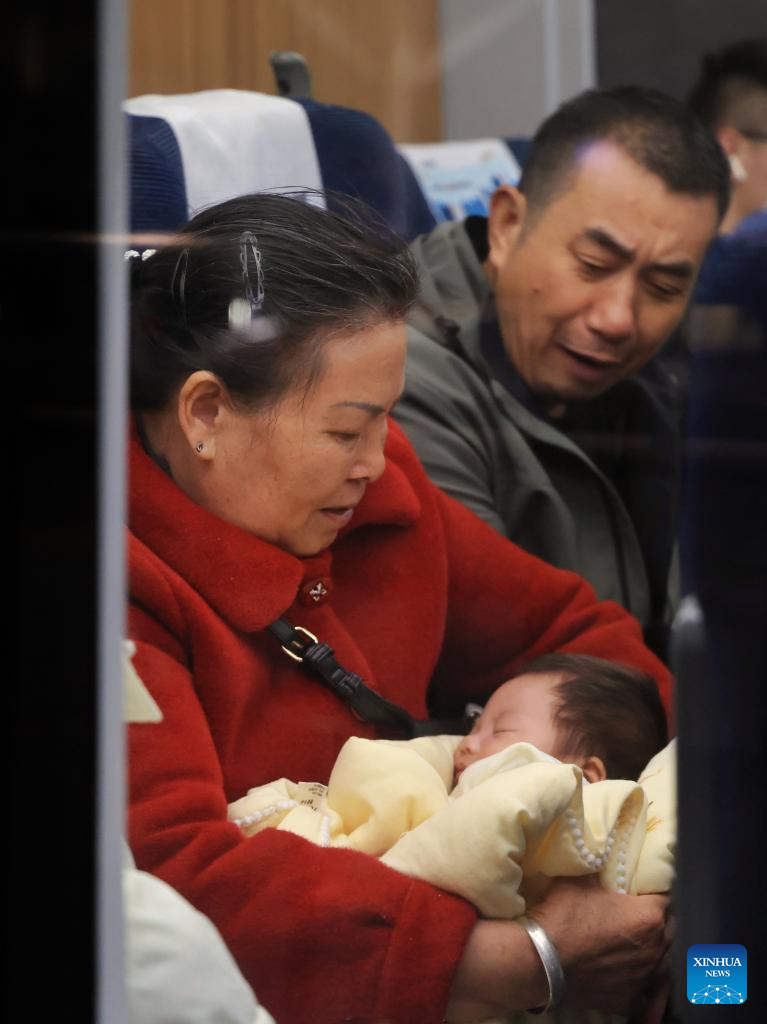
A woman takes care of an infant on a train at Shenzhen North Railway Station in Shenzhen, south China's Guangdong Province, Feb. 2, 2026. China ushered in its largest annual population migration on Monday, 15 days ahead of the 2026 Spring Festival, also known as the Chinese New Year.
A total of 9.5 billion passenger trips are expected during this year's travel rush period that will end on March 13, which will be a historic high.
Of this total, road trips remain the dominant mode of travel, accounting for approximately 80 percent.
An estimated 540 million passenger trips will be handled by the country's railways, while the civil aviation sector will see 95 million trips. Both the overall scale and daily peak traffic of rail and air travel are expected to surpass historic high levels this year.
In China, the 40-day travel surge will witness hundreds of millions of people return to their hometowns for family reunions. (Xinhua/Mao Siqian)
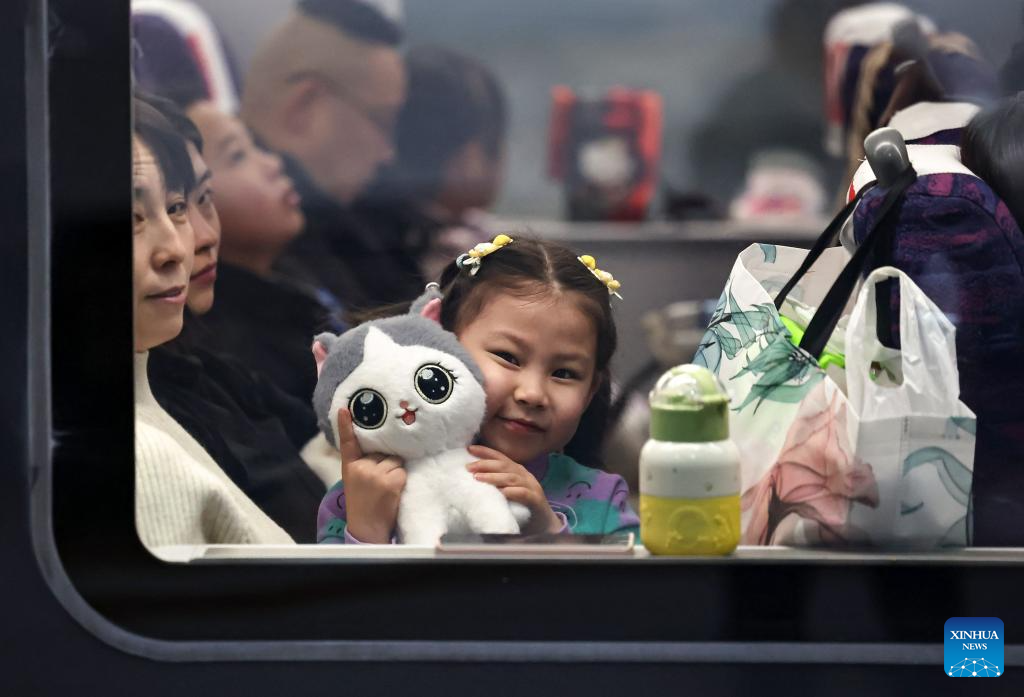
A girl plays with a toy aboard a train at Lanzhou West Railway Station in northwest China's Gansu Province, Feb. 2, 2026.
China ushered in its largest annual population migration on Monday, 15 days ahead of the 2026 Spring Festival, also known as the Chinese New Year.
A total of 9.5 billion passenger trips are expected during this year's travel rush period that will end on March 13, which will be a historic high.
In China, the 40-day travel surge will witness hundreds of millions of people return to their hometowns for family reunions. (Photo by Hou Chonghui/Xinhua)
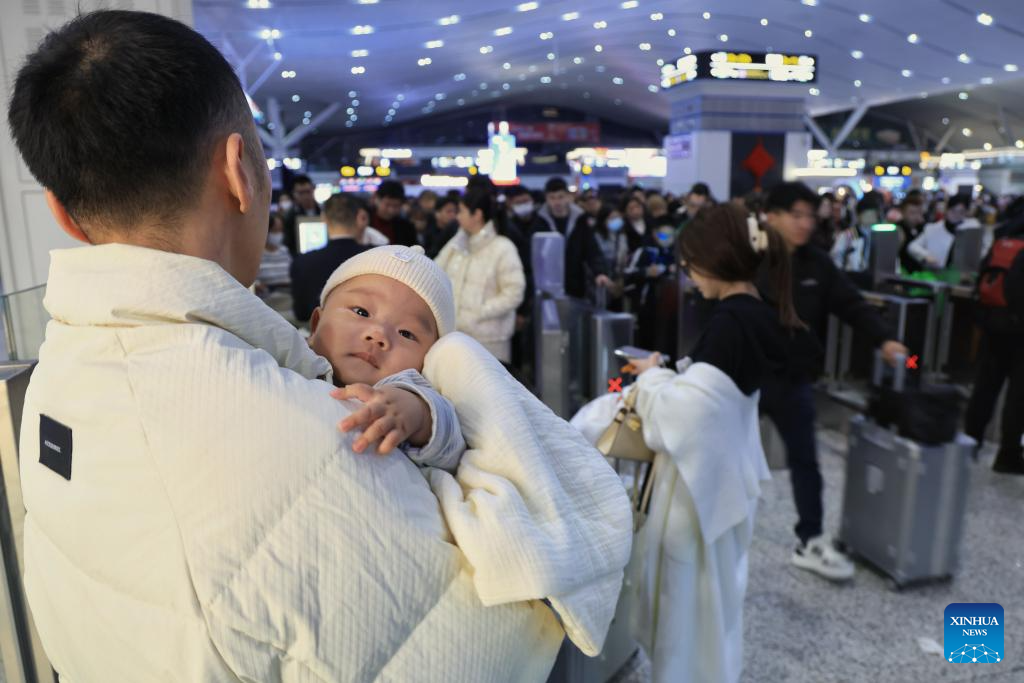
A man holding an infant is pictured at Shenzhen North Railway Station in Shenzhen, south China's Guangdong Province, Feb. 2, 2026. China ushered in its largest annual population migration on Monday, 15 days ahead of the 2026 Spring Festival, also known as the Chinese New Year.
A total of 9.5 billion passenger trips are expected during this year's travel rush period that will end on March 13, which will be a historic high.
Of this total, road trips remain the dominant mode of travel, accounting for approximately 80 percent.
An estimated 540 million passenger trips will be handled by the country's railways, while the civil aviation sector will see 95 million trips. Both the overall scale and daily peak traffic of rail and air travel are expected to surpass historic high levels this year.
In China, the 40-day travel surge will witness hundreds of millions of people return to their hometowns for family reunions. (Xinhua/Mao Siqian)
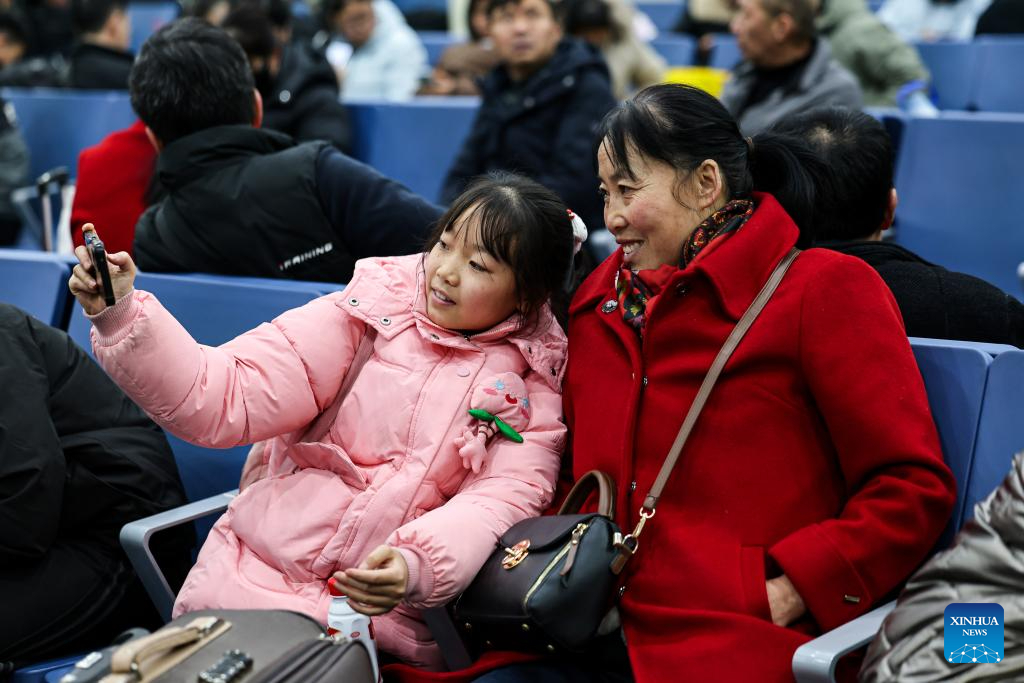
Passengers take selfies at Lanzhou Railway Station in northwest China's Gansu Province, Feb. 2, 2026.
China ushered in its largest annual population migration on Monday, 15 days ahead of the 2026 Spring Festival, also known as the Chinese New Year.
A total of 9.5 billion passenger trips are expected during this year's travel rush period that will end on March 13, which will be a historic high.
In China, the 40-day travel surge will witness hundreds of millions of people return to their hometowns for family reunions. (Photo by Hou Chonghui/Xinhua)
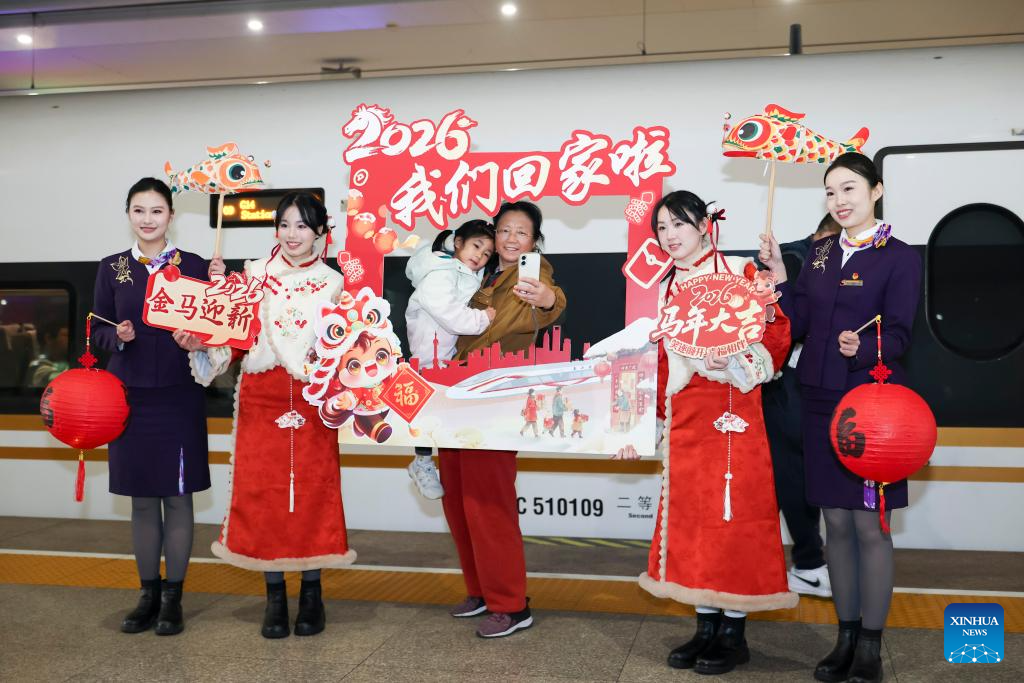
Passengers take photos with railway stewardesses at Shanghai Hongqiao Railway Station in east China's Shanghai, Feb. 2, 2026.
China ushered in its largest annual population migration on Monday, 15 days ahead of the 2026 Spring Festival, also known as the Chinese New Year.
A total of 9.5 billion passenger trips are expected during this year's travel rush period that will end on March 13, which will be a historic high. (Xinhua/Wang Xiang)
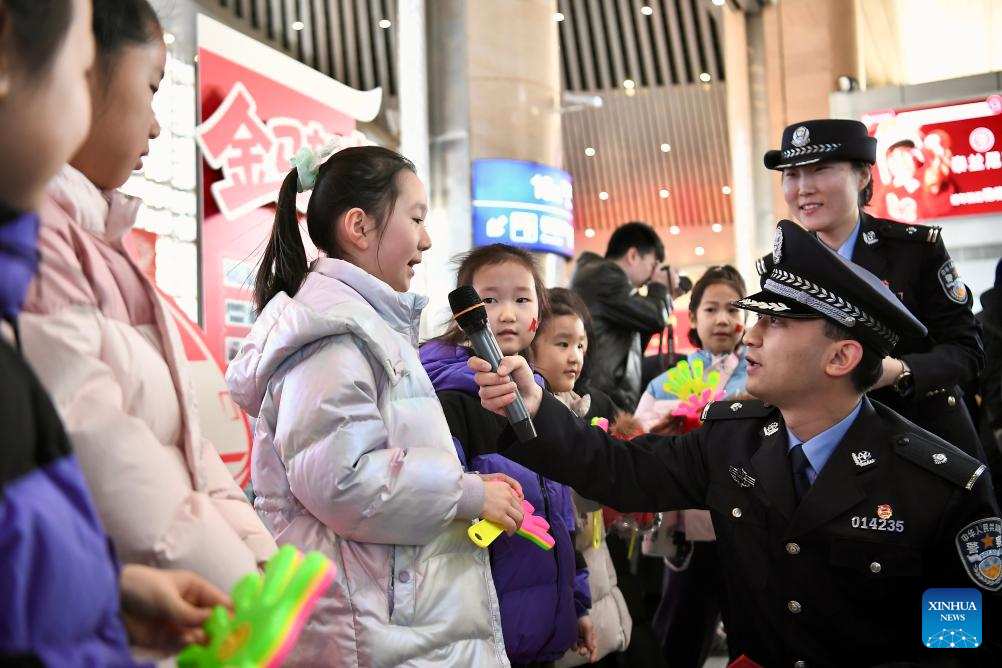
Police officers interact with children at Tianjin Railway Station in Tianjin, north China, Feb. 2, 2026.
China ushered in its largest annual population migration on Monday, 15 days ahead of the 2026 Spring Festival, also known as the Chinese New Year.
A total of 9.5 billion passenger trips are expected during this year's travel rush period that will end on March 13, which will be a historic high. (Xinhua/Sun Fanyue)
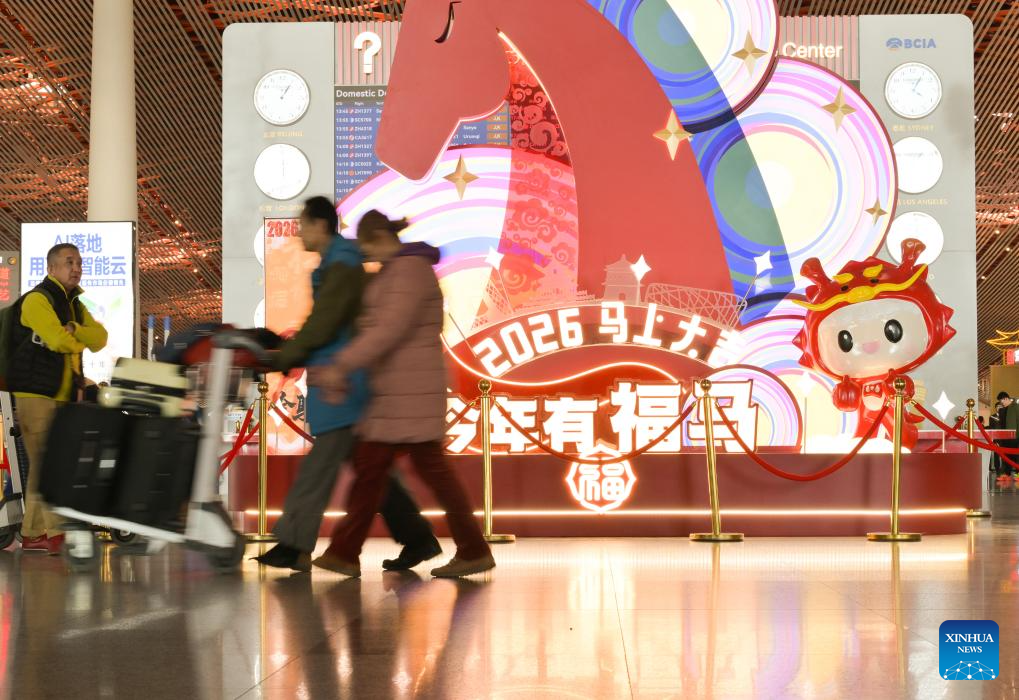
Passengers are seen at Beijing Capital International Airport in Beijing, capital of China, Feb. 2, 2026.
China ushered in its largest annual population migration on Monday, 15 days ahead of the 2026 Spring Festival, also known as the Chinese New Year.
A total of 9.5 billion passenger trips are expected during this year's travel rush period that will end on March 13, which will be a historic high. (Xinhua/Li He)
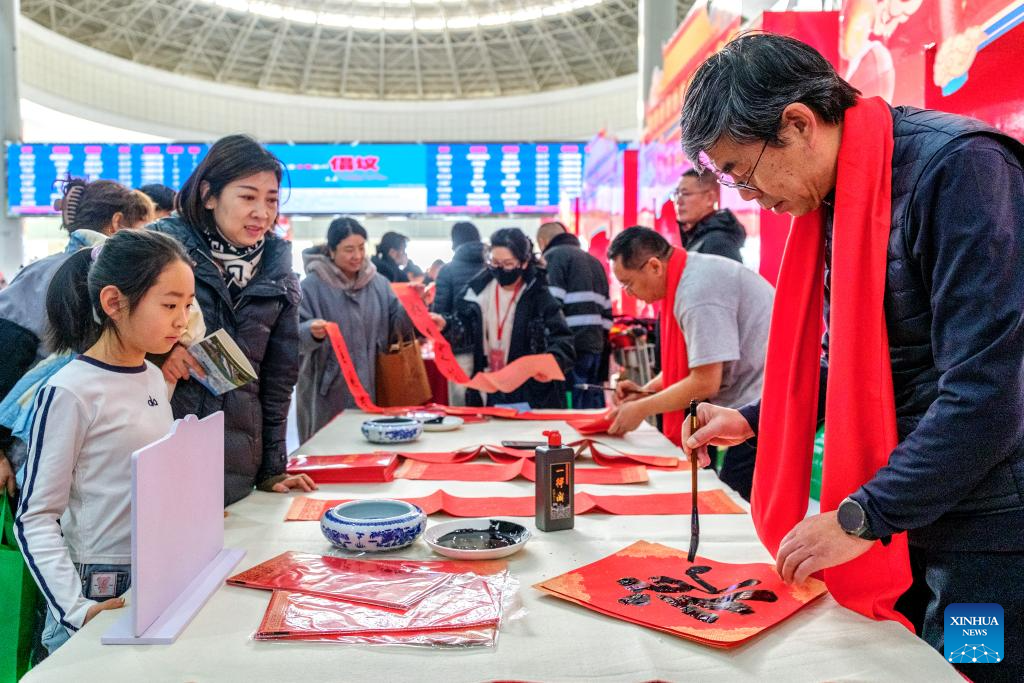
Calligraphers write Spring Festival couplets for passengers at Hohhot East Railway Station in Hohhot, north China's Inner Mongolia Autonomous Region, Feb. 2, 2026.
China ushered in its largest annual population migration on Monday, 15 days ahead of the 2026 Spring Festival, also known as the Chinese New Year.
A total of 9.5 billion passenger trips are expected during this year's travel rush period that will end on March 13, which will be a historic high. (Xinhua/Ma Jinrui)
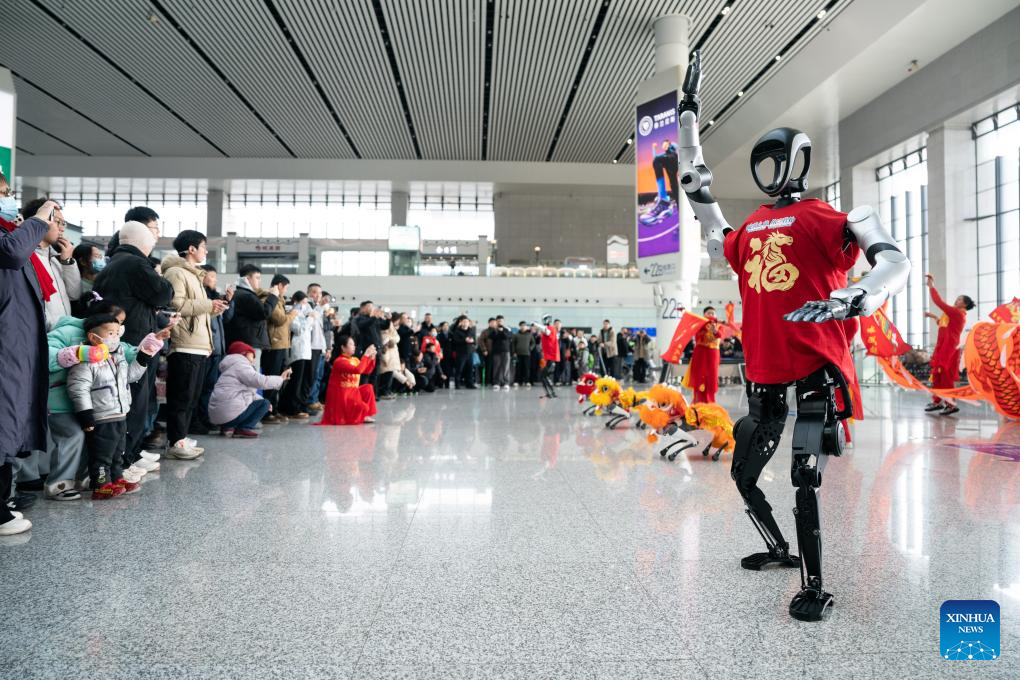
Passengers watch a robot performance at Hefei South Railway Station in Hefei, east China's Anhui Province, Feb. 2, 2026.
China ushered in its largest annual population migration on Monday, 15 days ahead of the 2026 Spring Festival, also known as the Chinese New Year.
A total of 9.5 billion passenger trips are expected during this year's travel rush period that will end on March 13, which will be a historic high. (Xinhua/Du Yu)
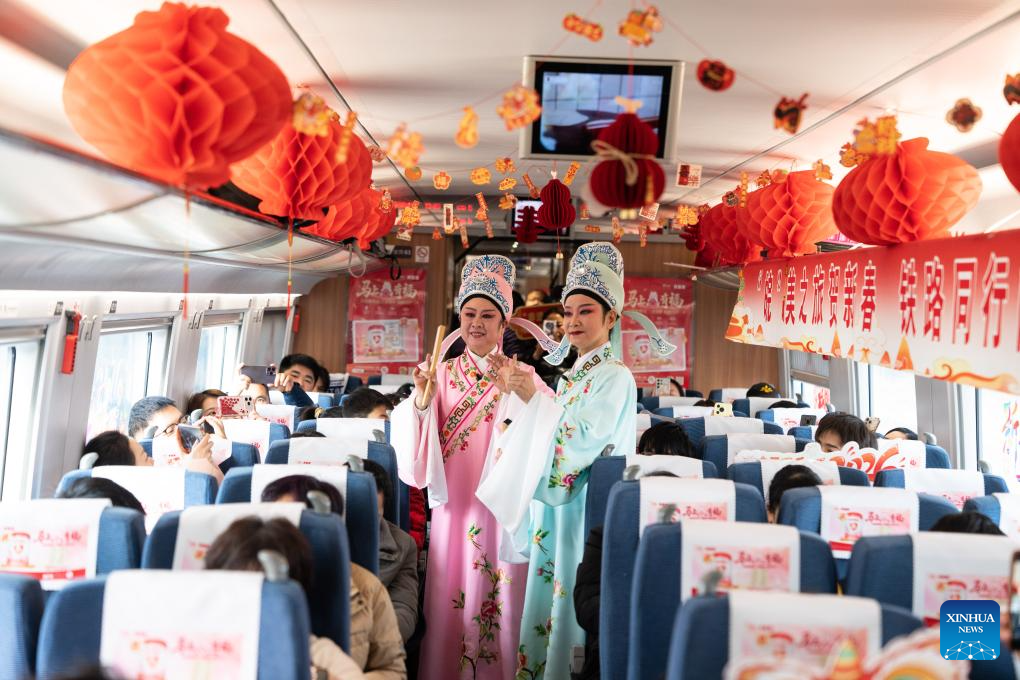
A local opera performance is staged aboard a high-speed train in east China's Anhui Province on Feb. 2, 2026.
China ushered in its largest annual population migration on Monday, 15 days ahead of the 2026 Spring Festival, also known as the Chinese New Year.
A total of 9.5 billion passenger trips are expected during this year's travel rush period that will end on March 13, which will be a historic high. (Xinhua/Du Yu)
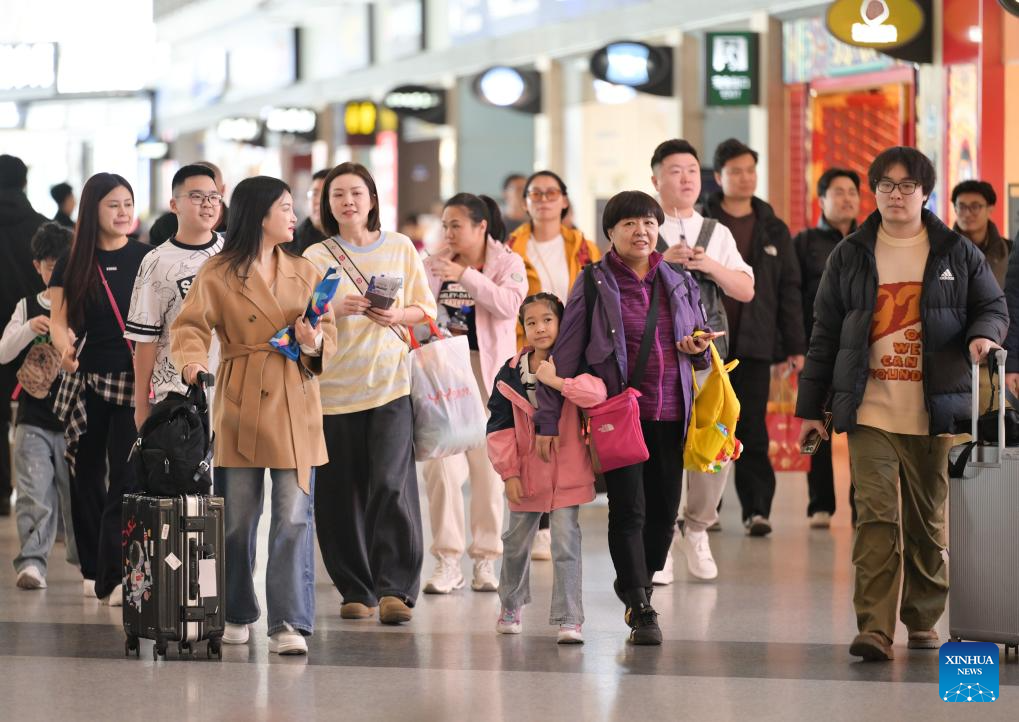
Passengers are seen at Beijing Capital International Airport in Beijing, capital of China, Feb. 2, 2026.
China ushered in its largest annual population migration on Monday, 15 days ahead of the 2026 Spring Festival, also known as the Chinese New Year.
A total of 9.5 billion passenger trips are expected during this year's travel rush period that will end on March 13, which will be a historic high. (Xinhua/Li He)
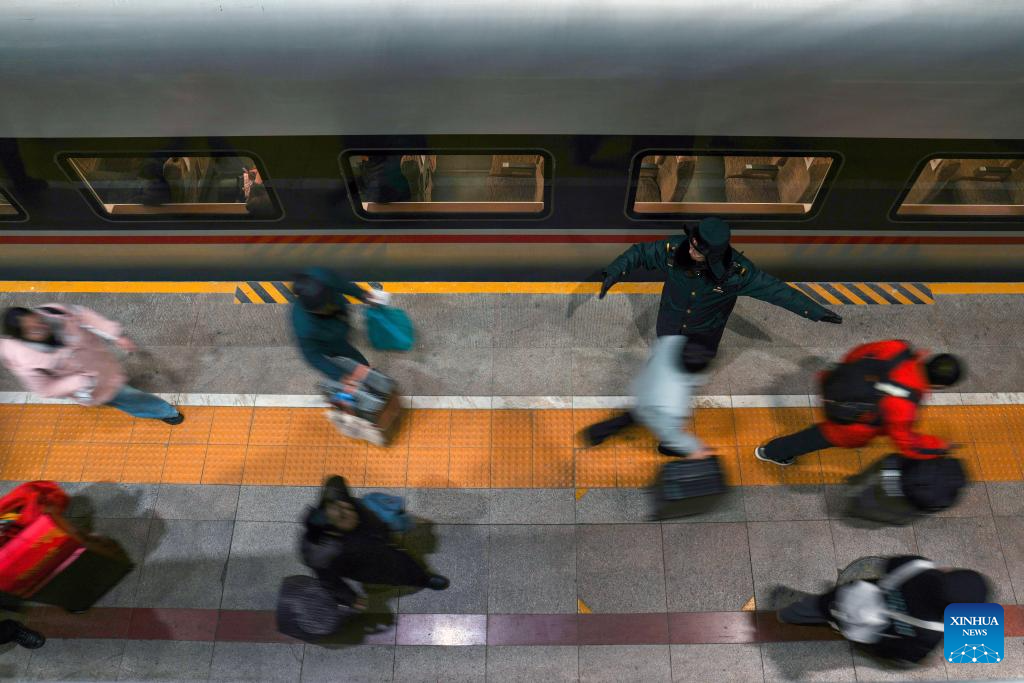
Passengers board a train under the guidance of a staff member at Beijing West Railway Station in Beijing, capital of China, Feb. 2, 2026. China ushered in its largest annual population migration on Monday, 15 days ahead of the 2026 Spring Festival, also known as the Chinese New Year.
A total of 9.5 billion passenger trips are expected during this year's travel rush period that will end on March 13, which will be a historic high.
In China, the 40-day travel surge will witness hundreds of millions of people return to their hometowns for family reunions. (Xinhua/Ju Huanzong)
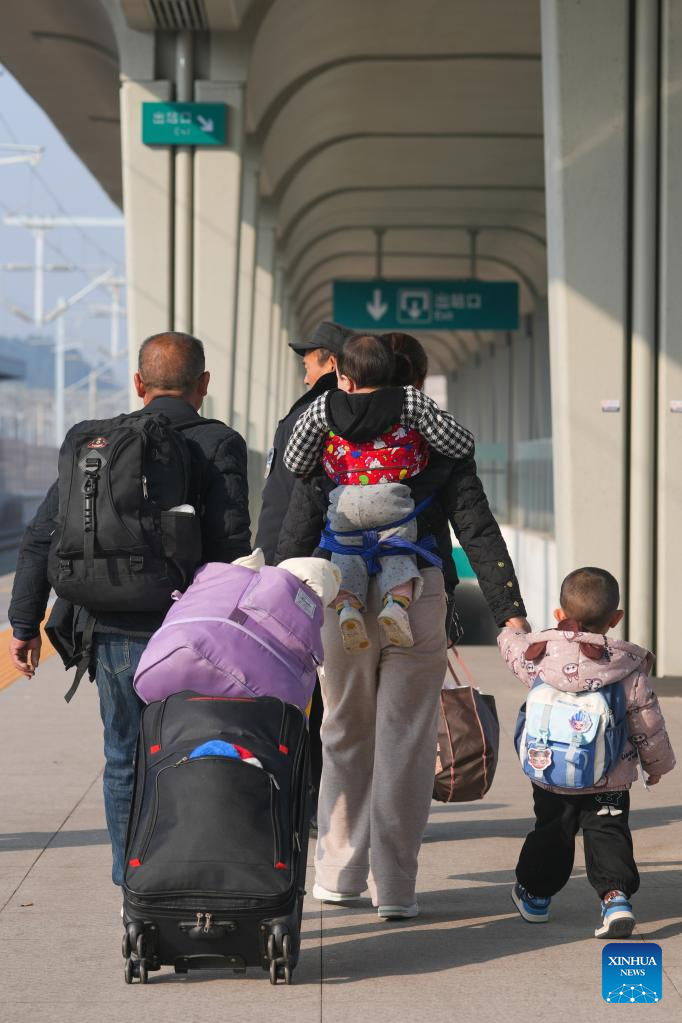
Passengers get off a train at Suining Railway Station in Suining, southwest China's Sichuan Province, Feb. 2, 2026. China ushered in its largest annual population migration on Monday, 15 days ahead of the 2026 Spring Festival, also known as the Chinese New Year.
A total of 9.5 billion passenger trips are expected during this year's travel rush period that will end on March 13, which will be a historic high.
In China, the 40-day travel surge will witness hundreds of millions of people return to their hometowns for family reunions. (Photo by Liu Changsong/Xinhua)

Robots dance for passengers at the waiting hall of Kunshan South Railway Station in Kunshan City, east China's Jiangsu Province, Feb. 2, 2026.
China ushered in its largest annual population migration on Monday, 15 days ahead of the 2026 Spring Festival, also known as the Chinese New Year.
A total of 9.5 billion passenger trips are expected during this year's travel rush period that will end on March 13, which will be a historic high. (Photo by Wang Xuzhong/Xinhua)
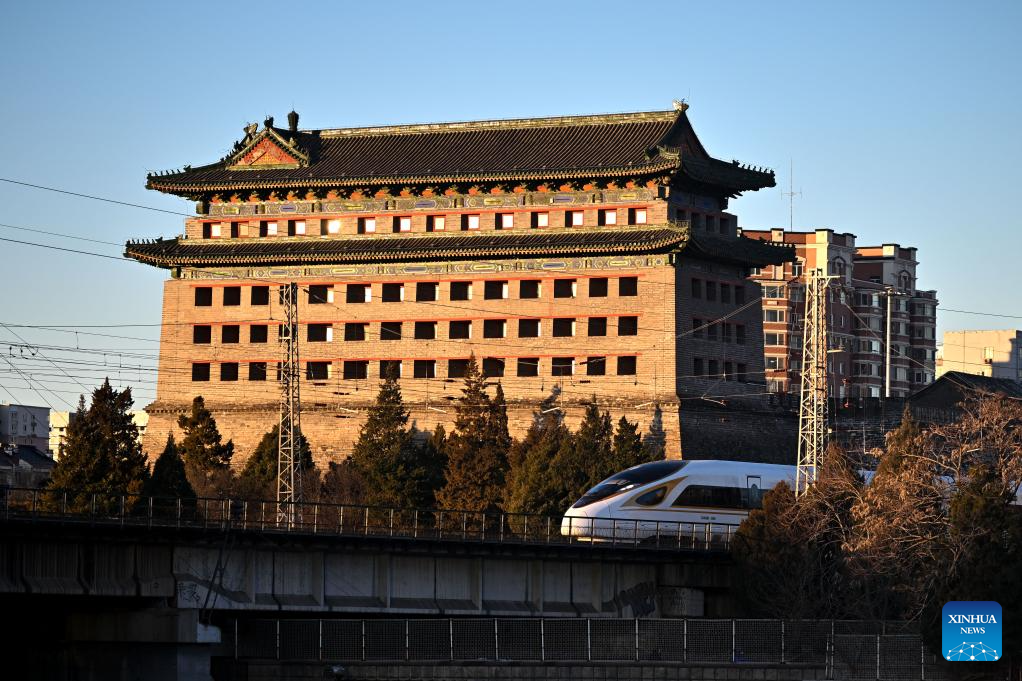
A high-speed train runs in downtown Beijing, capital of China, Feb. 2, 2026.
China ushered in its largest annual population migration on Monday, 15 days ahead of the 2026 Spring Festival, also known as the Chinese New Year.
A total of 9.5 billion passenger trips are expected during this year's travel rush period that will end on March 13, which will be a historic high. (Xinhua/Liu Jinhai)
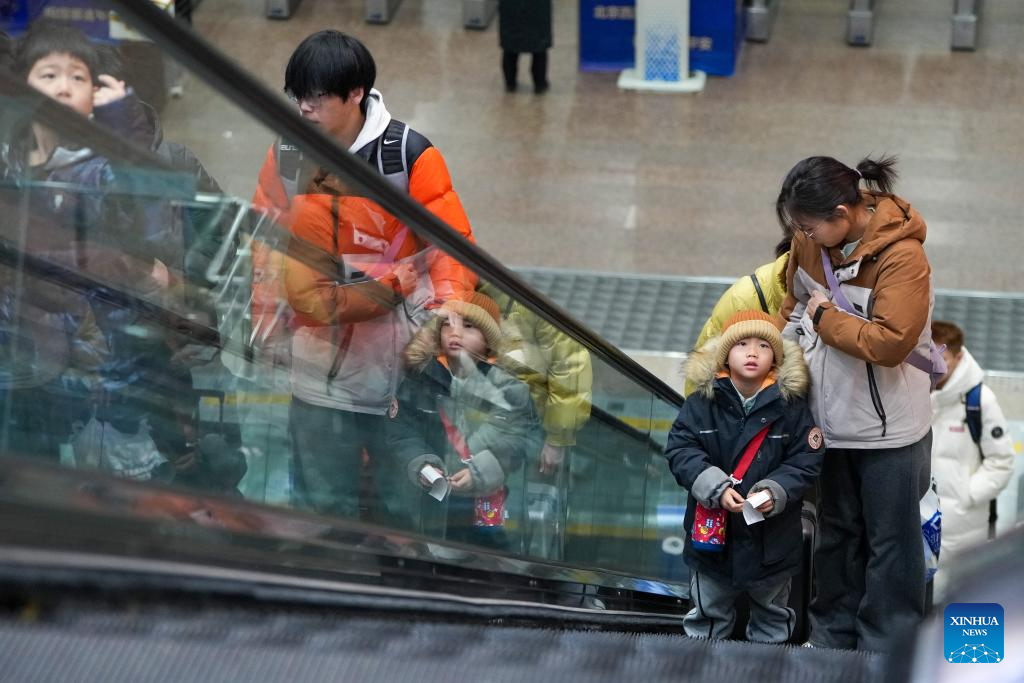
Passengers take escalators at Beijing West Railway Station in Beijing, capital of China, Feb. 2, 2026.
China ushered in its largest annual population migration on Monday, 15 days ahead of the 2026 Spring Festival, also known as the Chinese New Year.
A total of 9.5 billion passenger trips are expected during this year's travel rush period that will end on March 13, which will be a historic high. (Xinhua/Ju Huanzong)
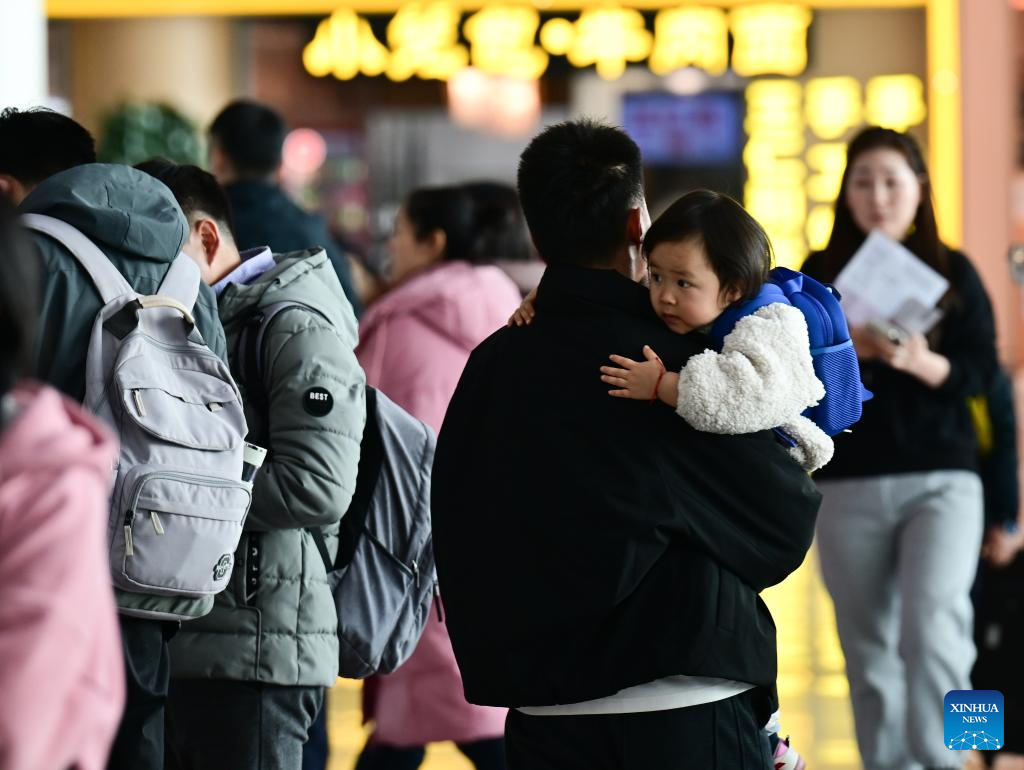
Passengers are seen at Hefei Xinqiao International Airport in Hefei, east China's Anhui Province, Feb. 2, 2026.
China ushered in its largest annual population migration on Monday, 15 days ahead of the 2026 Spring Festival, also known as the Chinese New Year.
A total of 9.5 billion passenger trips are expected during this year's travel rush period that will end on March 13, which will be a historic high. (Xinhua/Zhou Mu)
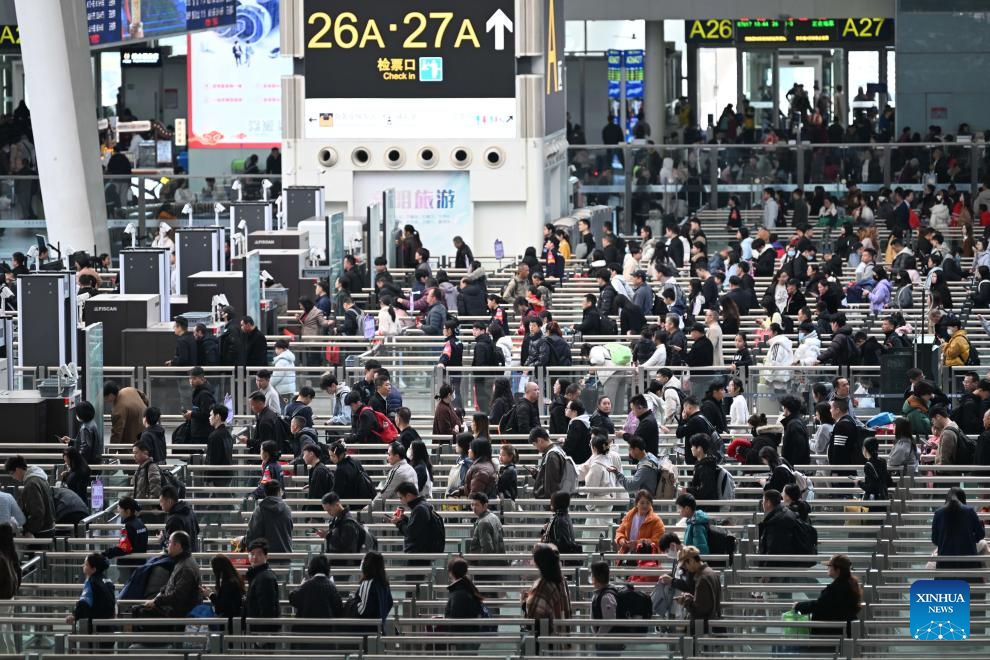
Passengers line up for security check at Guangzhou South Railway Station in Guangzhou, south China's Guangdong Province, Feb. 2, 2026.
China ushered in its largest annual population migration on Monday, 15 days ahead of the 2026 Spring Festival, also known as the Chinese New Year.
A total of 9.5 billion passenger trips are expected during this year's travel rush period that will end on March 13, which will be a historic high. (Xinhua/Deng Hua)
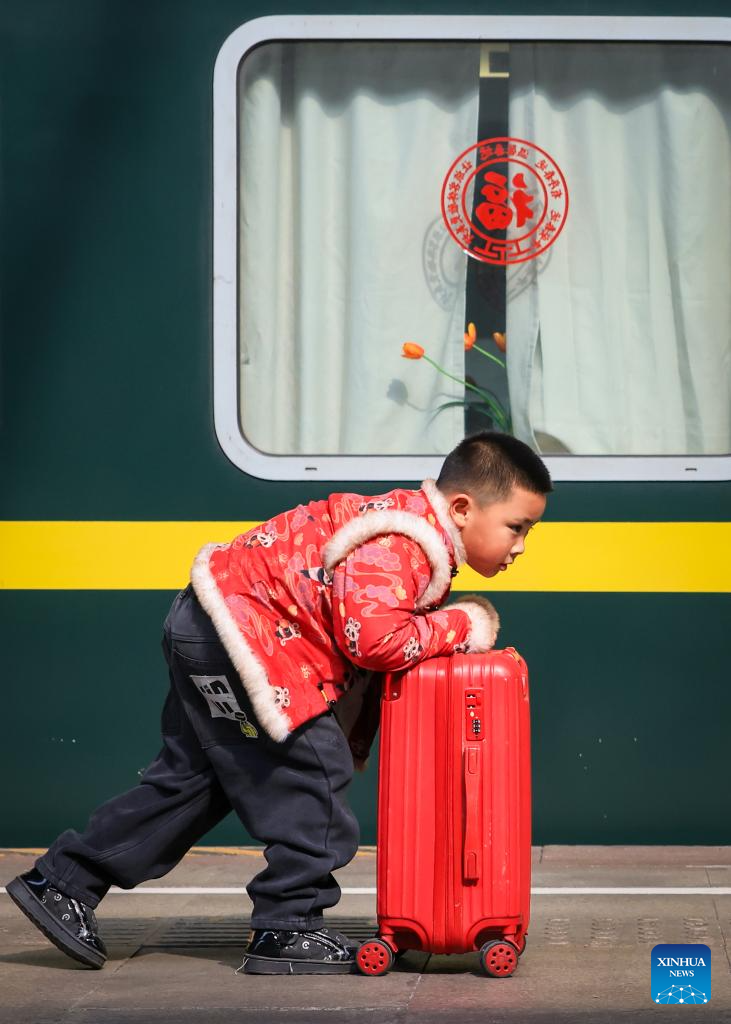
A boy boards a train at Nanjing Railway Station in Nanjing, east China's Jiangsu Province, Feb. 2, 2026.
China ushered in its largest annual population migration on Monday, 15 days ahead of the 2026 Spring Festival, also known as the Chinese New Year.
A total of 9.5 billion passenger trips are expected during this year's travel rush period that will end on March 13, which will be a historic high. (Photo by Su Yang/Xinhua)
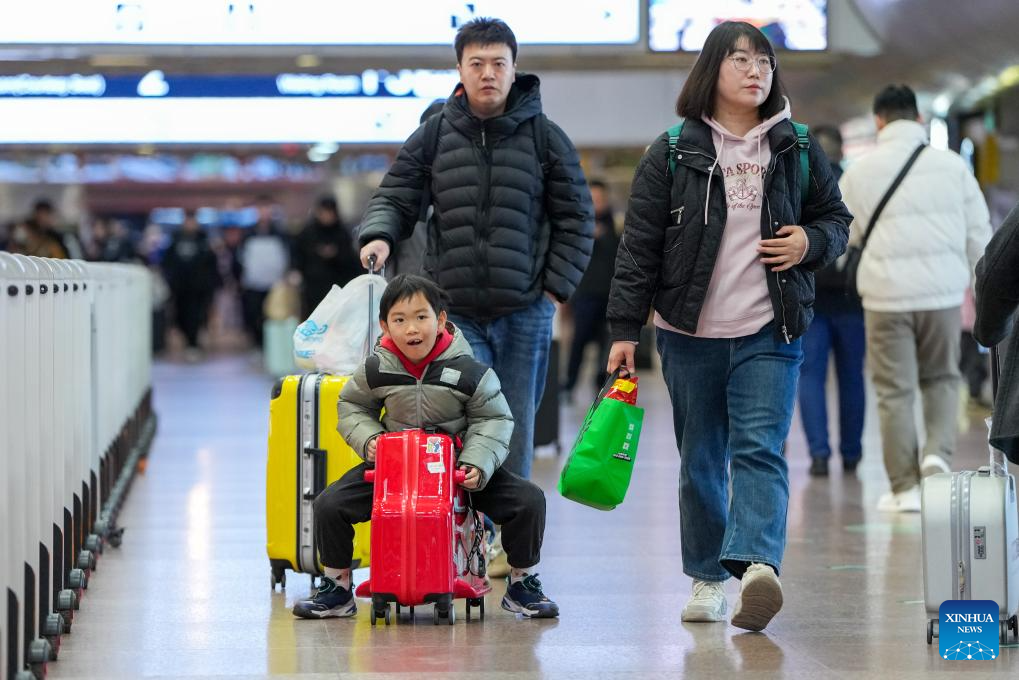
Passengers are seen at Beijing West Railway Station in Beijing, capital of China, Feb. 2, 2026.
China ushered in its largest annual population migration on Monday, 15 days ahead of the 2026 Spring Festival, also known as the Chinese New Year.
A total of 9.5 billion passenger trips are expected during this year's travel rush period that will end on March 13, which will be a historic high. (Xinhua/Ju Huanzong)
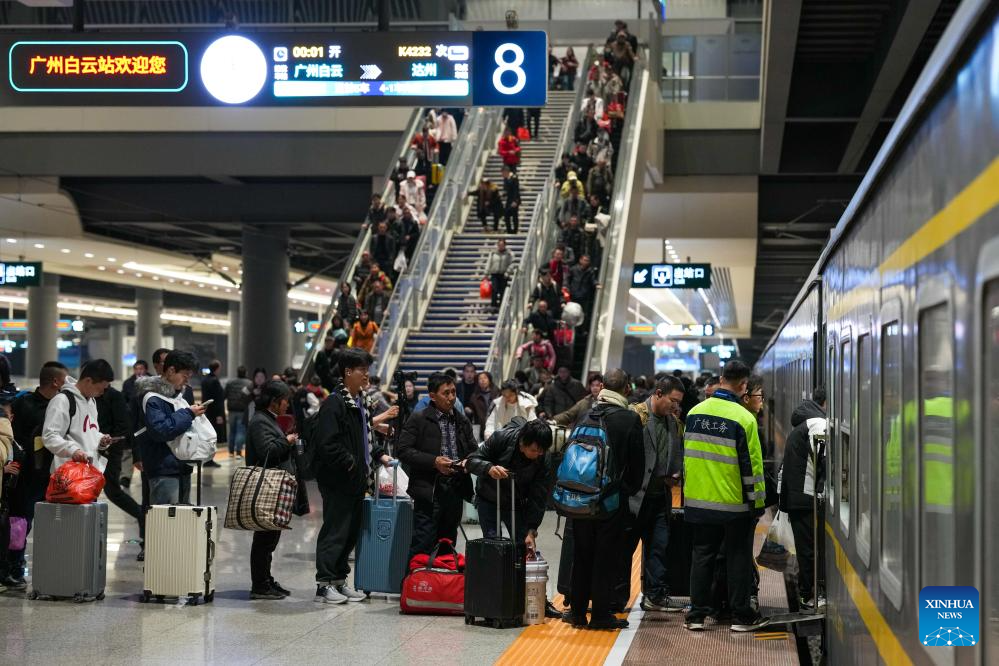
Passengers board a train at Guangzhou Baiyun Railway Station in Guangzhou, south China's Guangdong Province, Feb. 1, 2026.
China ushered in its largest annual population migration on Monday, 15 days ahead of the 2026 Spring Festival, also known as the Chinese New Year.
A total of 9.5 billion passenger trips are expected during this year's travel rush period that will end on March 13, which will be a historic high. (Xinhua/Wu Lu)
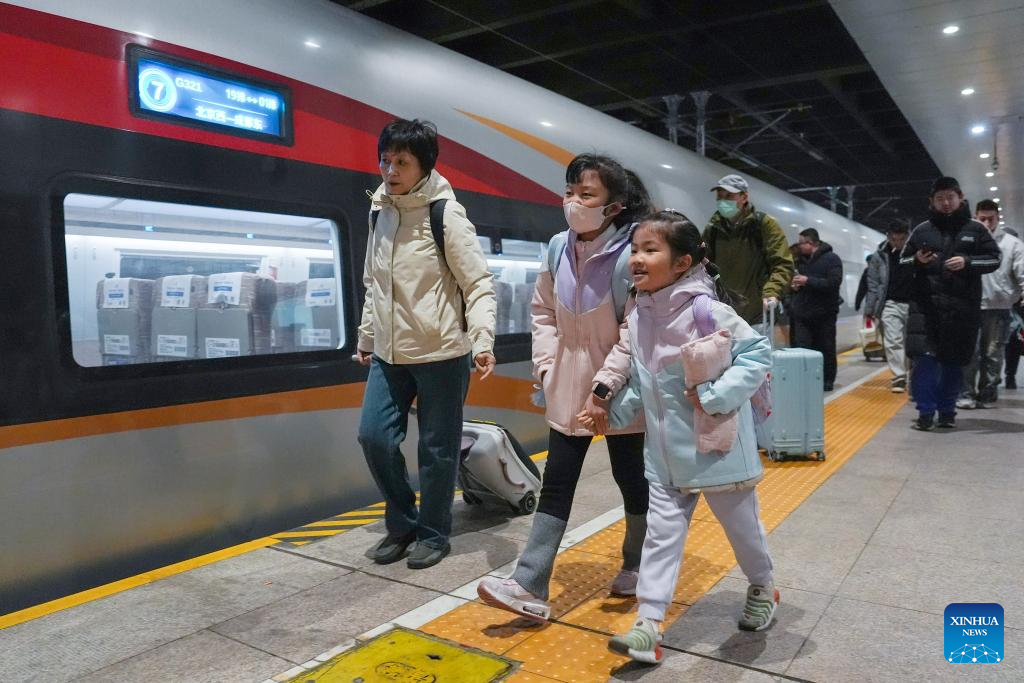
Passengers board a train at Beijing West Railway Station in Beijing, capital of China, Feb. 2, 2026. China ushered in its largest annual population migration on Monday, 15 days ahead of the 2026 Spring Festival, also known as the Chinese New Year.
A total of 9.5 billion passenger trips are expected during this year's travel rush period that will end on March 13, which will be a historic high.
In China, the 40-day travel surge will witness hundreds of millions of people return to their hometowns for family reunions. (Xinhua/Ju Huanzong)
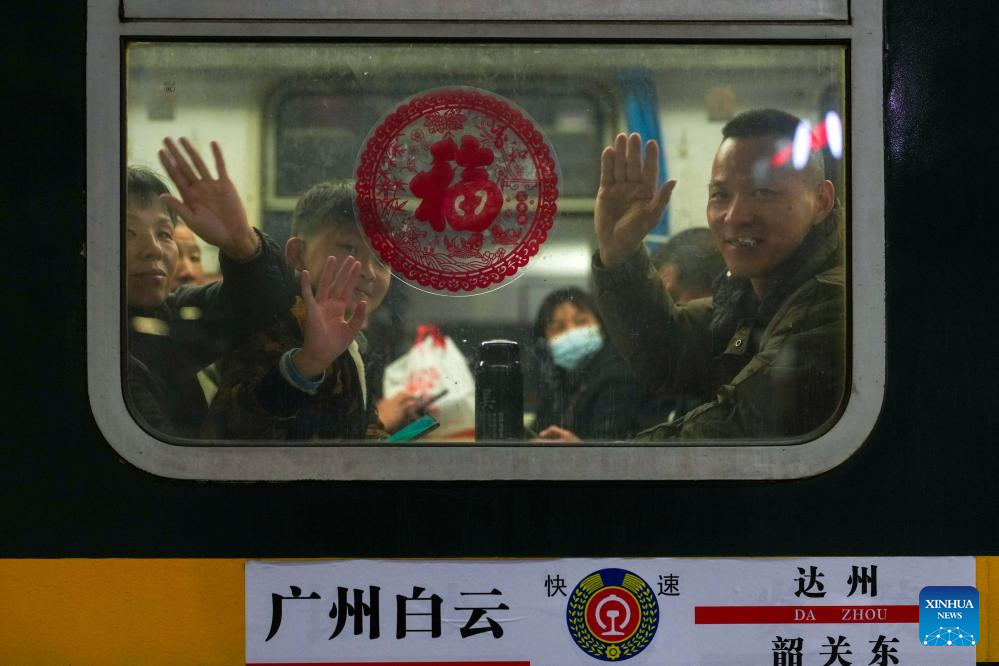
Passengers wave goodbye aboard a train at Guangzhou Baiyun Railway Station in Guangzhou, south China's Guangdong Province, Feb. 1, 2026.
China ushered in its largest annual population migration on Monday, 15 days ahead of the 2026 Spring Festival, also known as the Chinese New Year.
A total of 9.5 billion passenger trips are expected during this year's travel rush period that will end on March 13, which will be a historic high. (Xinhua/Wu Lu)
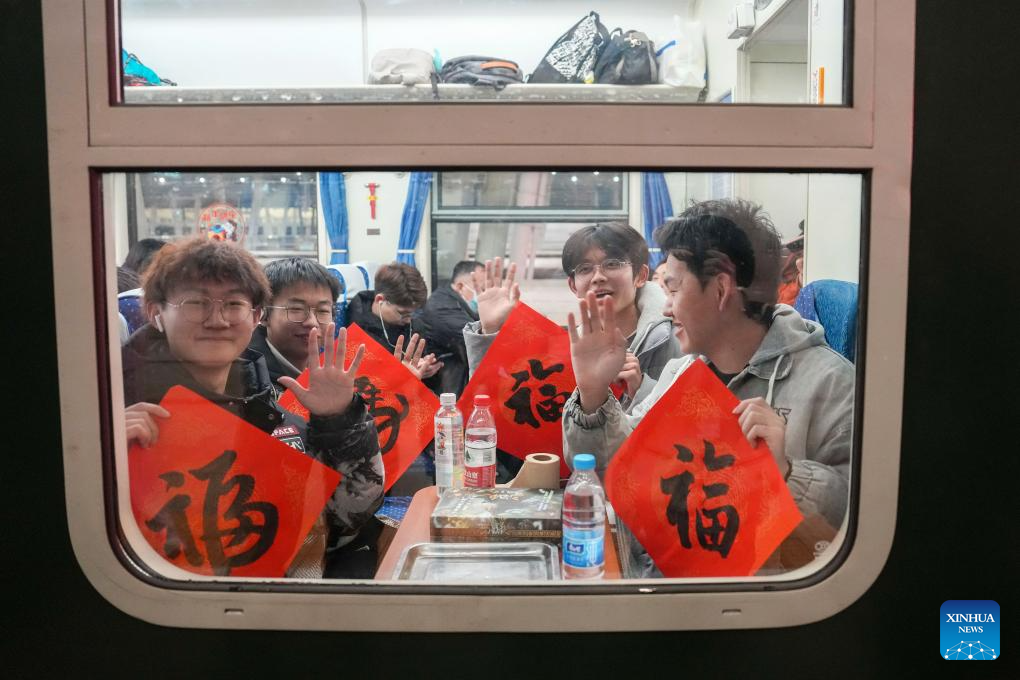
Miao Xinpeng (2nd R), a college freshman, is pictured along with three high school classmates on board train No. K4069 before traveling back to his hometown in east China's Jiangxi for the Spring Festival from Beijing West Railway Station in Beijing, capital of China, early on Feb. 2, 2026. China ushered in its largest annual population migration on Monday, 15 days ahead of the 2026 Spring Festival, also known as the Chinese New Year.
A total of 9.5 billion passenger trips are expected during this year's travel rush period that will end on March 13, which will be a historic high. (Xinhua/Ju Huanzong)
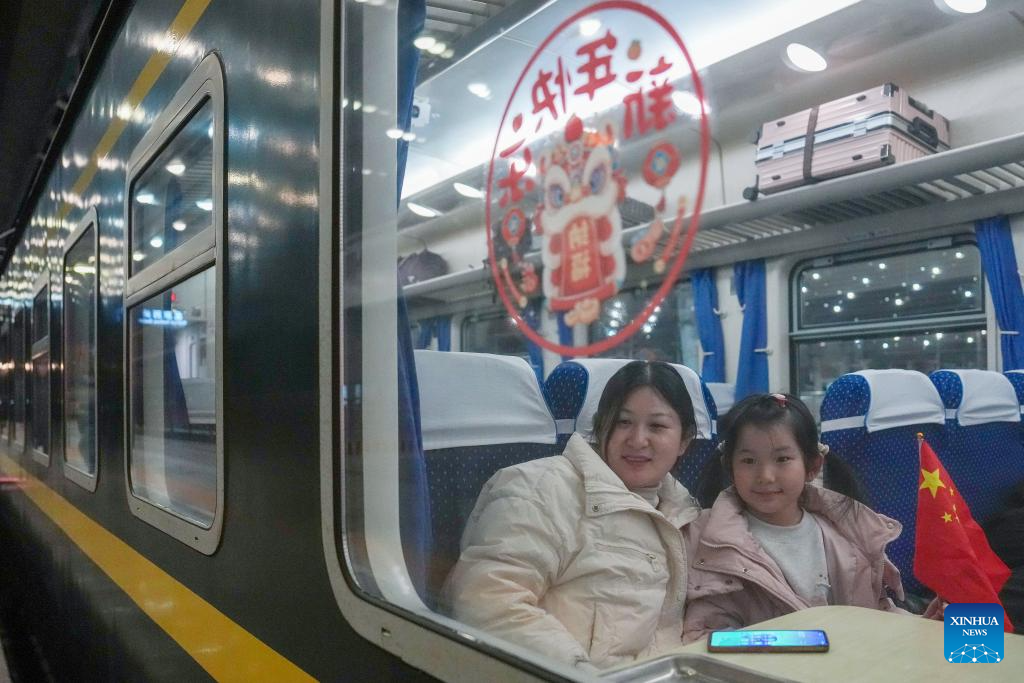
Seven-year-old Xixi (R) is pictured with her mother on train No. K4069 before traveling back to their hometown Zhoukou in central China's Henan Province for the Spring Festival from Beijing West Railway Station in Beijing, capital of China, early on Feb. 2, 2026. China ushered in its largest annual population migration on Monday, 15 days ahead of the 2026 Spring Festival, also known as the Chinese New Year.
A total of 9.5 billion passenger trips are expected during this year's travel rush period that will end on March 13, which will be a historic high. (Xinhua/Ju Huanzong)
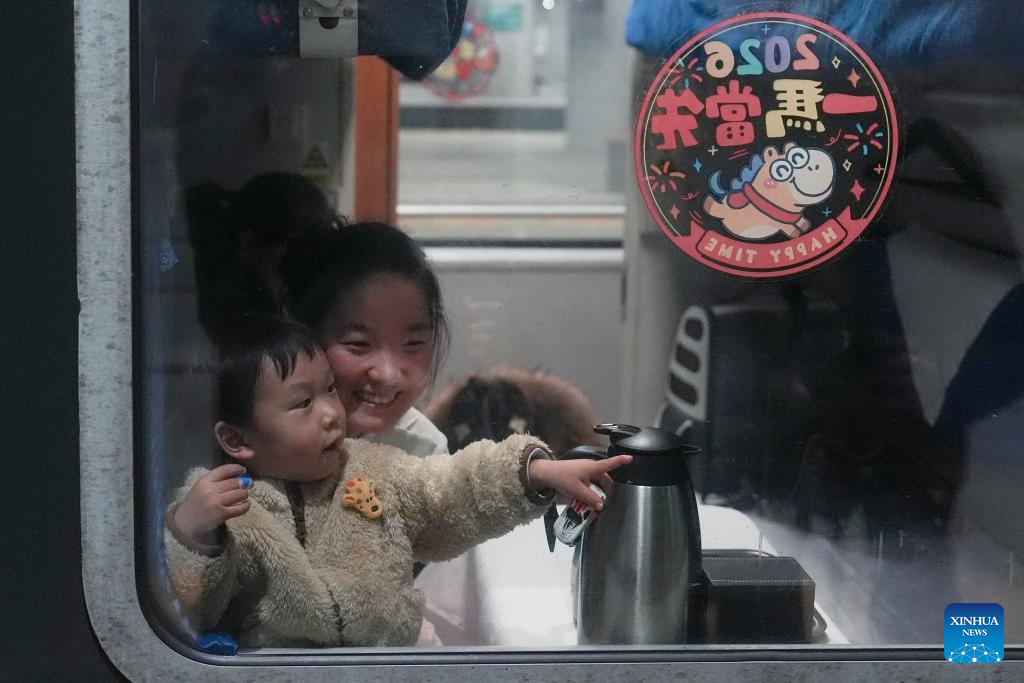
A mother is pictured with her two-year-old toddler on train No. K4069 before traveling back to their hometown Fuyang for the Spring Festival from Beijing West Railway Station in Beijing, capital of China, early on Feb. 2, 2026. China ushered in its largest annual population migration on Monday, 15 days ahead of the 2026 Spring Festival, also known as the Chinese New Year.
A total of 9.5 billion passenger trips are expected during this year's travel rush period that will end on March 13, which will be a historic high. (Xinhua/Ju Huanzong)
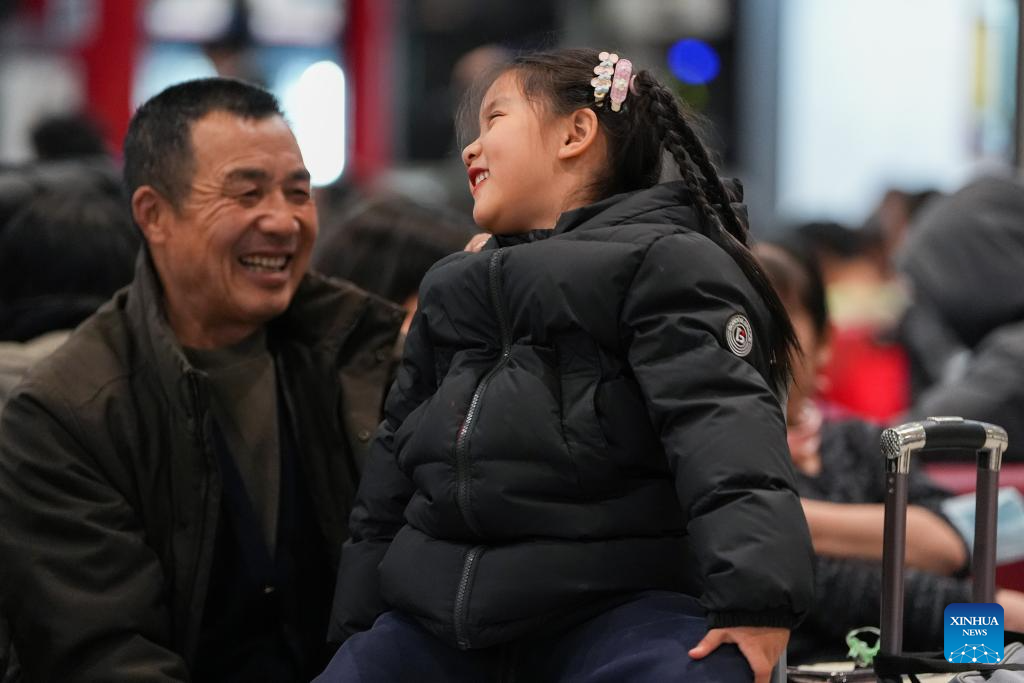
Five-year-old Dai Chenxi (R) plays with her grandfather at the departure hall of Beijing West Railway Station in Beijing, capital of China, Feb. 1, 2026. She will travel with her family on train No. K4069 back to her hometown Gushi in central China's Henan for the Spring Festival. China ushered in its largest annual population migration on Monday, 15 days ahead of the 2026 Spring Festival, also known as the Chinese New Year.
A total of 9.5 billion passenger trips are expected during this year's travel rush period that will end on March 13, which will be a historic high. (Xinhua/Ju Huanzong)
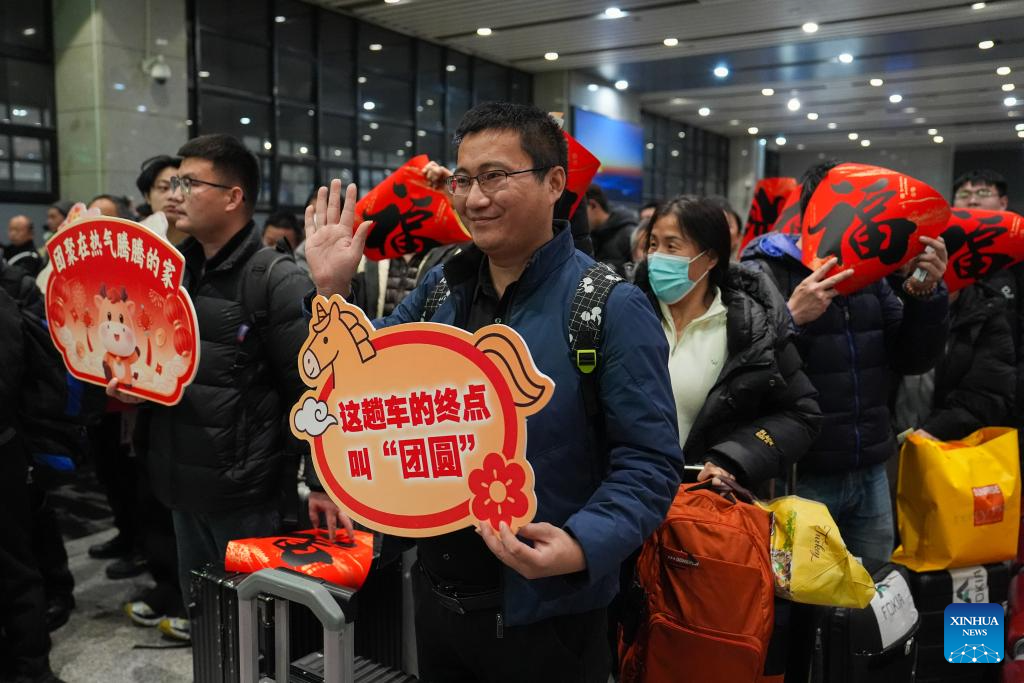
Passengers waiting to board train No. K4069 queue up at the departure hall of Beijing West Railway Station in Beijing, capital of China, Feb. 1, 2026. China ushered in its largest annual population migration on Monday, 15 days ahead of the 2026 Spring Festival, also known as the Chinese New Year.
A total of 9.5 billion passenger trips are expected during this year's travel rush period that will end on March 13, which will be a historic high. (Xinhua/Ju Huanzong)
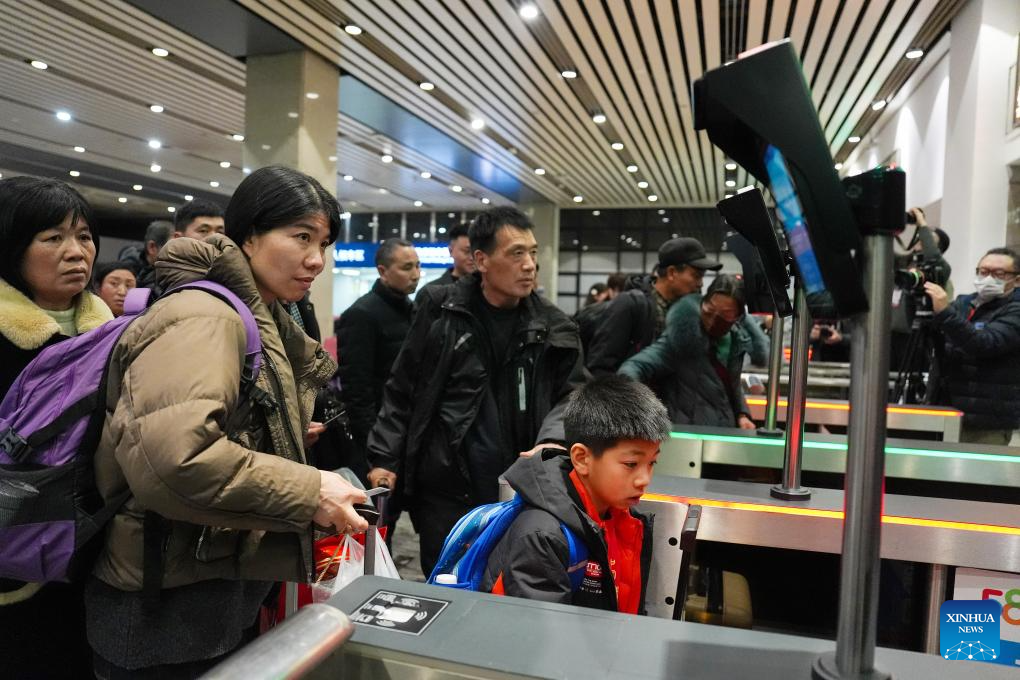
Passengers pass through ticket gates to board train No. K4069 at Beijing West Railway Station in Beijing, capital of China, Feb. 1, 2026. China ushered in its largest annual population migration on Monday, 15 days ahead of the 2026 Spring Festival, also known as the Chinese New Year.
A total of 9.5 billion passenger trips are expected during this year's travel rush period that will end on March 13, which will be a historic high. (Xinhua/Ju Huanzong)
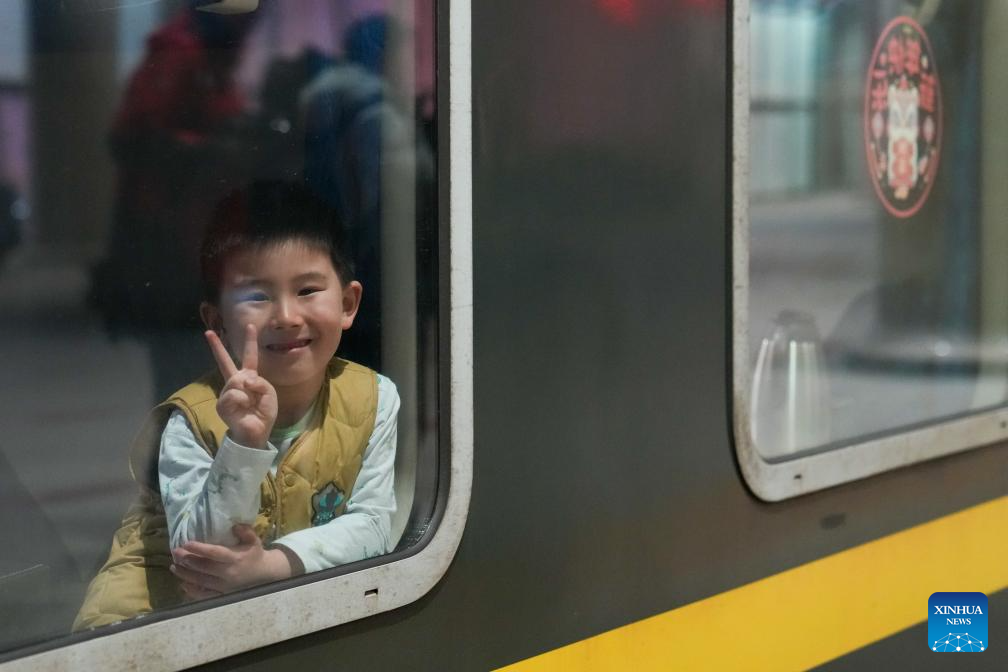
A child traveling with his family poses while on board train No. K4069 at Beijing West Railway Station in Beijing, capital of China, early on Feb. 2, 2026. China ushered in its largest annual population migration on Monday, 15 days ahead of the 2026 Spring Festival, also known as the Chinese New Year.
A total of 9.5 billion passenger trips are expected during this year's travel rush period that will end on March 13, which will be a historic high. (Xinhua/Ju Huanzong)


