
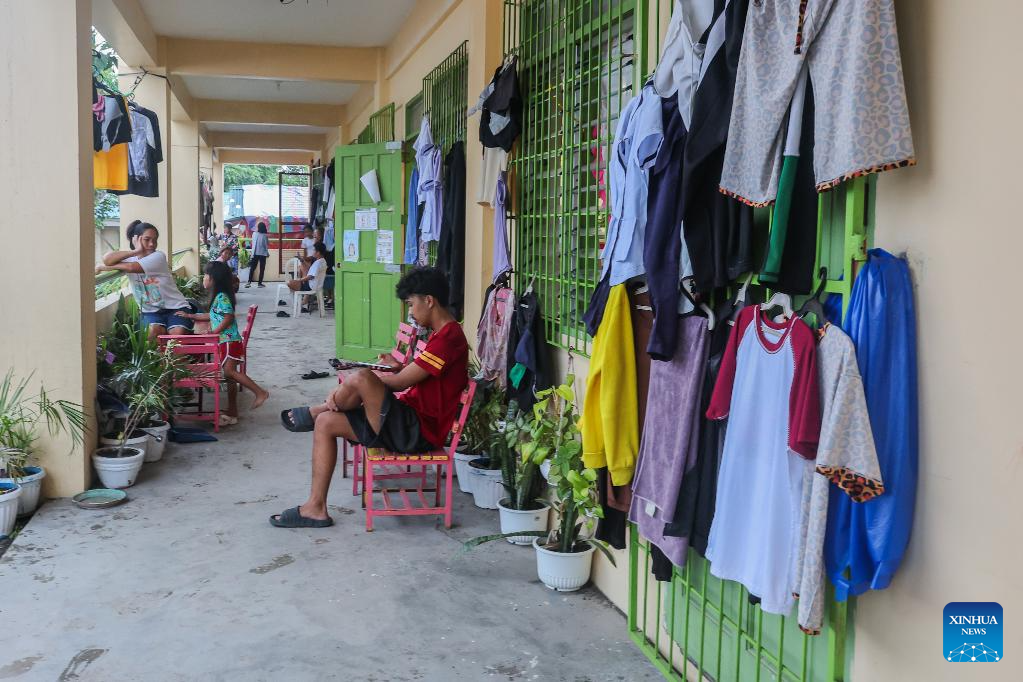
People are seen at a temporary shelter converted from a school as the nearby Mayon Volcano experiences episodic mild magmatic eruptions in Albay Province, the Philippines, Jan. 21, 2026. (Xinhua/Rouelle Umali)
by Xinhua writer Zhang Yisheng
LEGAZPI CITY, the Philippines, Jan. 24 (Xinhua) -- On Luzon island, Mayon Volcano stands tall, a nearly perfect cone against the Philippine sky.
But these days, its beauty is deceptive. Beneath the surface, the mountain is restless. For the thousands of people living in its shadow, Mayon is no longer just a landmark -- it is a ticking time bomb.
Since Jan. 6, the volcano has been under Alert Level 3, signaling "a high level of volcanic unrest." According to the Philippine Institute of Volcanology and Seismology, the volcano has experienced episodic mild magmatic eruptions.
From a rooftop in Legazpi City, the capital of Albay province, one can see thick plumes of ash and steam billowing from the crater. At night, the summit forgoes its darkness, glowing instead with a haunting crimson. Molten rock oozes down the slopes -- streams of lava that resemble an unhealed, fiery scar on the mountainside.
As the volcano smolders, the surrounding towns have become a hive of urgent activity. Local authorities have ordered a massive evacuation, and around 4,000 residents have already been compelled to flee their homes within the six-kilometer radius permanent danger zone.
Roderick Mendoza, chief of the Albay Public Safety and Emergency Management Office, warned that ashfall has already reached Legazpi City and nearby towns.
"We cannot gamble with lives," said Tim Florece, public information officer of Camalig, a town nestled at the base of the restive mountain. "If the activity increases, the alert level will be raised to level 4, meaning more people will be forced to leave."
The risks are etched in history. Cagsawa in Daraga, bordering Camalig, was once a thriving settlement until the catastrophic 1814 eruption. Today, only its iconic belfry stands as a silent witness to the volcano's destructive might.
As the lava continues its creeping descent, thousands of residents must live in shelters for an indefinite period.
They have been packed into classrooms or temporary tents. Children play on the floor while their parents stare toward the volcano, watching the smoke.
"We are used to this," said 18-year-old Leonilo Duran, who has shared a single classroom with 33 others for more than three weeks. To pass the time when the mobile signal fails, he sings.
"Living with Mayon means adapting to its temper," Duran said. "In the face of nature's power, we have no choice but to adapt."
The Philippines, which sits on the Pacific "Ring of Fire," has more than 20 active volcanoes. For those at the foot of Mayon, life is a delicate tango: one step in awe of nature's masterpiece, the next in survival of its volatile breath. Enditem
(Xinhua reporters Guo Yige and Dario Agnote also contributed to the story.)
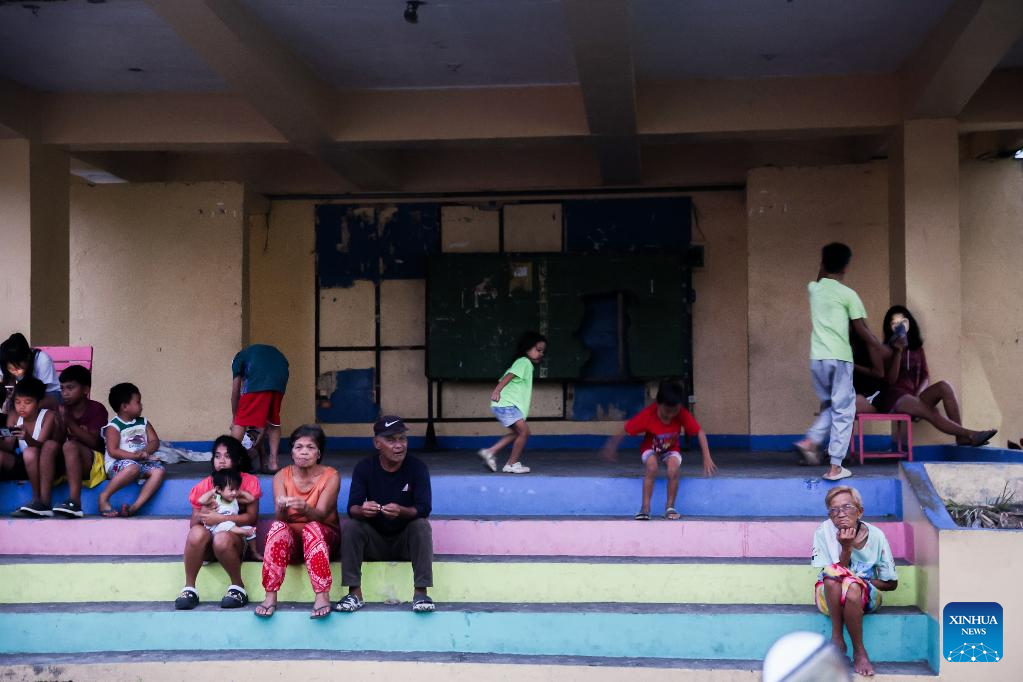
People are seen at a temporary shelter converted from a school as the nearby Mayon Volcano experiences episodic mild magmatic eruptions in Albay Province, the Philippines, Jan. 21, 2026. (Xinhua/Rouelle Umali)
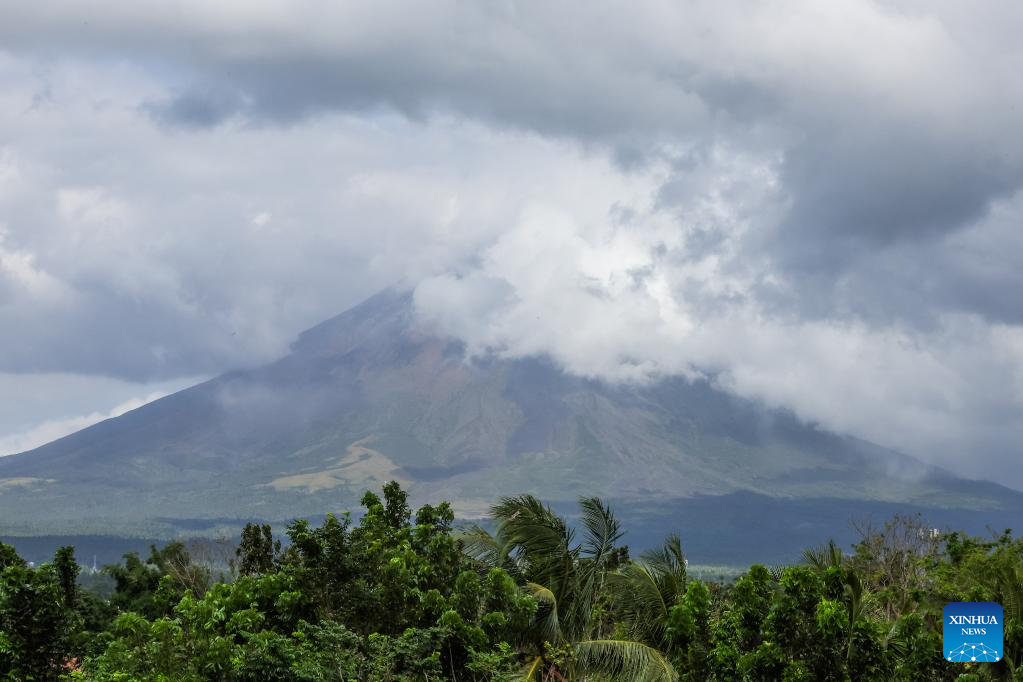
Mayon Volcano is seen covered in clouds in Albay Province, the Philippines, Jan. 24, 2026. (Xinhua/Rouelle Umali)
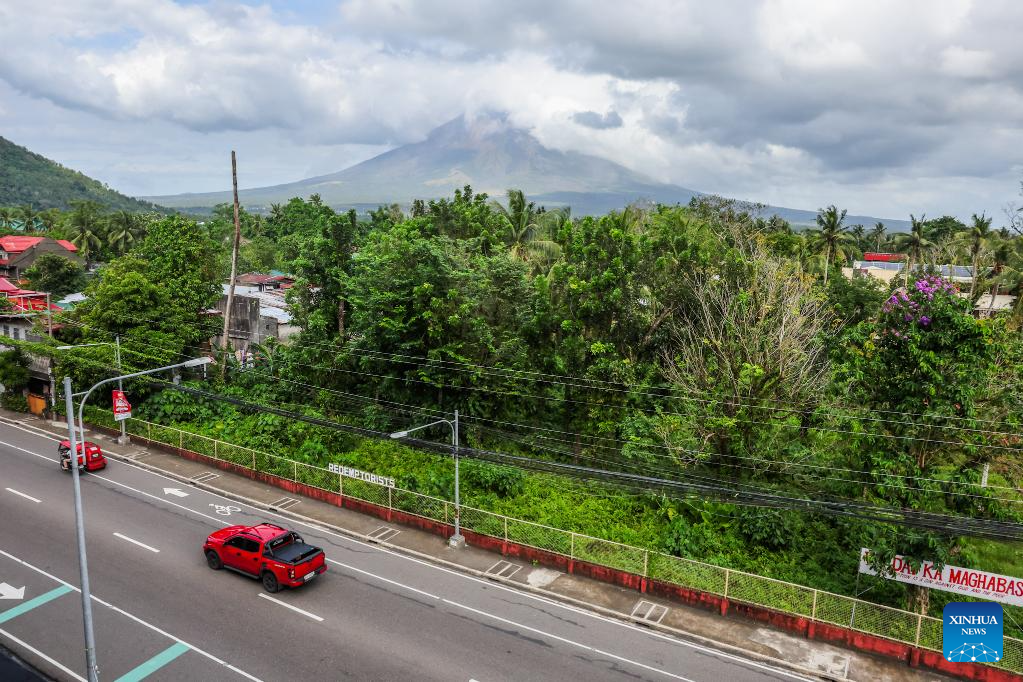
Mayon Volcano is seen covered in clouds in Albay Province, the Philippines, Jan. 24, 2026. (Xinhua/Rouelle Umali)
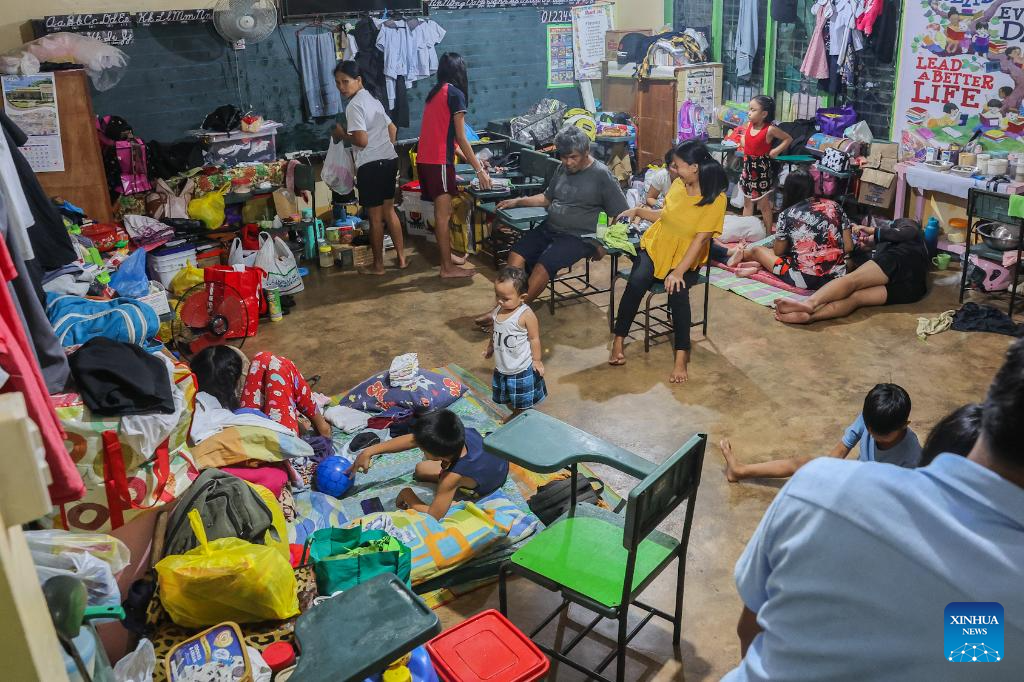
People are seen at a temporary shelter converted from a school as the nearby Mayon Volcano experiences episodic mild magmatic eruptions in Albay Province, the Philippines, Jan. 21, 2026. (Xinhua/Rouelle Umali)
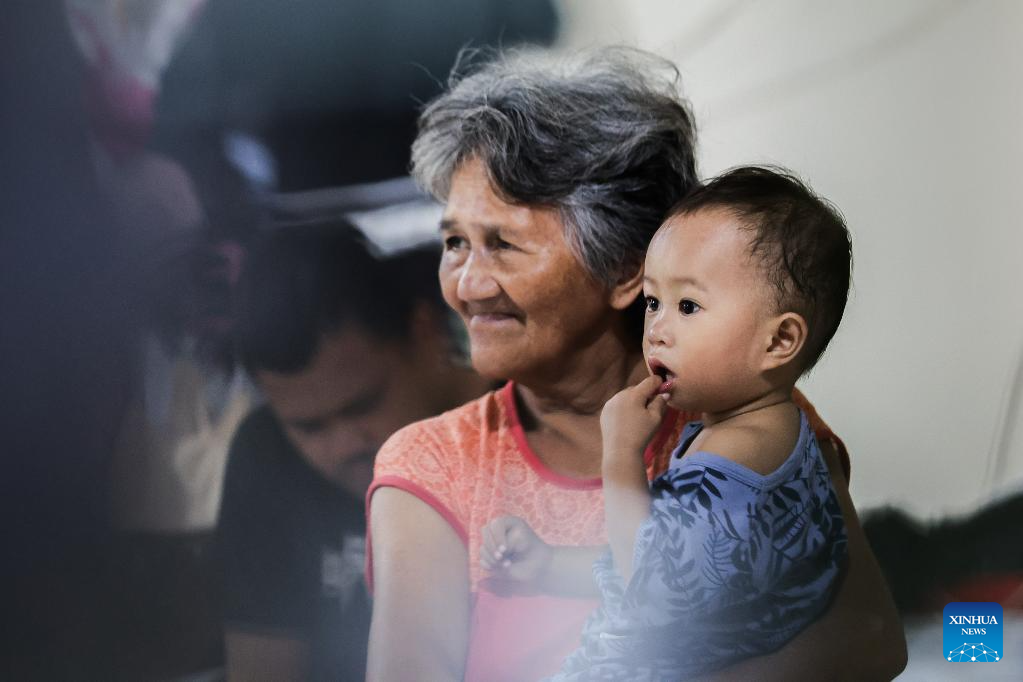
An elderly woman and a child are seen at a temporary shelter converted from a school as the nearby Mayon Volcano experiences episodic mild magmatic eruptions in Albay Province, the Philippines, Jan. 21, 2026. (Xinhua/Rouelle Umali)


