
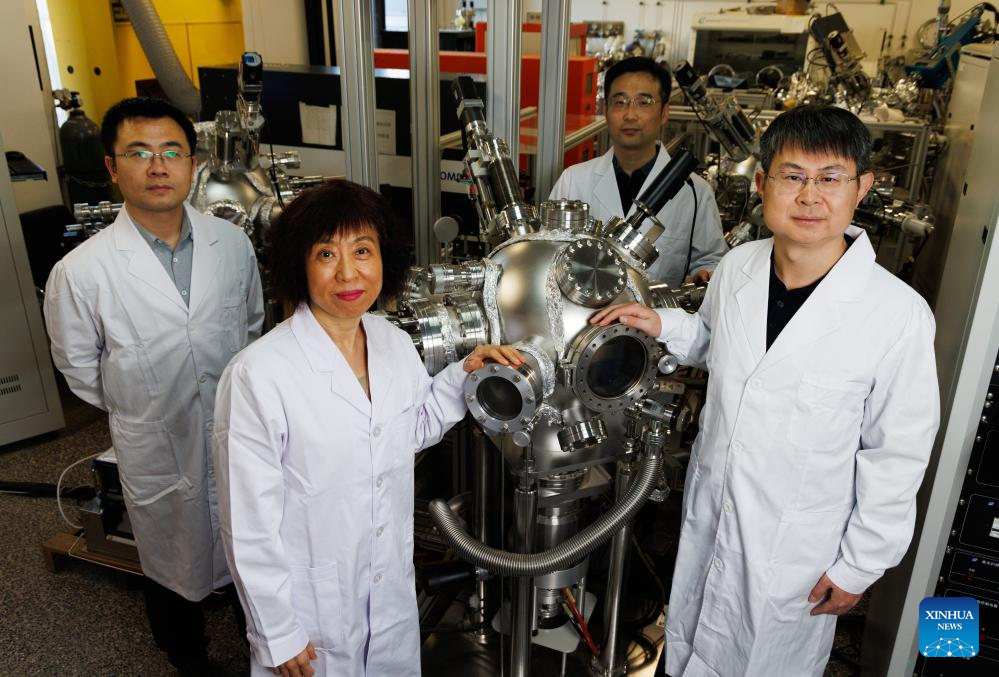
Researchers Zhang Qinghua, Jin Kuijuan, Zhong Hai and Ge Chen (from left to right), who have successfully identified one-dimensional charged domain walls within a fluorite-structured ferroelectric material, pose for a group photo at a laboratory of the Institute of Physics at the Chinese Academy of Sciences in Beijing, capital of China, Jan. 21, 2026. Chinese researchers recently made a breakthrough in ferroelectric materials that promises to dramatically increase information storage density. The research team from the Institute of Physics at the Chinese Academy of Sciences, successfully identified one-dimensional charged domain walls within a fluorite-structured ferroelectric material. These walls are tiny, with both thickness and width measuring just a few hundred-thousandths of the diameter of a human hair. This discovery, notably, provides a scientific basis for developing next-generation ultra-high-density devices. Their findings were on Friday published in the journal Science. (Xinhua/Jin Liwang)
BEIJING, Jan. 23 (Xinhua) -- Chinese researchers recently made a breakthrough in ferroelectric materials that promises to dramatically increase information storage density. Their findings were on Friday published in the journal Science.
The research team from the Institute of Physics at the Chinese Academy of Sciences, successfully identified one-dimensional charged domain walls within a fluorite-structured ferroelectric material.
These walls are tiny, with both thickness and width measuring just a few hundred-thousandths of the diameter of a human hair. This discovery, notably, provides a scientific basis for developing next-generation ultra-high-density devices.
Ferroelectric materials are pivotal for future technologies in fields such as data storage, sensing and artificial intelligence. Storing information within these one-dimensional domain walls could result in a several hundredfold boost of storage density.
The theoretical limit is estimated at about 20 terabytes per square centimeter, which is enough capacity to store 10,000 high-definition movies or 200,000 high-definition short videos on a device no larger than a postage stamp. ■
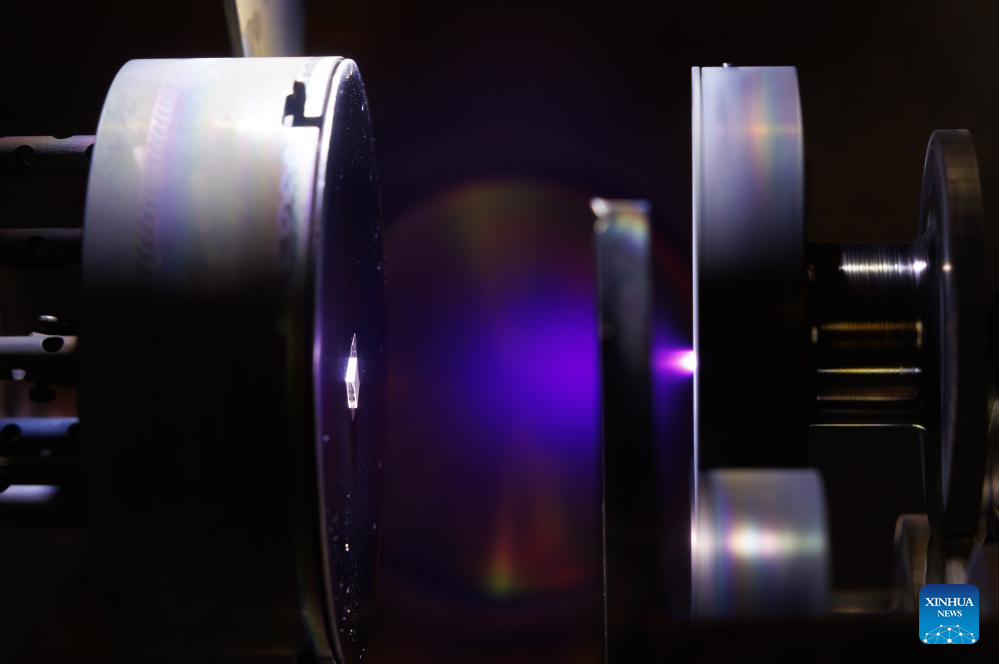
This photo taken on Jan. 21, 2026 shows a sample of ferroelectric thin film in experiment at a laboratory of the Institute of Physics at the Chinese Academy of Sciences, Beijing, capital of China. (Xinhua/Jin Liwang)
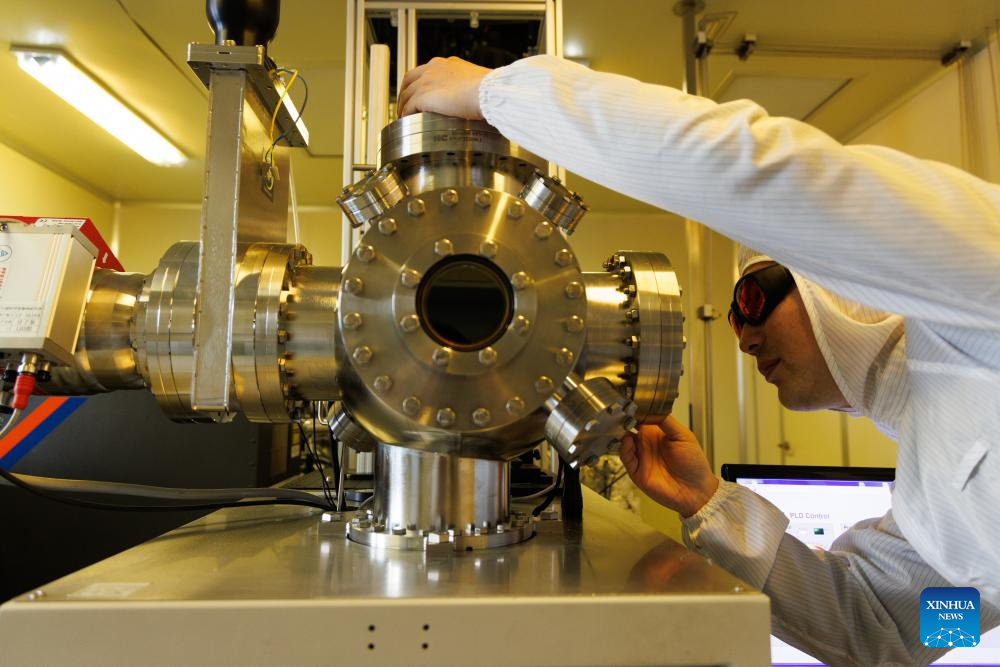
Postdoctoral researcher Zhong Hai conducts an experiment on ferroelectric thin film deposition at a laboratory of the Institute of Physics at the Chinese Academy of Sciences, Beijing, capital of China, Jan. 21, 2026. (Xinhua/Jin Liwang)
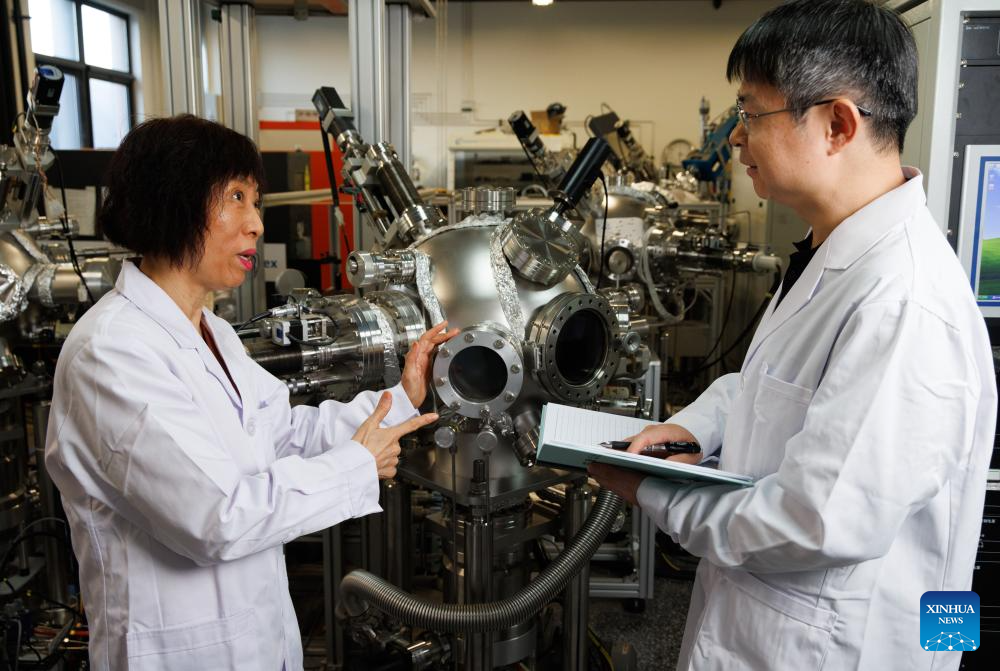
Researchers Jin Kuijuan (L) and Ge Chen discuss the experiment plan at a laboratory of the Institute of Physics at the Chinese Academy of Sciences, Beijing, capital of China, Jan. 21, 2026. (Xinhua/Jin Liwang)
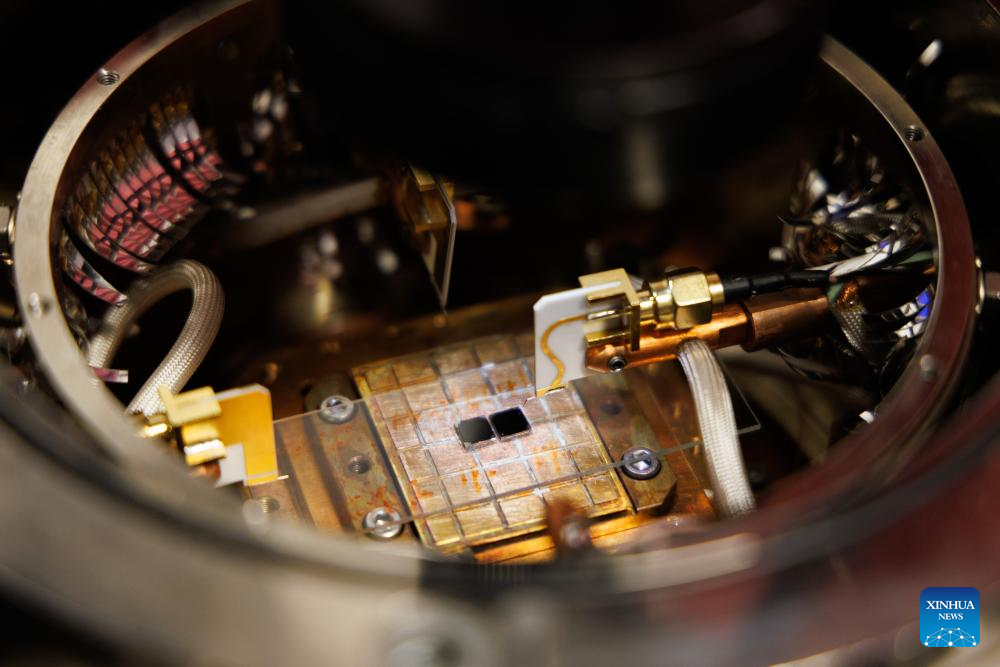
This photo taken on Jan. 21, 2026 shows a sample of ferroelectric capacitor waiting to be tested at a laboratory of the Institute of Physics at the Chinese Academy of Sciences, Beijing, capital of China. (Xinhua/Jin Liwang)
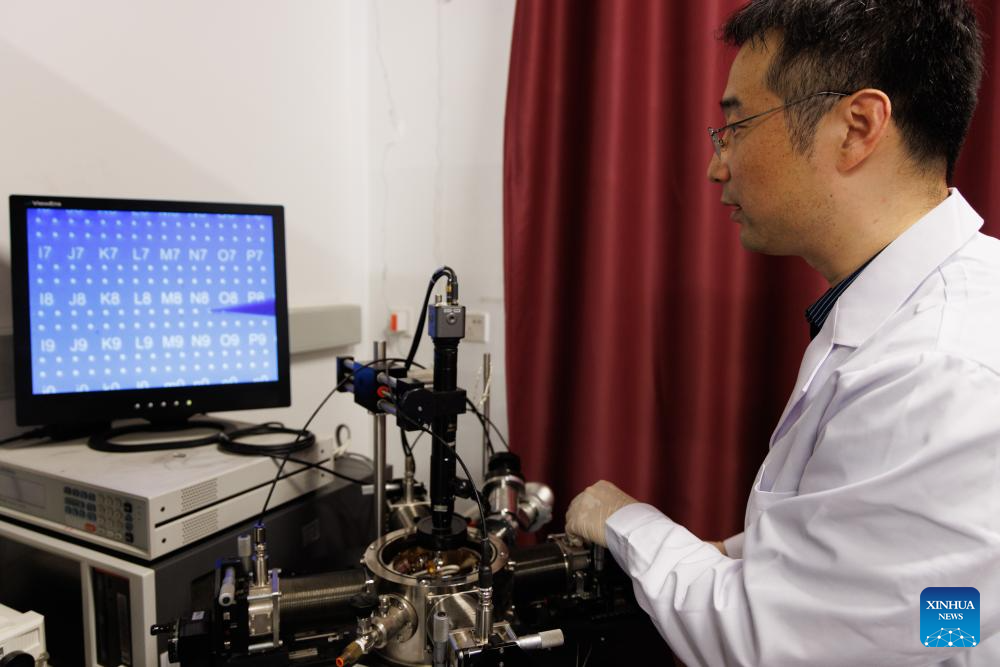
Postdoctoral researcher Zhong Hai tests ferroelectric performance at a laboratory of the Institute of Physics at the Chinese Academy of Sciences, Beijing, capital of China, Jan. 21, 2026. (Xinhua/Jin Liwang)
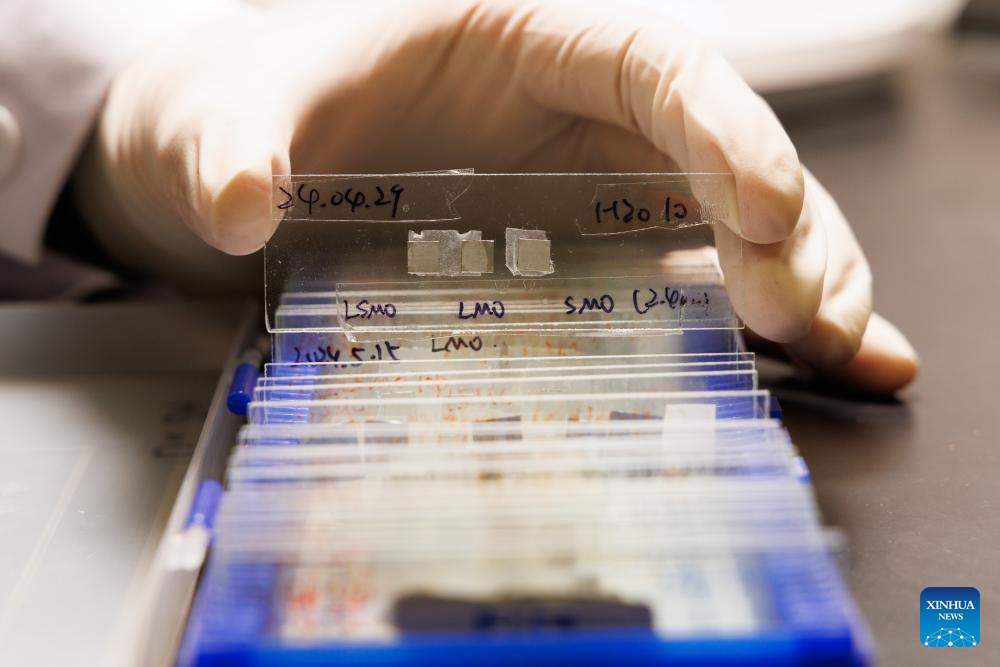
This photo taken on Jan. 21, 2026 shows a sample of ferroelectric capacitor at a laboratory of the Institute of Physics at the Chinese Academy of Sciences, Beijing, capital of China. (Xinhua/Jin Liwang)


