

People shop at a local market in Ankara, Türkiye, on Jan. 22, 2026. Türkiye's central bank cut its benchmark interest rate by 100 basis points to 37 percent on Thursday, continuing a gradual cycle of easing as inflation shows signs of cooling. The move marks the fifth reduction since last summer, signaling a cautious shift away from the tight monetary policy previously used to curb soaring prices. (Mustafa Kaya/Handout via Xinhua)
ANKARA, Jan. 22 (Xinhua) -- Türkiye's central bank on Thursday cut its benchmark interest rate by 100 basis points at its first rate-setting meeting of 2026, signaling a careful approach to monetary easing as price pressures persist.
The Monetary Policy Committee (MPC) of the central bank lowered the one-week repo rate to 37 percent, a smaller cut than the 150-basis-point reduction many analysts had anticipated.
In a statement, the MPC cited a continued slowdown in the underlying inflation trend, supported by tighter financial conditions throughout 2025.
Yet the bank warned that "inflation expectations and pricing behavior continue to pose risks to the disinflation process" and stressed the need for a prudent, data-driven approach.
The move follows a 150-basis-point cut in December. Annual inflation ended 2025 at 30.89 percent, down from 44.38 percent in 2024, slightly above the government's forecast of 28.5 percent.
The moderation has been attributed to a combination of tight monetary policy, easing domestic demand, and a more stable exchange-rate environment.
The central bank has reiterated its interim inflation target of 16 percent by the end of 2026 while maintaining its medium-term goal of reducing inflation to single digits by the end of 2027, according to its latest policy communications.
According to the bank's latest Market Participants Survey, released on Jan. 16, year-end inflation expectations have continued to fall, reaching 23.23 percent, suggesting improving confidence among businesses and financial analysts.
Istanbul-based economists viewed the rate cut as a careful balancing act between supporting economic activity and preserving the central bank's credibility.
Atilla Yesilada, a veteran market economist, told Xinhua that the decision "sends a supportive message to the economy without giving the impression that the fight against inflation is over. The real test will be whether expectations continue to improve in the coming months."
He added that global financial conditions could complicate the outlook while underlying price pressures remain.
Analysts emphasized that sustaining disinflation will require coordinated fiscal discipline and structural reforms, particularly as domestic demand could rebound.
"As rates come down, policymakers must ensure that demand does not rebound too quickly, especially given ongoing cost pressures in services and food," independent economist Mustafa Sonmez cautioned.
The cautious monetary stance came alongside the government's decision to raise the minimum wage by 27 percent to 28,075 lira (around 649 U.S. dollars). Effective Jan. 1, the hike has broad economic implications, as roughly half of Türkiye's workforce is estimated to earn the minimum wage.
Yet the increase remained below the inflation rate, drawing criticism from political opponents and discontent from labour unions, as the ongoing depreciation of the Turkish lira and persistent high inflation are eroding its real value, further diminishing workers' purchasing power. ■
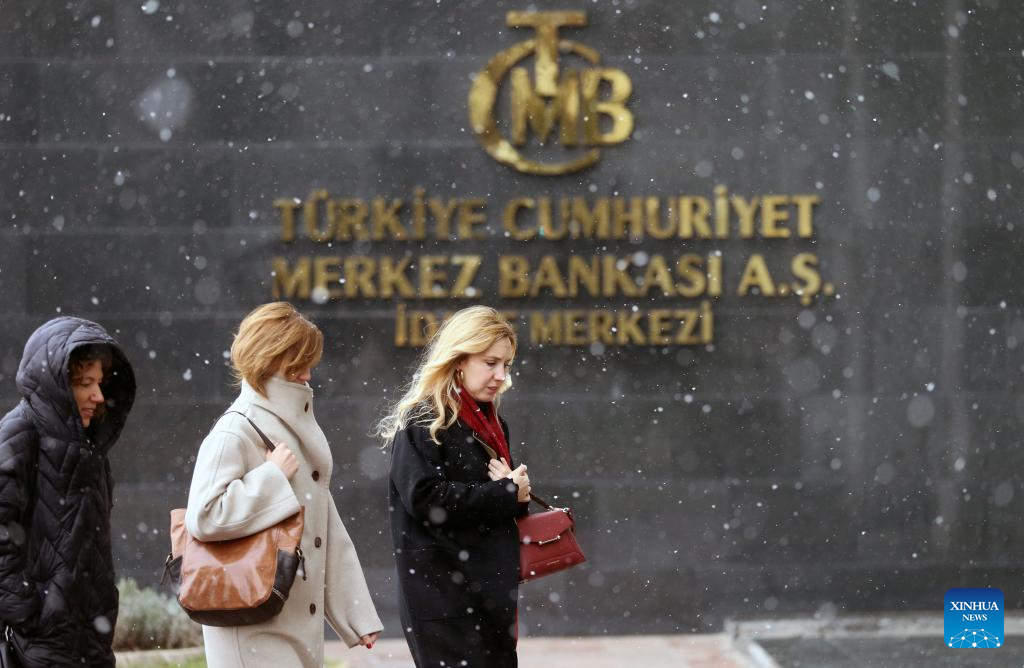
People walk past the Turkish central bank in Ankara, Türkiye, on Jan. 22, 2026. Türkiye's central bank cut its benchmark interest rate by 100 basis points to 37 percent on Thursday, continuing a gradual cycle of easing as inflation shows signs of cooling.
The move marks the fifth reduction since last summer, signaling a cautious shift away from the tight monetary policy previously used to curb soaring prices. (Mustafa Kaya/Handout via Xinhua)


