
BEIJING, Jan. 13 (Xinhua) -- In 1959, Chinese archaeologist Xia Nai handed researchers Qiu Shihua and Cai Lianzhen a copy of "Radiocarbon Dating," a book by American scientist Willard F. Libby that sparked the first revolution in modern archaeology.
At the time, scientific archaeology in China was virtually uncharted territory. Yet scholars like Xia had already realized that without scientific methods, archaeology could only offer qualitative descriptions and not determine absolute dates.
That same year, Xia invited Qiu and Cai, who worked at what is now the Institute of High Energy Physics, to the Institute of Archaeology to establish China's first radiocarbon dating laboratory.
After several years of efforts from the husband-and-wife team, the laboratory produced its first batch of data in 1965. That year is regarded as the starting point of China's scientific archaeology endeavors.
Six decades later and now in their nineties, silver-haired Qiu and Cai joined successive generations of scholars at a recent symposium in Beijing to reflect on the development of scientific archaeology in China and look ahead to its future.
Cai recalled that under the conditions of that time, their immediate challenge was how to translate the theory laid out in "Radiocarbon Dating" into workable practice. There was no ready-made laboratory equipment, and so the couple had to design and build the required instruments piece by piece.
In the years following the establishment of the radiocarbon dating laboratory, Xia led efforts to promote the application of this method.
In a prominent paper published in 1977, Xia drew on nearly 100 radiocarbon-dated samples to systematically establish absolute chronologies for Neolithic sites in China's Central Plains, the Gansu-Qinghai region of the upper Yellow River, the lower Yellow River basin, and the middle and lower reaches of the Yangtze River.
His work laid an initial chronological framework for multiple prehistoric cultures in China, for the first time providing several Neolithic archaeological cultures with a firm temporal sequence.
"After decades of collective effort, radiocarbon dating has continued to improve in accuracy and stability," Cai said at the event in Beijing. "Its applications have expanded from archaeology and geology to many other disciplines that rely on chronological evidence."
What has impressed her even more is the significant advances and flourishing of scientific archaeology in China. "Scientific archaeology is revealing ever more vivid pictures of ancient life," she noted.
Looking back at the development of this field, Ma Yuan, deputy secretary-general of the Chinese Academy of Social Sciences (CASS), highlighted two other milestones in the country's scientific archaeology journey.
Firstly, to further advance technologies and nurture interdisciplinary talent, the Institute of Archaeology under the CASS consolidated previously scattered research teams, including the radiocarbon laboratory, into a unified center for scientific archaeology in 1995. This marked the beginning of a more integrated and systematic phase in the field's development.
Then in 2024, the CASS inaugurated a key laboratory, reorganizing 18 sub-laboratories and five joint laboratories. This new structure encompasses research areas ranging from ancient DNA, isotope and residue analysis to environmental archaeology and human osteoarchaeology, establishing a comprehensive research system that spans multiple disciplines.
As Ma put it, the 60-year journey of scientific archaeology at the CASS mirrors China's broader transformation from a technological wilderness to a disciplinary frontier.
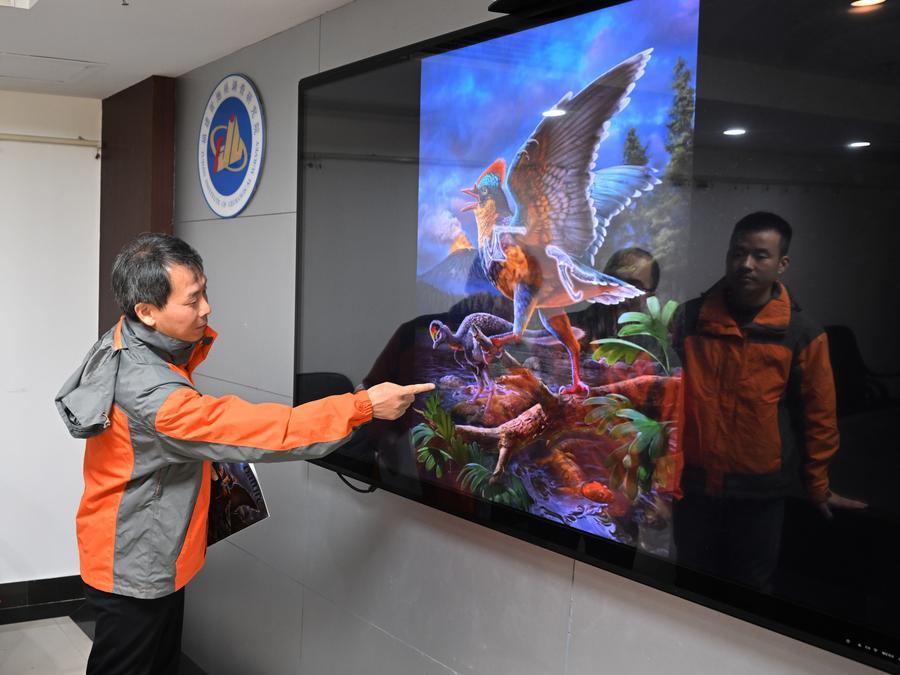
Wang Changsui, professor at the School of Humanities of the University of Chinese Academy of Sciences, observed that after nearly 40 years of rapid growth, Chinese scientific archaeology has emerged as an integral part of the global field, with environmental, agricultural and bioarchaeology now among its mainstream branches.
Experts attending the symposium agreed that technology is playing an increasingly critical role in archaeology in China. Human osteoarchaeology, for example, helps clarify the evolutionary history of ancient populations in China and reconstructs patterns of health, subsistence and social organization across different historical periods. Digital archaeology, another notable example, draws on cutting-edge spatial information technologies, thereby shedding light on prehistoric water-management systems.
Spotlighting digital archaeology, Liu Jianguo, a researcher at the Institute of Archaeology, said that advances in surveying, remote sensing, 3D reconstruction and LiDAR scanning have driven a leap in archaeological mapping, ranging from the collection of point and surface data to the comprehensive acquisition and in-depth processing of three-dimensional information.
The application of artificial intelligence (AI) has further accelerated data processing and improved data utilization, Liu added.
Looking ahead, Ma Yuan emphasized the need for more organized, coordinated research, the development of an independent knowledge system for Chinese archaeology, and the construction of world-class laboratories.
He also called for breakthroughs in areas such as high-precision ancient DNA sequencing and intelligent digital archaeology to strengthen China's influence in global archaeological studies. ■