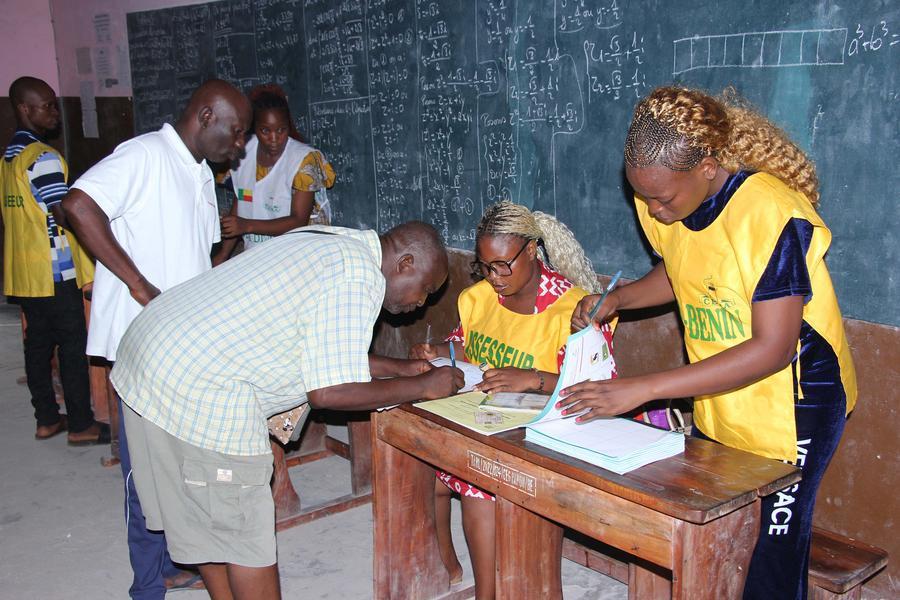
Voting for Benin's 2026 legislative and municipal elections officially got under way nationwide on Sunday, although minor delays were reported at some polling stations.
COTONOU, Jan. 12 (Xinhua) -- Voting for Benin's 2026 legislative and municipal elections officially got under way nationwide on Sunday, although minor delays were reported at some polling stations.
At the polling station located at the Vedoko public primary school in Cotonou, the country's economic capital, Pierre Vihotogbe, a retired civil administrator, cast his ballot.
"I am proud to fulfill my right to vote. We have been waiting for this day to give new momentum to our democracy," Vihotogbe told Xinhua.
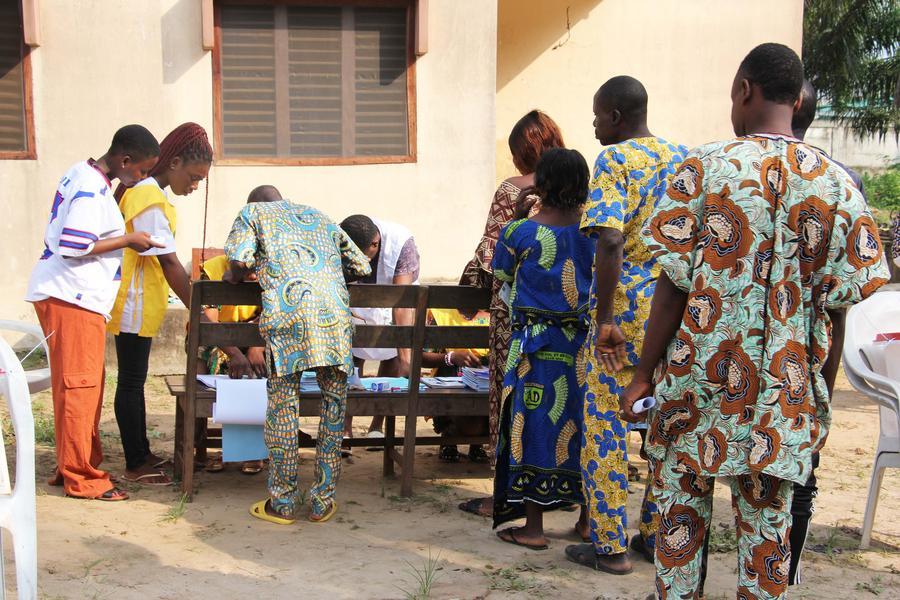
Although voting was scheduled to start at 7:00 a.m. local time (0600 GMT), the opening of some polling stations was delayed by a few minutes in several southern cities visited by Xinhua on Sunday morning, including Cotonou, Godomey, and Abomey-Calavi.
According to members of district-level electoral commissions, the delays were mainly due to logistical challenges related to the delivery of electoral materials.
"For security reasons, some district electoral commissions only received ballot papers very early this morning, making it impossible to distribute them before the official opening time," an official with the Cotonou district electoral commission told Xinhua on condition of anonymity.
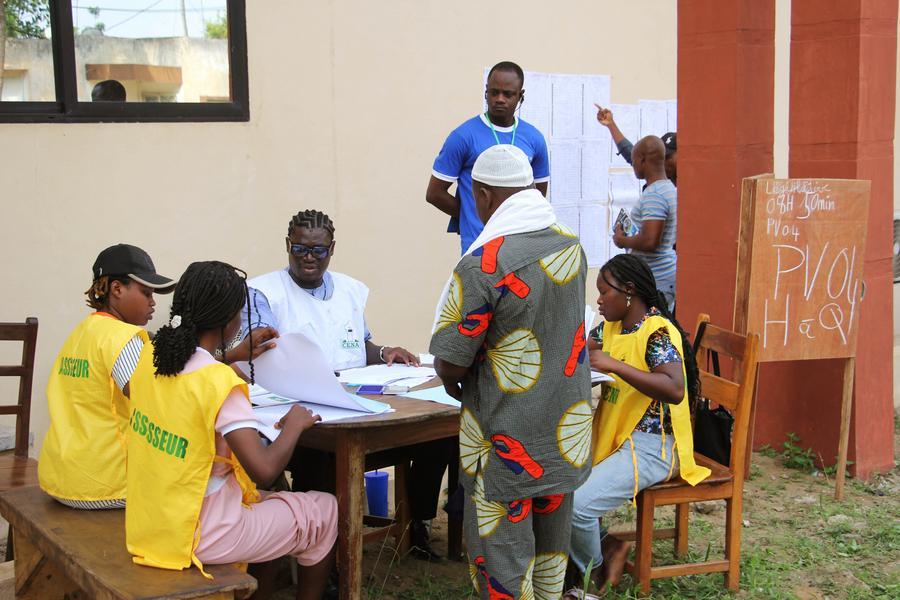
Under Benin's electoral code, voting operations are scheduled to last 10 hours from the opening of each polling station. More than 7.8 million registered voters are expected to cast ballots at about 17,000 polling stations nationwide.
In line with the new electoral code in force, the 109 members of the National Assembly are elected by direct universal suffrage through proportional representation on party lists for a seven-year term, across 24 constituencies corresponding to the country's departments. To secure seats in a constituency, a political party must obtain at least 10 percent of valid votes both at the constituency level and nationwide.
In the municipal elections, 1,815 councilors will be elected in 546 districts across Benin's 77 municipalities under a multi-member proportional voting system with a dual electoral threshold. Seat allocation is likewise contingent on securing at least 10 percent of valid votes at both the local and national levels.■