
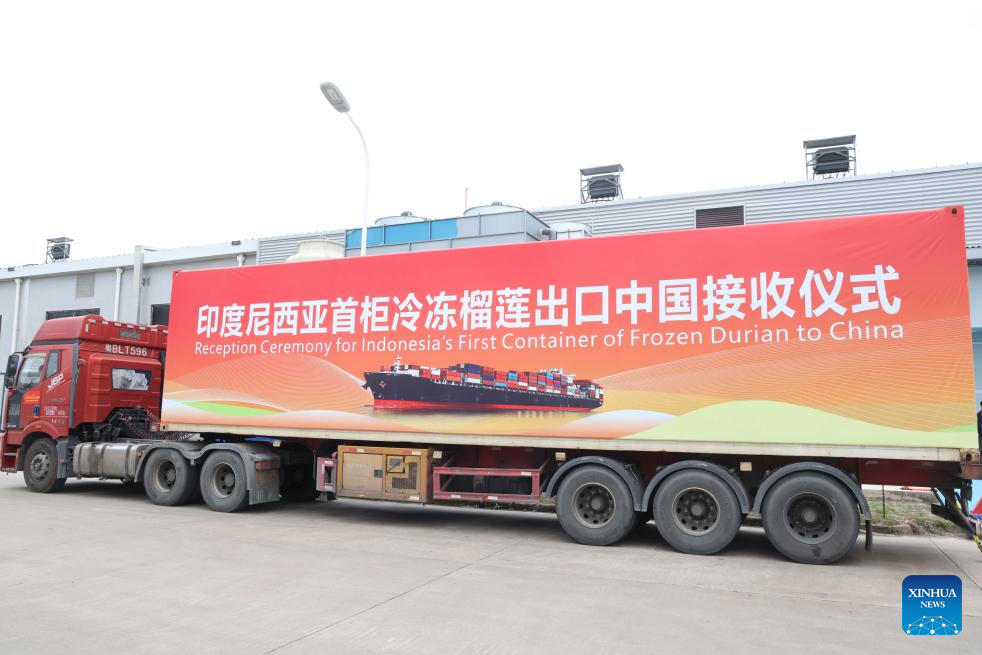
A container carrying 23 tonnes of frozen durian pulp and puree from Indonesia arrives at the Qinzhou comprehensive bonded zone in Qinzhou, south China's Guangxi Zhuang Autonomous Region, Jan. 6, 2026. A ceremony was held on Tuesday at Qinzhou Port, south China's Guangxi Zhuang Autonomous Region, marking the arrival of Indonesia's first container of frozen durian exported to China via maritime transport, an important step in expanding bilateral agricultural trade. (Photo by Hou Chaobo/Xinhua)
NANNING, Jan. 8 (Xinhua) -- A ceremony was held on Tuesday at Qinzhou Port, south China's Guangxi Zhuang Autonomous Region, marking the arrival of Indonesia's first container of frozen durian exported to China via maritime transport, an important step in expanding bilateral agricultural trade.
The container, carrying 23 tonnes of frozen durian pulp and puree from Indonesia, was imported by Guangxi Jiarong Food Technology Co., Ltd. It departed the Port of Jakarta on Dec. 26, 2025. After completing customs clearance, it arrived at a bonded warehouse in the Qinzhou comprehensive bonded zone on Monday, marking the opening of a dedicated maritime route linking Indonesian production areas with the Chinese market.
Previously, only small quantities of Indonesian frozen durian were imported into China by air for trial consumption. With the support of established shipping routes and cold-chain logistics, Indonesian frozen durian is expected to be supplied to China on a more stable and larger scale, injecting new momentum into Indonesia-China economic and trade cooperation.
Wu Junyi, the company's general manager, said the frozen durian will be processed into a range of value-added products, including frozen durian pulp and freeze-dried durian.
The company has invested 30 million yuan (about 4.27 million U.S. dollars) to build an intelligent durian processing factory covering the full industry chain, integrating technologies such as AI-based hyperspectral sorting, liquid nitrogen quick freezing and freeze-drying.
These technologies enable standardized production, helping address long-standing bottlenecks related to manual sorting and inconsistent quality.
Taking the durian import as a model, the company will explore and establish a standardized, replicable pathway for the import and processing of other specialty agricultural products from ASEAN countries, Wu said.
Previously, Indonesian durian products were required to be processed in a third country before entering China. This shipment came after the signing of a phytosanitary protocol between China's General Administration of Customs and Indonesia's quarantine authority in May 2025, which removed such requirements.
Budi Hansyah, trade attache of the Indonesian Embassy in China, said the entry of Indonesian frozen durian into the Chinese market demonstrates the close and solid trade relations between the two countries.
At present, eight Indonesian companies have been approved by Chinese customs authorities to export frozen durian, with negotiations for fresh durian market access underway. Indonesia's diverse durian varieties cater to different consumer preferences, and frozen durian is widely used in desserts, cakes and ice cream, meeting a growing demand in China, he added.
Chen Jing'en, vice mayor of Qinzhou, said the Qinzhou Port, a key hub of the New International Land-Sea Trade Corridor, currently operates 44 shipping routes connecting ASEAN countries, while its sea-rail intermodal services help form an efficient logistics network, allowing Indonesian agricultural products to reach inland markets efficiently or connect with China-Europe freight trains.
Looking ahead, the scheduled opening of the Pinglu Canal in 2026 is projected to reduce logistics costs by about 30 percent, further facilitating the entry of Indonesian and other ASEAN agricultural products into the Chinese market.
In recent years, Guangxi has continued to deepen practical cooperation with ASEAN countries in agricultural trade. Data from the regional commerce department show that from January to November 2025, Guangxi ports imported more than 2.65 million tonnes of fruits from ASEAN, up 15.8 percent year on year, with a total value exceeding 40.6 billion yuan, up 22 percent.
China stands as the world's major importer and consumer of durian. In recent years, trade in the "king of fruits" has emerged as a flagship component of agricultural cooperation between China and ASEAN. The inclusion of Indonesian frozen durian further expands opportunities, allowing ASEAN countries to share more deeply in the dividends of China's economic growth. ■
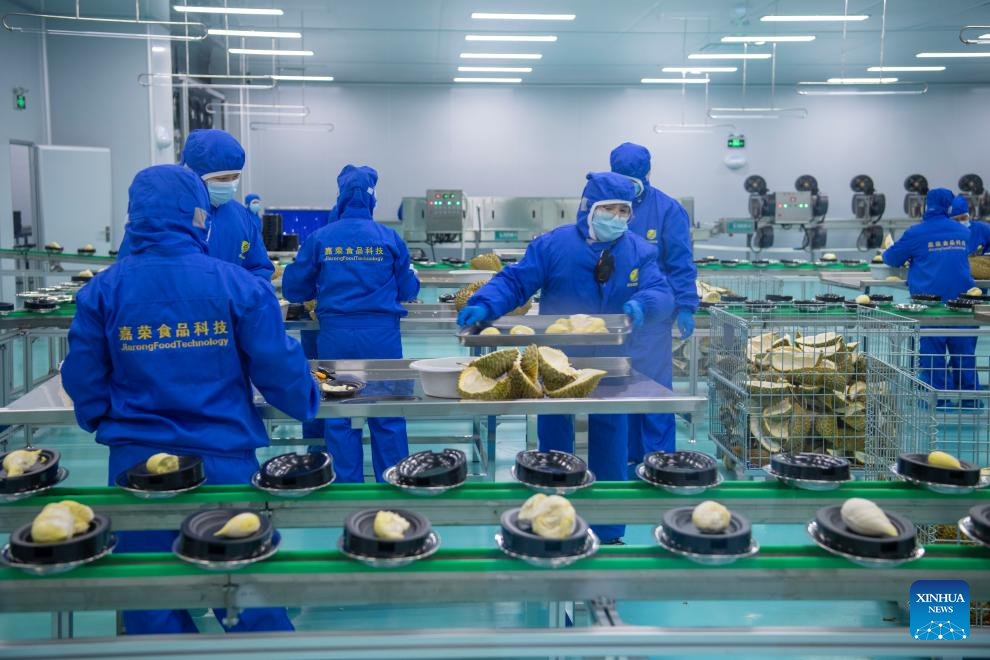
People work at a durian processing enterprise in the Qinzhou comprehensive bonded zone in Qinzhou, south China's Guangxi Zhuang Autonomous Region, Jan. 6, 2026.
A ceremony was held on Tuesday at Qinzhou Port, south China's Guangxi Zhuang Autonomous Region, marking the arrival of Indonesia's first container of frozen durian exported to China via maritime transport, an important step in expanding bilateral agricultural trade. (Photo by Hou Chaobo/Xinhua)
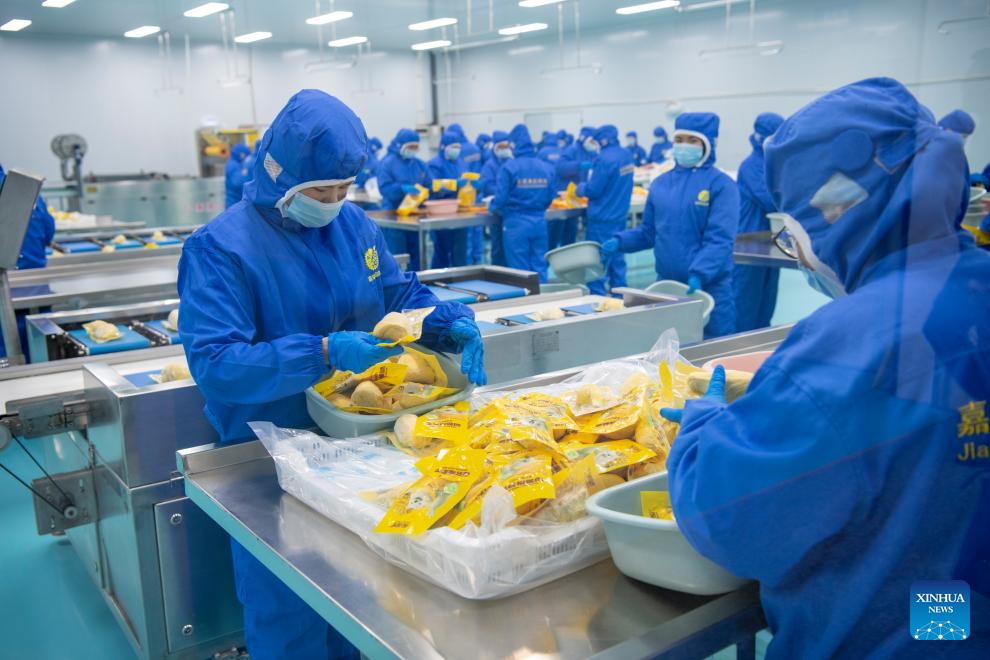
People work at a durian processing enterprise in the Qinzhou comprehensive bonded zone in Qinzhou, south China's Guangxi Zhuang Autonomous Region, Jan. 6, 2026.
A ceremony was held on Tuesday at Qinzhou Port, south China's Guangxi Zhuang Autonomous Region, marking the arrival of Indonesia's first container of frozen durian exported to China via maritime transport, an important step in expanding bilateral agricultural trade. (Photo by Hou Chaobo/Xinhua)


