
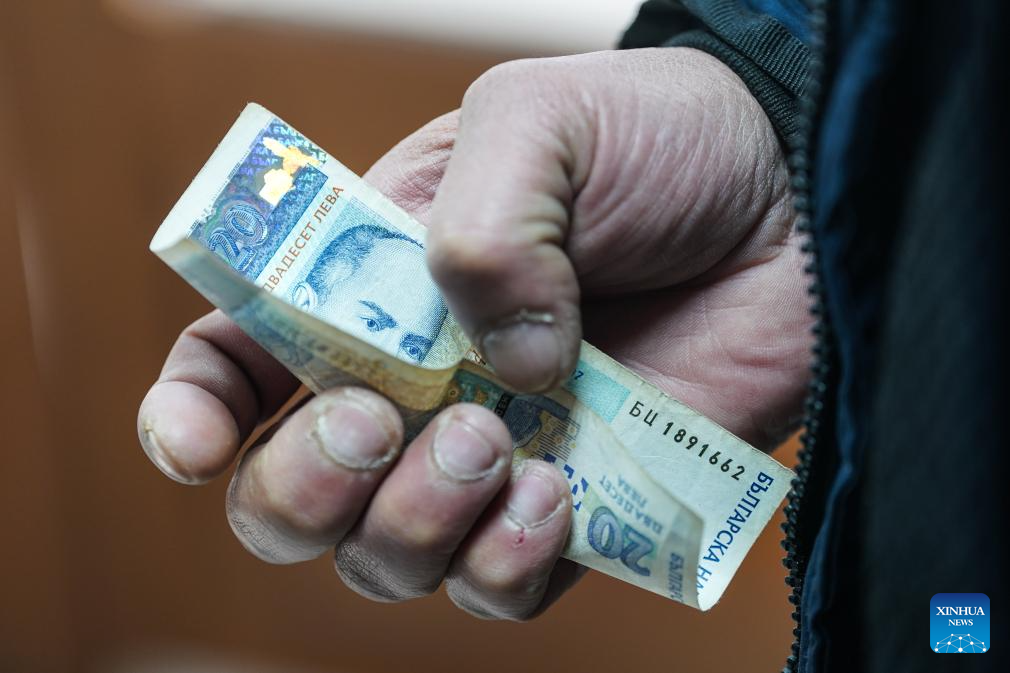
A citizen holds Bulgarian lev cash to make a payment in Sofia, Bulgaria, Dec. 31, 2025. Bulgaria joined the eurozone and adopted the euro as its official currency on New Year's Day, becoming the 21st member of the euro area. To ensure a smooth transition to the new currency, throughout January, the Bulgarian lev will remain in circulation alongside the euro. Starting Feb. 1, the euro will become the country's sole legal tender. (Xinhua/Peng Ziyang)
SOFIA, Jan. 1 (Xinhua) -- Bulgaria joined the eurozone and adopted the euro as its official currency on New Year's Day, becoming the 21st member of the euro area.
To ensure a smooth transition to the new currency, throughout January, the Bulgarian lev will remain in circulation alongside the euro. Starting Feb. 1, the euro will become the country's sole legal tender.
From Jan. 1 to June 30, the exchange of lev for euros is free of charge at banks and post offices. After this period, currency exchanges will be subject to a fee.
The Bulgarian National Bank has stated that it will exchange levs for euros indefinitely, continuing the process for as long as necessary. But it added that the mandatory dual pricing of goods and services in euro and lev will end on Aug. 8, 2026.
Officials and experts have expressed their confidence in the transition process.
Vladimir Ivanov, chairman of Bulgaria's State Commission on Commodity Exchanges and Markets, described 2025 as a year of market stabilization in a brief meeting, saying he expected 2026 to begin similarly, "especially after transaction costs decrease with the introduction of the euro."
Nikolay Valkanov, executive director of the Association for Modern Trade, also said in an interview that retailers, from large chains to small shops, had made significant efforts to ensure a smooth transition to the new currency.
Eurozone accession has been a central priority for the Bulgarian government ever since the country joined the EU in 2007.
It was not until June 4, 2025, that the European Commission announced Bulgaria had met all convergence criteria. On July 8, 2025, the Council of the European Union formally approved Bulgaria's adoption of the euro, effective Jan. 1, 2026.
The eurozone came into existence with the official launch of the euro on Jan. 1, 1999, in 11 countries including France, Germany and Austria.
Currently among the 27 EU countries, there are still six members, namely Sweden, Poland, the Czech Republic, Hungary, Romania and Denmark, that have not yet adopted the euro. ■
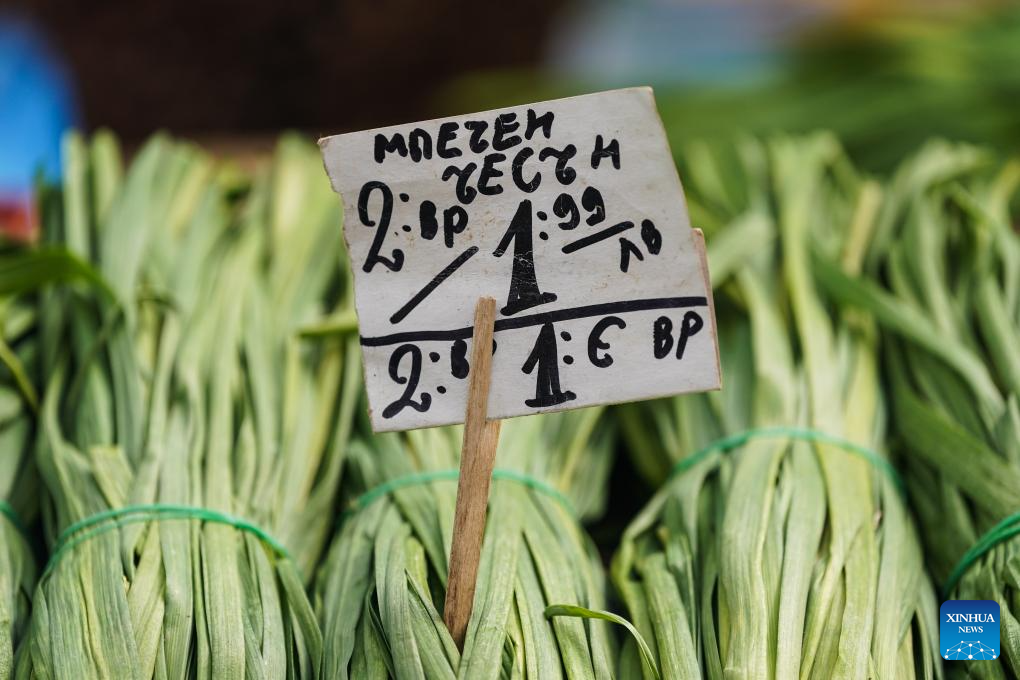
Vegetables are labeled with prices in both euros and Bulgarian lev at a market in Sofia, Bulgaria, Dec. 31, 2025. Bulgaria joined the eurozone and adopted the euro as its official currency on New Year's Day, becoming the 21st member of the euro area.
To ensure a smooth transition to the new currency, throughout January, the Bulgarian lev will remain in circulation alongside the euro. Starting Feb. 1, the euro will become the country's sole legal tender. (Xinhua/Peng Ziyang)


