

Customers visit a cafe in Amman, Jordan, Dec. 25, 2025. (Photo by Mohammad Abu Ghosh/Xinhua)
AMMAN, Dec. 29 (Xinhua) -- Whether at the break of dawn or after a long day's work, more and more Jordanians are making a rich, specialty coffee at local cafes an integral part of their daily routine.
As urbanization progresses in Jordan, the lifestyle of its people is shifting, with the rise of coffee culture serving as a clear marker of this change.
According to Amin Alasoufi, head of the Economic Studies and Research Department at the Amman Chamber of Industry, coffee in Jordan has transitioned from a beverage traditionally associated with social occasions to a daily consumer product.
As noted by Alasoufi, Jordan's coffee industry has seen significant growth, especially in the capital, Amman, where population density and changing lifestyles have driven increased demand.
In 2024, Jordan imported over 55,600 tons of coffee, valued at 151.2 million Jordanian dinars (approximately 213 million U.S. dollars), according to Alasoufi. Chamber data also revealed that the average annual per capita consumption stands at about 5 kg, highlighting robust and sustained demand.
According to the chamber, the number of cafes operating nationwide has exceeded 1,664, reflecting a 9.6-percent increase from 2023.
"Cafes now serve multiple purposes, from social gatherings to business meetings and study spaces," Alasoufi said.
For cafe owners, the surge in coffee consumption has translated into business opportunities. "Coffee has become a reliable business because people drink it regardless of economic conditions," said Mohammad Odeh, who opened a specialty coffee shop in west Amman three years ago. "Customers may cut back on other expenses, but coffee remains a constant in their daily routine."
Sociologist Fadia Ibrahim attributes the shift in coffee consumption patterns to changes in social behavior.
"While traditional Arabic coffee symbolizes hospitality, respect, and social cohesion, especially during important events like weddings, funerals, and reconciliation gatherings, modern cafes cater to younger generations who seek flexible social spaces and a variety of tastes," said Ibrahim.
In downtown Amman, traditional Turkish coffee shops continue to operate alongside modern establishments, reflecting a balance between Jordanian tradition and modern lifestyles.
Saif Abdulmunem, owner of Central Cafe, one of the city's oldest cafes established in the 1930s, acknowledged that modern cafe concepts have impacted traditional businesses. However, he emphasized that long-established cafes continue to draw customers seeking authenticity and a familiar social atmosphere.
For ordinary Jordanians, the line between tradition and modernity doesn't seem to matter as much. What's really important to them is the social connection and meaning behind the coffee.
Ahmad Khalil, a 42-year-old employee from Amman, said, "Coffee is always the first thing we offer to guest, no matter the occasion. It's not just about having coffee; it's about showing respect and hospitality." ■
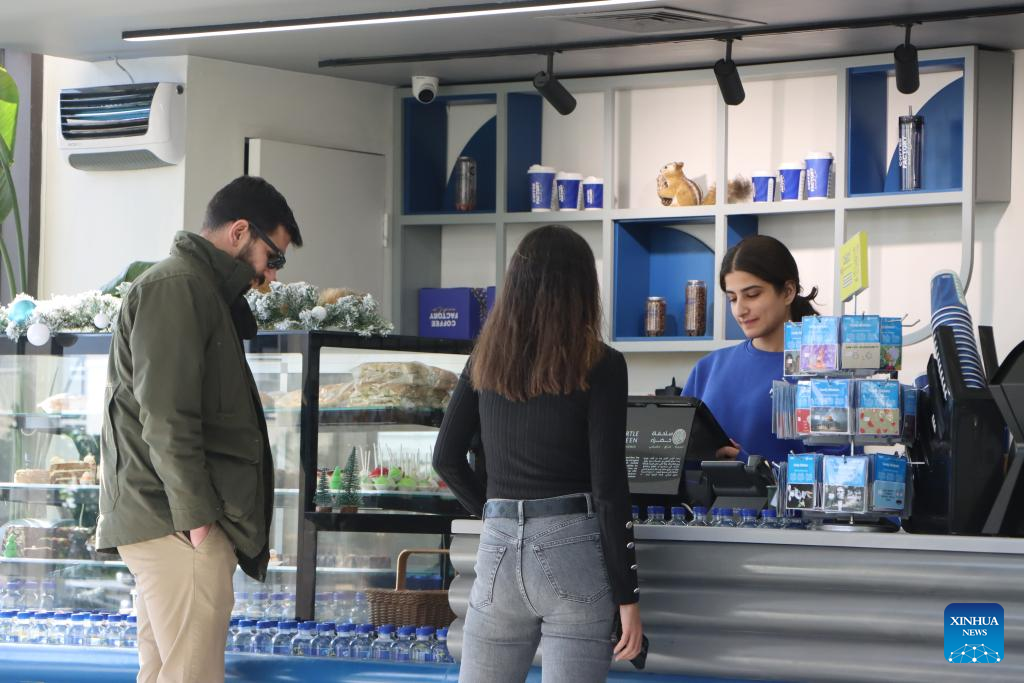
People order coffee at a cafe in Amman, Jordan, Dec. 25, 2025. (Xinhua/He Yiping)

A man drinks coffee at a cafe in Amman, Jordan, Dec. 24, 2025. (Photo by Mohammad Abu Ghosh/Xinhua)
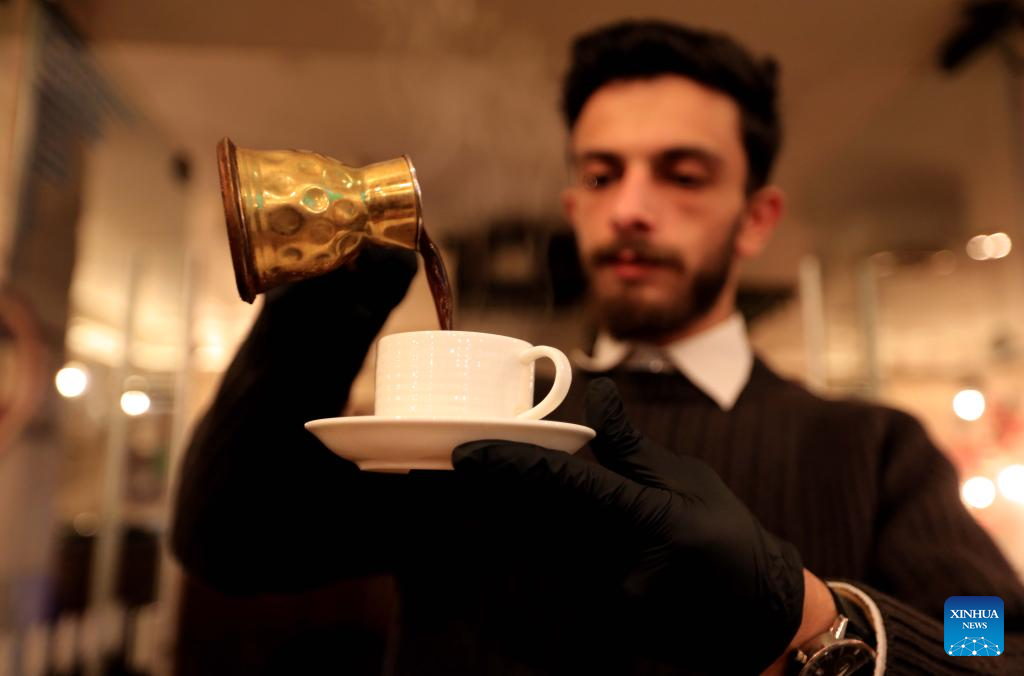
A man pours Arabic coffee at a cafe in Amman, Jordan, Dec. 24, 2025. (Photo by Mohammad Abu Ghosh/Xinhua)
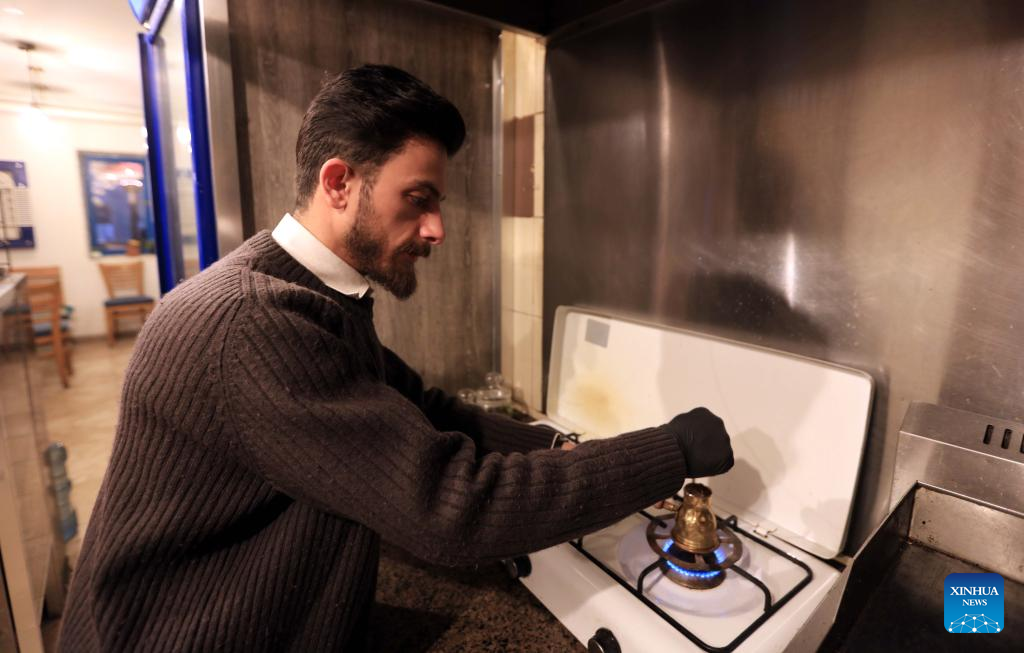
A man prepares Arabic coffee at a cafe in Amman, Jordan, Dec. 24, 2025. (Photo by Mohammad Abu Ghosh/Xinhua)


