
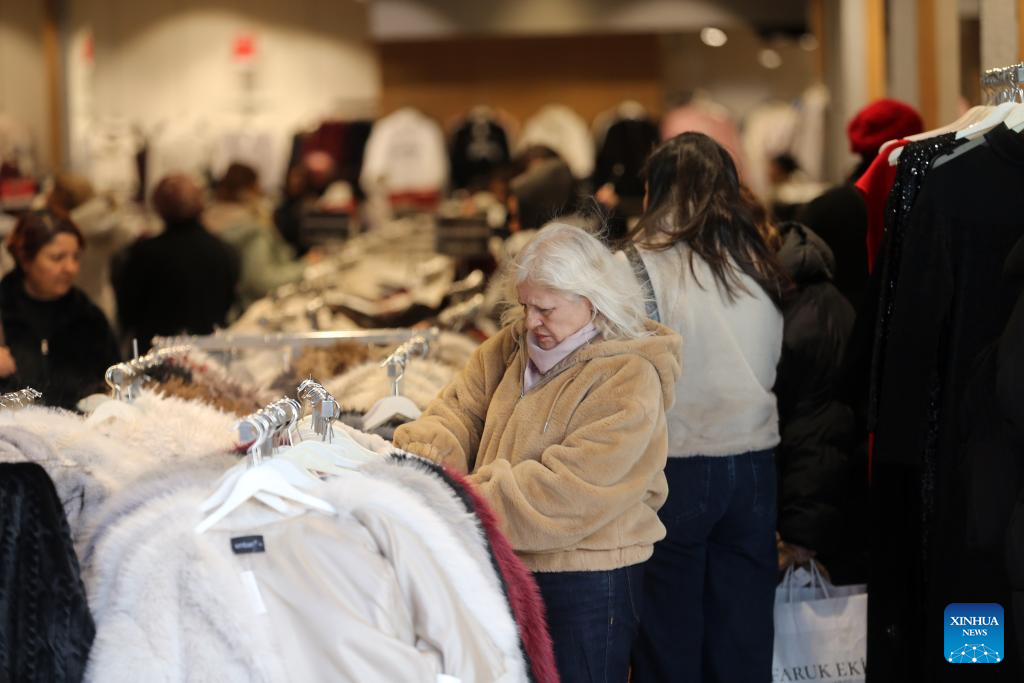
People shop for clothes at a store in Ankara, Türkiye, Dec. 29, 2025. (Mustafa Kaya/Handout via Xinhua)
ANKARA, Dec. 29 (Xinhua) -- Türkiye is entering the new year with a significantly lower inflation rate and sustained economic growth, yet financial vulnerabilities, political uncertainty, and currency pressures continue to pose challenges to its economic outlook.
Official data from the Turkish Statistical Institute show the economy grew by 3.7 percent year-on-year in the third quarter of 2025, maintaining a prolonged growth streak, while the second quarter's annual growth was revised to around 4.9 percent.
Meanwhile, annual consumer inflation has retreated from a peak of around 75 percent in May 2024 to about 31.07 percent in November 2025, its lowest level in about four years.
This disinflation follows a period of aggressive monetary tightening. The central bank's policy rate, which stood around 50 percent in late 2024, was gradually cut to about 38 percent by December 2025 as price pressures eased.
"The decline in inflation is significant, but price growth is still very high by international standards," Senol Babuscu, a scholar at Ankara's Baskent University, told Xinhua.
"Maintaining credibility will depend on sustained monetary discipline and coordination with fiscal policy, especially in a politically sensitive environment," he said.
The policy shift led by Treasury and Finance Minister Mehmet Simsek and Central Bank Governor Fatih Karahan has received a cautious response from international investors.
In July 2025, Moody's upgraded Türkiye's sovereign credit rating, citing improved policy predictability and reduced macroeconomic imbalances, though major agencies still maintain a sub-investment-grade rating for the country.
Financial markets reflect underlying fragility. The benchmark BIST 100 stock index experienced sharp swings in 2025, reaching record highs but also undergoing abrupt corrections amidst domestic political uncertainties. Legal proceedings involving major opposition figures have periodically unsettled investor confidence.
"The economy has become more resilient compared with previous years, but it is not immune to political shocks," Istanbul-based economist Atilla Yesilada told Xinhua.
"Market behavior in 2025 showed that confidence can evaporate quickly if investors perceive rising political risk or a departure from orthodox policies," he noted.
Currency weakness remains a concern. The Turkish lira depreciated over the year, trading around 42-43 against the U.S. dollar by late December, compared to just over 35 at the start of 2025. This depreciation complicates inflation management and raises the cost of servicing foreign-currency debt.
On a positive note, foreign direct investment inflows saw a 35-percent year-on-year increase in the first 10 months of 2025, reaching 11.6 billion dollars, according to data from the International Investors Association.
For Yesilada, while Türkiye heads into 2026 with improved fundamentals, sustaining progress will require continued policy discipline and careful navigation of both domestic and global financial risks. ■
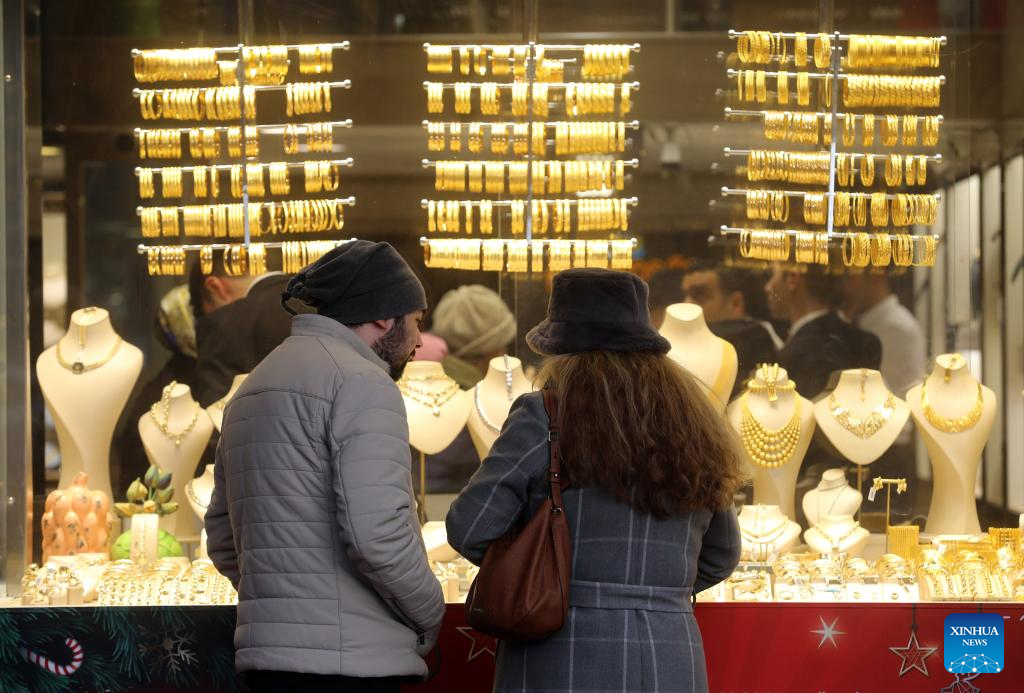
People shop in a jewelry store in Ankara, Türkiye, Dec. 29, 2025. (Mustafa Kaya/Handout via Xinhua)
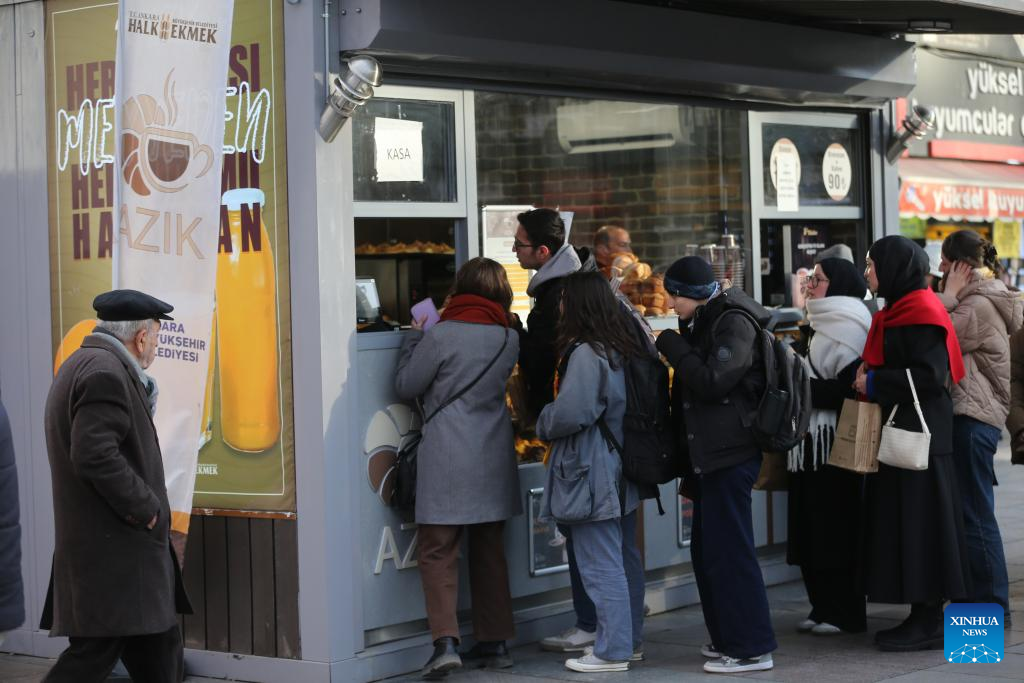
People shop at a public bakery in Ankara, Türkiye, Dec. 29, 2025. (Mustafa Kaya/Handout via Xinhua)


