
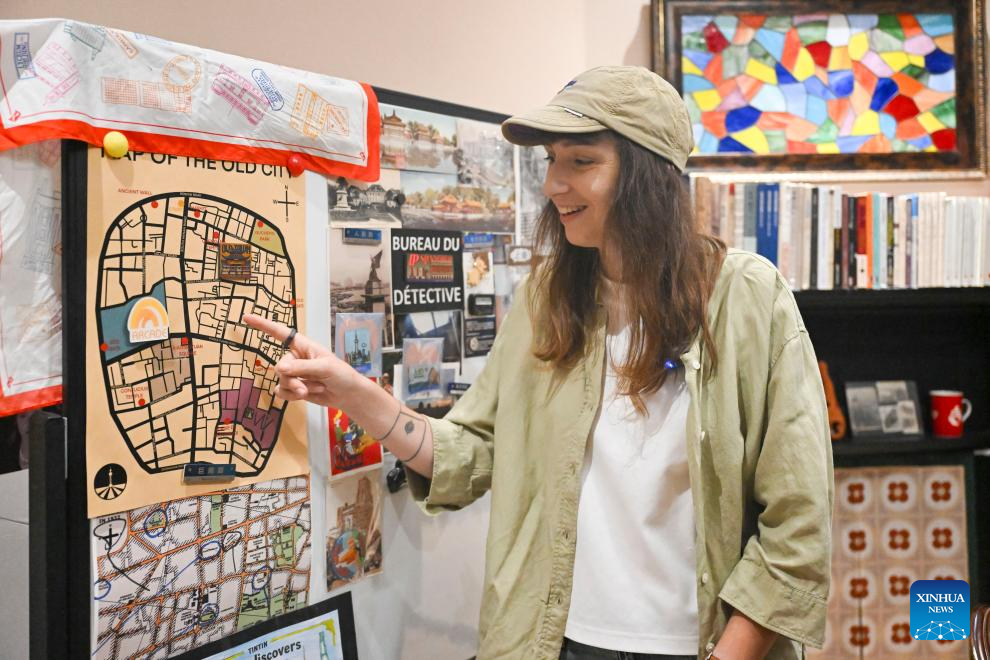
This photo taken on Sept. 22, 2025 shows Clarisse Le Guernic, a French woman working as a local tour guide, introducing the "citywalk" routes she explored at a studio in Shanghai, east China. As China's latest chapter of inbound tourism begins to take shape, there are a loosely connected group of people who do not fit neatly into media narratives or influencer culture. They are present in everyday encounters, helping visitors bridge the gap between assumption and experience. In China's media and academic cultural communication circles, people have begun calling them "cultural ferrymen."
Some are Chinese professionals who have turned away from conventional tourism; others are foreigners who have built their lives in China and now find themselves translating it. Together, they are reshaping how international visitors experience the country -- not as a spectacle, but as a lived reality. (Xinhua/Chen Haoming)
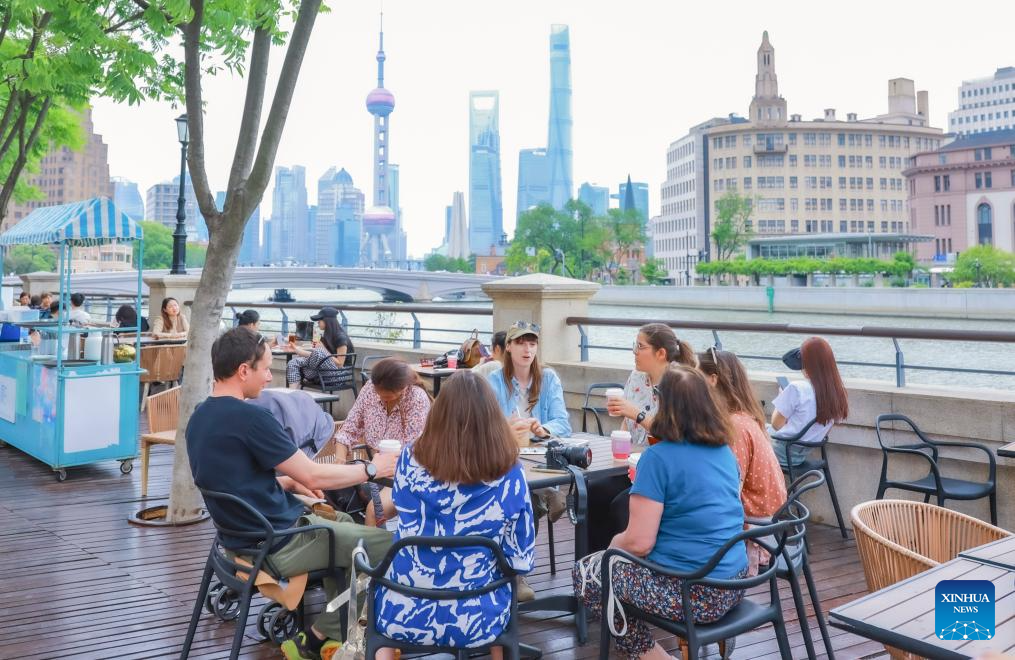
This photo taken on May 13, 2025 shows Clarisse Le Guernic, a French woman working as a local tour guide, leading foreign tourists in a "citywalk" tour in Shanghai, east China. As China's latest chapter of inbound tourism begins to take shape, there are a loosely connected group of people who do not fit neatly into media narratives or influencer culture. They are present in everyday encounters, helping visitors bridge the gap between assumption and experience. In China's media and academic cultural communication circles, people have begun calling them "cultural ferrymen."
Some are Chinese professionals who have turned away from conventional tourism; others are foreigners who have built their lives in China and now find themselves translating it. Together, they are reshaping how international visitors experience the country -- not as a spectacle, but as a lived reality. (Xinhua)
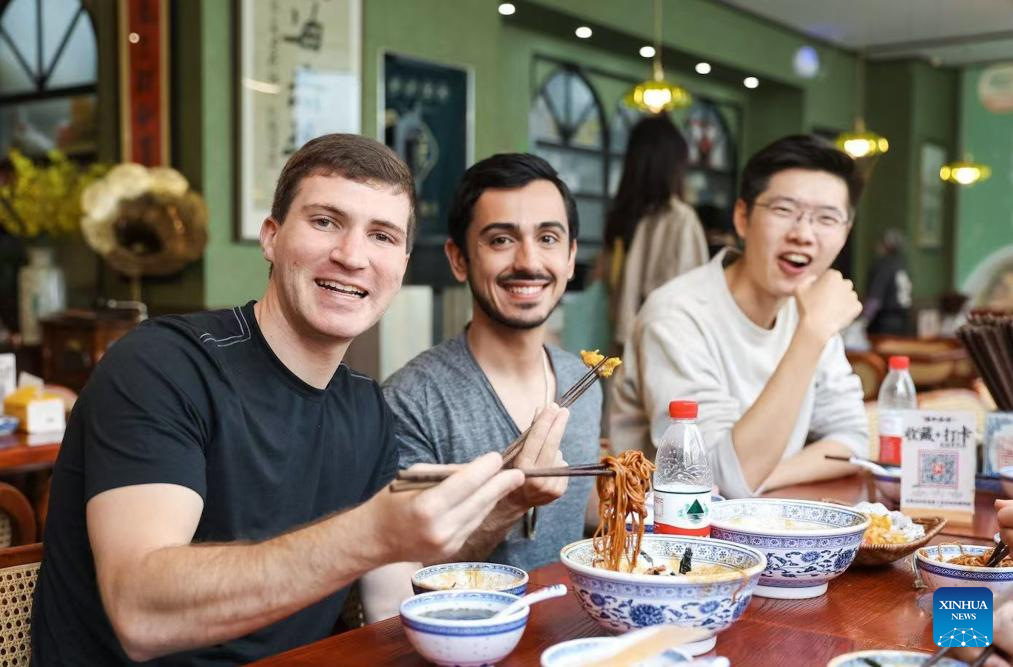
This photo taken in April of 2025 shows a tour guide with his tourists tasting Shanghai-style scallion oil noodles at a restaurant in Shanghai, east China. As China's latest chapter of inbound tourism begins to take shape, there are a loosely connected group of people who do not fit neatly into media narratives or influencer culture. They are present in everyday encounters, helping visitors bridge the gap between assumption and experience. In China's media and academic cultural communication circles, people have begun calling them "cultural ferrymen."
Some are Chinese professionals who have turned away from conventional tourism; others are foreigners who have built their lives in China and now find themselves translating it. Together, they are reshaping how international visitors experience the country -- not as a spectacle, but as a lived reality. (Xinhua)

This photo taken on July 18, 2025 shows an actor performing at an English-language stand-up comedy club in Shanghai, east China. As China's latest chapter of inbound tourism begins to take shape, there are a loosely connected group of people who do not fit neatly into media narratives or influencer culture. They are present in everyday encounters, helping visitors bridge the gap between assumption and experience. In China's media and academic cultural communication circles, people have begun calling them "cultural ferrymen."
Some are Chinese professionals who have turned away from conventional tourism; others are foreigners who have built their lives in China and now find themselves translating it. Together, they are reshaping how international visitors experience the country -- not as a spectacle, but as a lived reality. (Xinhua/Chen Haoming)
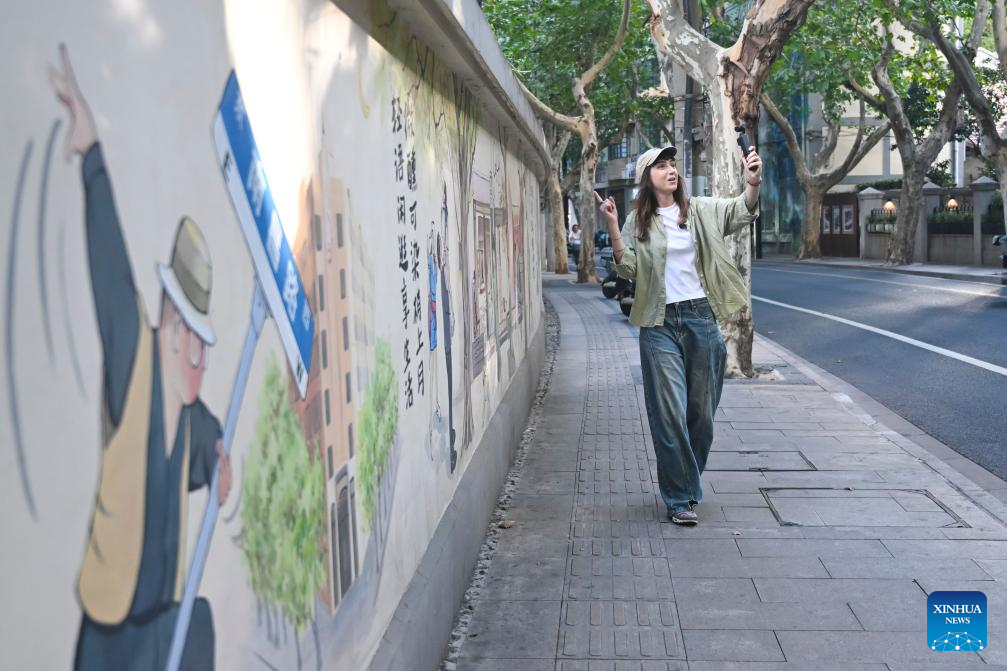
This photo taken on Sept. 22, 2025 shows Clarisse Le Guernic, a French woman working as a local tour guide, shooting for a vlog on Nanchang Road in Shanghai, east China. As China's latest chapter of inbound tourism begins to take shape, there are a loosely connected group of people who do not fit neatly into media narratives or influencer culture. They are present in everyday encounters, helping visitors bridge the gap between assumption and experience. In China's media and academic cultural communication circles, people have begun calling them "cultural ferrymen."
Some are Chinese professionals who have turned away from conventional tourism; others are foreigners who have built their lives in China and now find themselves translating it. Together, they are reshaping how international visitors experience the country -- not as a spectacle, but as a lived reality. (Xinhua/Chen Haoming)
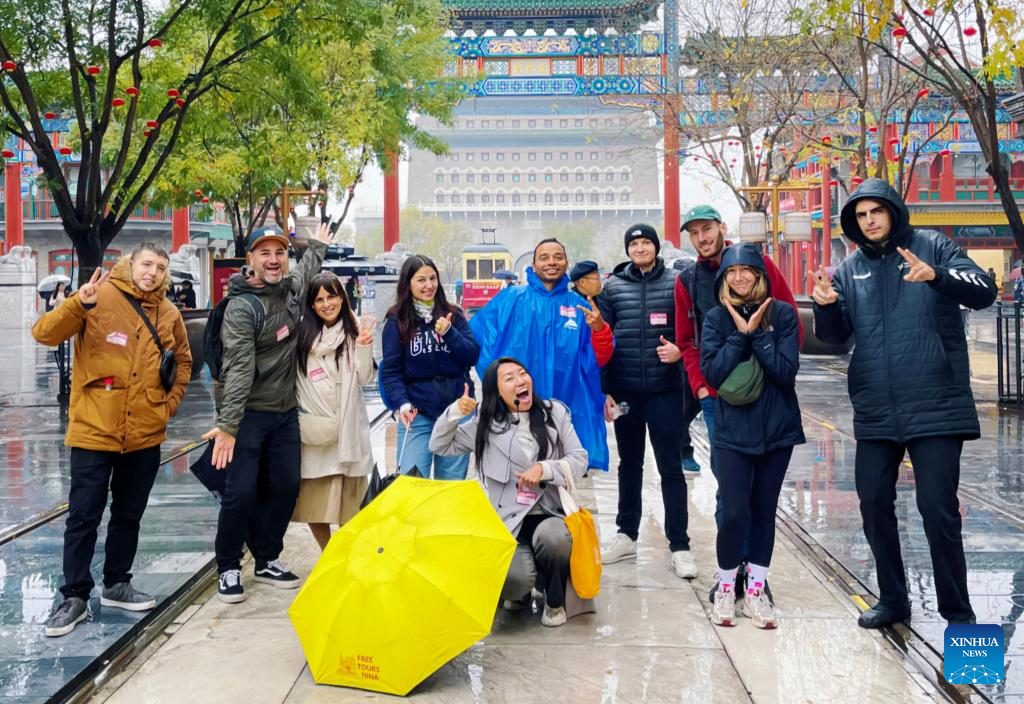
This photo taken in November of 2024 shows Sun Shuli posing for a photo with foreign tourists she leads on the Qianmen pedestrian street in Beijing, capital of China. Sun, who has worked in inbound tourism for years, now leads teams offering in-depth "citywalk" tours and cultural experiences in Beijing and Shanghai. As China's latest chapter of inbound tourism begins to take shape, there are a loosely connected group of people who do not fit neatly into media narratives or influencer culture. They are present in everyday encounters, helping visitors bridge the gap between assumption and experience. In China's media and academic cultural communication circles, people have begun calling them "cultural ferrymen."
Some are Chinese professionals who have turned away from conventional tourism; others are foreigners who have built their lives in China and now find themselves translating it. Together, they are reshaping how international visitors experience the country -- not as a spectacle, but as a lived reality. (Xinhua)


