
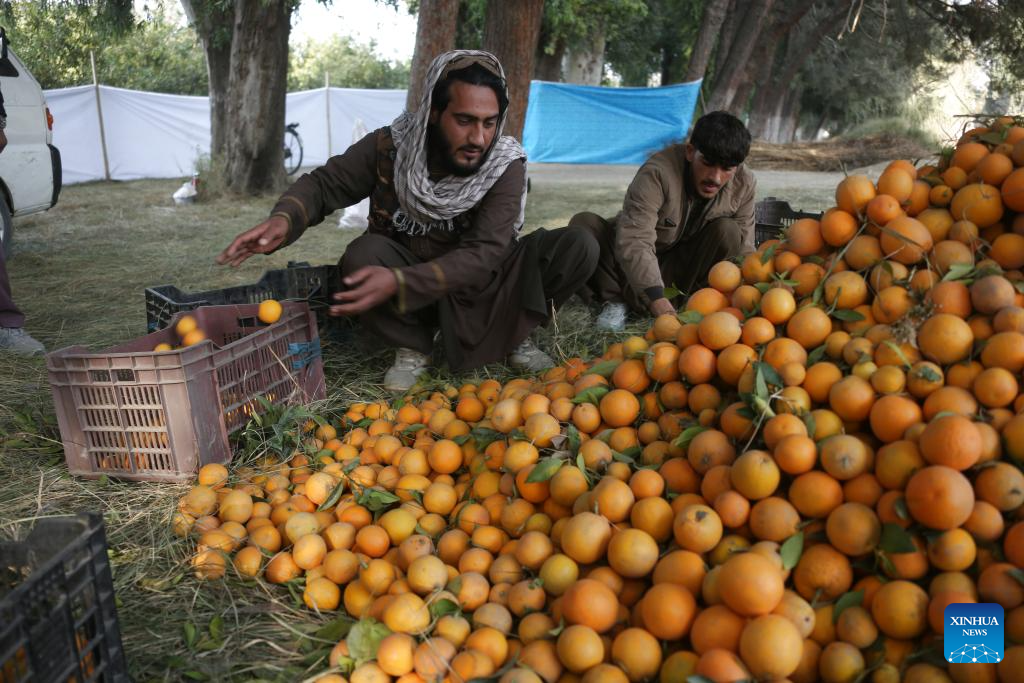
Farmers transfer fresh harvest at an orange orchard in Nangarhar province, eastern Afghanistan, Dec. 10, 2025.(Photo by Saifurahman Safi/Xinhua)
KABUL, Dec. 20 (Xinhua) -- In the fertile lowlands of eastern Afghanistan's Nangarhar province, rows of orange trees glow under the winter sun. The sight of orange trees heavy with fruit is a symbol of perseverance and hope.
As the early morning light spills over the landscape, 52-year-old Wali Jan walks quietly between the rows of orange trees he has cared for over the years. With 100 acres of orchards to manage, his daily life is a rhythm of tending to the soil, coordinating harvests, and overseeing irrigation. The land supports not only his family of 23 but also provides seasonal work for dozens of others in his community.
"Though the harvest season keeps us busy four to five months," says Wali Jan, his voice filled with a quiet sense of gratitude, "I am still so grateful to be in my homeland, laboring in health and happiness." His story is shared by many farmers across the region, where the cultivation of oranges has become a vital source of livelihood.
While Wali Jan earns a modest 7,000 afghanis (about 105.64 U.S. dollars) per month, the stability his orchards provide is invaluable in a country where steady work is hard to come by. His orchards offer not just food but dignity, allowing him to remain rooted in his land despite the uncertainties surrounding life in Afghanistan.
The region's orange orchards are more than just a means of survival; they are a source of pride and resilience. As Afghanistan continues to struggle with economic hardship, these orchards are once again becoming a lifeline for thousands of families, and this year's harvest is expected to be the largest in recent memory.
Authorities predict production will reach 5,000 to 5,500 tons, an increase driven by improved farming techniques and the expansion of newly planted orchards.
"This year, we have paid more attention to the quality of the produce," says Ghairatmal, head of the Nangarhar Canal Department. "By improving agricultural practices and focusing on quality, we have created more opportunities for local people."
During harvest season, Nangarhar's orchards also attract visitors from other parts of the country. Families come to picnic among the trees, buy fresh fruit, and escape urban life. A local official says the orchards have become informal gathering places, drawing people from different ethnic and regional backgrounds.
"People come to enjoy the oranges, relax, and experience the rich diversity of our country. It's a place where cultures meet and unite, and it plays a role in promoting peace and understanding," Ghairatmal said.
For workers like Wali Shah, a seasonal laborer who spends long hours picking oranges, the harvest season is both grueling and fulfilling. From dawn until late afternoon, Wali Shah collects between 500 and 700 seers (about 100 to 140 kilograms) of fruit, earning 200 afghanis daily.
"It's tough work, but it allows us to feed our families," he says. "And here, we don't have to leave our country to find work."
During the harvest season, each orchard employs 30 to 40 workers, but the economic ripple extends far beyond the fields. The citrus trade supports truck drivers, traders, packaging workers, and small roadside businesses, creating a network of interdependence that sustains countless families across the province.
Across Nangarhar, approximately 25,000 acres of land are now planted with orange trees.
These orchards also connect Afghanistan to the world. Each year, thousands of tons of citrus are exported to neighboring countries, including Iran, Tajikistan, Uzbekistan, and Russia. As demand for Afghan oranges rises, the industry's future looks brighter than ever.
As Wali Jan and his fellow farmers look toward the future, they remain committed to improving the quality of their produce and expanding their orchards, ensuring Nangarhar's orange industry thrives for years to come. ■
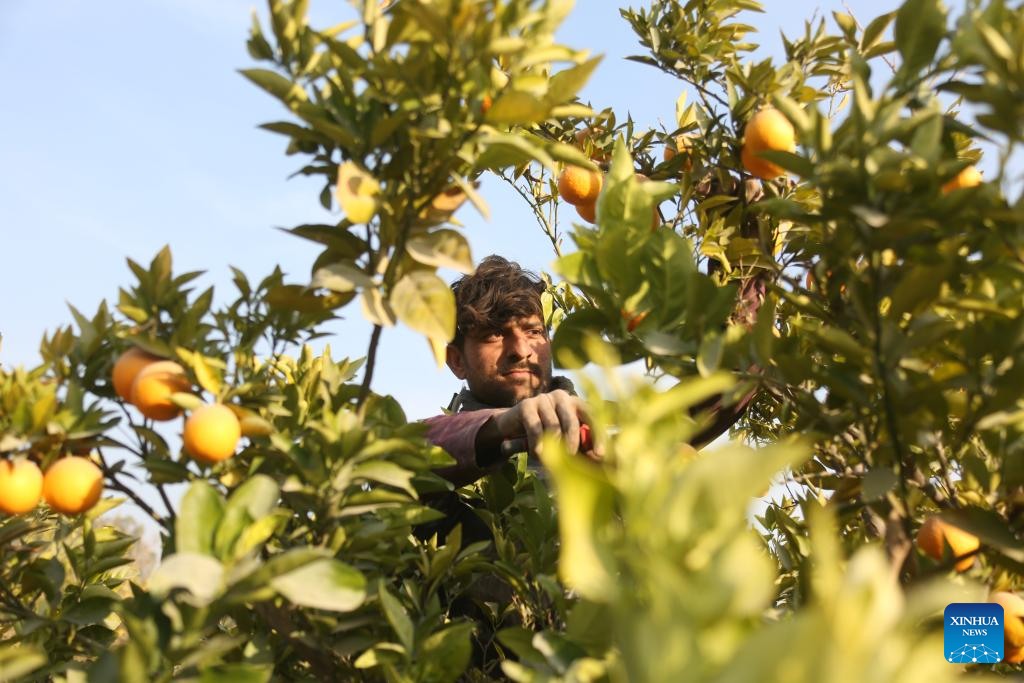
A farmer harvests at an orange orchard in Nangarhar province, eastern Afghanistan, Dec. 10, 2025.(Photo by Saifurahman Safi/Xinhua)
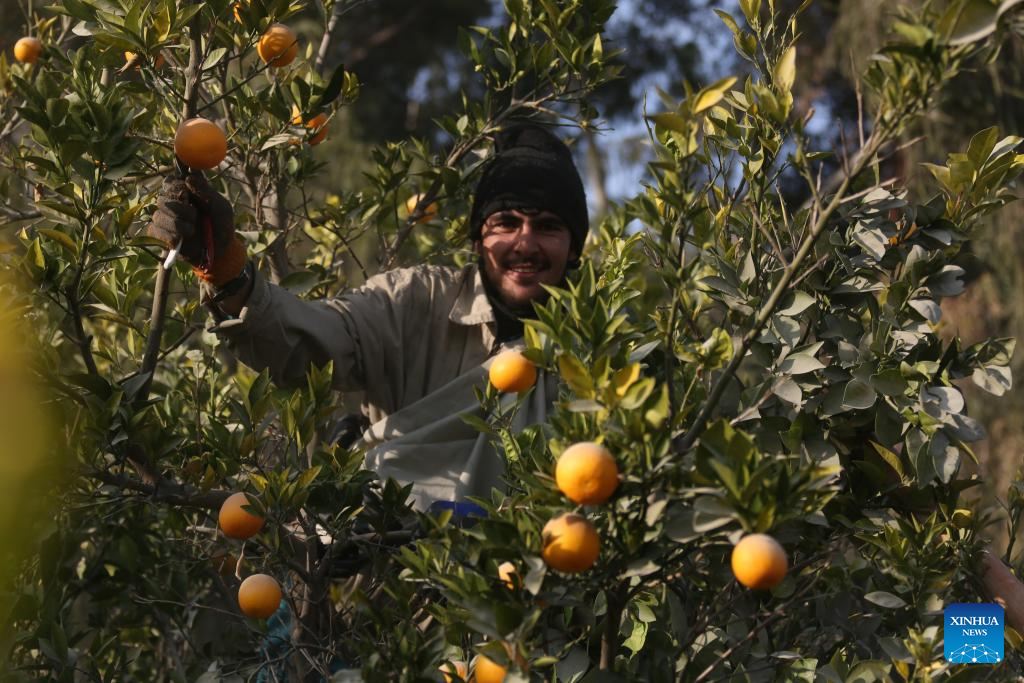
A farmer harvests at an orange orchard in Nangarhar province, eastern Afghanistan, Dec. 10, 2025.(Photo by Saifurahman Safi/Xinhua)


