
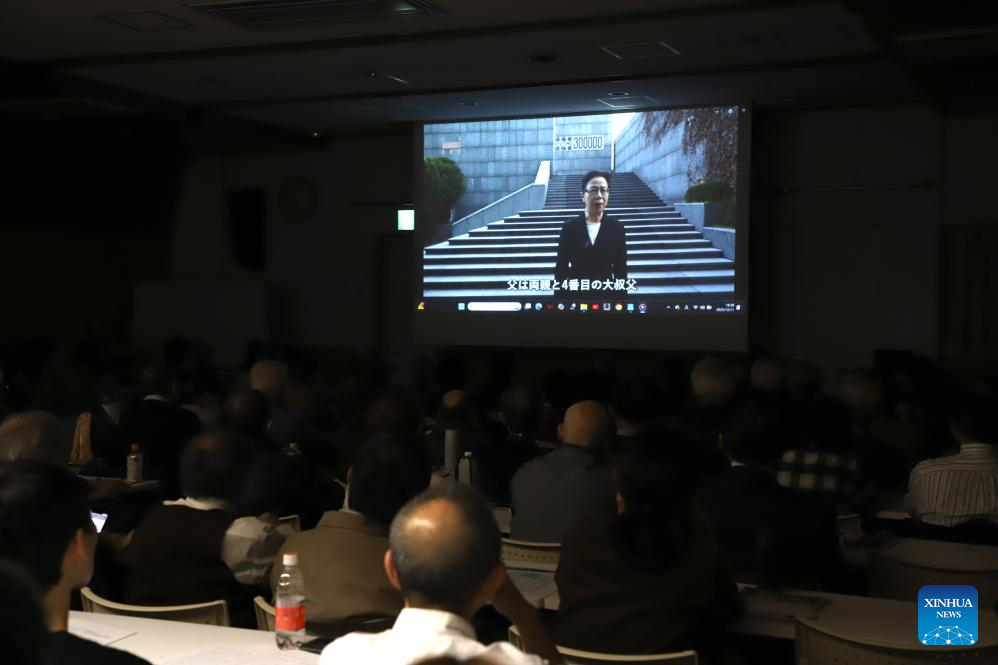
Cao Yuli, daughter of two Nanjing Massacre survivors, speaks in a video testimony during a testimony meeting on the Nanjing Massacre in Tokyo, Japan, Dec. 11, 2025. (Xinhua/Li Ziyue)
TOKYO, Dec. 12 (Xinhua) -- On a bitterly cold winter day in 1937, a young girl stood by a riverbank in Nanjing and saw a sight she would never forget: "The reeds along the river were all red. Many bodies were floating in the water..."
In a video testimony played in an auditorium in Tokyo, Cao Yuli, daughter of two Nanjing Massacre survivors, recounted her mother's words. Her voice filled the hall, and a somber stillness settled over the audience.
This year marks the 88th anniversary of the Nanjing Massacre, and Saturday marks the 12th national memorial day for the victims of the Nanjing Massacre. On Thursday evening, more than 100 people gathered in Tokyo to once more confront history through testimonies and archival material.
Both of Cao's parents lived through the Nanjing Massacre as children, who witnessed the deaths of their own relatives at the hands of Japanese invaders. Though they survived, the trauma followed them for the rest of their lives.
"Even decades later, I would see them suddenly drift off, their eyes unfocused," Cao said. "My mother especially -- just the slightest sound could make her tremble uncontrollably, even faint."
The testimony meeting is organized by the Japanese civic group "No More Nanjing," which has held public testimony events on the Nanjing Massacre around Dec. 13 in Tokyo and other cities for 29 years, giving Nanjing Massacre survivors, their descendants and scholars a platform to tell their stories and to push Japanese society to confront its history of aggression with honesty.
This year's event invited director Yoshikazu Hara to introduce his new documentary, which traces the brutality of war through the diaries and memoirs of several Japanese soldiers.
Some excerpts of the soldiers' writings were read aloud during the event. "Wherever our troops advanced with overwhelming force, there was looting, violence, killing, arson." "On the road, a young mother -- likely assaulted -- lay dead after being shot." As the words echoed, some audience bowed their head while others were on the verge of tears.
Most of those attending were elderly, but several younger faces stood out. They told Xinhua they are fourth-year university students who had come seeking historical truths that Japan's education system has deliberately sidestepped.
Rei Kanazawa, who had visited the Exhibition Hall of Evidences of Crime Committed by Unit 731 of the Japanese Imperial Army in China, had been shaken by how Japanese researchers and medical practitioners became perpetrators under wartime militarism, carrying out countless inhumane acts. "It was deeply painful to see," she said.
Another student, Ryo Yamamoto, noted that Japanese education barely touches on Unit 731 or the issue of "comfort women." "I came because I wanted to fill in the gaps. Hearing these testimonies today, I finally understood how horrific the Japanese military's actions against civilians truly were," he said.
Kanazawa added that school curricula often emphasize Japan's wartime suffering, such as the atomic bombings, but leave out the broader context of why the bombings occurred or why so many civilians died. "These should be taught as part of history," she said. "But we never learned from our textbooks those terrifying chapters about Japan as a perpetrator."
Some speakers at the event also drew connections between history and Japan's current political climate, voicing concern about troubling trends at the national level.
Akinobu Ito, president of Japan-China Workers Exchange Association, noted that Japan is currently building a framework of so-called "economic security," strengthening counter-espionage measures, and passing legislation to bolster the defense industry -- moves that funnel increasing resources into military-related sectors.
Japanese citizens, he warned, cannot ignore the growing risks of war. "And that is precisely why we must continue demanding that the government uphold the Constitution and halt all discussions about constitutional revision and military expansion," he said. ■
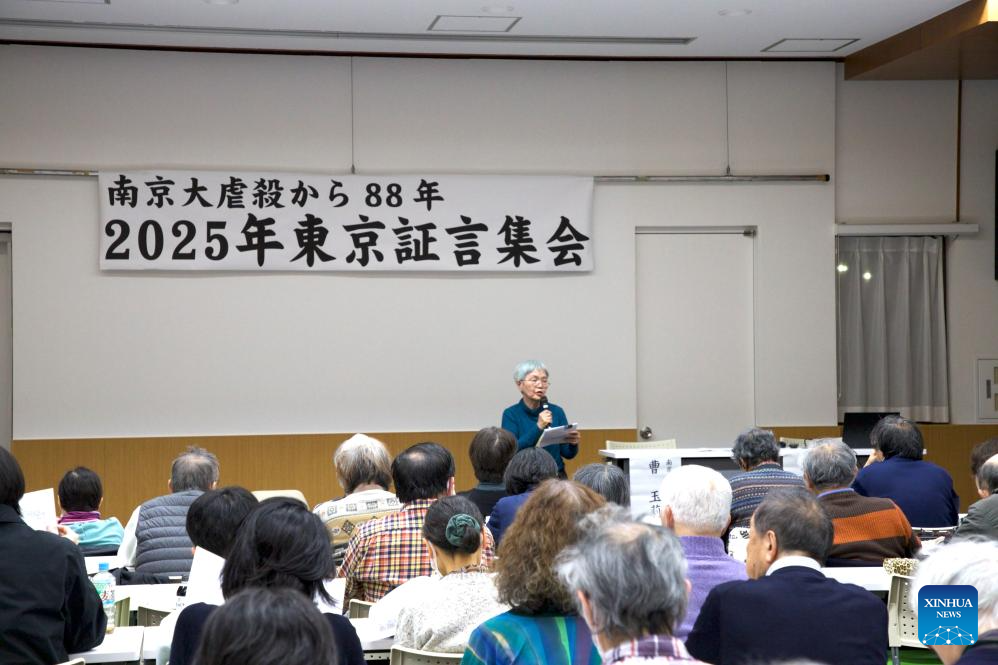
A representative of the Japanese civic group "No More Nanjing" speaks during a testimony meeting on the Nanjing Massacre in Tokyo, Japan, Dec. 11, 2025. (Xinhua/Li Ziyue)
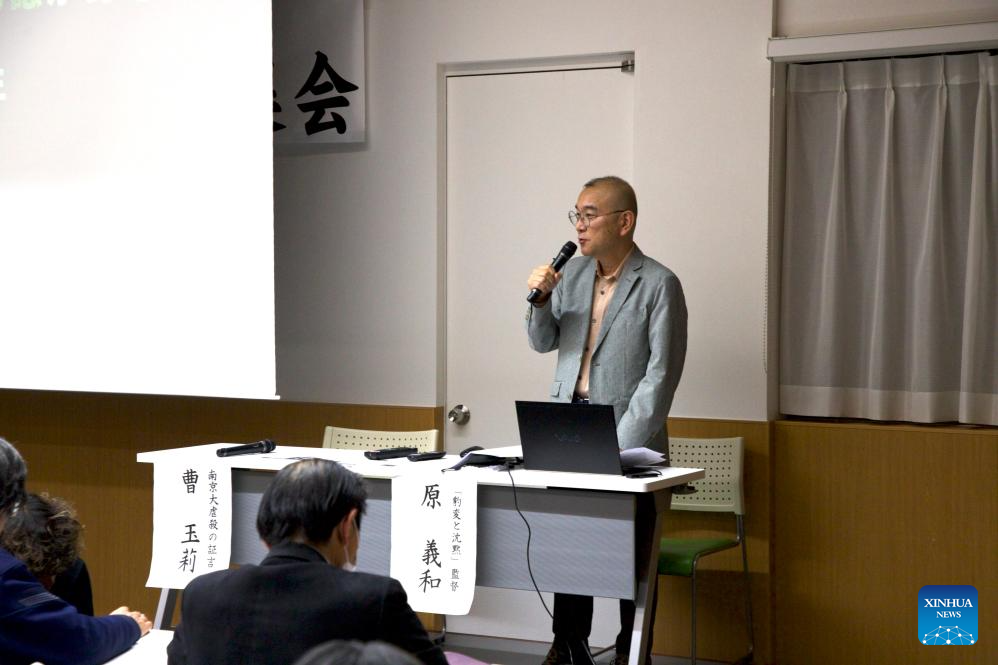
Japanese director Yoshikazu Hara speaks during a testimony meeting on the Nanjing Massacre in Tokyo, Japan, Dec. 11, 2025. (Xinhua/Li Ziyue)
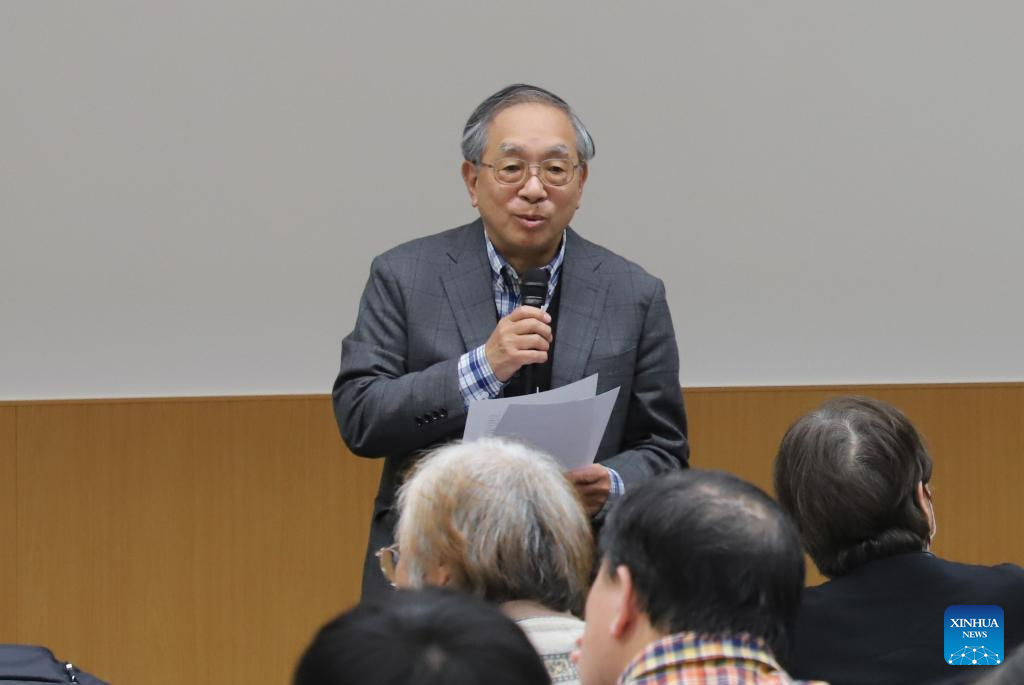
Akinobu Ito, president of Japan-China Workers Exchange Association, speaks during a testimony meeting on the Nanjing Massacre in Tokyo, Japan, Dec. 11, 2025. (Xinhua/Li Ziyue)
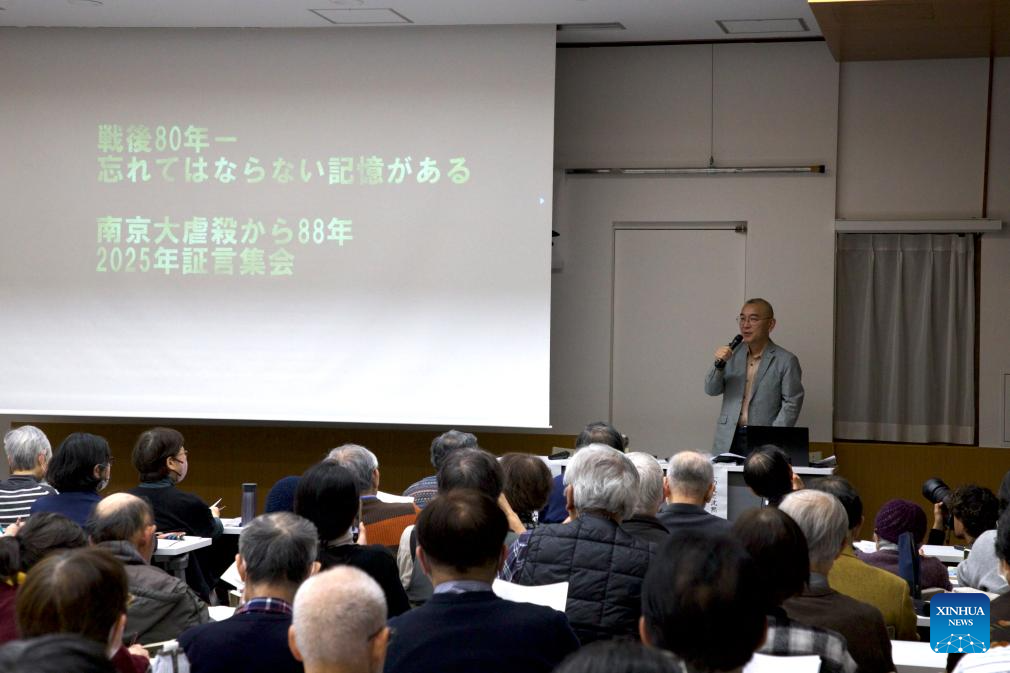
Japanese director Yoshikazu Hara speaks during a testimony meeting on the Nanjing Massacre in Tokyo, Japan, Dec. 11, 2025. (Xinhua/Li Ziyue)


