BEIJING, Dec. 5 (Xinhua) -- For nearly a month, Japanese Prime Minister Sanae Takaichi has refused to retract her erroneous and provocative remarks concerning China's Taiwan region, choosing instead to dodge accountability with evasion and sophistry.
At a Diet meeting on Nov. 7, Takaichi claimed that the Chinese mainland's "use of force on Taiwan" could constitute a "survival-threatening situation" for Japan, implying the possibility of Japan's armed intervention in the Taiwan Strait.
At a plenary session of the House of Councillors on Dec. 3, Takaichi said, "The Japanese government's basic position regarding Taiwan remains as stated in the 1972 Sino-Japanese Joint Statement, and there has been no change to this position."
"China's stance is very clear: We urge the Japanese side to reflect on and correct its wrongdoing, and retract Prime Minister Takaichi's erroneous remarks. This is an issue of principle," Chinese foreign ministry spokesman Lin Jian told a regular press conference Thursday.
"The facts and Japan's commitments are written down in black and white in historical records. We have been asking the Japanese side the same questions for days and still haven't received an answer," Lin said.
"No change to the position" is far from adequate and certainly unacceptable as a response to China, he said.
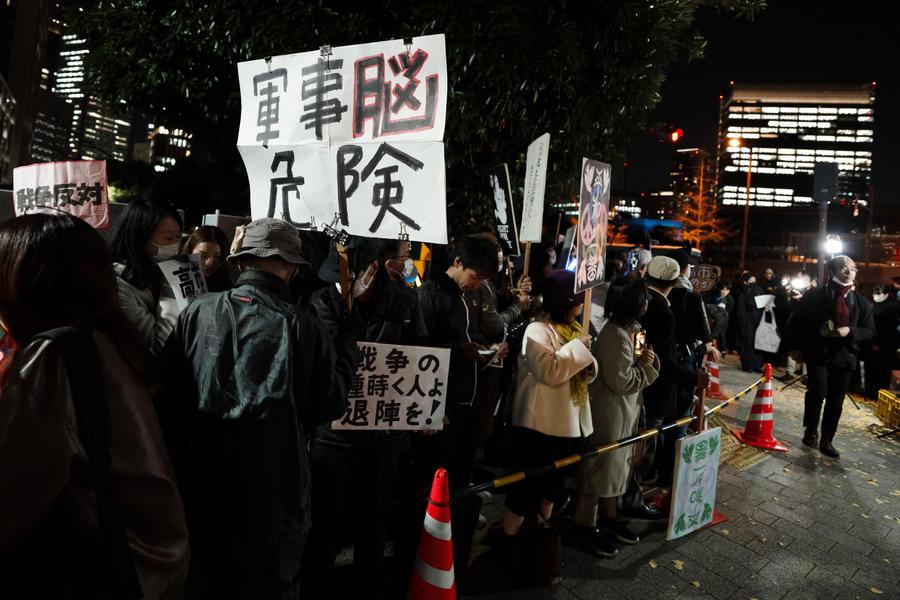
It is alarming that in recent years, Japan has drastically readjusted its security policy, increased its defense spending year after year, relaxed restrictions on arms export, sought to develop offensive weapons, and planned to abandon its three non-nuclear principles. Japan's right-wing provocateurs are trying every means to break free from the pacifist constitution, going further down the path of military buildup.
According to a report released Monday by the Stockholm International Peace Research Institute (SIPRI), all five Japan-based companies listed in the SIPRI Top 100 arms producers reported double-digit growth in arms sales in 2024, and their combined revenues went up 40 percent from the previous year, driven by strong domestic demand amid Japan's ongoing military buildup.
Japan's ambitions to expand its military capabilities warrant the highest vigilance from the international community. Now that Takaichi has let the cat out of the bag, Japan owes the world a clear answer to a crucial question: will the country repeat its past mistakes of militarism?
Some sectors in Japan have been impacted due to the souring of bilateral relations. The number of Chinese tourists traveling to Japan has fallen sharply, with reports indicating that over 40 percent of planned flights from China to Japan in December have been canceled.
China is determined and fully capable of defending its national and territorial sovereignty. China will also steadfastly safeguard the hard-won outcomes of WWII and the post-war international order, together with the international community. It will never allow the revival of Japanese militarism. ■