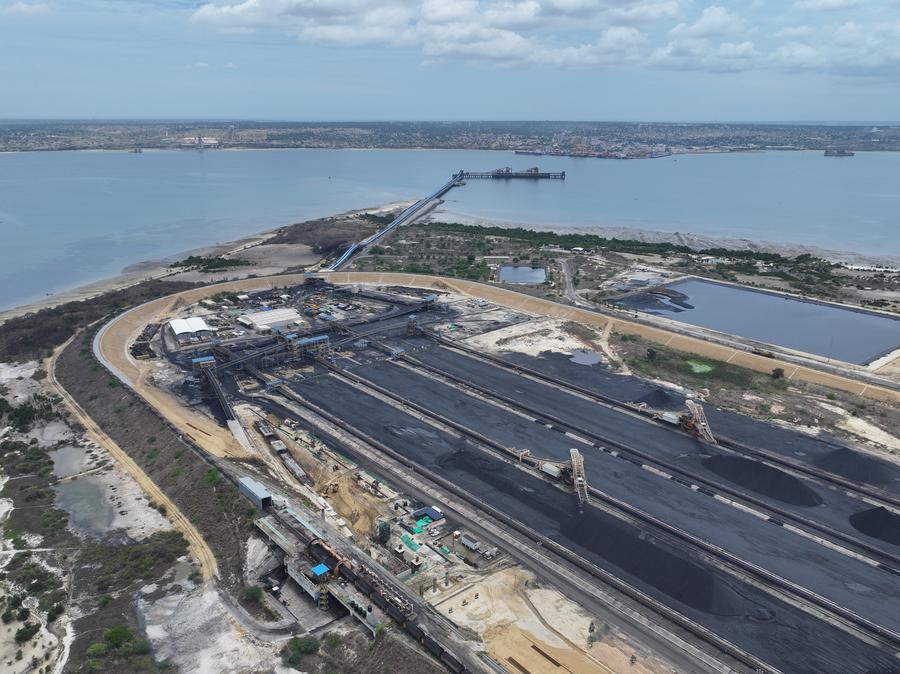
A Chinese company is advancing the upgrade of the old Port of Nacala in Mozambique, including the construction of a new rotary car dumper, an unloading equipment key to improving port operation efficiency, as well as the broader upgrade of the Nacala corridor.
MAPUTO, Dec. 3 (Xinhua) -- Carrying real-time kinematic surveying equipment on his shoulder, Orlando Vicente, a surveyor with China Railway 20th Bureau Group Corporation Limited (CR20), stepped into the coal terminal of the old Nacala Port in northern Mozambique.
He set up the device precisely in the marked position and completed calibration before positioning and recording data. These collected figures would lay the technical basis for the next phase of construction.
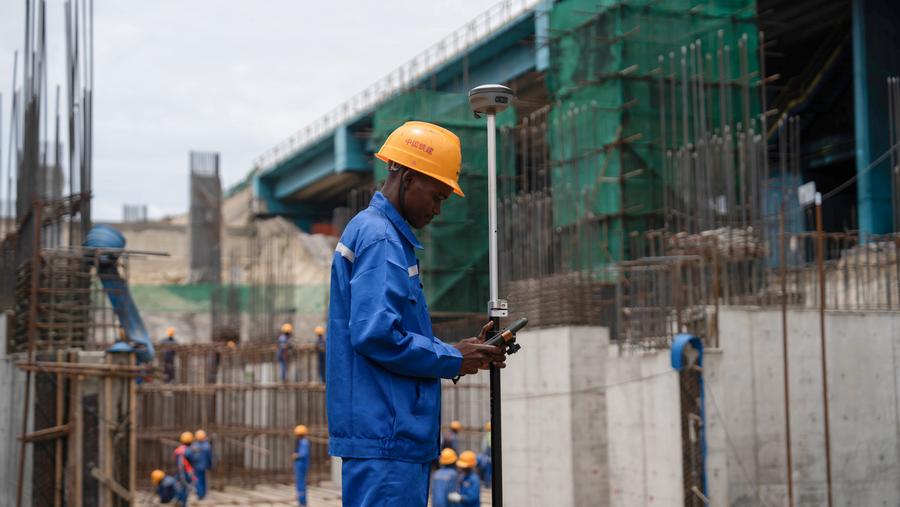
"I've been working for three years. When I first joined the team, I was not yet fully comfortable with the equipment, but now I can carry out surveying tasks independently," Vicente said.
Accuracy, he said, is essential to construction control.
The CR20 is currently advancing the upgrade of the old Port of Nacala, including the construction of a new rotary car dumper, an unloading equipment key to improving port operation efficiency.
Tang Dongsheng, chief engineer of the project, said the new car dumper is an important part of the broader upgrade of the Nacala corridor.
"The railway is undergoing electrification, and once the upgrade is complete, its transport capacity will increase. The port must therefore achieve higher unloading efficiency," Tang explained, adding that the new equipment, once operational, will significantly enhance Nacala old Port's unloading capacity and improve coal export efficiency.
The Nacala corridor railway project, completed in 2016, is one of Mozambique's most vital pieces of infrastructure. Stretching over 900 km, it links the Moatize coalfields in Tete Province, crosses Malawi, and ends at the deep-water Port of Nacala in Nampula Province.
With an annual coal transport capacity of around 18 million tonnes, it provides a stable and efficient export route for the country's abundant coal resources. CR20 participated in its construction and now undertakes its maintenance and related works.
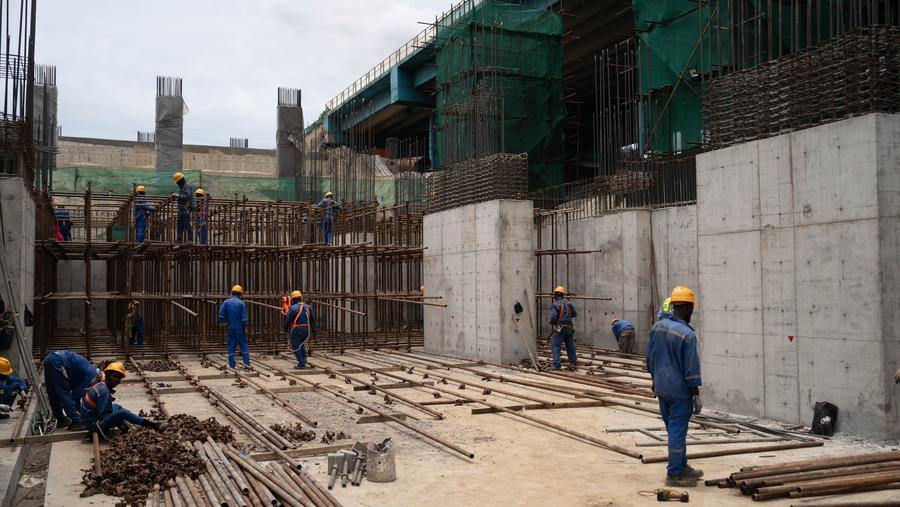
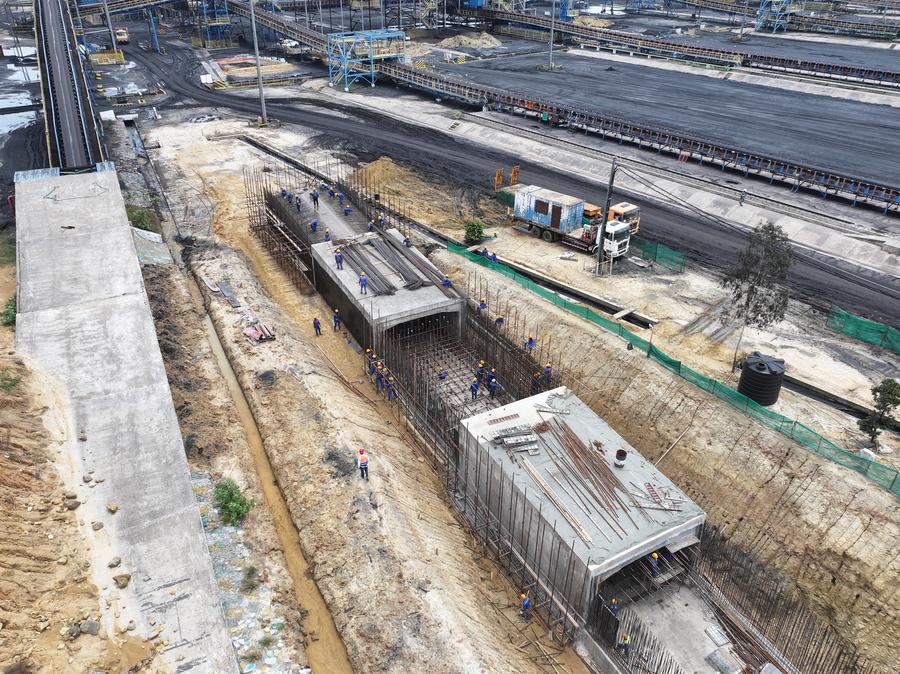
Conditions at the car dumper construction site are demanding. The new structure is positioned near existing facilities, groundwater levels are high, and the foundation pit is both deep and constrained, offering limited working space.
To ensure steady progress, the project team has adopted techniques such as well-point dewatering, water stop curtain, and protective piles for deep excavation.
Meanwhile, maintenance work on open freight wagons is also underway.
Years of transporting coal have exposed carbon-steel wagon bodies to an acidic mix of coal dust and rainwater, causing metal corrosion. Some wagons have also suffered deformation from long-term operation or accidental impact and require structural repair.
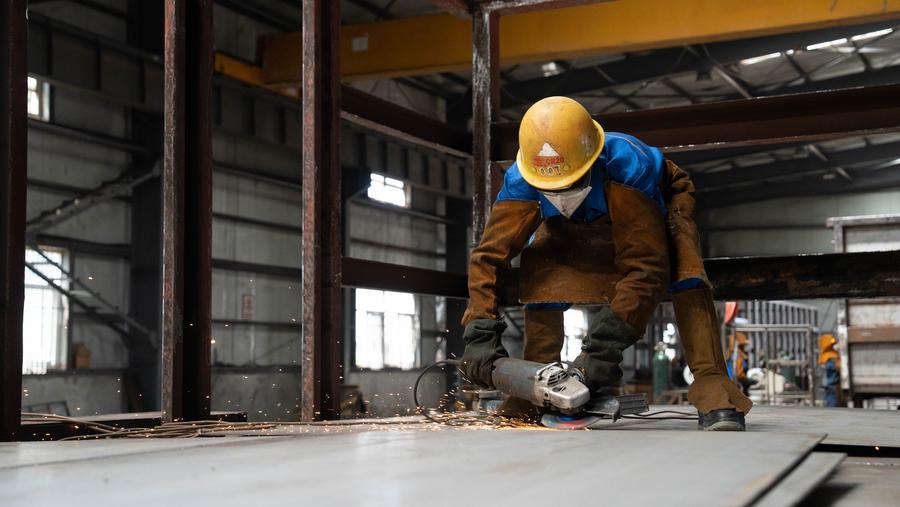
Inside the maintenance workshop, workers were seen dismantling damaged components as welding sparks flashed across steel plates. On the other side of the facility, others applied fresh anti-corrosion paint to wagon bodies.
Each wagon undergoes a series of procedures, such as dismantling, grinding, welding, and coating, before returning to service. The workshop currently repairs around 25 wagons per month, satisfying the majority of the line's transport requirements.
Anil Kumar, head of Nacala logistics engineering and projects, said the Nacala corridor is a strategic transport artery for Mozambique, and both the port upgrade and routine railway maintenance play a positive role in strengthening regional logistics capacity.
"We look forward to the project progressing as planned and contributing even more to improving port operations," he added. ■