Since early September, the Pentagon has carried out more than 20 known strikes on alleged drug vessels in the Caribbean and eastern Pacific Ocean, killing more than 80 people aboard.
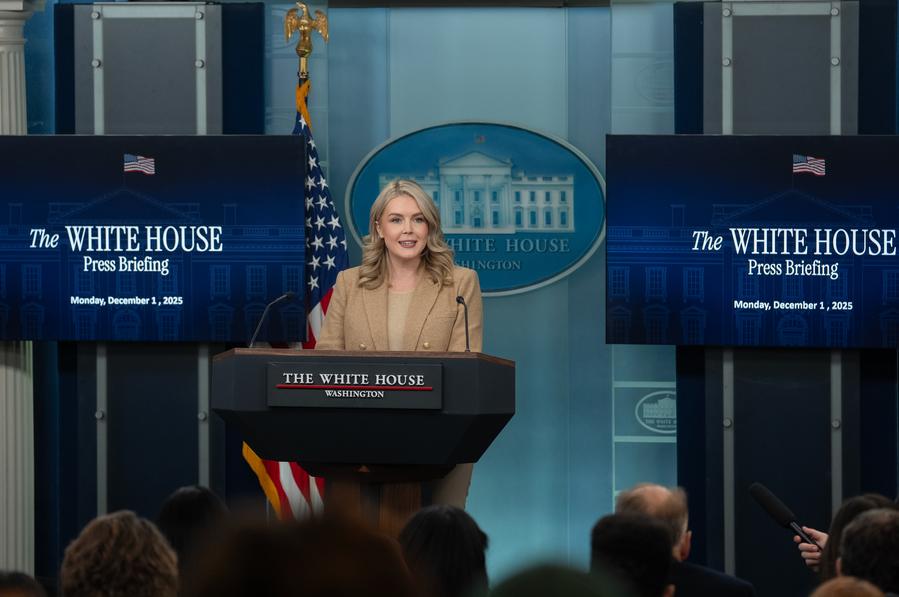
WASHINGTON, Dec. 1 (Xinhua) -- White House Press Secretary Karoline Leavitt confirmed Monday that U.S. Defense Secretary Pete Hegseth authorized a second strike aiming to kill survivors on an alleged drug boat in the Caribbean in early September.
The second strike reportedly killed the two survivors hanging onto the burning vessel following an initial strike on Sept. 2.
WHITE HOUSE COMMENTS
"President (Donald) Trump and Secretary Hegseth have made it clear that presidentially designated narco-terrorist groups are subject to lethal targeting in accordance with the laws of war. With respect to the strikes in question on Sept. 2, Secretary Hegseth authorized Admiral (Frank) Bradley to conduct these kinetic strikes," Leavitt said at the White House daily briefing.
"Admiral Bradley worked well within his authority and the law, directing the engagement to ensure the boat was destroyed and the threat to the United States of America was completely eliminated," Leavitt said. "The initial order, from U.S. Secretary Haig said, 'everyone be killed,' and that came from President (Donald) Trump."
She argued that the boat strike was "conducted in self-defense" and that Trump "has a right to take them out if they are threatening the United States of America."
However, when asked about the two survivors reportedly killed after the second strike on Sept. 2, Leavitt dodged the question, deferring it to the Pentagon.
And when asked if there was a "change in policy" regarding survivors of these attacks, she answered, "Not to my knowledge, no."
TRUMP AND HEGSETH
Leavitt's remarks came one day after Trump told reporters aboard Air Force One that he would not have wanted a second strike to kill survivors aboard alleged drug boats.
"I don't know that that happened, and Pete said he did not want -- he didn't even know what people were talking about. So we'll look at -- we'll look into it. But no, I wouldn't have wanted that. Not a second strike. The first strike was very lethal. It was fine, and if there were two people around, but Pete said that didn't happen. I have great confidence," said Trump.
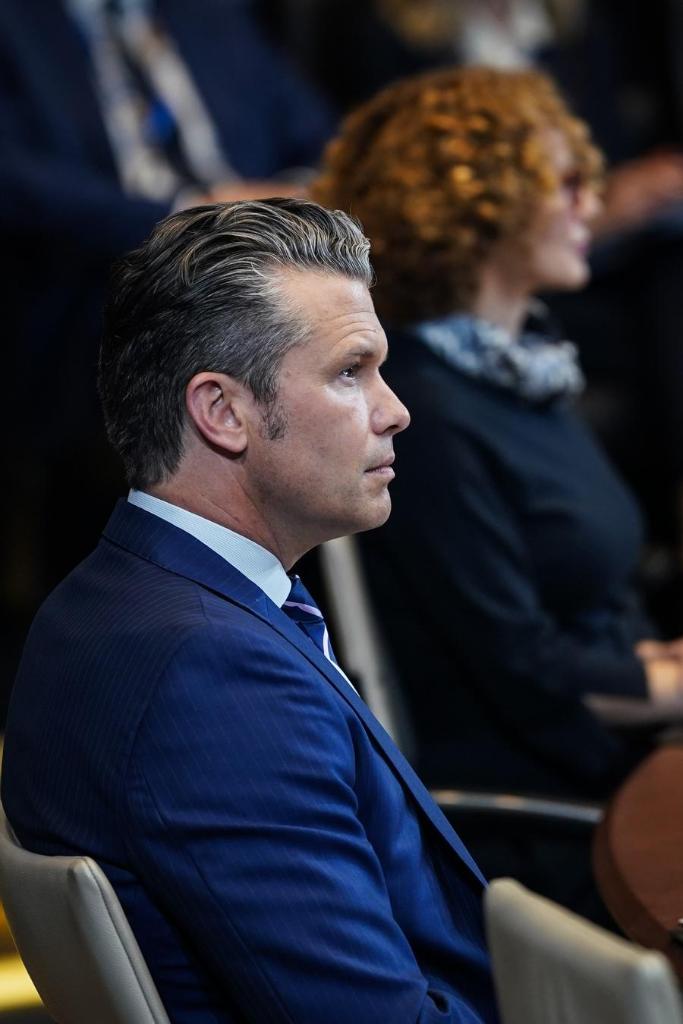
The Washington Post reported Friday that Hegseth issued a verbal order to "kill everybody" aboard the boats suspected of transporting illegal drugs, and since the Sept. 2 initial strike left two survivors, Bradley ordered a follow-up strike to make sure no survivors were left.
Later on Friday, Hegseth issued a post on the social platform X, claiming that "the fake news is delivering more fabricated, inflammatory, and derogatory reporting to discredit our incredible warriors fighting to protect the homeland."
"Our current operations in the Caribbean are lawful under both U.S. and international law, with all actions in compliance with the law of armed conflict," he wrote.
However, the Pentagon chief didn't directly deny that he authorized the second strike.
LAWMAKERS AND LAW EXPERTS
The Republican-led armed services committees in both the House and Senate have announced they are opening bipartisan inquiries into the second U.S. strike aiming to kill the survivors from the first boat strike.
In separate statements issued over the weekend, the House Armed Services Committee said it would take "bipartisan action to gather a full accounting of the operation in question," while the Senate panel vowed "vigorous oversight" to determine what occurred.
A number of Republican and Democratic lawmakers, as well as U.S. law experts, voiced deep concern over the incident on Sunday, suggesting the Pentagon order amounted to a war crime.
Democratic Senator Tim Kaine told CBS News on Sunday that if the report was accurate, the attack "rises to the level of a war crime."
Don Bacon, a Republian sitting on the House Armed Services Committee, told ABC News that if the strike occurred as the report said, "that is a violation of the law of war ... It's hard to believe that two people on a raft trying to survive would pose an imminent threat."
Asked by CNN on Sunday if he believed a second strike to kill survivors constituted a war crime, Democratic Senator Mark Kelly said, "It seems to."
Laura A. Dickinson, a professor of law at the George Washington University law school, told the Time magazine that if the report is true, Hegseth could be exposed to criminal liability under the U.S. Uniform Code of Military Justice (UCMJ).
"In an armed conflict, the intentional killing of a protected person -- someone who is a civilian or a person who is 'hors de combat' because they have laid down their arms or are shipwrecked at sea -- is a war crime," she said.
In her observation, most U.S. law experts do not believe there is an armed conflict between the U.S. and drug traffickers, the professor added.
The United States "is not at war at all, meaning that all of the strikes are illegal -- not solely the strike being discussed." Jennifer Trahan, a professor at New York University's Center for Global Affairs, also told the magazine.
Since early September, the Pentagon has carried out more than 20 known strikes on alleged drug vessels in the Caribbean and eastern Pacific Ocean, killing more than 80 people aboard.■