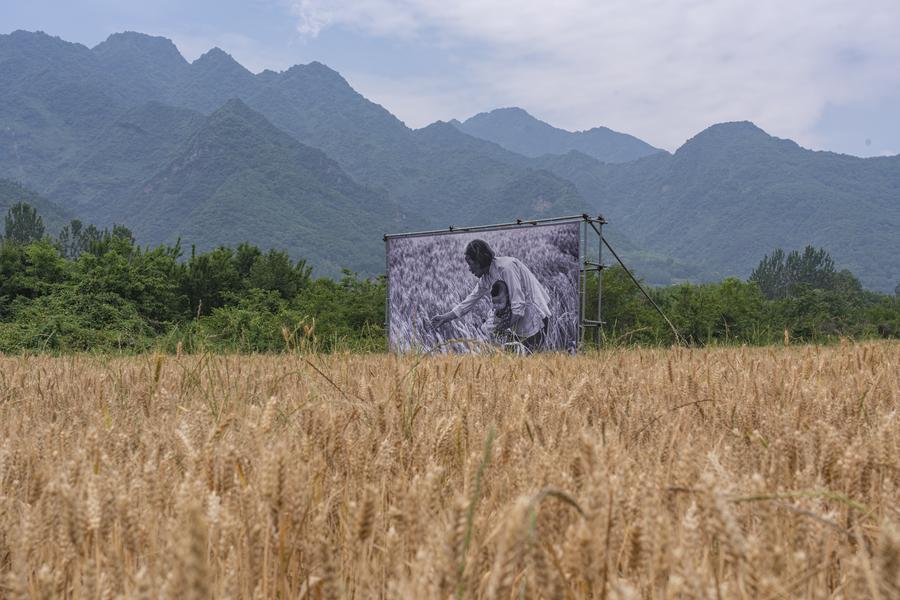
XI'AN, Oct. 29 (Xinhua) -- Drones spray pesticides over fields, livestreaming sales are made on smartphones, and sleek high-speed trains run on rail bridges stretching across landscapes -- these modern rural Chinese scenes have all appeared in the paintings of Zhang Qingyi, a 71-year-old farmer painter from northwest China's Shaanxi Province.
Zhang was born in Huxian County, which is now the Huyi District of Xi'an, the provincial capital. Growing up in Huyi, one of the birthplaces of the Chinese folk art movement known as "Nongminhua," which translates to "farmers' painting," he developed a strong interest in art at an early age.
After graduating from junior high school in 1970, Zhang returned to the countryside, where the deep roots of farmer painting and the artistic atmosphere nurtured his development as a painter.
Grounded in authentic depictions of life in the countryside, Zhang's paintings -- ranging from field scenes to more niche themes such as the fight against crime -- vividly chronicle how rural communities have transformed alongside the country's broader development over the decades.
"Every painting tells a story of farmers and their lives. In daily life, there are always moments that particularly touch me," Zhang said, describing how ordinary scenes often become the inspiration for his work.
On his canvases, thatched huts have gradually given way to tiled houses and two-story buildings, manual labor has been shifting to mechanized farming, and traditional farm attire has been slowly replaced by fashionable modern dress. For Zhang, these details are more than just artistic choices; they serve as a living record of the history and everyday life that he knows best.
Zhang is one of many farmer painters who are documenting China's rural revitalization through their art. An exhibition in Huyi showcased more than 200 farmer paintings spanning different periods, with colorful works depicting farming life, local festivals and social change.
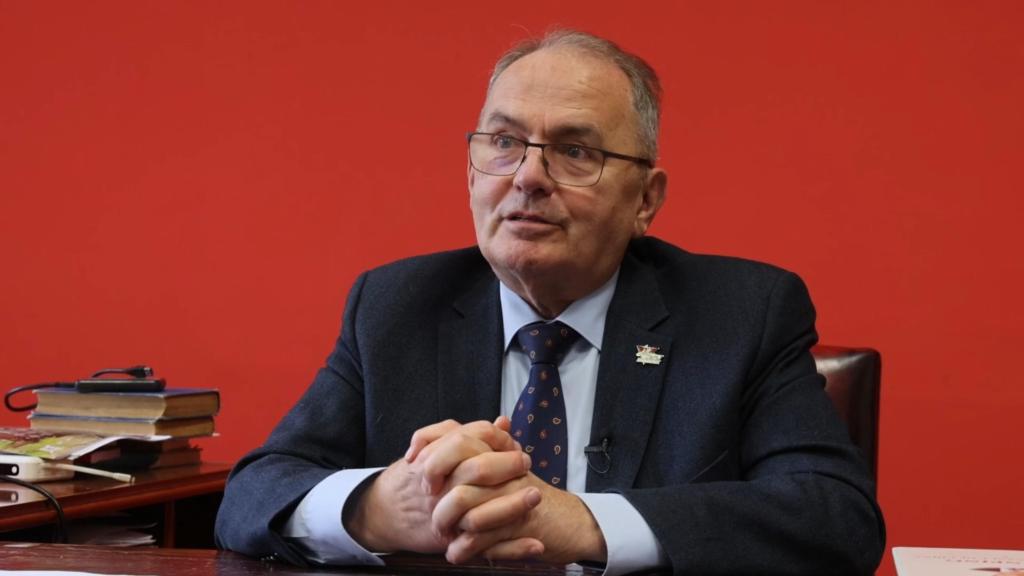
The exhibition hall's director, Wang Wenji, said that farmer paintings in the district date back to the 1950s, when they were primarily used to serve production by promoting agricultural knowledge and practices. With government support, the movement gradually expanded in scale, its content was enriched, and it developed with greater artistic depth.
The rural life depicted in farmer paintings has also become a bridge connecting the Chinese countryside with the world. Since it opened, more than 280,000 visitors from all over the world have visited the exhibition hall to see shows or undertake art exchanges, and thousands of paintings have been displayed across over 60 countries and regions, according to Wang.
"Through the paintings, foreigners can gain an understanding of the lives of Chinese farmers, and this genre is very popular," Zhang said. His work has taken him to the United States on two occasions, where he made some American friends he is still in touch with today, he said.
Beyond exhibitions, increasing numbers of people are now trying their own hand at painting -- one of the many art experiences now available in the countryside of Huyi. Supported by the local government's push to integrate agriculture, culture and tourism, a range of related initiatives have also emerged, leading to the renovation of public art spaces, the creation of large-scale murals and the establishment of art festivals.
As rural tourism continues to gain momentum across the country, it is offering fresh experiences for tourists and tangible benefits for farmers. And it is attracting more and more young people to return to their rural hometowns to start businesses like guesthouses and cafes.
Even now, Zhang still spends eight to 10 hours painting every day. In addition to working in his countryside studio and taking part in exhibitions and exchange activities, he often teaches at nearby primary schools.
"Farmers' painting is a local treasure that must not be lost. I hope to plant the seeds of creativity in the hearts of children so that they will continue to depict fresh scenes of our rural life," he said. ■