A letter of a quiet yet unyielding girl who dreams of a better future and believes that hope is stronger than war
by Rahaf Radi
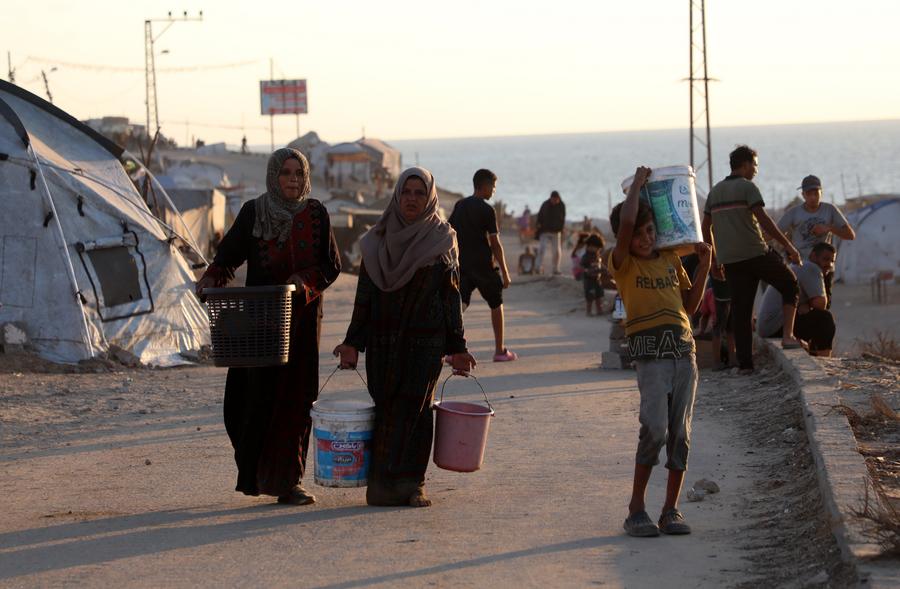
GAZA, Oct. 5 (Xinhua) -- My name is Rahaf Radi. I am 18 years old, a 12th-grade student, and I am writing to you from a small tent in a town called al-Zawaida in central Gaza.
It is currently nighttime. Distant booms and occasional explosions still punctuate the darkness, but writing to you -- those of you who care about what's happening here -- offers me a moment of solace amid the chaos.
I fell in love with writing when I was a child. What I write today is more than a letter; it is a testimony -- the story of our life and a fragment of what we endure here. From an early age, I have looked at life with a measure of hope. Even growing up surrounded by restrictions and hardship, I have always searched for glimmers of light.
I am quiet by nature -- I love to read, to reflect -- but inside me there is also a rebellious spirit, unwilling to accept the chains of this reality. The paradox may sound strange: serenity gives me strength, while rebellion compels me toward change.
In my 18 years, I have lived through four wars. I still remember the pounding of airstrikes in 2014, when I was still a child, and the suffocating shelter rooms where we hid. In 2019 and 2021, I was older, and I saw death creep closer to our homes as each conflict broke out. In 2023, violence erupted again and escalated into the war that has yet to end. To grow up under such relentless violence would be unimaginable in other places; yet here, it has become ordinary.
Today, my family and I squeeze into a tent just a few meters wide. We have lost our home. What breaks my heart most, though, is that I have lost my school. Some of the teachers were killed in the bombings. Many of my classmates have disappeared without a trace. At first, the school was converted into a shelter for the displaced. Not long after, it was leveled. Sitting at a desk in a real classroom is a pipe dream now.
In more than a year of displacement, the memories of school have never left me. I can still see myself waking up early, buttoning the blue uniform, and walking with friends through Gaza's crowded streets. We laughed all the way, trading innocent visions of a luminous future. School was more than a place of learning; it was a second home, a stage for ambition.
The day the school building was bombed into rubble, a part of me was taken with it. My childhood collapsed right before my eyes. I cried, but I swore that destruction would not deprive me of my right to learn.
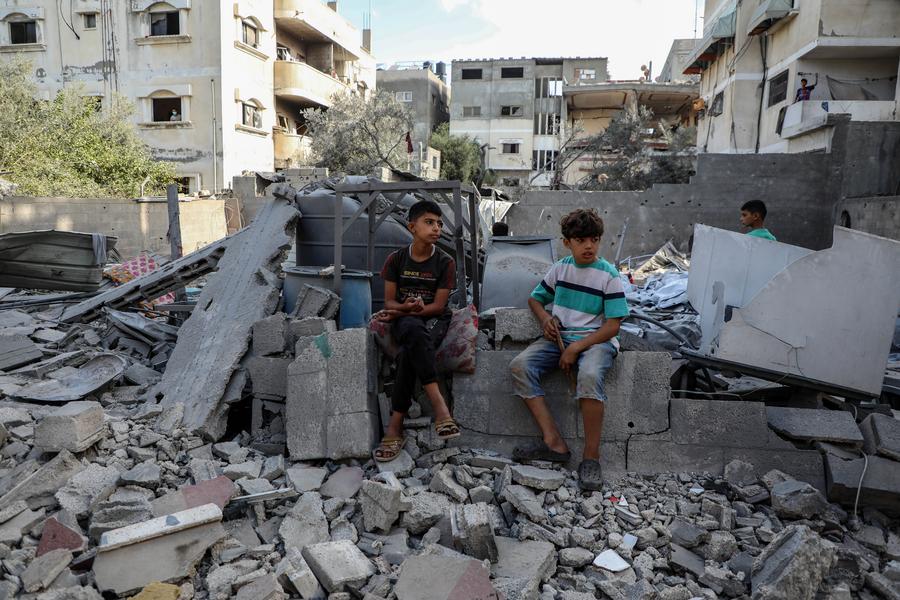
I built a "desk" from scraps of wood salvaged from the ruins. On it, I place the few books I have -- hand-me-downs from older students, some torn but still legible. I study by candlelight, or with a small battery lamp. The air inside the tent is stifling; the roar of fighter jets never leaves the skies. Still, when I open my books, I try to seal myself inside another world.
I dream of becoming a journalist not only because I love writing, but also because journalism seems to be the only way to speak for my generation. I want to tell the world what it means to live here -- to write not just of sorrow, but of defiance and hope; to tell the stories of children, women and young people who refuse to surrender to despair. I want to be a witness, not merely a victim.
The Gaza I knew as a child was alive with color: its bustling markets, the scent of the sea, the streets crowded with students. The Gaza I see now is wounded, hollow: houses gutted, streets emptied, dreams postponed -- if not yet shattered. However, when I sit before the sea and watch the waves, I feel that the city is not dead. Like us, it has the power to rise again.
I know that day will not come easily, but I am determined to show that Palestinians -- the people of this land, the heirs to its history -- do not vanish. Even when bodies are buried, the dreams endure. That faith gives me the strength to face my fear each time I hear the death of a friend or relative, each time an explosion rattles the air not far from where I am. I rein in my terror with prayer, with quiet talks with my mother and friends, with words scribbled into notebooks.
Since the latest war began, I have been keeping a diary. I wrote down moments of fear, the sudden hush when the bombing pauses, children's tears and the fragile bursts of joy we manage to create. I write to preserve memory, believing that if I survive, one day I will place these pages in the hands of my own children. I will tell them that whatever success I would achieve did not come from nothing -- it was forged in the long patience of life under fire.
For me, learning and writing are not merely a path to a certificate or a job. They are a means of survival -- what convinces me that my life has meaning, and that my future may still unfold differently from my present.
I picture myself years from now, a journalist known beyond Gaza, traveling the world, telling my city's story in my voice and on my page -- proof that Palestinians, whatever the devastation they endure, remain capable of dreaming, of building.
This is my letter from Gaza. The letter of a quiet yet unyielding girl who dreams of a better future and believes that hope is stronger than war. And I trust that these words will stand as witness: that the Palestinian dream never dies. Enditem
Editor's note: Rahaf Radi is an 18-year-old girl in Gaza. She was a student at Roqaya Secondary School in Gaza City before the Gaza war.
The views expressed in this article are those of the author and do not necessarily reflect the positions of Xinhua News Agency.■