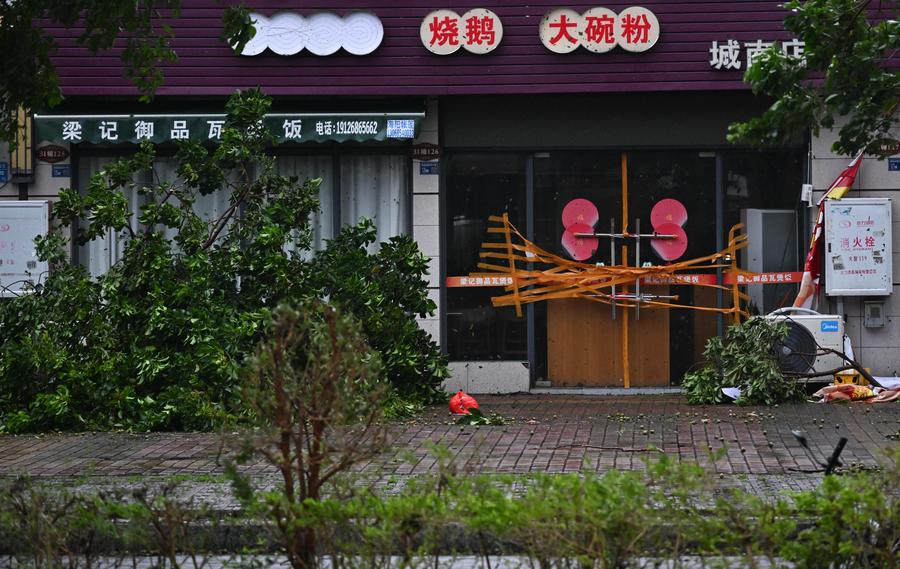
GUANGZHOU, Sept. 24 (Xinhua) -- More than 2.16 million local residents had been relocated in south China's Guangdong Province as of 4 p.m. on Wednesday, in response to Typhoon Ragasa, which made landfall in the province at about 5 p.m.
Typhoon Ragasa, the 18th typhoon of this year, with maximum wind force near its center reaching 40 meters per second, churned ashore at Hailing Island in the city of Yangjiang in Guangdong, according to the provincial meteorological observatory.
More than 2 million people were moved to safety in a remarkably short time, a feat made possible by local cadres who planned early and counted heads late into the night to ensure the smooth relocation.
In Yangjiang City, the landing site of Typhoon Ragasa, all 1,038 shelters across the city have been fully opened to the public.
Prior to the typhoon's arrival, Buchang Township of Yangjiang swiftly relocated villagers from coastal villages to safer areas.
On Tuesday afternoon, Fan Fei, a 60-year-old villager from Buchang's Shanwaixi Village, arrived at the shelter set up at a local primary school with his grandson.
"The village officials told us to come here for shelter. My house is close to the sea, and it's very dangerous during typhoons and heavy rains," Fan said. "We have water, canned food, boxed meals, and all the necessary supplies are well-provided here."
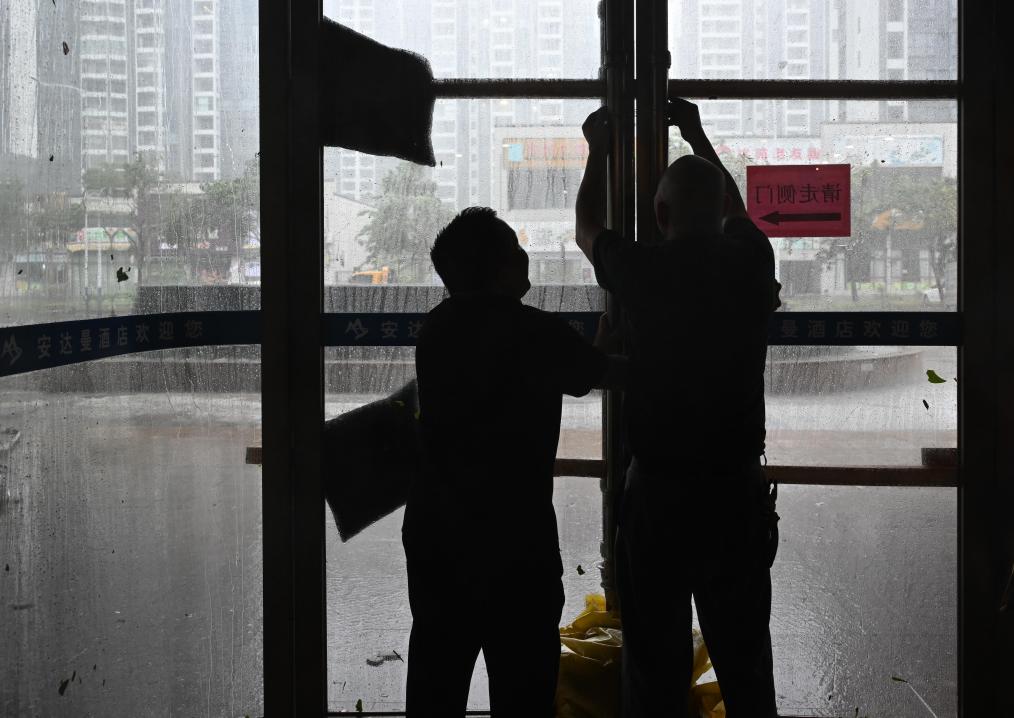
For 58-year-old Huang Xiang, a solitary resident of Shanwaixi Village, typhoon nights used to mean rattling windows and the fear of black-outs.
"I was scared staying alone. The wind shook every door and window," Huang recalled. This time, local cadres escorted him to an emergency shelter where meals and a bed were waiting.
"Our primary and most effective disaster prevention strategy is the evacuation of populations from danger zones," explained Yang Jianxiong, deputy head of the Yangjiang emergency management bureau.
As of 4 p.m. on Wednesday, China Southern Power Grid's Guangdong branch maintained its highest level of emergency response for typhoon and flood prevention.
The main blackout areas are concentrated in coastal cities of Guangdong such as Jiangmen and Yangjiang. Some 60 percent of the users affected by power outages due to the typhoon have had their electricity restored.
The power supply to Macao Special Administrative Region from the Chinese mainland remains safe and stable. A total of over 38,000 personnel, 8,900 vehicles, 239 emergency power generation vehicles, and 142 generators have been deployed, said the company.
In Guangdong, over 80,000 fishing boats are securely docked in the harbor to take shelter from the storm, and more than 12,000 maritime workers have evacuated to the shore.
All 53 "Ro-ro" (roll-on/roll-off) passenger ships across the Qiongzhou Strait have been led to south China's Hainan Province to avoid the impact of the typhoon.
Ragasa, the most powerful typhoon to hit China this year forecasted by meteorologists, has left 14 dead and 18 injured in China's Taiwan as of 6 a.m. on Wednesday. About 100 people remain trapped awaiting rescue, according to the island's emergency operation center. ■