
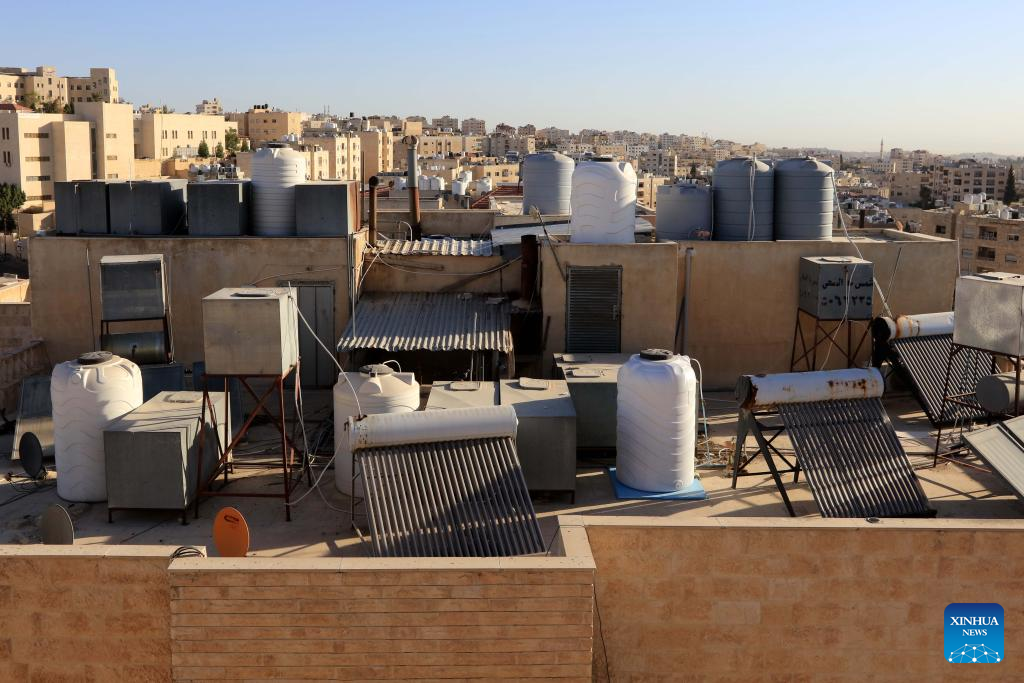
Water tanks on the roof of households are pictured in Amman, Jordan, on Sept. 21, 2025. Jordan is grappling with one of the world's most severe water crises caused by climate change, over-pumping, and rising demand, as local authorities are trying to manage scarcity with a rotation system and large-scale infrastructure projects.(Photo by Mohammad Abu Ghosh/Xinhua)
AMMAN, Sept. 20 (Xinhua) -- Jordan is grappling with one of the world's most severe water crises caused by climate change, over-pumping, and rising demand, as local authorities are trying to manage scarcity with a rotation system and large-scale infrastructure projects.
Jordan's annual renewable water resources fall below 75 cubic meters per person, far under the global water scarcity threshold of 500 cubic meters, Jordanian environmental specialist Omar Shoshan told Xinhua recently.
"The crisis is worsening due to climate change, over-pumping, and rising demand," Shoshan warned. He cited Jordan's Fourth National Communication on Climate Change, a report published in October 2023 by the UN Development Programme, that projected a 15-percent decline in average annual rainfall and a 5-percent rise in evaporation over the next 20 years in Jordan.
"Declining rainfall and higher temperatures mean less groundwater recharge, more droughts, and shrinking surface water supplies," Shoshan said, adding that demographic pressures, including a large refugee population, further strain resources.
Currently, groundwater provides about 60 percent of Jordan's supply, surface water stored in dams for about 25-30 percent, and treated wastewater for the rest.
To manage scarcity, a rotation system is implemented in the capital, Amman, where households typically receive piped water two days a week. Some governorates receive supply only once every two weeks. Families rely on rooftop storage tanks, and many turn to private tankers at additional cost when supplies run out.
Residents report adapting to the rationed system with careful planning. "I always hear that Jordan is one of the most water-poor countries, but in my home the water comes regularly on scheduled days, and we manage without problems," said Kareema Othman, a 64-year-old housewife in Amman.
"Still, we cannot do all the big household chores at once. We must spread them out so we don't empty the tanks," she told Xinhua.
Mahdy Obada, from eastern Amman, noted inconsistencies. "The water in my neighborhood comes once a week, but sometimes the pressure is too low. Less water reaches the upper floors of our building, and sometimes the whole neighborhood suffers from weak flow," he told Xinhua.
Jordanian officials have acknowledged the system's fragility, citing over-pumping, illegal wells, high extraction costs, and water losses nearing 50 percent through leakage, theft, or metering gaps.
"The current distribution model is unsustainable in the medium and long term," a source at Jordan's Ministry of Water and Irrigation told Xinhua.
In response, Jordan is advancing large-scale infrastructure projects. The National Water Carrier Project aims to desalinate Red Sea water in the coastal city of Aqaba and transport it 445 km north to Amman and other cities, potentially supplying about 300 million cubic meters annually, roughly one-third of Jordan's needs by 2030.
Additional measures, outlined in Jordan's national water strategy and economic development vision, include reducing network losses, expanding wastewater reuse, and extending sewage coverage.
Jordan is pursuing an integrated approach combining advanced technology, sustainable supply, and institutional reform, to secure water access under mounting environmental, climatic, and demographic pressures, the ministerial source told Xinhua. ■
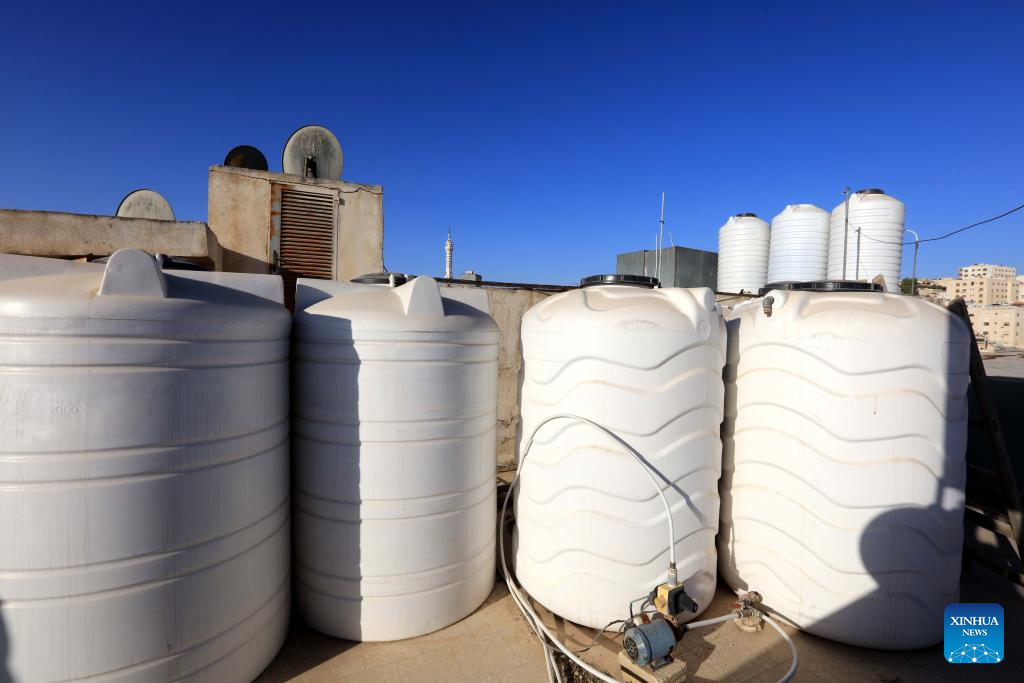
Water tanks on the roof of households are pictured in Amman, Jordan, on Sept. 21, 2025. Jordan is grappling with one of the world's most severe water crises caused by climate change, over-pumping, and rising demand, as local authorities are trying to manage scarcity with a rotation system and large-scale infrastructure projects.(Photo by Mohammad Abu Ghosh/Xinhua)
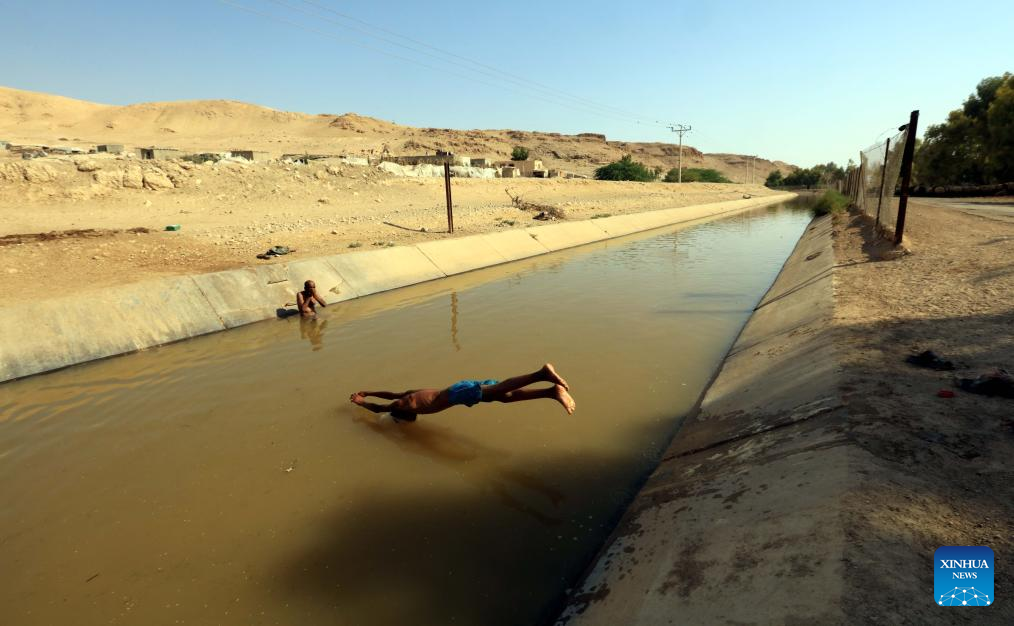
This undated file photo shows people swimming in an irrigation canal in Jordan Valley, Jordan. Jordan is grappling with one of the world's most severe water crises caused by climate change, over-pumping, and rising demand, as local authorities are trying to manage scarcity with a rotation system and large-scale infrastructure projects.(Photo by Mohammad Abu Ghosh/Xinhua)
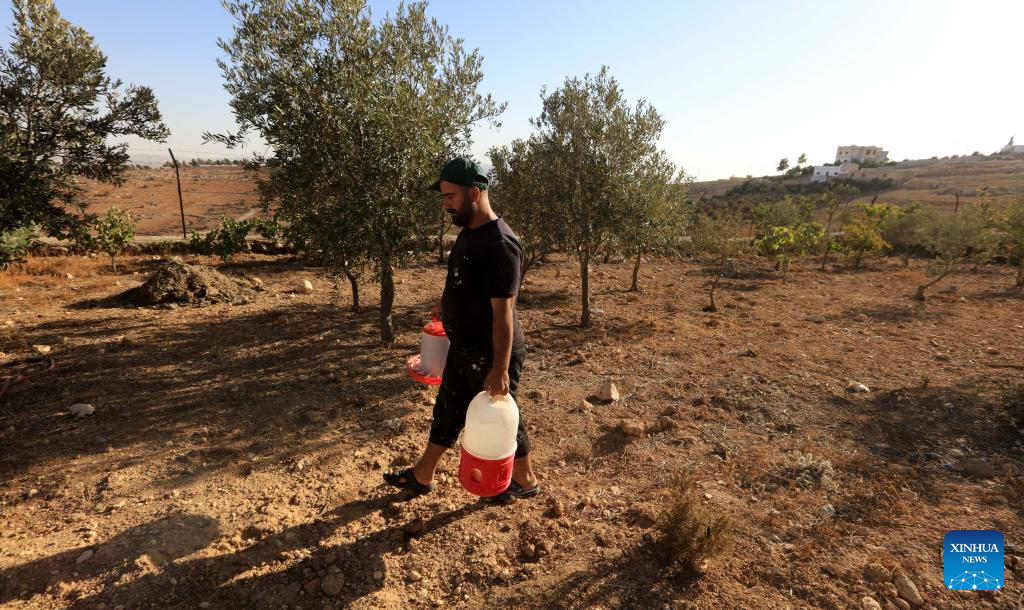
A man brings water from a water tank to his home at a village in Jerash, Jordan, on Sept. 20, 2025. Jordan is grappling with one of the world's most severe water crises caused by climate change, over-pumping, and rising demand, as local authorities are trying to manage scarcity with a rotation system and large-scale infrastructure projects.(Photo by Mohammad Abu Ghosh/Xinhua)
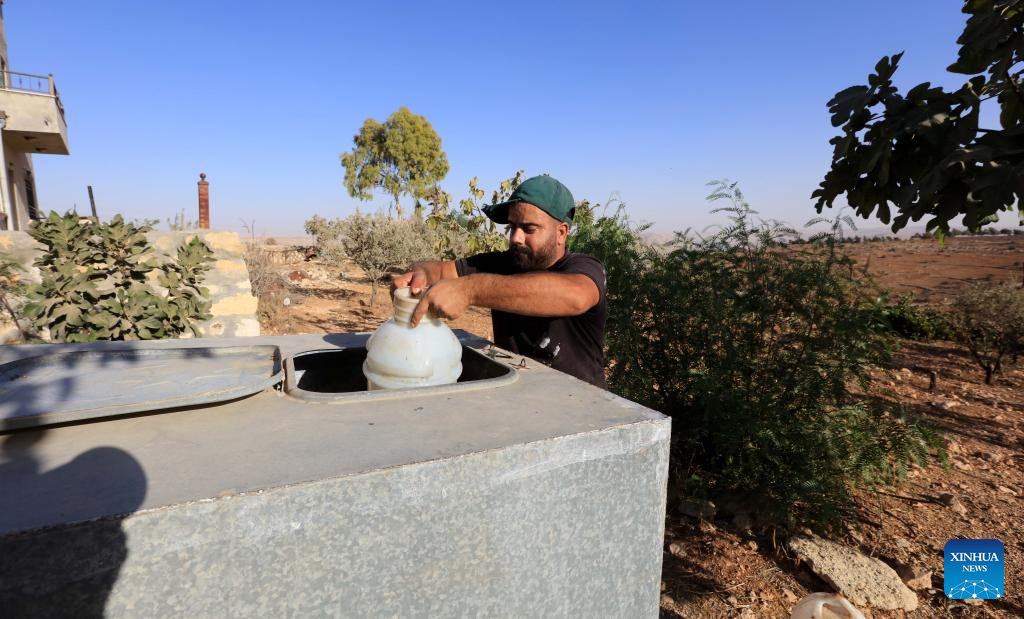
A man gets water from a water tank at a village in Jerash, Jordan, on Sept. 20, 2025. Jordan is grappling with one of the world's most severe water crises caused by climate change, over-pumping, and rising demand, as local authorities are trying to manage scarcity with a rotation system and large-scale infrastructure projects.(Photo by Mohammad Abu Ghosh/Xinhua)
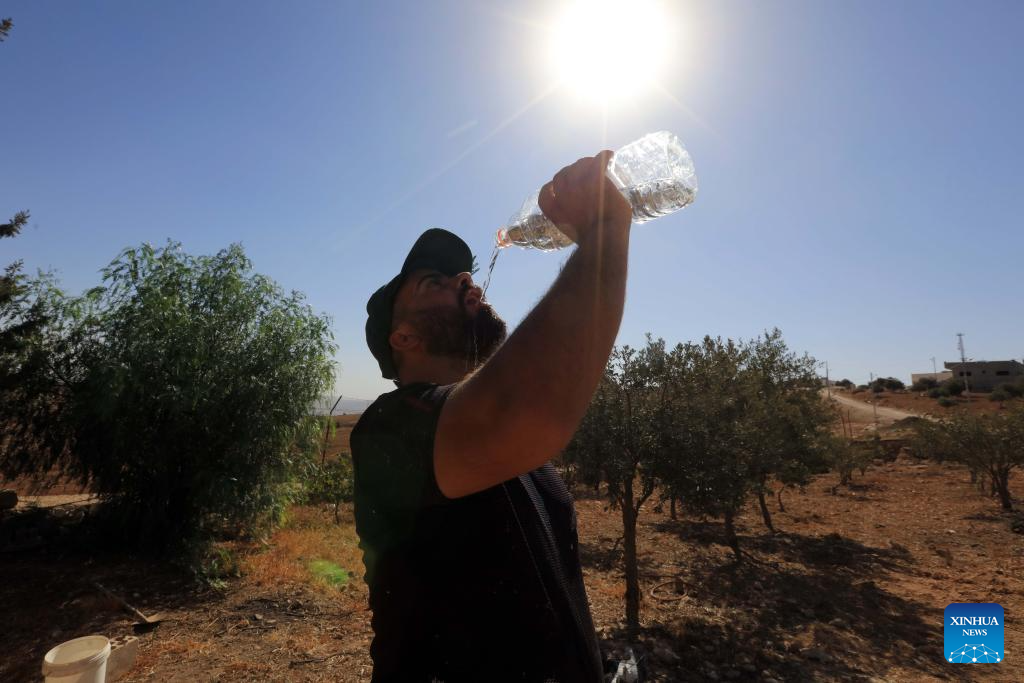
A man drinks water after taking it from a water tank at a village in Jerash, Jordan, on Sept. 20, 2025. Jordan is grappling with one of the world's most severe water crises caused by climate change, over-pumping, and rising demand, as local authorities are trying to manage scarcity with a rotation system and large-scale infrastructure projects.(Photo by Mohammad Abu Ghosh/Xinhua)


