Analysts say many of her pledges remain largely symbolic given internal disagreements over military spending and support for Ukraine.
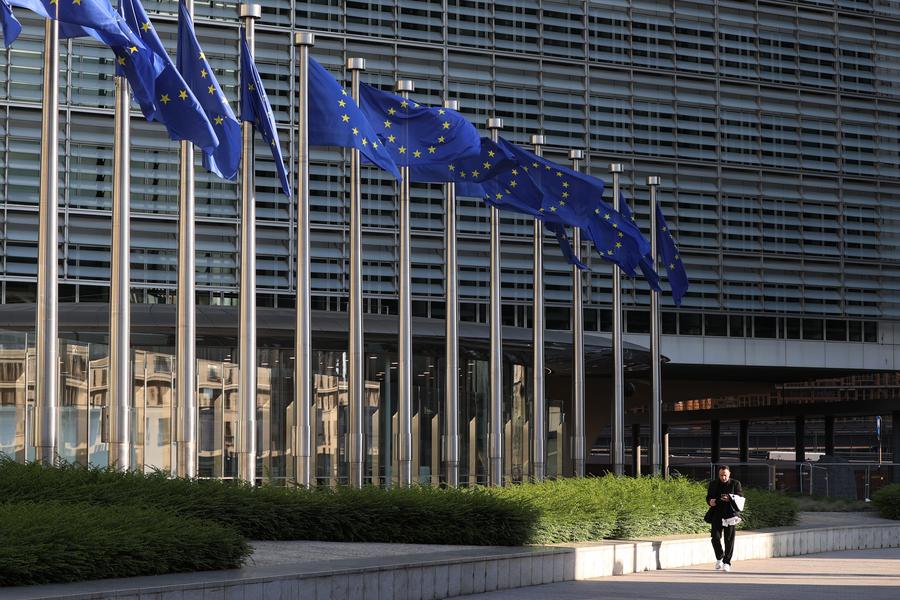
BRUSSELS, Sept. 4 (Xinhua) -- European Commission President Ursula von der Leyen's four-day tour of seven European Union (EU) member states along the bloc's eastern flank has underscored both Europe's efforts to bolster defense cooperation and the divisions that continue to hamper a common security strategy.
Her stops in Latvia, Finland, Estonia, Poland, Bulgaria, Lithuania and Romania included visits to drone production facilities, border defenses, maritime initiatives and defense financing projects.
Brussels presented the trip as a show of solidarity with the states "on the front line." Analysts, however, noted that many of her pledges remain largely symbolic given internal disagreements over military spending and support for Ukraine.
The tour came against the backdrop of the prolonged Russia-Ukraine conflict and uncertainty about U.S. commitment to Europe's defense, which has fueled what some analysts describe as a sense of "strategic loneliness."
In recent months, the EU has sought to keep Washington engaged by offering concessions ranging from trade deals to defense spending commitments. Leaders of the North Atlantic Treaty Organization (NATO) have pledged to increase defense budgets to five percent of gross domestic product by 2035, while Brussels has unveiled an 800-billion-euro "Readiness 2030" plan to boost the bloc's military capacity.
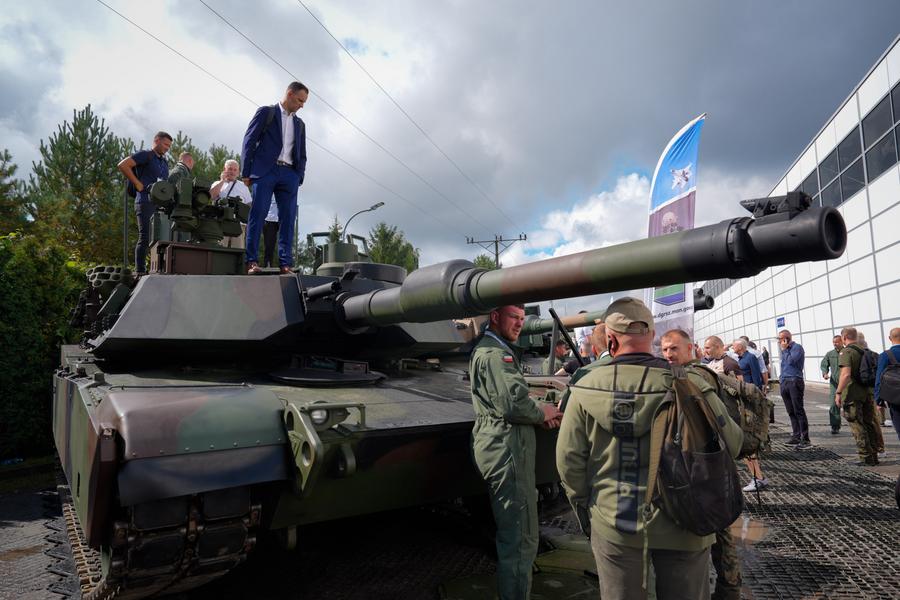
Von der Leyen said the goal now is to draw up a clear roadmap for filling security gaps, telling the Financial Times that the upcoming EU leaders' meeting in Copenhagen must deliver a "gap analysis" and coordinated plan for the decade ahead.
Her stop in Bulgaria included a visit to VMZ Sopot, a major ammunition producer, where she praised its potential. But security experts warned that Bulgaria still lacks a long-term strategy and the political will. More broadly, the EU remains divided over whether its defense financing should be limited to European suppliers or also open to U.S. procurement, an issue that continues to stall progress.
On Ukraine, von der Leyen outlined a three-point plan involving strengthening Kiev's army, deploying a multinational reassurance force, and advancing EU accession. Yet German Defense Minister Boris Pistorius rejected the idea of EU troop deployments, saying Brussels has no authority to make such commitments. France and Britain left the discussion open, while Italy's Deputy Prime Minister Matteo Salvini criticized French President Emmanuel Macron's proposal as lacking consensus.
Analysts remain skeptical about Europe's ability to move beyond symbolic gestures. Croatian military expert Marinko Ogorec told Xinhua that a peace settlement remains far off, given Ukraine's refusal to cede territory and Russia's insistence on its own conditions.
Paul Taylor, a senior visiting fellow at the European Policy Centre, wrote in The Guardian that Europe must now confront the reality of defending itself and Ukraine largely on its own, though doubts persist about whether the political will and military capacity are sufficient. (1 euro = 1.16 U.S. dollars) ■