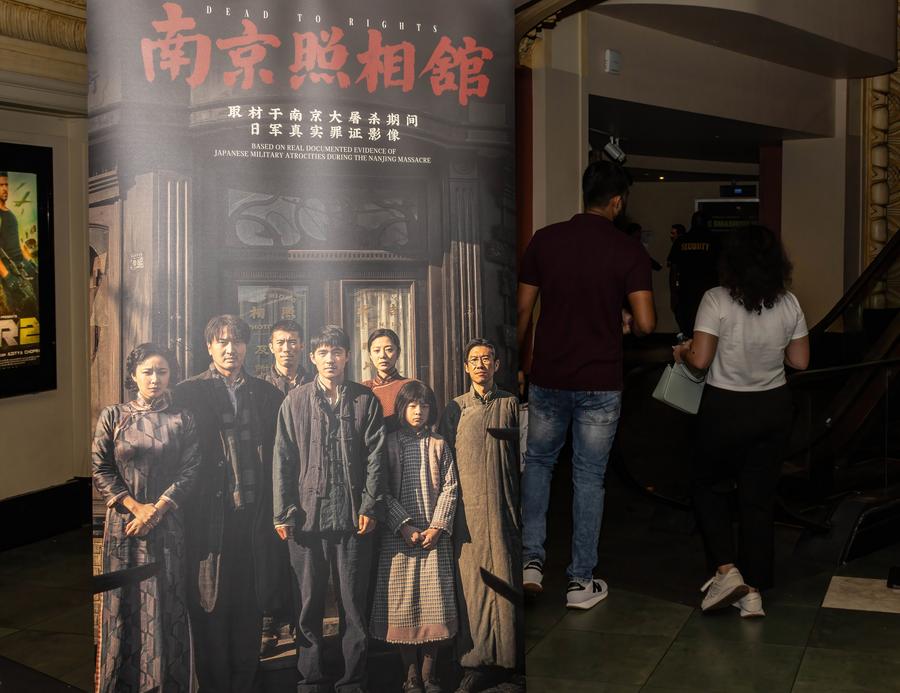
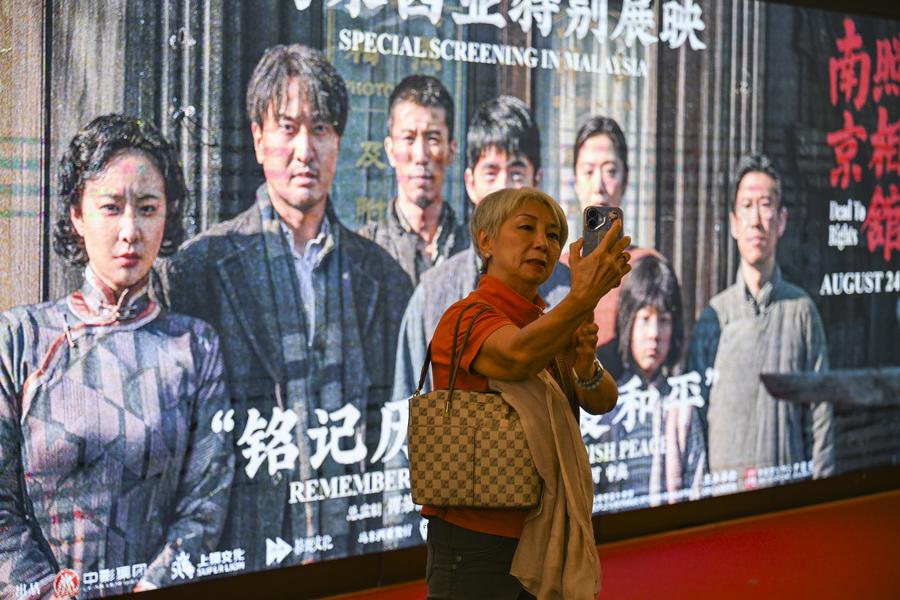
MUNICH, Germany, Aug. 29 (Xinhua) -- As the credits rolled on the Chinese film Dead to Rights in a German cinema on Thursday evening, Sarah Bahadra sat completely stunned, with glistening eyes. In a voice barely above a whisper, she said she was overwhelmed, describing the film as "too sad... really horrible."
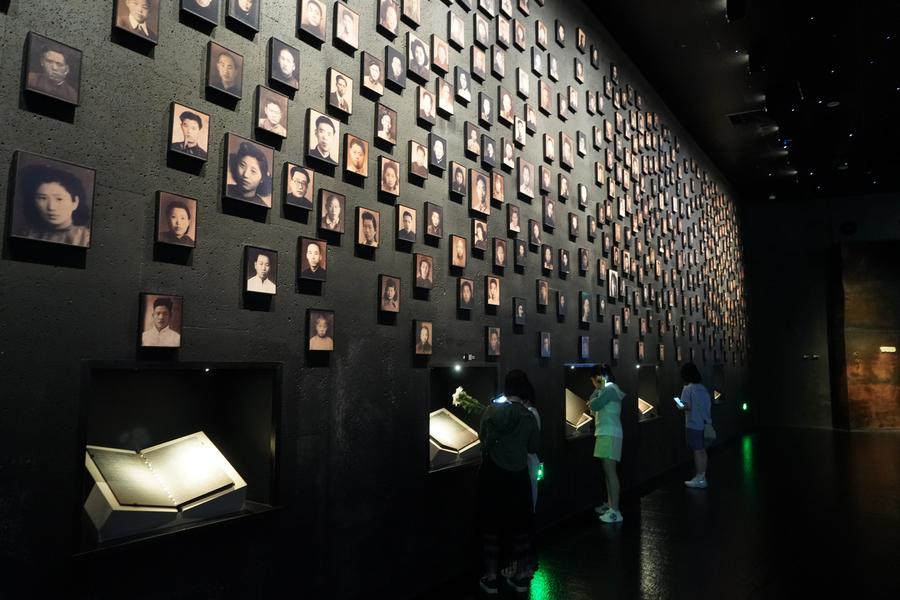
Like many Germans in the packed theater of Mathaeser Filmpalast in central Munich, Bahadra had never heard of the Nanjing Massacre, the subject of the movie. In one of the darkest chapters of the 20th century, Japanese troops stormed the Chinese city of Nanjing in the winter of 1937, and unimaginable horror unfolded.
Over the course of just six weeks, tens of thousands were inhumanely tortured and raped, most of them innocent civilians. The massacre left more than 300,000 people dead.
Told through stories around a Chinese photographic studio, the film chronicles the brutalities of the massacre with unflinching detail and left much of the German audience in tears. When the lights came up, some sat in stunned silence, reluctant to leave their seats.
"It is a very important movie," said Bernd Einmeier, president of the German-Chinese Association for Economy, Education, and Culture, during an interview with Xinhua after the event. "It's also very important for Europe to know about the Nanjing Massacre. Because honestly, most Europeans have never heard about this, they have no clue what happened there."
Einmeier believes that in the global war against fascism, China paid a high price. "We have seen in the movie so much suffering, so many dead and injured, and there's a big trauma there... China as a nation came together and contributed to the peace," he said.
"The movie also gives us the motivation to work for peace," he noted. "Nobody wants war."
For Esref Yavuz, a German father who attended the screening, the film was his first real exposure to the Nanjing Massacre. "The film shook me deeply, and seeing those innocent women and children being killed made me very sad. As a father, I find it hard to imagine such a thing really happened," he told Xinhua.
Yavuz admitted that before the screening, he knew nearly nothing about what happened in Nanjing. "We didn't learn much about this in Europe. There was no public acknowledgment from Japan either, saying, 'Yes, this happened.' And that's sad, because those people died in vain. It was horrible."
He added: "If you even try to imagine what these people went through... it was an insane, terrible time. I'm glad it's over, and I'm glad China stood back up from it."
The emotional gravity of the film was echoed by Erhard Rau, president of the German Cultural and Economic Promotion Association. He told Xinhua that the Japanese military had committed serious war crimes in China, but the unyielding spirit of the Chinese people in the face of such atrocities deserves respect.
"This part of history remains difficult for Japanese society to confront. But historical facts cannot be denied, and the truth should not be avoided," he said. "That is precisely why a film like this is so important. It not only restores a neglected part of history, but also reminds us to remain vigilant against war and to cherish peace."