By Burak Akinci
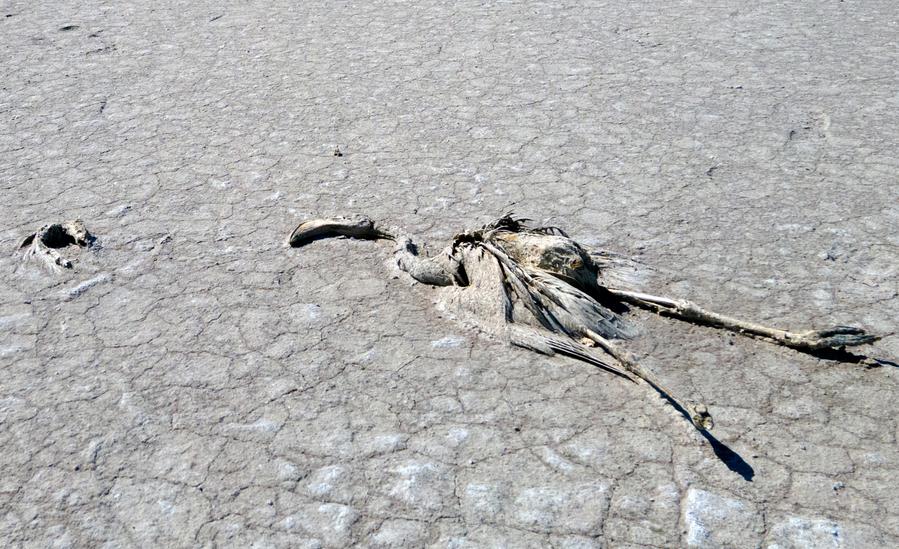
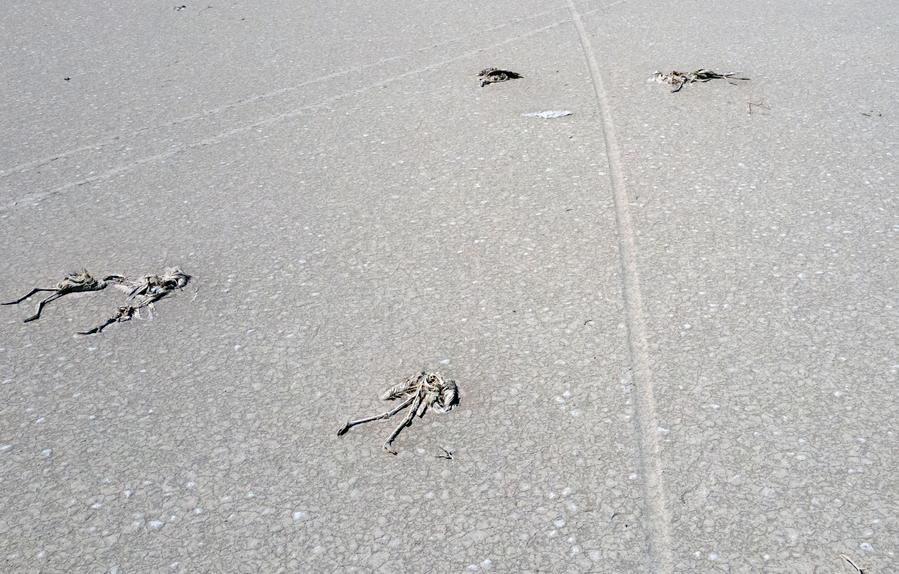
ANKARA, July 8 (Xinhua) -- Around 2,000 flamingo chicks have died at Lake Tuz, Türkiye's second-largest lake, during this year's breeding season, triggering alarm over escalating water scarcity and environmental concerns in central Anatolia.
Field inspection teams confirmed in the past few days the mass deaths in the lake's primary nesting zones, raising serious concerns about the future of this critical habitat.
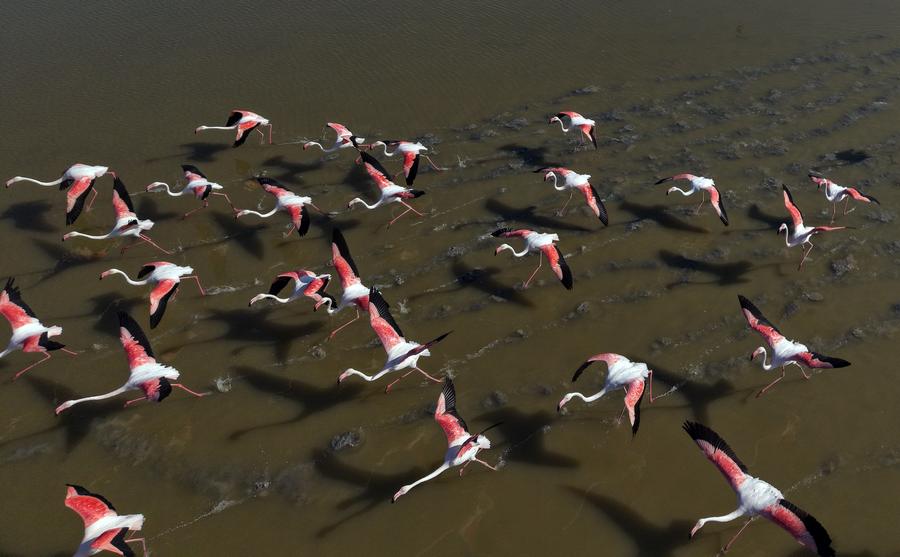
One of the largest hypersaline lakes in the world, Lake Tuz has long been a vital stopover for migratory birds and a key breeding ground for greater flamingos, the largest species of the flamingo family.
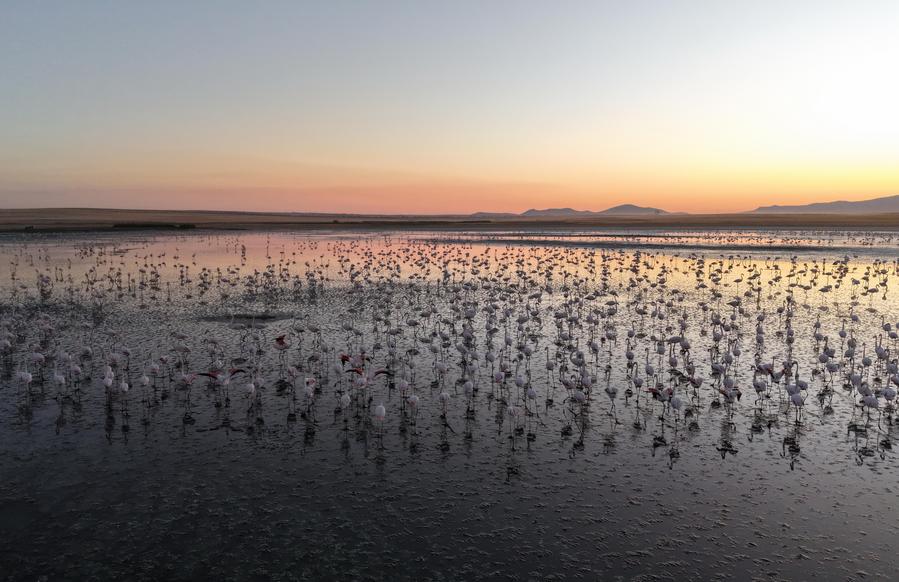
Experts link the tragedy to a convergence of severe drought, rapidly declining groundwater levels, and the diversion of water for unregulated agricultural irrigation. As a result, the shallow wetlands surrounding the lake, essential for chick survival, have dried up prematurely.
"Most of the chicks died after being cut off from the water sources they depend on in early life," a member of the inspection team told the semi-official Anadolu Agency. "The canal feeding the breeding area has run dry."
Stretching across the provinces of Konya, Ankara, and Aksaray, Lake Tuz typically hosts up to 22,000 flamingos annually between spring and late summer.
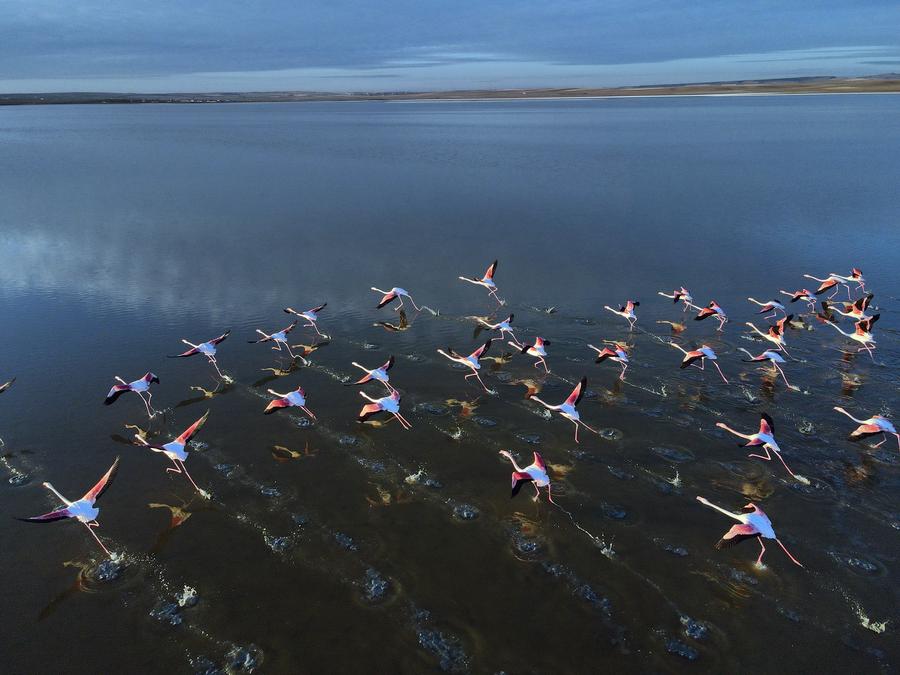
Known locally as the "flamingo paradise," the lake's vast, shallow waters and salt flats once provided ideal conditions for nesting colonies. But in recent years, the lake has been shrinking due to the combined pressures of climate change and overexploitation of water resources.
"This year, we are facing exceptional climate conditions. Lake Tuz is one of the driest regions in Türkiye, and temperatures have been well above average," said Mustafa Uzun, head of conservation and monitoring at the Ministry of Environment, Urbanization, and Climate Change.
He told Anadolu Agency that authorities are taking steps to safeguard the breeding areas to ensure the continuation of the flamingo population.
However, local conservationists argue that the response has been too "reactive" and insufficient to address the root causes.
"What we're witnessing is not a natural disaster, it's mainly the result of human activity," environmental activist Fahri Tunc told Xinhua.
"Farmers are drilling deep wells and diverting water meant to sustain the lake. Despite repeated warnings, the authorities have failed to implement lasting solutions," he said.
Following a similar die-off in 2021, officials drilled an emergency well to redirect water to the breeding areas, which offered temporary relief.
Tunc believes that without systemic change, the cycle is bound to repeat. "The real issue isn't just low rainfall," he said. "It's the ongoing disruption of the basin's hydrological balance."
Wildlife photographer Melih Ozbek from Ankara, who has documented birdlife at the lake for over a decade, said this year's die-off was tragic but unsurprising.
"The lake has receded extensively due to high temperatures and a lack of rainfall," he told Xinhua. "The chicks died from dehydration and lack of food. We've reached a point where this is no longer an anomaly, it's the new normal," he said.
Ozbek warned that the decline of Lake Tuz could have far-reaching ecological consequences. "This lake is a critical stop on the migratory route for birds between Europe and Africa. If it disappears, thousands of birds will lose one of their last remaining safe havens," he said.
As a closed basin with no natural outlet, Lake Tuz is especially sensitive to environmental disruption. Scientists have warned that prolonged droughts, combined with excessive groundwater extraction, are pushing the lake toward collapse.
In surrounding provinces, the overuse of groundwater has also led to a spike in sinkholes, another sign of unsustainable water management.
While Türkiye has launched several monitoring and protection projects for its wetlands, environmental groups say enforcement remains weak, noting that long-term solutions require a fundamental shift in water policy.
"This is not just about flamingos," Tunc said. "This is a warning for all wetlands in Türkiye. If we don't urgently rethink how we use and conserve water, we risk losing far more than a single species." ■