CHENGDU, June 28 (Xinhua) -- In the early morning mist of the highland forests in southwest China's Sichuan Province, 71-year-old photographer Xue Kang crouches silently behind a rock, his lens trained on the treetops.
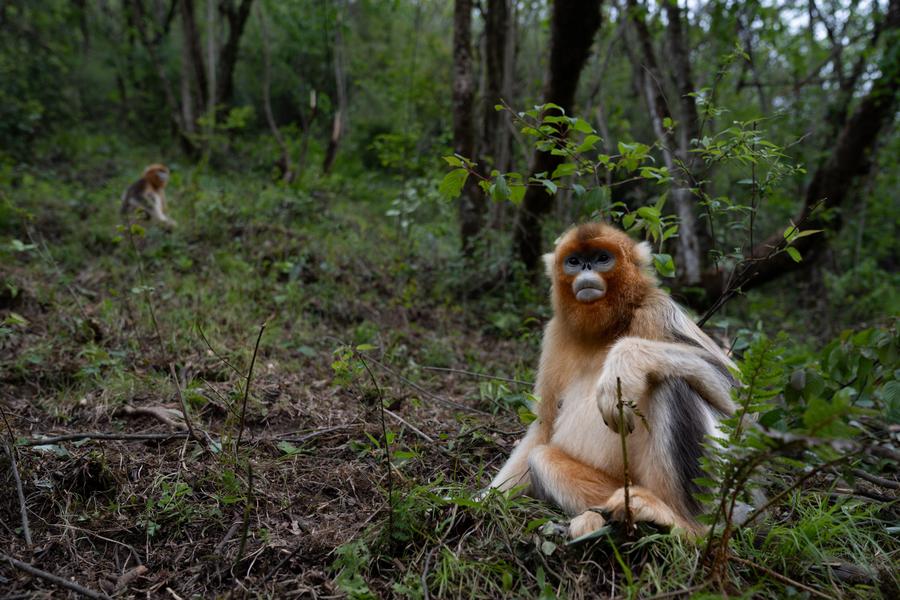
A flash of golden fur darts through the canopy, and a golden snub-nosed monkey pauses just long enough for Xue to click the shutter.
As the 12th World Games draws near, Chengdu, the capital of Sichuan Province, is bursting with excitement. The city's streets are alive with color and movement, and two cheerful mascots -- "Shu Bao" the giant panda and "Jin Zai" the golden snub-nosed monkey -- greet locals and tourists alike.

Inspired by two iconic species native to Sichuan, both of which are recognized as important animals in global biodiversity conservation, the mascots reflect the province's ecological richness and its deep cultural pride.
These same species have long been the focus of Xue Kang's lens. He has spent years quietly documenting the untamed spirit of China's rarest wildlife.
"Golden monkeys have fascinated me since childhood," said Xue, whose hometown is less than 50 kilometers from the site where French naturalist Armand David first recorded the golden snub-nosed monkey in 1869. "It feels like a mission and a responsibility to share their beauty with the world."
Since 2015, Xue has traveled through provinces such as Sichuan, Yunnan, Guizhou, Hubei and Shaanxi, venturing into remote, misty highlands to observe and photograph elusive wildlife. His images have now taken center stage at an art and culture exhibition in Chengdu.
The exhibition showcases not only his photographs but also his stamp collections and publications, highlighting China's decades-long efforts in wildlife research, wildlife protection and international cultural exchange.
Through Xue's photography, animals appear full of character and vitality: a golden monkey with gleaming fur and soulful eyes, a panda playfully waving its paw, and a tender moment shared by a monkey family nestled in the trees. Each shot is a visual reminder that these creatures are not just symbols -- they are living beings whose survival depends on people's actions.
"Golden monkeys are among the most beautiful primates," Xue said, his eyes lighting up. "Their shimmering coats and agile movements give them an almost magical quality, like spirits of the silent forest."
Sichuan is home to over 70 percent of China's wild panda population. It is also a primary habitat for golden snub-nosed monkeys.
Despite their ecological significance, golden snub-nosed monkeys remain relatively unknown to the public -- a reality Xue hopes to change through his photography.
By capturing a series of vivid, lively and irresistibly charming images, he aims to raise awareness and inspire care for the species both at home and abroad. "I want people to fall in love with them at first sight," he said.
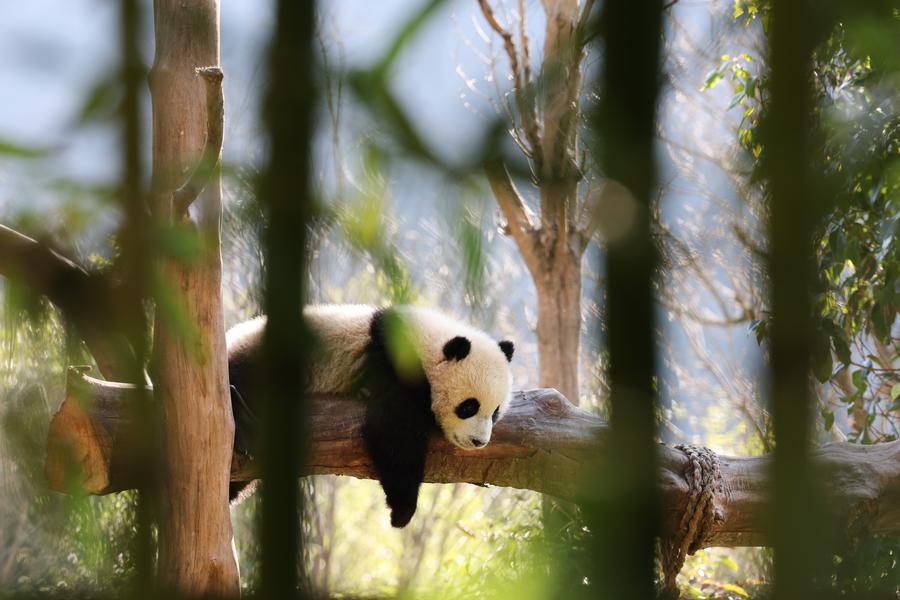
Official data from the National Forestry and Grassland Administration shows that populations of rare and endangered wild species have increased steadily in China as the country's biodiversity conservation efforts continue to yield notable results.
Key species like pandas and golden monkeys are among these rising populations, thanks to ongoing ecological restoration and policy support.
As a signatory to the Convention on Biological Diversity and holding the presidency of the 15th meeting of the Conference of the Parties to the UN Convention on Biological Diversity (COP15), China is taking an increasingly active role in global biodiversity governance.
Work like Xue's reflects the country's broader ambition to share its conservation experience and promote ecological awareness on the world stage.
"I'll keep using my camera to tell their stories," Xue said. "Through art and imagery, I hope to deepen global understanding of biodiversity and encourage more people to protect our shared Earth." ■