
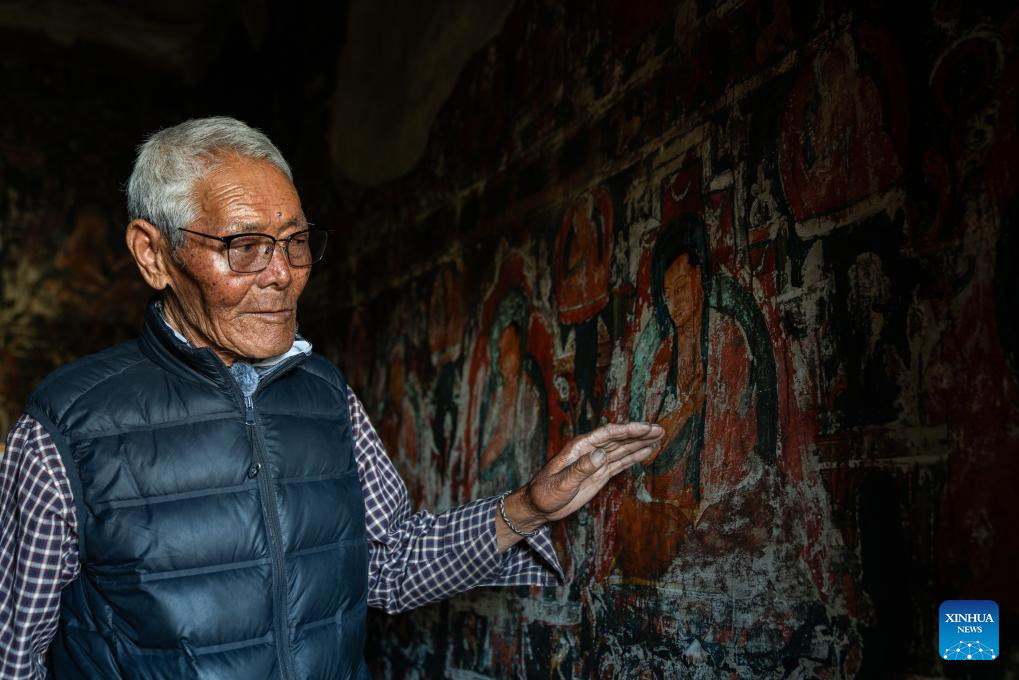
Rigzin Wangzhab views murals in Piyang grottoes in Zanda County of Ngari Prefecture, southwest China's Xizang Autonomous Region, June 24, 2025. Hidden among sandstone hills in remote western Xizang, a stretch of honeycomb-shaped caverns is way beyond the reach of most travelers.
Known as the Piyang grottoes, the 1,000-year-old caverns in the Xizang Autonomous Region's Ngari Prefecture hold one of the world's greatest collections of Tibetan Buddhist murals.
Rigzin Wangzhab, 77, has been guarding the site for more than 20 years.
"When I was very young, I was told that the grottoes on the mountain were relics of high research value, so I had been thinking about doing something for them," Rigzin recalled.
It was in 2002 that Rigzin learned of a job opening for these cultural relics protection. He applied for the position, strongly believing that the job would be the best way for him to guard the relics.
Buddhist murals have been previously found in north China's Shanxi Province and in the desert city of Dunhuang in northwest China's Gansu Province. Experts say the discovery of the Donggar and Piyang grottoes provides a missing link for historians, allowing them to fully trace the origins of Buddhism in China. The murals depict substantial content, including exotic figures, animals, patterns and designs.
In addition to giving free lectures to tourists, Rigzin inspects the grottoes every day in case of water seepage or collapse.
In June this year, Rigzin just bid farewell to his beloved work. "I hope young people can take over the responsibility and continue to guard the grottoes,"He said. (Xinhua/Tenzin Nyida)
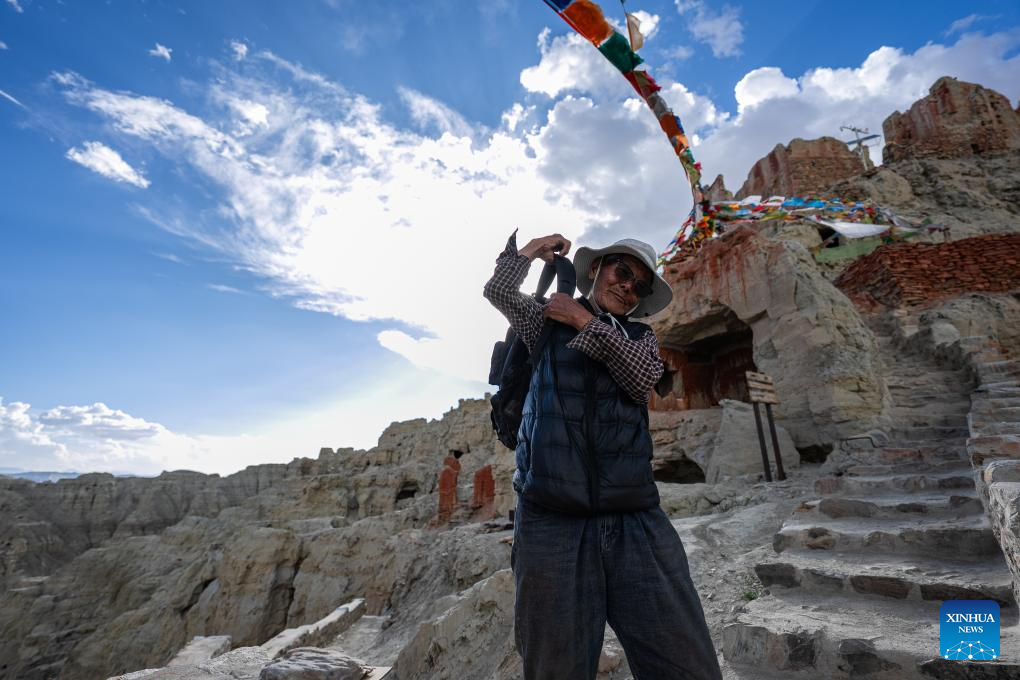
Rigzin Wangzhab gets ready to go home in Zanda County of Ngari Prefecture, southwest China's Xizang Autonomous Region, June 24, 2025. (Xinhua/Tenzin Nyida)

Rigzin Wangzhab inspects the Piyang grottoes in case of water seepage or collapse in Zanda County of Ngari Prefecture, southwest China's Xizang Autonomous Region, June 24, 2025. (Xinhua/Tenzin Nyida)
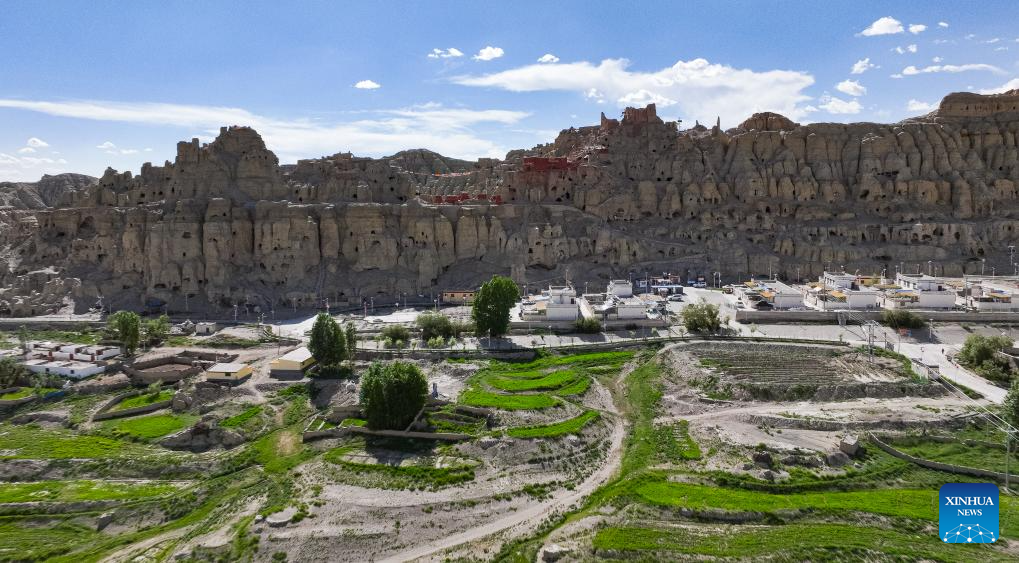
A drone photo shows the Piyang grottoes in Zanda County of Ngari Prefecture, southwest China's Xizang Autonomous Region, June 24, 2025. (Xinhua/Tenzin Nyida)
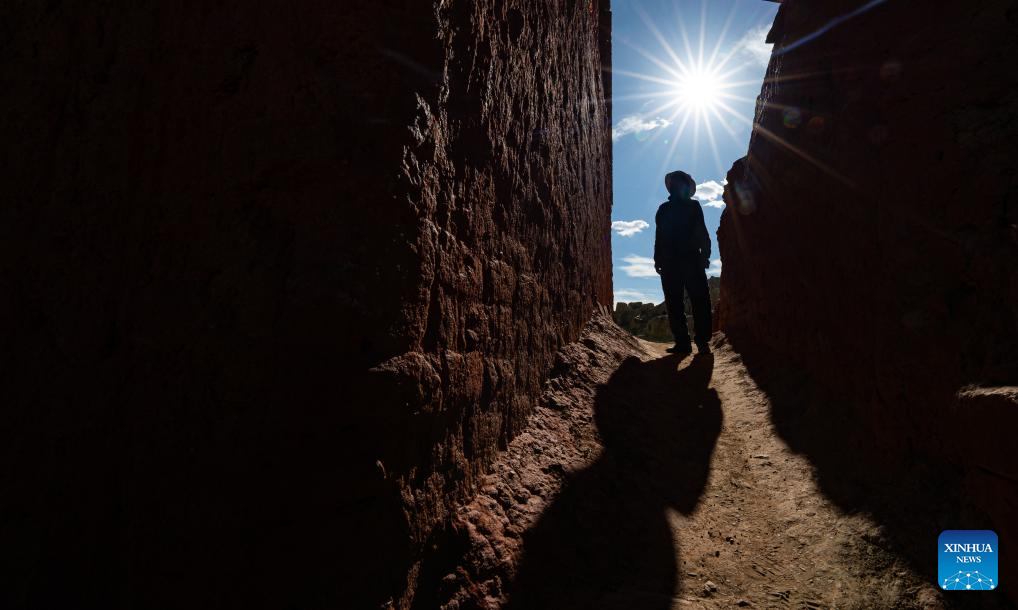
Rigzin Wangzhab inspects the exterior of grottoes in Zanda County of Ngari Prefecture, southwest China's Xizang Autonomous Region, June 24, 2025. (Xinhua/Tenzin Nyida)
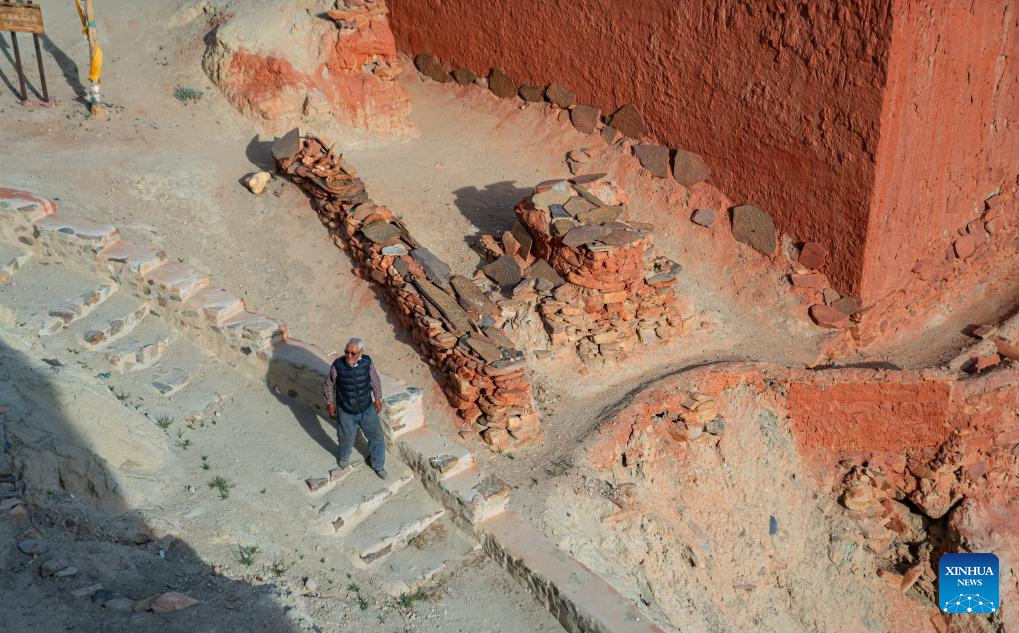
Rigzin Wangzhab walks between grottoes in Zanda County of Ngari Prefecture, southwest China's Xizang Autonomous Region, June 24, 2025. (Xinhua/Tenzin Nyida)
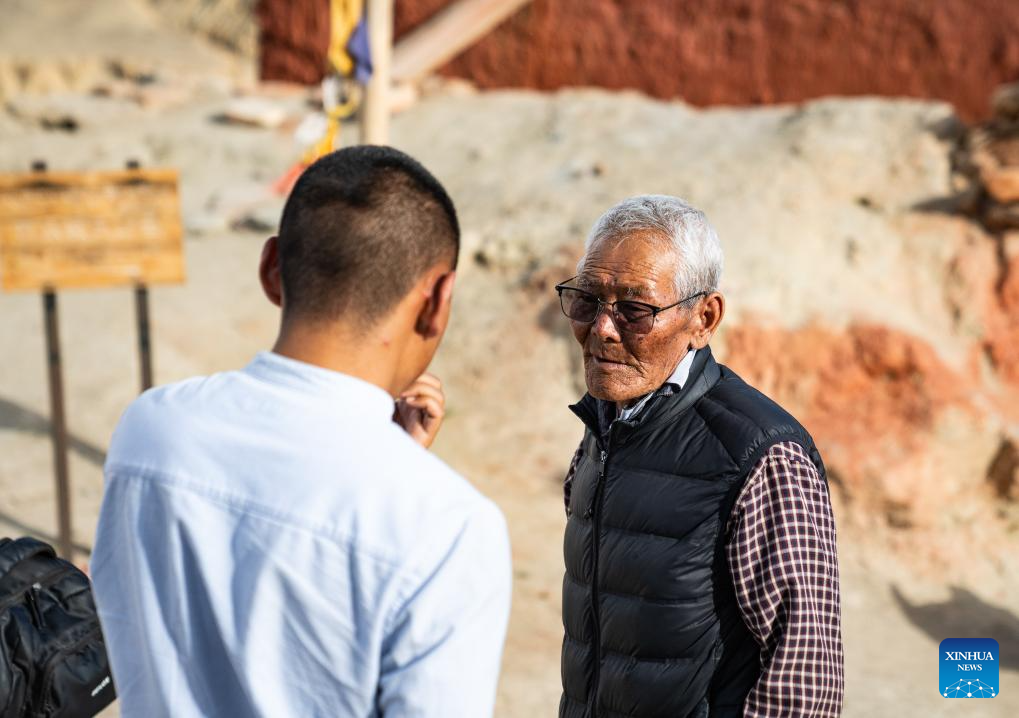
Rigzin Wangzhab talks with a tourist in Zanda County of Ngari Prefecture, southwest China's Xizang Autonomous Region, June 24, 2025. (Xinhua/Tenzin Nyida)
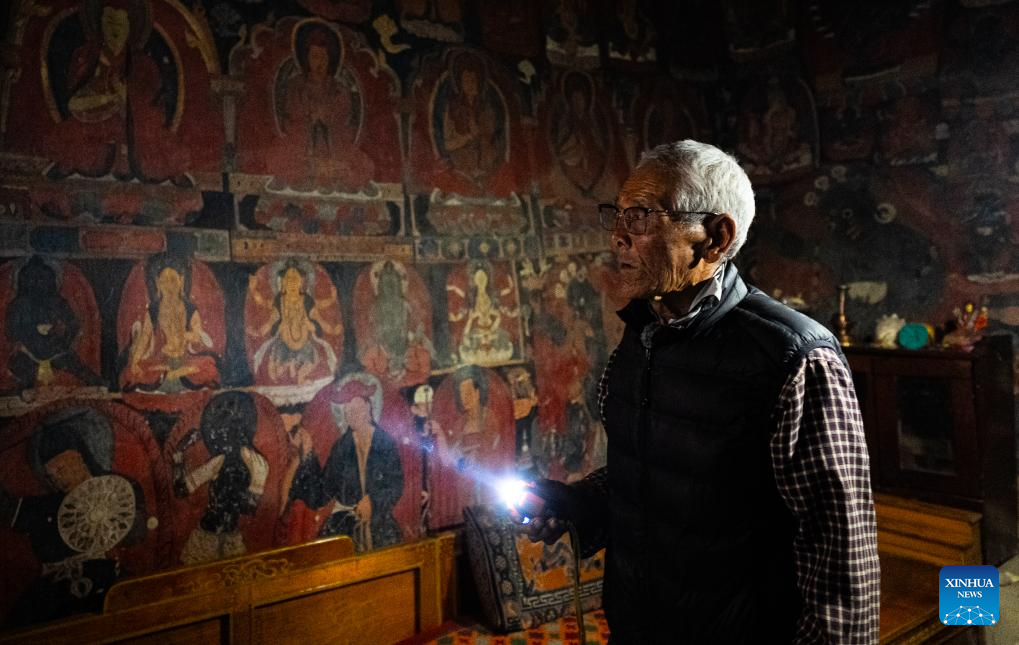
Rigzin Wangzhab inspects the Piyang grottoes in case of water seepage or collapse in Zanda County of Ngari Prefecture, southwest China's Xizang Autonomous Region, June 24, 2025. (Xinhua/Tenzin Nyida)
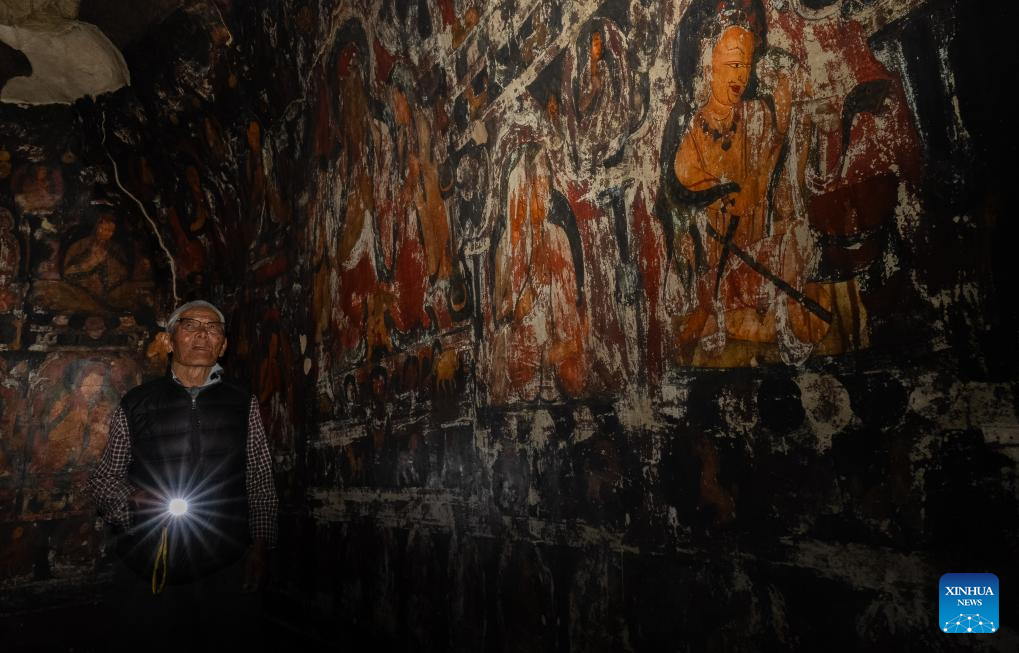
Rigzin Wangzhab inspects the Piyang grottoes in case of water seepage or collapse in Zanda County of Ngari Prefecture, southwest China's Xizang Autonomous Region, June 24, 2025. (Xinhua/Tenzin Nyida)
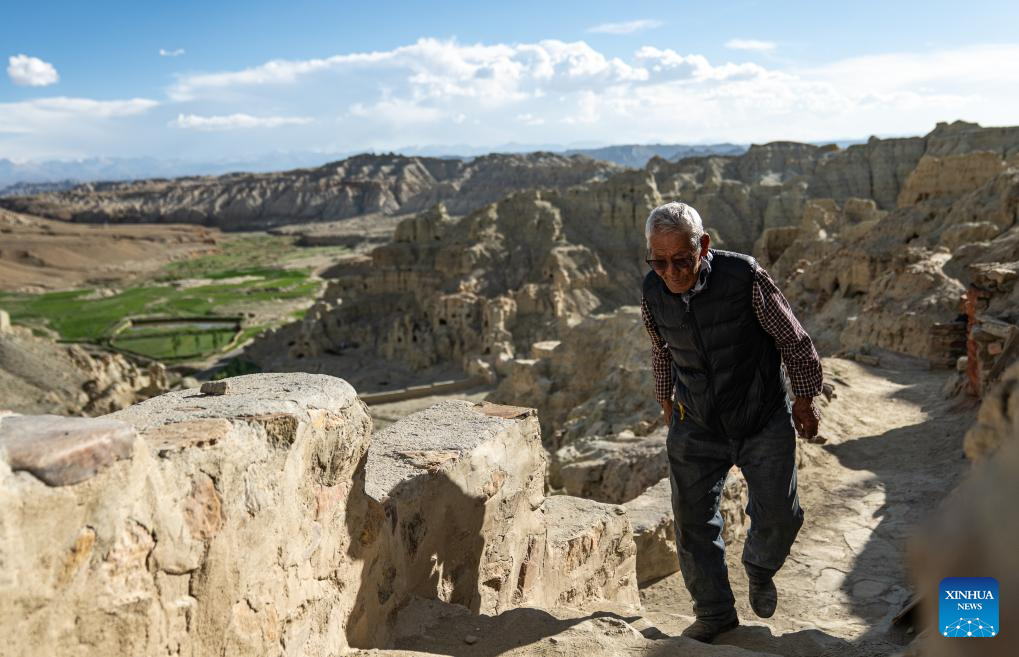
Rigzin Wangzhab walks between grottoes in Zanda County of Ngari Prefecture, southwest China's Xizang Autonomous Region, June 24, 2025. (Xinhua/Tenzin Nyida)
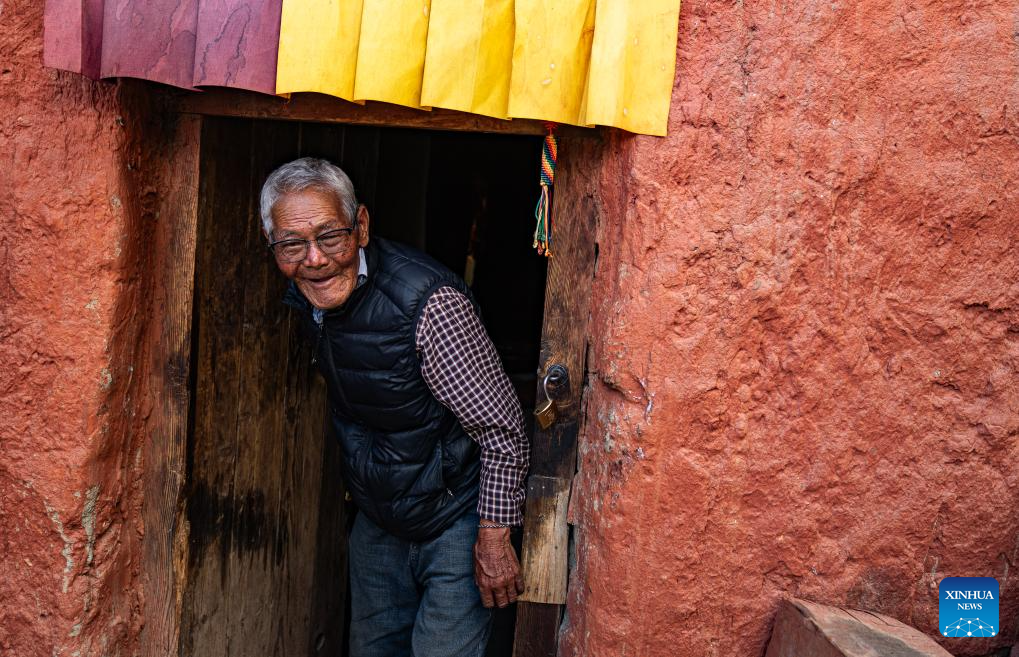
Rigzin Wangzhab walks out of Piyang grottoes in Zanda County of Ngari Prefecture, southwest China's Xizang Autonomous Region, June 24, 2025. (Xinhua/Tenzin Nyida)
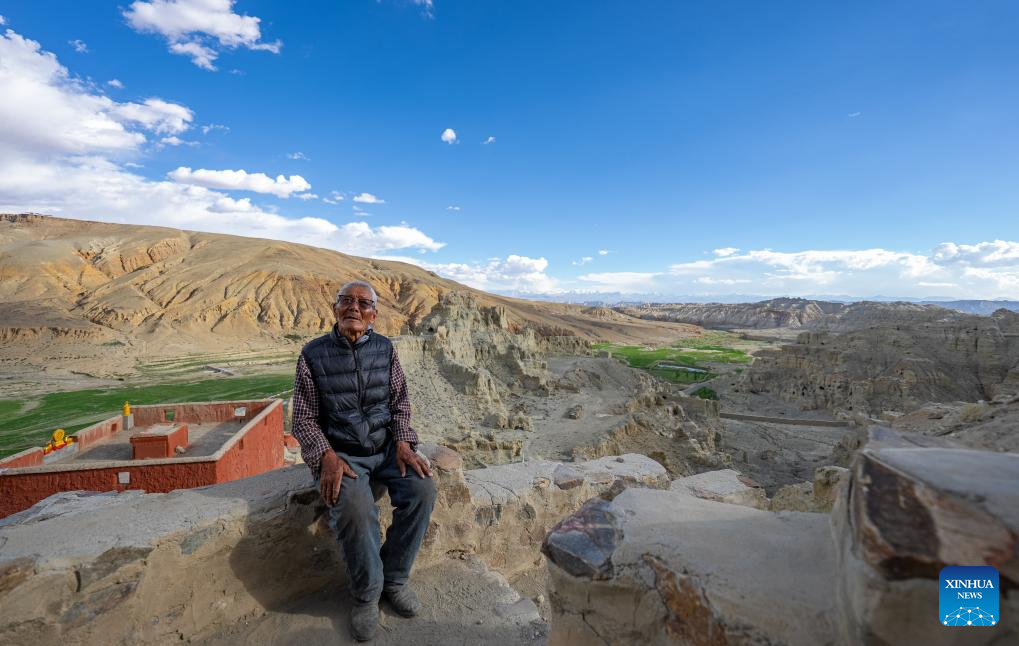
Rigzin Wangzhab rests on a stone in Zanda County of Ngari Prefecture, southwest China's Xizang Autonomous Region, June 24, 2025. (Xinhua/Tenzin Nyida)
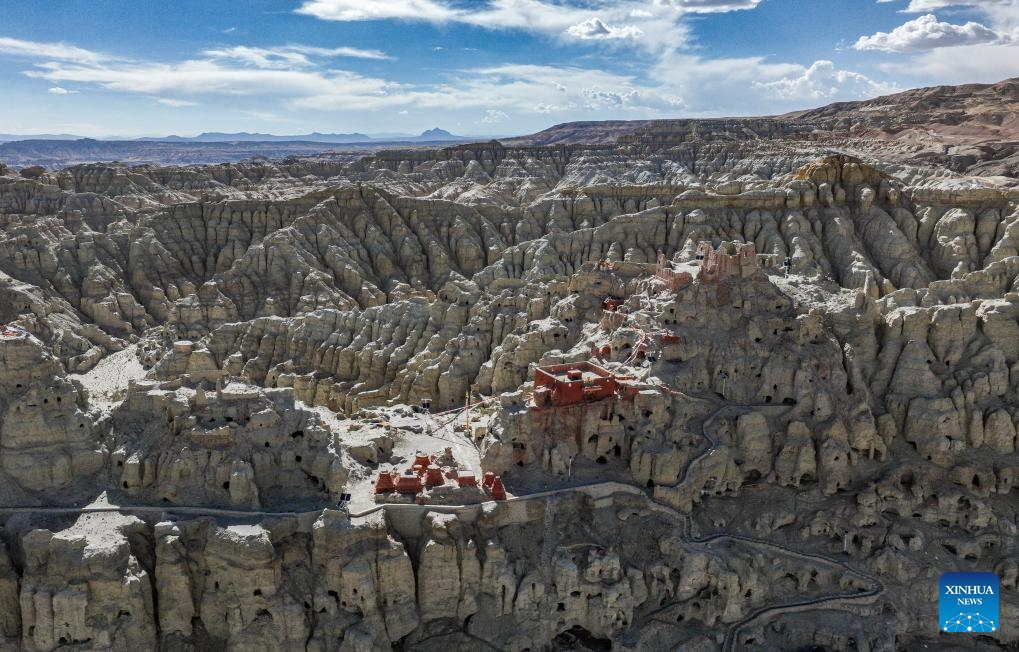
A drone photo shows the Piyang grottoes in Zanda County of Ngari Prefecture, southwest China's Xizang Autonomous Region, June 24, 2025. (Xinhua/Tenzin Nyida)


