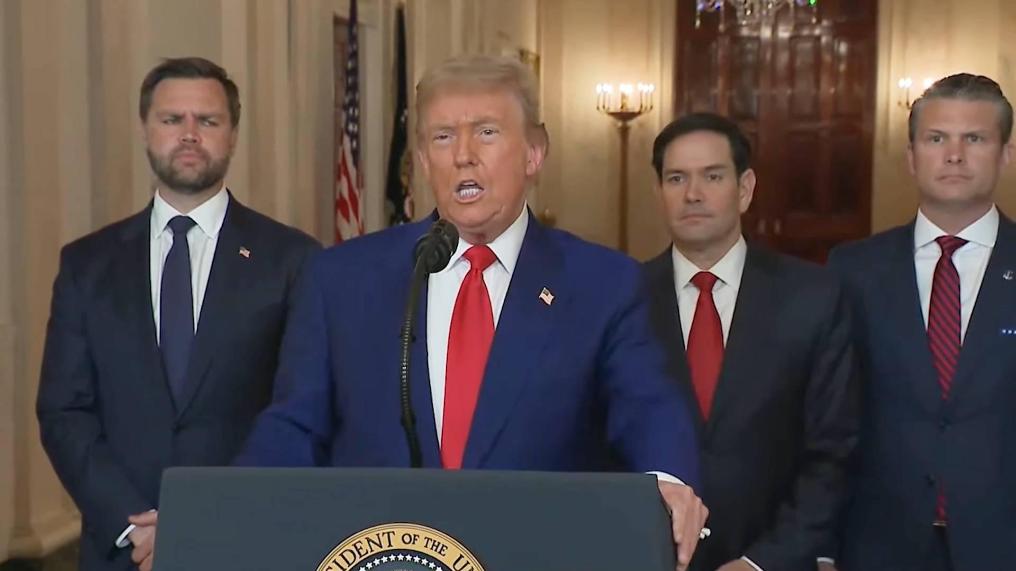
BRUSSELS, June 20 (Xinhua) -- Several European governments on Sunday voiced concerns over U.S. airstrikes on Iranian nuclear facilities, urging all parties to prioritize diplomacy and avoid further escalation. Some officials criticized the U.S. action as an "unlawful attack."
The U.S. attacks targeting key Iranian nuclear sites on Saturday have further destabilized an already volatile landscape. Rafael Grossi, director general of the International Atomic Energy Agency (IAEA), confirmed the damage in a statement issued on Sunday but said the agency could not yet assess the extent of the damage.
Grossi stressed the paramount importance of diplomacy in ending the hostilities and allowing the IAEA to resume its verification activities in Iran. "We have to allow the IAEA inspectors to return. The IAEA is ready to play its indispensable role in this process ... We have to work for peace," he stated.
In Sweden, Prime Minister Ulf Kristersson urged de-escalation. On the social media platform X, he emphasized the importance of halting the spiral of violence in the Middle East. "De-escalation, restraint, and a return to talks and diplomacy are now of utmost importance," he wrote.
In Finland, President Alexander Stubb described the U.S. strikes as "of exceptional scale" and warned that the cycle of vengeance in the region must come to an end. "A sustainable solution requires diplomacy, dialogue, and respect for international law," he posted on X.
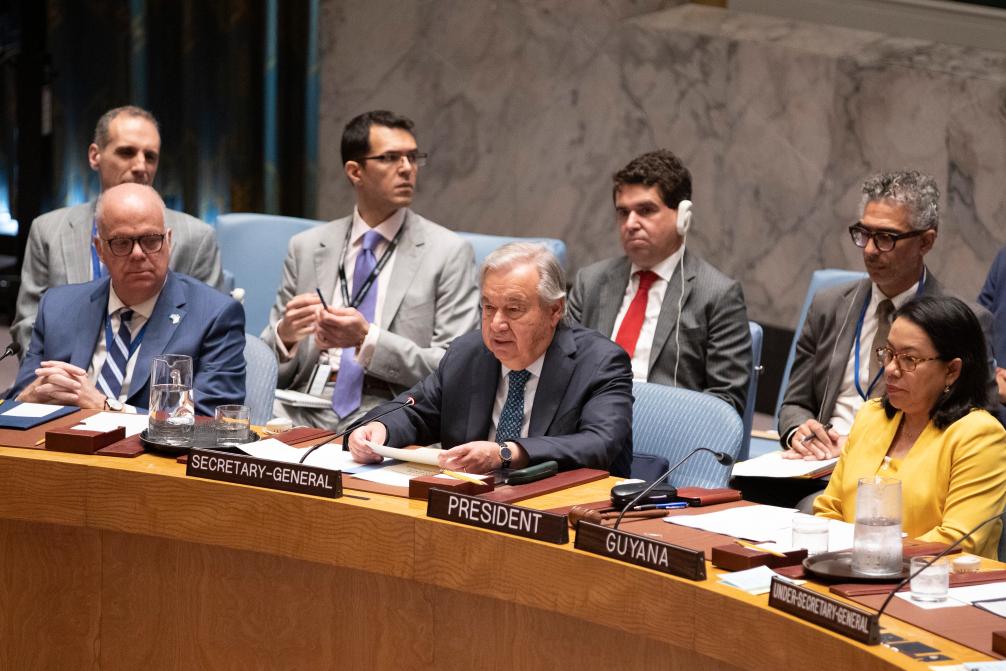
Slovenian Prime Minister Robert Golob also called for a return to diplomatic negotiations. In a statement issued on Sunday, he emphasized that continued violence and military conflict only bring further suffering to innocent civilians. Echoing the position of United Nations Secretary-General Antonio Guterres, he reiterated that peace and diplomacy are the only viable path forward.
The Slovenian Foreign Ministry echoed this position, expressing deep concern over the escalating tensions and warning that further hostilities could undermine international peace and security and endanger civilian lives. "Diplomacy and dialogue must prevail, and war must be avoided," the ministry stated, reaffirming support for the UN Charter.
Meanwhile, the Left, a member party of Slovenia's ruling coalition, condemned the U.S. action as a dangerous and irresponsible act of escalation. The party criticized the strike for lacking a UN mandate and warned that it could push the region and the world closer to a wider conflict. It called on the Slovenian government to request an emergency meeting of the UN Security Council and urged the EU and wider international community to condemn the strike as an "unlawful attack."
Latvian President Edgars Rinkevics emphasized the need for all parties to return to negotiations in order to reach a diplomatic solution, while Slovak Foreign Minister Juraj Blanar condemned the U.S. attack.
"It's unacceptable for any country to conduct military operations on the territory of another sovereign country," Blanar said. In a post on social media, he stressed that any conflict should be resolved through the United Nations, not through weapons.
In Estonia, Foreign Minister Margus Tsahkna told local media that "it is essential that the situation does not escalate into a broader conflict in the region and that the protection of civilians remains a priority for all parties." He called for collective international efforts to ensure long-term security in the region. Enditem