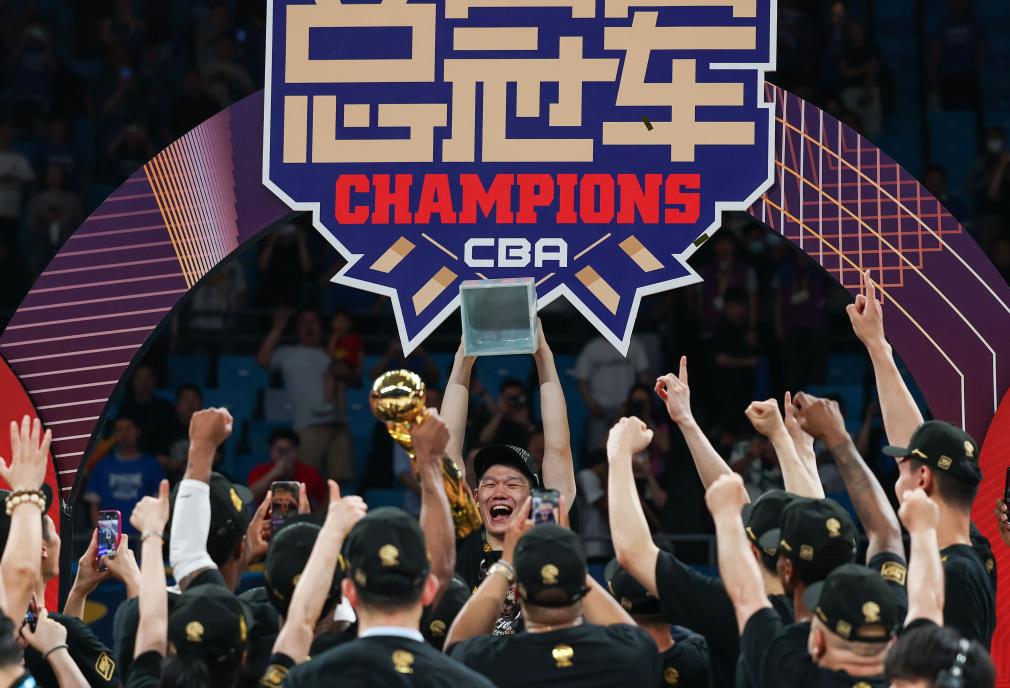
The Zhejiang Lions claimed their first CBA title, capping a season marked by rising stars, key reforms, and renewed parity. Standouts like Yang Hansen and Lin Wei signaled a bright future as the league celebrated its 30th anniversary with fresh momentum.
by sportswriters Cao Yibo and Sun Zhe
BEIJING, May 22 (Xinhua) -- The 2024-25 Chinese Basketball Association (CBA) League season came to a close on Tuesday, as the Zhejiang Lions defeated the Beijing Ducks in Game 6 of the Finals, clinching a 4-2 series victory to claim their first-ever CBA championship.
Tears of joy from the Lions' players and quiet resignation among Beijing fans marked the end of a season full of excitement, debate and renewed hope.
A NEW CHAMPION
After years of close calls, the Lions finally broke through. Prior to this season, they had reached the CBA Finals twice but carried an eight-game losing streak in those appearances.
Their campaign began on a shaky note with a home loss in Game 1 of the Finals. But despite lacking the bench depth of Beijing, Zhejiang's formidable starting five showed resilience and turned the series around.
Center Hu Jinqiu was the cornerstone of the Lions' title run. The 27-year-old averaged 19.1 points and 8.3 rebounds over 44 regular-season games, earning his second Most Valuable Player (MVP) award. In the playoffs, he averaged 18.6 points on 62.3 percent shooting with only 0.4 turnovers per game.
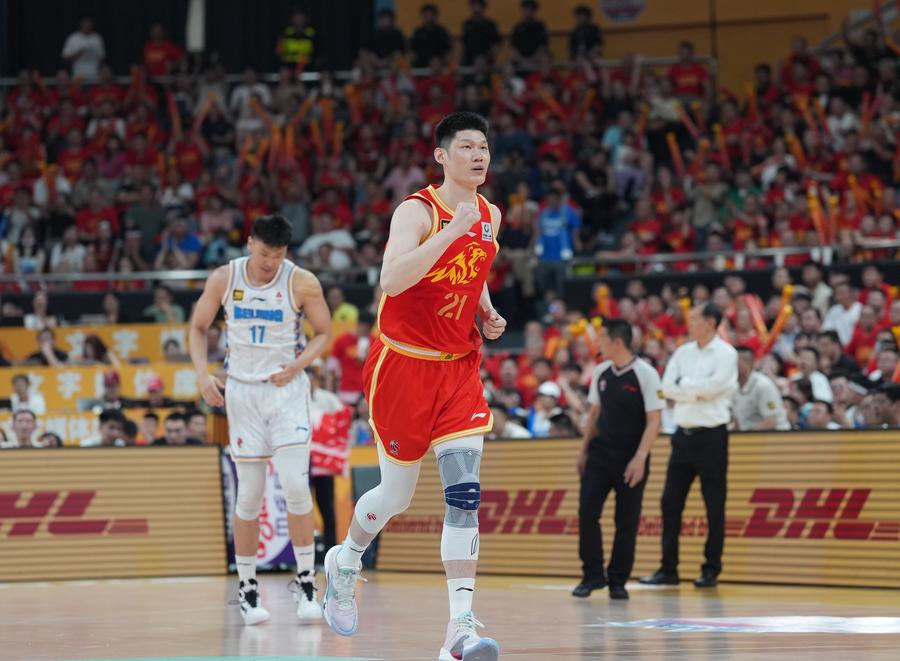
Backcourt duo Barry Brown Jr. and Sun Minghui powered the offense, combining for 41.8 points per game in the postseason. Guard Lin Bingsheng and forward Zhu Junlong anchored the defense, embracing the mantra that "defense wins championships."
Though they fell short in the Finals, the Ducks completed a highly successful season - marking their first Finals appearance in a decade. Their resurgence began with the offseason additions of elite point guard Chen Yingjun, scorer Eugene German and dominant center Zhou Qi. Young forward Zeng Fanbo also fulfilled his long-anticipated potential, becoming a reliable offensive weapon.
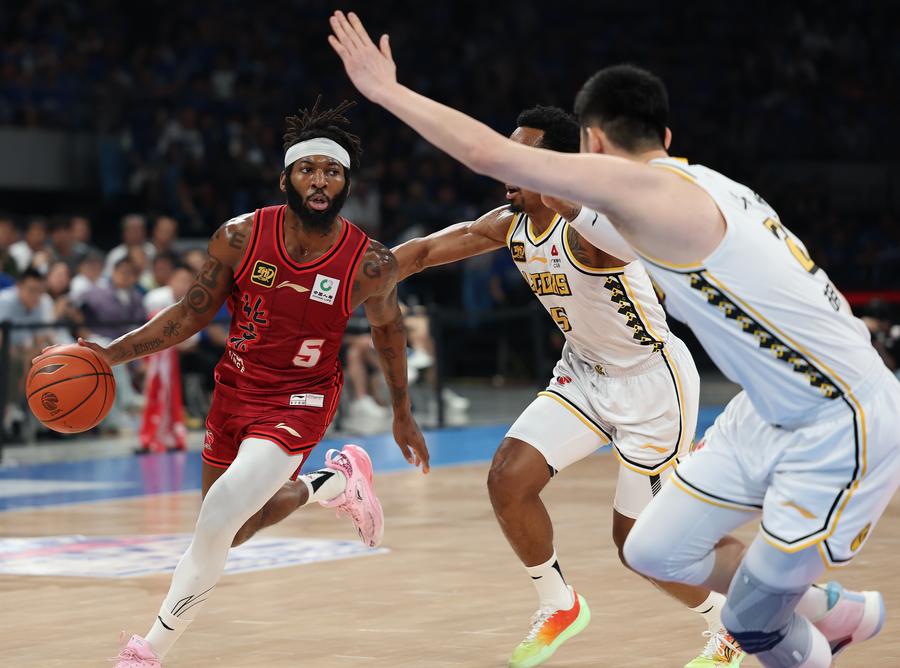
Looking ahead, Beijing faces a crucial offseason with nine player contracts expiring, including veterans Fang Shuo and Zhai Xiaochuan. Managing a smooth generational transition will be a key task for head coach Xu Limin and the front office.
Elsewhere, the Shanxi Loongs emerged as the season's dark horses. With a star-studded backcourt featuring Brandon Goodwin, Zhang Ning, Yuan Shuai, George King III and Hamidou Diallo, Shanxi advanced to the semifinals. If they can sustain their perimeter shooting and bolster their interior presence, they could be serious contenders next season.
Traditional powerhouses Guangdong Southern Tigers and Liaoning Flying Leopards both reached the playoffs but now face mounting challenges. Guangdong's backcourt duo of Xu Jie and Hu Mingxuan continues to progress, but head coach Du Feng still lacks a dominant presence in the frontcourt. Liaoning, meanwhile, is contending with an aging core - veterans Li Xiaoxu, Han Dejun and Kyle Fogg are nearing retirement, while its younger players have yet to live up to expectations.
THE NEXT WAVE
This season brought renewed optimism through a new wave of rising stars.
In just his second professional season, the Qingdao Eagles' Yang Hansen silenced critics. He averaged 16.6 points, 10.5 rebounds and a league-best 2.6 blocks per game, anchoring both ends for Qingdao. Once doubted for his footwork, the 19-year-old showed significant improvement in mobility and feel, earning comparisons to NBA MVP Nikola Jokic. Yang led Qingdao to the quarterfinals and pushed eventual champions Zhejiang to a decisive Game 5.
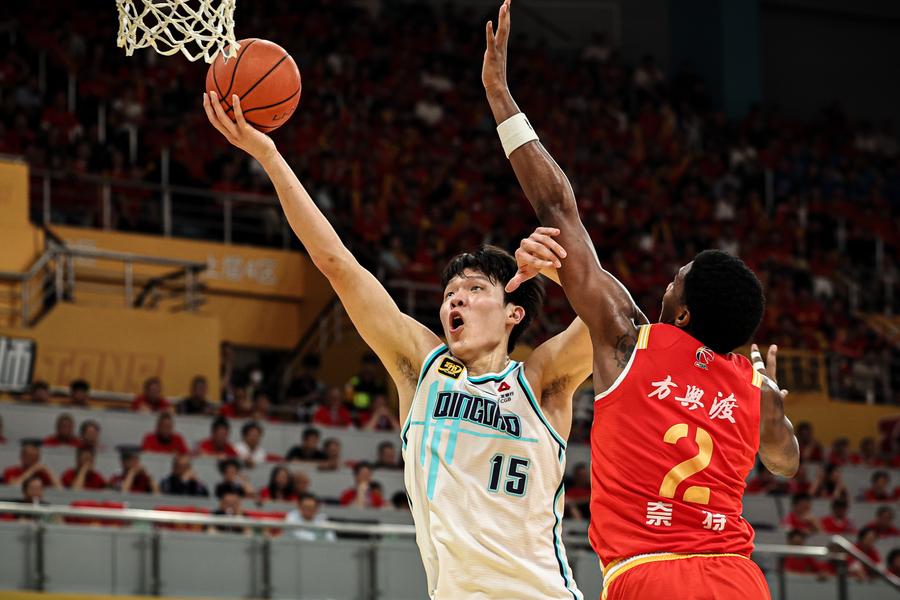
He now has his sights set on the NBA. Considered one of the top international prospects in this year's draft class, Yang could soon fill the void of Chinese talent in the league.
Another standout was Lin Wei of the Nanjing Monkey Kings. A top scorer over the past two seasons, Lin elevated his game in the playoffs. Despite being swept by Xinjiang in the first round, he averaged 30.5 points, 6.5 rebounds and 11 assists per game. While he must still improve his ball security and on-ball defense, his postseason performance signaled the rise of China's next elite guard.
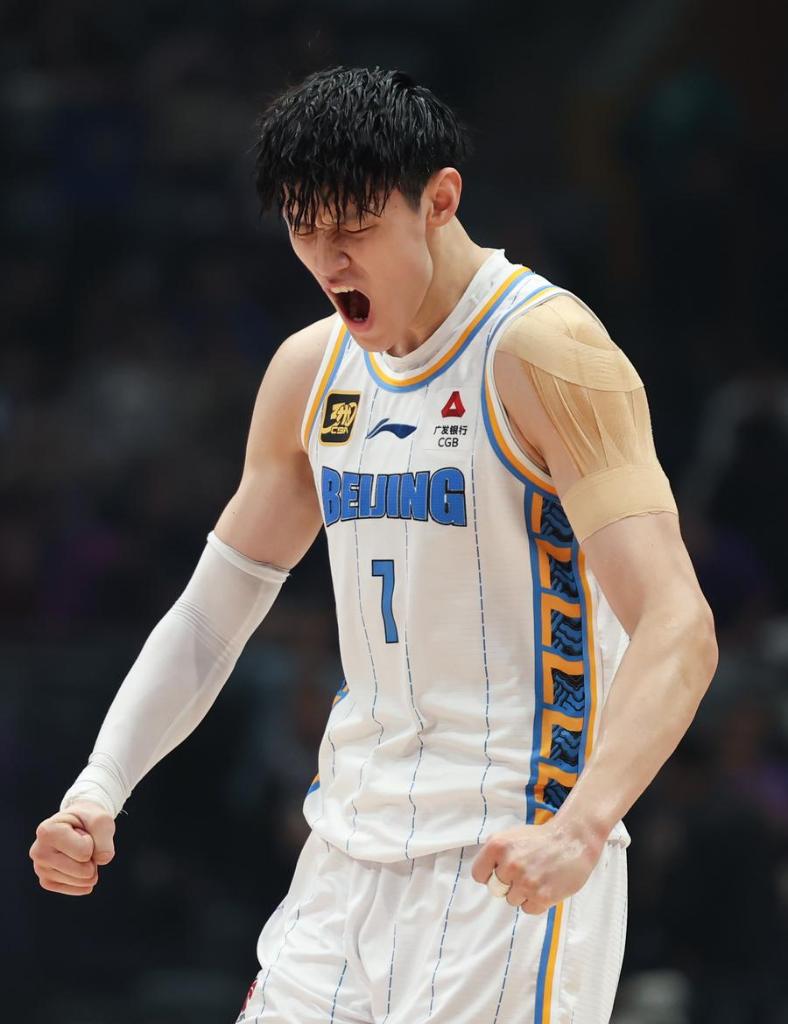
Zeng Fanbo also made headlines with a long-awaited breakout. After an underwhelming start to his pro career following a stint with G League Ignite, Zeng found his rhythm late in the regular season. By the playoffs, he had become a cornerstone of Beijing's unexpected Finals run, helping eliminate crosstown rivals the Beijing Royal Fighters.
Just as he seemed poised for national stardom, Zeng suffered a fractured lower vertebra - ending his season and raising concerns about his durability. Still, the Ducks remain optimistic and fans finally saw flashes of his full potential.
VITAL CHANGES
In its 30th anniversary season, the CBA delivered competitive basketball. For the first time since 2015-16, the best-of-seven Finals did not end in a sweep - a testament to the league's growing parity. Two key reforms this season helped raise the level of play.
The first was the "four quarters, seven overseas-player appearances" policy. This rule allows teams up to two overseas-player appearances per quarter in the first three quarters, and one in the fourth. The result was faster-paced, more intense games.
In past seasons, stricter overseas-player limits led to predictable rosters built around a scoring guard and a dominant big. The new policy encouraged diverse lineups and greater tactical flexibility, which accelerated development among domestic players.
The second reform was the introduction of the inaugural CBA Club Cup, held during two league breaks in November 2024 and February 2025 - windows previously set aside for national team FIBA Asia Cup qualifiers. The tournament helped fill scheduling gaps, kept clubs sharp and brought high-level basketball to cities without CBA franchises, expanding the league's footprint.
The Shanghai Sharks were among the biggest beneficiaries. After opening the season 1-9, they used the Club Cup to regroup under new head coach Lu Wei. Shanghai then rattled off 16 straight wins in the second half and returned to the playoffs. ■