Voters in Portugal, Poland, and Romania will head to the polls Sunday in pivotal elections that could redefine their national politics and impact Europe's broader direction.
BRUSSELS, May 17 (Xinhua) -- Voters in Portugal, Poland, and Romania are set to cast their ballots on Sunday in three separate but highly consequential elections. As each country confronts pressing domestic and geopolitical challenges, the outcomes could reshape their political landscapes and even influence Europe's broader trajectory.
PORTUGAL: PARLIAMENTARY VOTE MAY LEAD TO COALITION TALKS
Portugal will hold a snap parliamentary election to fill all 230 seats in the Republic Assembly. Voting will take place between 8 a.m. and 7 p.m. (0700-1800 GMT), with preliminary results expected later the same evening. About 10.85 million voters are registered to participate.
The election follows the collapse of Prime Minister Luis Montenegro's government after he lost a confidence vote linked to alleged conflicts of interest involving his family business. It is Portugal's third national vote since 2022.
Through the campaigns, the issues that concern voters most include political stability, soaring housing costs, stagnant wages, strained healthcare services, and immigration.
According to the latest polls, the Democratic Alliance (AD), a center-right bloc dominated by Montenegro's Social Democratic Party (PSD), leads the race with a support rate of 34 percent. The Socialist Party (PS), led by Pedro Nuno Santos, trailed with 26 percent, and the Chega (Enough) party, led by Andre Ventura, followed at 19 percent.
Given the results of recent polls, no single party is projected to secure a majority, making coalition negotiations almost inevitable. As Portugal's constitution does not provide for a runoff, the outcome will directly shape the next government.
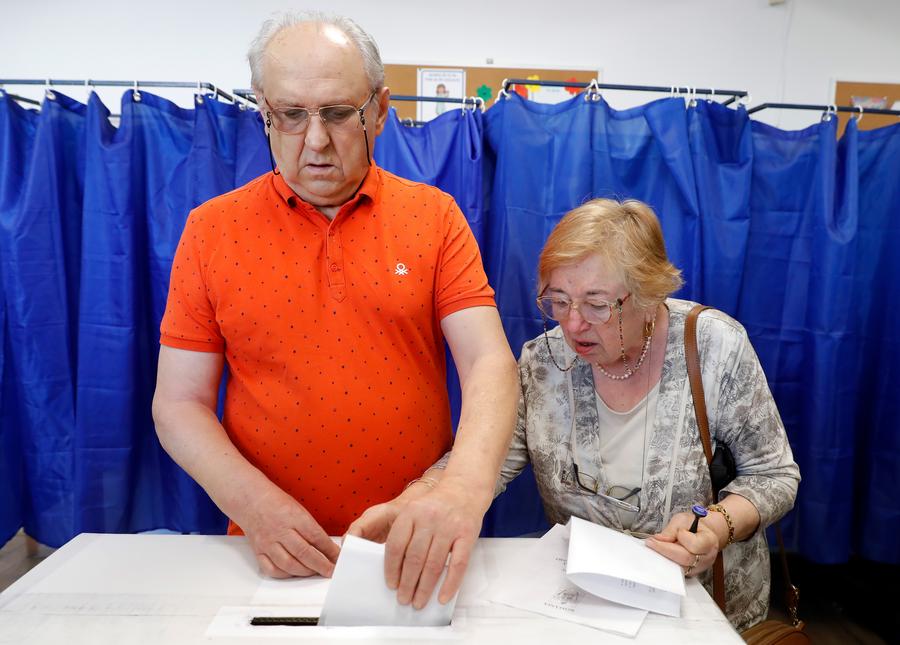
POLAND: PRESIDENTIAL ELECTION FOCUSED ON SECURITY, MIGRATION
Poles will vote in the first round of their presidential election from 7 a.m. to 9 p.m. (0500-1900 GMT) on Sunday. If no candidate secures an outright majority, a second-round runoff will be held on June 1.
According to the latest survey by the Centre for Public Opinion Research, the most popular contenders include: Rafal Trzaskowski of the ruling Civic Coalition (KO) with 32.7 percent of support; Karol Nawrocki, backed by the opposition Law and Justice (PiS) party, with 27.5 percent; Slawomir Mentzen of the Confederation party, at 13.7 percent.
Trzaskowski, the mayor of Warsaw, narrowly lost to outgoing President Andrzej Duda in 2020. Nawrocki, a historian and head of Poland's Institute of National Remembrance, is new to electoral politics but has consistently ranked second in the polls.
In light of the complicated geopolitical situations of the Russia-Ukraine conflicts, NATO uncertainties following Donald Trump's return to the U.S. presidency, and a border crisis with Belarus, the campaign has been dominated by concerns over national security and migration.
ROMANIA: PRESIDENTIAL RUNOFF TO DECIDE STRATEGIC DIRECTION
Romania will hold a decisive second-round presidential runoff between nationalist George Simion, 38, leader of the Alliance for the Union of Romanians (AUR), and Nicusor Dan, 55, the pro-European mayor of Bucharest. Nearly 18 million Romanians are eligible to vote.
Simion, who won the first round with 40.96 percent, campaigns on a "Romania First" platform, vowing to end aid to Ukraine and reduce bureaucracy. Dan, who secured 20.99 percent in the first round, has since won endorsements from the Save Romania Union and the National Liberal Party. Romania's largest party, the Social Democrats, has not endorsed either candidate.
This runoff follows the annulment of last year's presidential results over alleged Russian interference. The initial round's outcome earlier this month led to Prime Minister Marcel Ciolacu's resignation and the collapse of the ruling coalition. This vote carries high stakes for the European Union, with analysts seeing it may signal another nationalist shift in Eastern Europe.
Under Romania's constitution, the president plays a key role in shaping foreign policy, overseeing defense matters, appointing senior judges, and nominating the prime minister. ■