
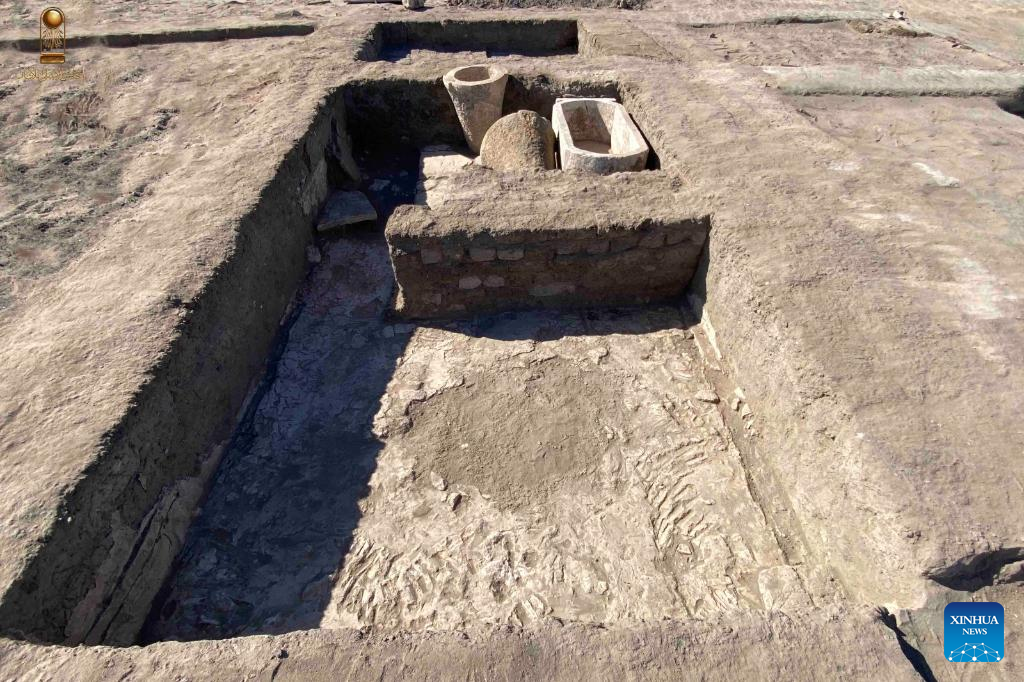
The undated photo shows uncovered remains of military fortresses and residential units for soldiers dating back to the Ptolemaic and Roman periods, in the North Sinai Province, Egypt. An Egyptian archeological mission uncovered these remains in the North Sinai province, the Egyptian Ministry of Tourism and Antiquities said in a statement on Saturday. According to the ministry's statement, the findings were made at the historical site of Tell Abu Seify, a location of strategic importance throughout antiquity. The Ptolemaic period in Egypt spanned from 332 BC to 30 BC, followed by the Roman era, which lasted until 395 AD. The discovery offers insights into the design and function of eastern military fortifications during the two eras, underlining the significance of Tell Abu Seify as a prominent military and industrial hub, the statement said. (Egyptian Ministry of Tourism and Antiquities/Handout via Xinhua)
CAIRO, May 3 (Xinhua) -- An Egyptian archeological mission uncovered the remains of military fortresses and residential units for soldiers dating back to the Ptolemaic and Roman periods, in the North Sinai province, the Egyptian Ministry of Tourism and Antiquities said in a statement on Saturday.
According to the ministry's statement, the findings were made at the historical site of Tell Abu Seify, a location of strategic importance throughout antiquity. The Ptolemaic period in Egypt spanned from 332 BC to 30 BC, followed by the Roman era, which lasted until 395 AD.
The discovery offers insights into the design and function of eastern military fortifications during the two eras, underlining the significance of Tell Abu Seify as a prominent military and industrial hub, the statement said.
The mission also uncovered two specially designed eastern gates for previously discovered Ptolemaic and Roman castles, which would contribute to the understanding the shapes of the ancient defensive gates.
In addition, more than 500 circular formations made of mudbrick were uncovered near the castle entrances, which were likely used for tree planting during the Ptolemaic period, the statement said.
The mission also unearthed some houses for hosting Roman-era soldiers, it added. ■
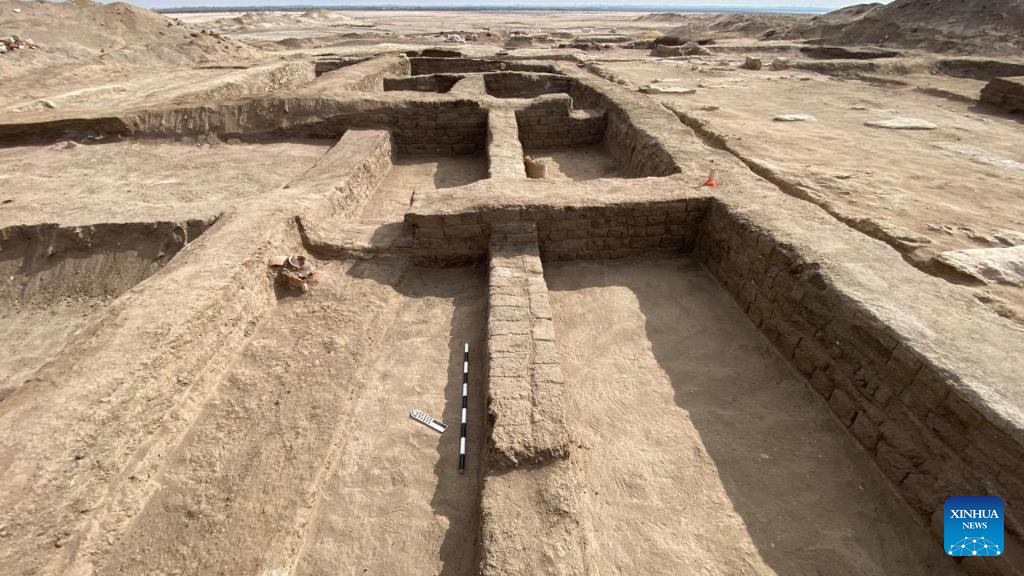
The undated photo shows uncovered remains of military fortresses and residential units for soldiers dating back to the Ptolemaic and Roman periods, in the North Sinai Province, Egypt. An Egyptian archeological mission uncovered these remains in the North Sinai province, the Egyptian Ministry of Tourism and Antiquities said in a statement on Saturday.
According to the ministry's statement, the findings were made at the historical site of Tell Abu Seify, a location of strategic importance throughout antiquity. The Ptolemaic period in Egypt spanned from 332 BC to 30 BC, followed by the Roman era, which lasted until 395 AD.
The discovery offers insights into the design and function of eastern military fortifications during the two eras, underlining the significance of Tell Abu Seify as a prominent military and industrial hub, the statement said. (Egyptian Ministry of Tourism and Antiquities/Handout via Xinhua)
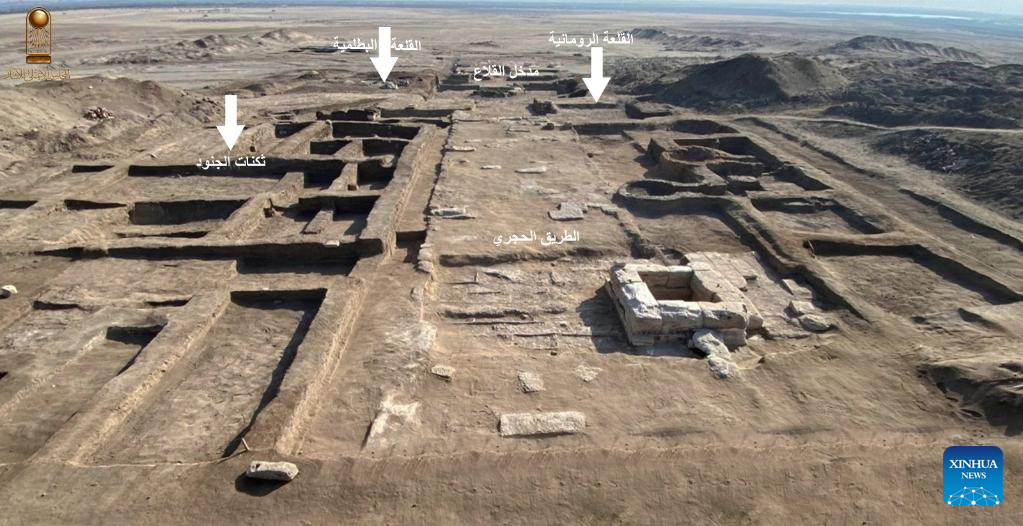
The undated photo shows uncovered remains of military fortresses and residential units for soldiers dating back to the Ptolemaic and Roman periods, in the North Sinai Province, Egypt. An Egyptian archeological mission uncovered these remains in the North Sinai province, the Egyptian Ministry of Tourism and Antiquities said in a statement on Saturday.
According to the ministry's statement, the findings were made at the historical site of Tell Abu Seify, a location of strategic importance throughout antiquity. The Ptolemaic period in Egypt spanned from 332 BC to 30 BC, followed by the Roman era, which lasted until 395 AD.
The discovery offers insights into the design and function of eastern military fortifications during the two eras, underlining the significance of Tell Abu Seify as a prominent military and industrial hub, the statement said. (Egyptian Ministry of Tourism and Antiquities/Handout via Xinhua)
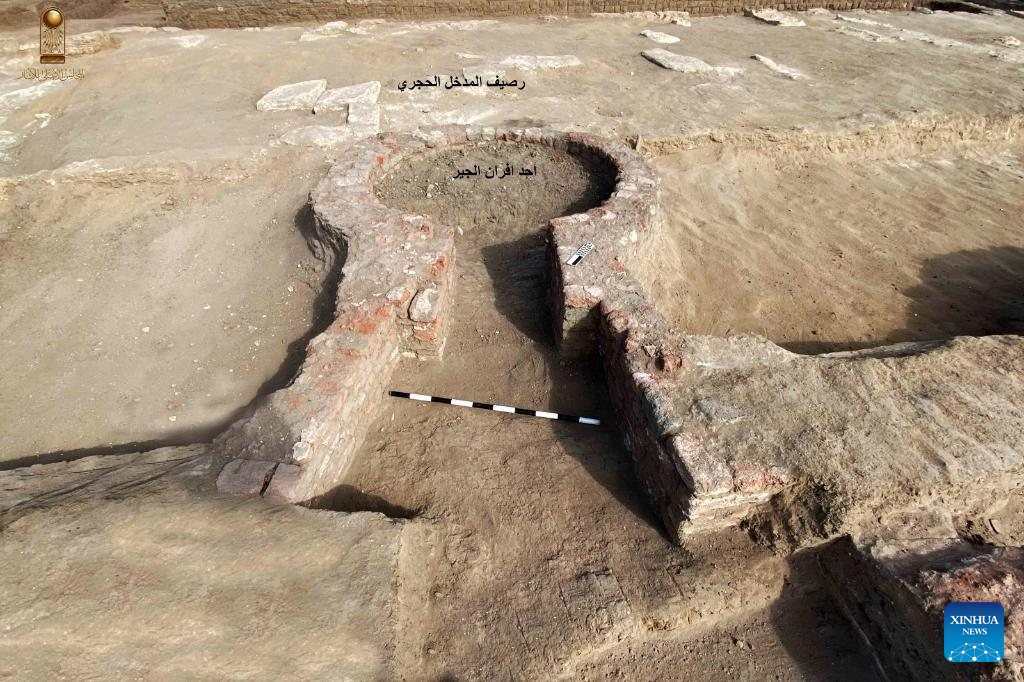
The undated photo shows uncovered remains of military fortresses and residential units for soldiers dating back to the Ptolemaic and Roman periods, in the North Sinai Province, Egypt. An Egyptian archeological mission uncovered these remains in the North Sinai province, the Egyptian Ministry of Tourism and Antiquities said in a statement on Saturday.
According to the ministry's statement, the findings were made at the historical site of Tell Abu Seify, a location of strategic importance throughout antiquity. The Ptolemaic period in Egypt spanned from 332 BC to 30 BC, followed by the Roman era, which lasted until 395 AD.
The discovery offers insights into the design and function of eastern military fortifications during the two eras, underlining the significance of Tell Abu Seify as a prominent military and industrial hub, the statement said. (Egyptian Ministry of Tourism and Antiquities/Handout via Xinhua)
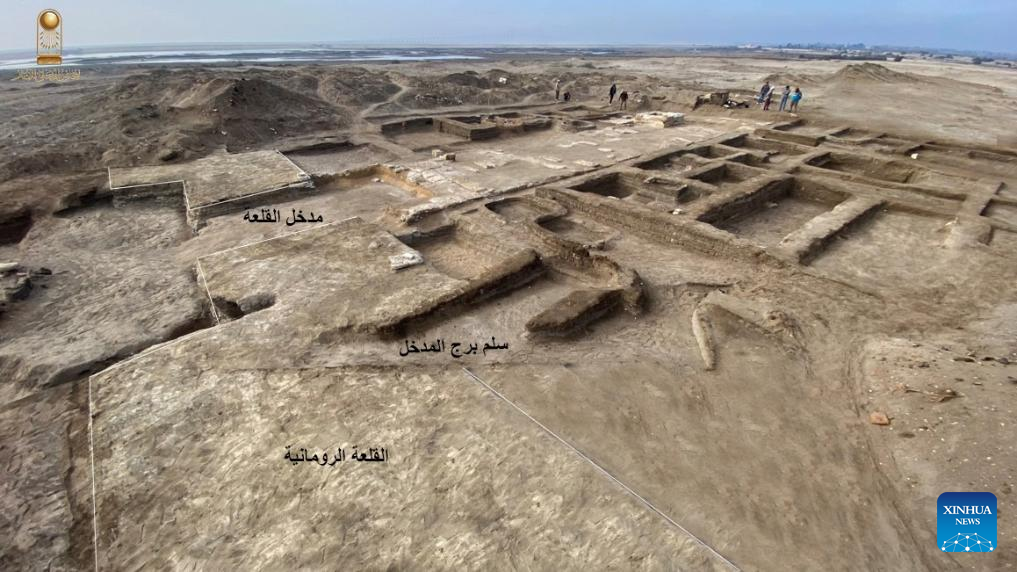
The undated photo shows uncovered remains of military fortresses and residential units for soldiers dating back to the Ptolemaic and Roman periods, in the North Sinai Province, Egypt. An Egyptian archeological mission uncovered these remains in the North Sinai province, the Egyptian Ministry of Tourism and Antiquities said in a statement on Saturday.
According to the ministry's statement, the findings were made at the historical site of Tell Abu Seify, a location of strategic importance throughout antiquity. The Ptolemaic period in Egypt spanned from 332 BC to 30 BC, followed by the Roman era, which lasted until 395 AD.
The discovery offers insights into the design and function of eastern military fortifications during the two eras, underlining the significance of Tell Abu Seify as a prominent military and industrial hub, the statement said. (Egyptian Ministry of Tourism and Antiquities/Handout via Xinhua)


