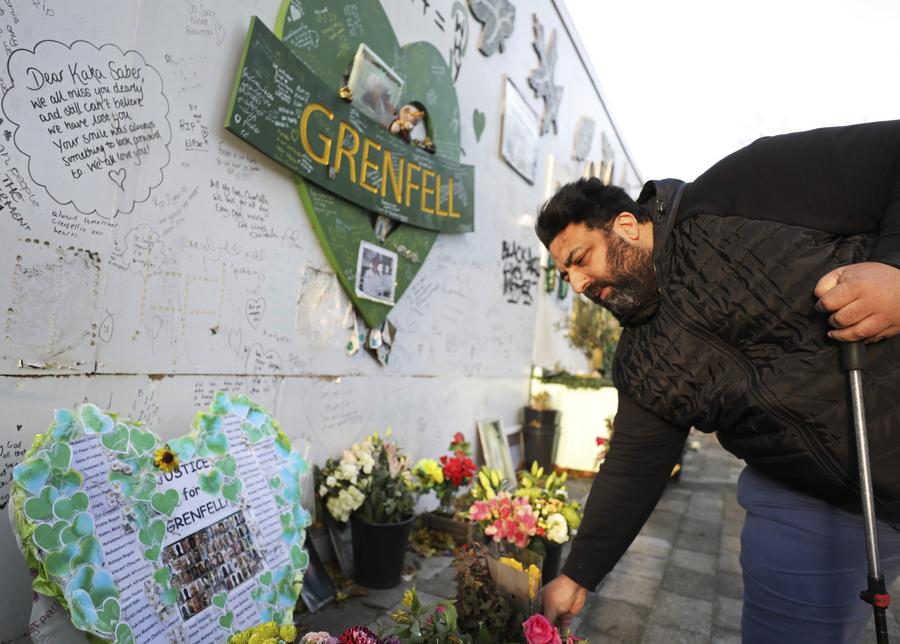
The government's decision to demolish the tower received mixed reactions from the public.
LONDON, Feb. 12 (Xinhua) -- Nearly eight years have passed since the Grenfell Tower tragedy, one of the deadliest fires in British history. The devastating blaze, which occurred on June 14, 2017, claimed 72 lives and had a profound impact on the local community.
On Feb. 3 this year, British Deputy Prime Minister and Housing, Communities, and Local Government Secretary Angela Rayner met with survivors and relatives of those who perished in the fire. During the meeting, she announced the government's decision to demolish the tower. The announcement received mixed reactions, with some attendees sharing their thoughts with Xinhua.
Nabil Choucair, whose mother, sister, and four other family members died in the fire, told Xinhua in an exclusive interview: "I don't accept Grenfell has to come down. It is a sacred place where many families lost loved ones."
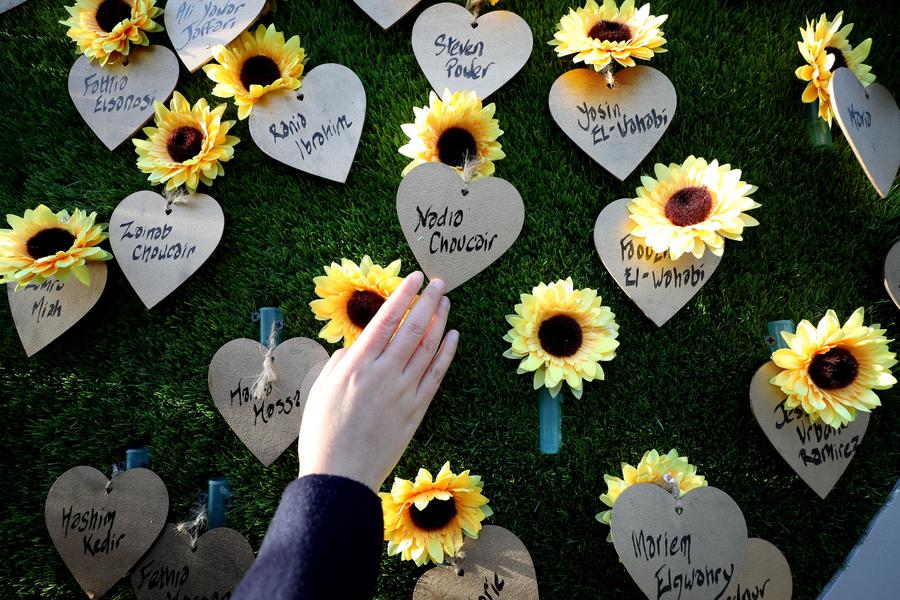
On the night of the fire, Choucair watched helplessly as flats 191 and 193, on the 22nd floor of Grenfell Tower, were consumed by flames. The flats were home to his mother and sister, a nursery nurse at a local school. Choucair's frantic attempts to enter the tower to rescue them were made impossible by the intense heat as the building was consumed by flames.
Choucair, who has also campaigned relentlessly against the demolition of the tower block, said: "Me and my family are devastated by the decision to demolish Grenfell Tower. Pulling it down should not be even considered until there have been prosecutions against those responsible and all of the inquiries have been concluded."
He recalled seeing a newspaper photograph of his sister waving a makeshift flag from a window in her apartment, in a desperate bid for help.
According to the final report from the Grenfell Tower inquiry, the disaster was the result of "decades of failure" by the government and construction industry to act on the dangers of using flammable cladding materials in high-rise buildings.
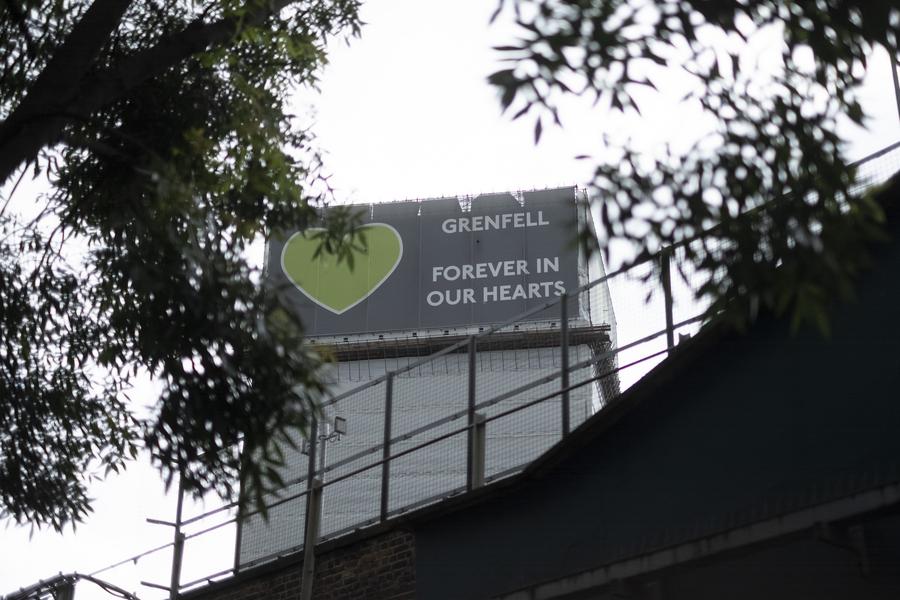
Sir Martin Moore-Bick, the inquiry chair, said all the deaths were avoidable, and those who lived in the tower had been failed by the authorities, due to incompetence, dishonesty, and greed.
The Grenfell Tower Memorial Commission is also consulting on plans for a permanent memorial where the tower stands, a "sacred space" designed for remembrance and reflection.
In an official statement, the Ministry of Housing, Communities and Local Government said: "It is clear from conversations the tower remains a sacred site. It is also clear that there is not a consensus about what should happen to it.
"Being able to see the Tower every day helps some people continue to feel close to those they lost. For others, it is a painful reminder of what happened and is having a daily impact on some members of the community."
The ministry also confirmed that in the coming months, the government will develop a detailed plan for demolishing the tower, which will likely take around two years, and will be done through "a process of careful and sensitive progressive deconstruction that happens behind the wrapping."
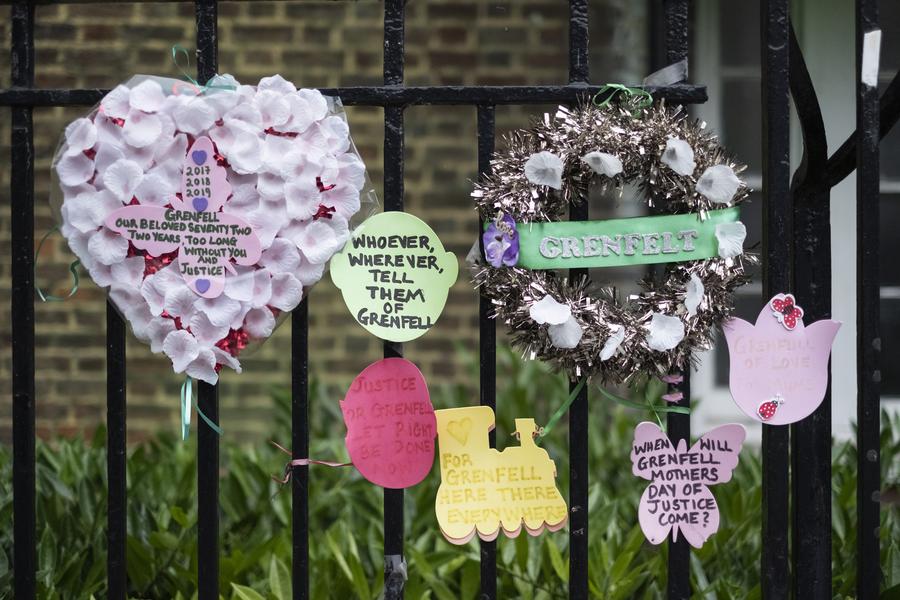
To those who lost members of their families, the tower is a sacred place.
"It is only when you have lost a loved one that you have a feeling for the tower. None of us ever asked to be put in this position," said Choucair, adding that nothing like this should ever happen again. "Even today there are schools and hospitals with cladding that has yet to be removed," he added.
"The government has messed up by involving everyone in the future of the tower. It should only be the voices of the next of kin that are heard. It is about us, not those who were never affected," he said. ■