Whatever the United States says, the people who are most affected in the world, ironically, are the American people.
SINGAPORE, Dec. 13 (Xinhua) -- "You cannot wantonly or randomly use tariffs to extract bargains and benefits from other countries," a Singaporean scholar has warned, expressing concern over U.S. President-elect Donald Trump's plan to impose tariffs on U.S. trading partners once he assumes office.
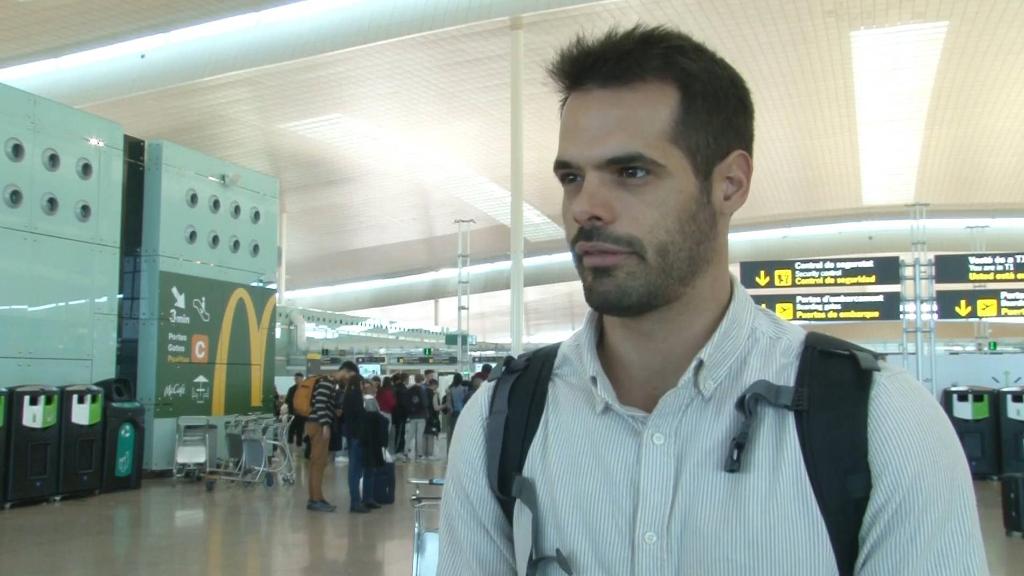
In a recent interview with Xinhua, Lawrence Loh, director of the Center for Governance and Sustainability at the National University of Singapore Business School, noted that Trump appears to be using tariffs as bargaining chips. However, "for every bargaining chip, there's a price to pay," he said, adding that the consequences would be felt not only by the affected countries but also by the United States itself.
Loh cautioned that such tariffs could have "broad-based repercussions" on global supply chains, as the interconnected nature of the economic system means that any cost increases in commodities, components, or products would ripple through to other sectors.
Ultimately, Loh said, this will harm consumer welfare. For American consumers, tariffs would add to the cost of imports, resulting in more expensive domestic goods, whether in information services, manufacturing products, or electric vehicles.
"Tariffs are a burden, and someone will just have to carry it," he said.
Trump has cited controlling illegal immigration and drug smuggling into the United States as justifications for his proposed tariffs on Canada, Mexico, and China. However, Loh dismissed these arguments as a "pretext."
"The relationship between smuggling and illegal immigration and tariffs is very hard to determine. The two are definitely not linked," he said, adding that trade should not be weaponized to address unrelated issues.
"Whatever the United States says, the people who are most affected in the world, ironically, are the American people," Loh said.
Describing tariffs as an "artificial intervention in the market mechanism," Loh argued that they hinder economic growth by diminishing opportunities and progress. By raising prices in ways that are "not consistent with social efficiency," tariffs, he said, must be used "very carefully."
Loh highlighted the importance of free trade and the unrestricted movement of resources. "If anything, we should strongly believe in the free flow of factors of production, goods, and services. This is the only way the world can progress forward so that all economies can take part in the benefits of sharing comparative advantage," he said.
With Trump set to take office in January, Loh hoped that the incoming administration would adopt a thoughtful approach to policymaking, given the far-reaching implications of their actions. Their economic and trade policies, for instance, could "trickle down and even cascade down" to impact various sectors of both domestic and international economies.
Loh warned that policies driven by self-interest at the expense of others are "counterproductive and counterintuitive."
Maintaining global peace and prosperity, Loh said, is "the basic factor" underpinning international relations. "This is definitely the bedrock and the bare minimum on which countries should interact with one another," he said.■