ChineseToday | Chinese expedition team braves river headwaters-Xinhua
ChineseToday | Chinese expedition team braves river headwaters
Source: Xinhua
Editor: huaxia
2024-07-31 16:35:16
WUHAN, July 31 (Xinhua) -- Since July 20, a Chinese expedition team has been conducting research on the water resources and ecological environment in the headwater regions of the Yangtze and Lancang rivers.
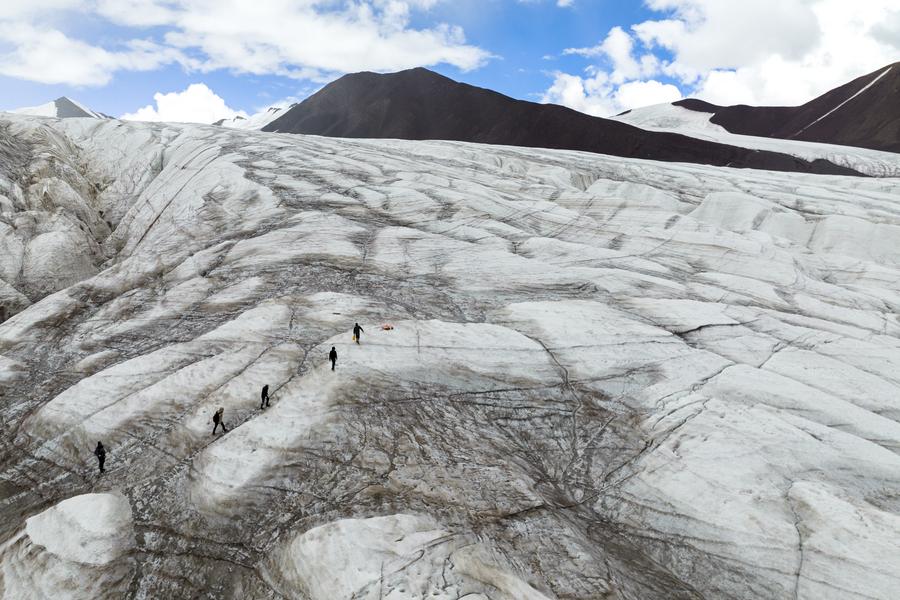
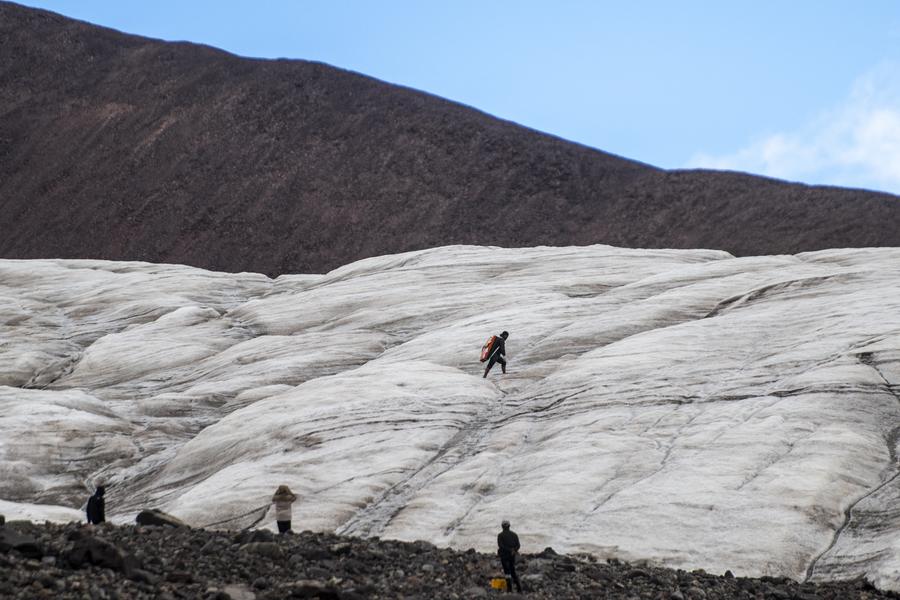
An aerial drone photo shows researchers climbing the Dongkemadi glacier in northwest China's Qinghai Province, July 25, 2024. (Xinhua/Wu Zhizun)Researchers climb the Dongkemadi glacier in northwest China's Qinghai Province, July 25, 2024. (Xinhua/Wu Zhizun)
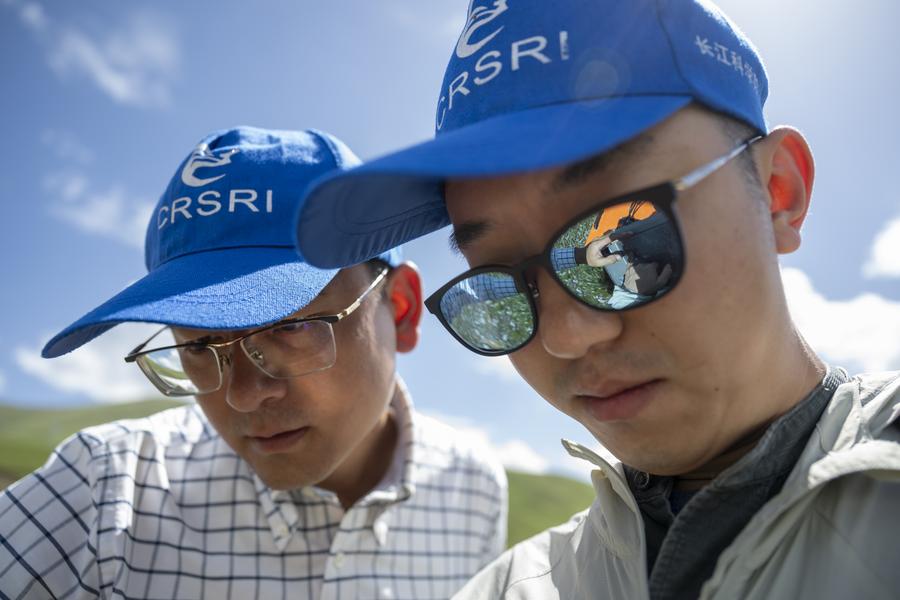
The expedition, comprising around 20 members, carried out scientific investigations into river hydrology, water ecology, soil erosion, glaciers and permafrost in Qinghai Province.
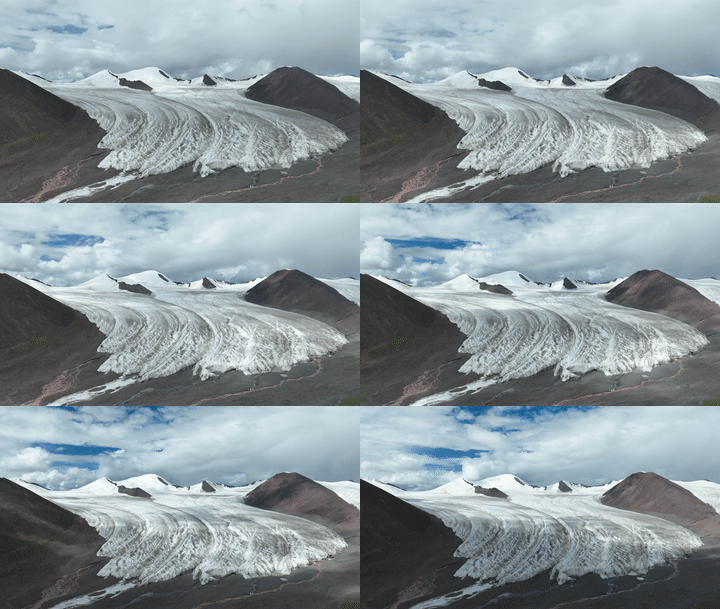
Key research projects include estimating the carbon stock of wetlands, assessing the impacts of permafrost thawing on the plateau, and measuring the thickness of permafrost on glaciers.
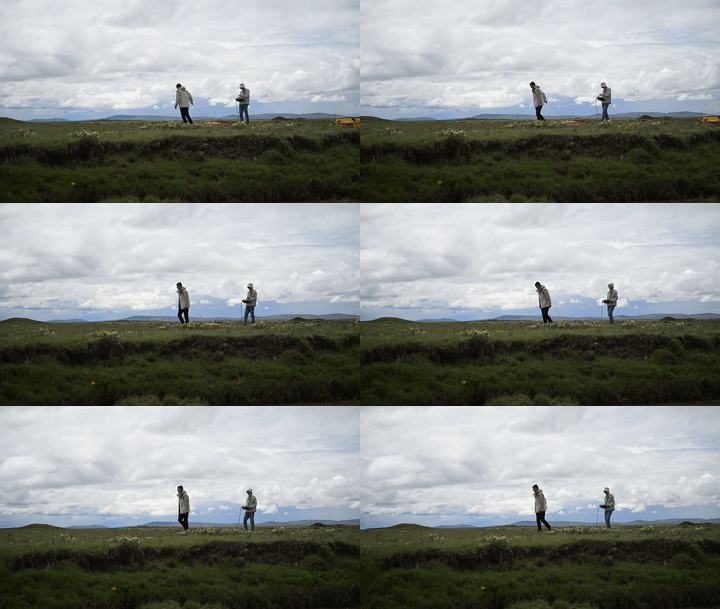
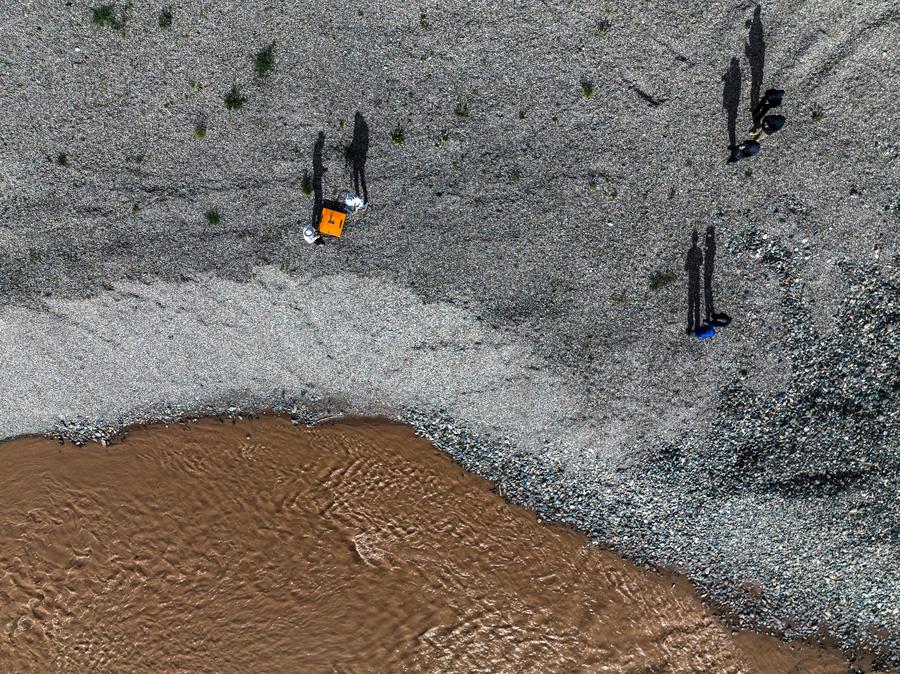
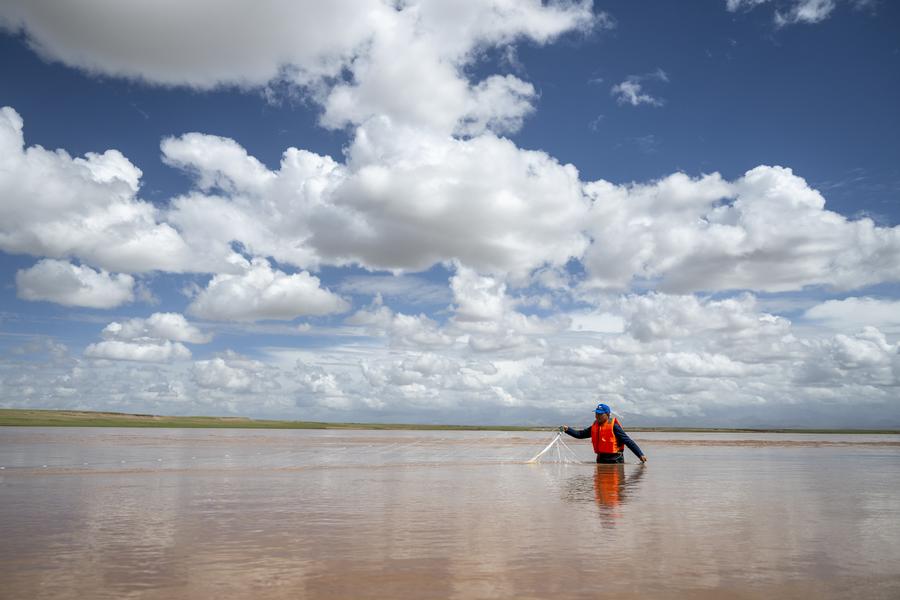
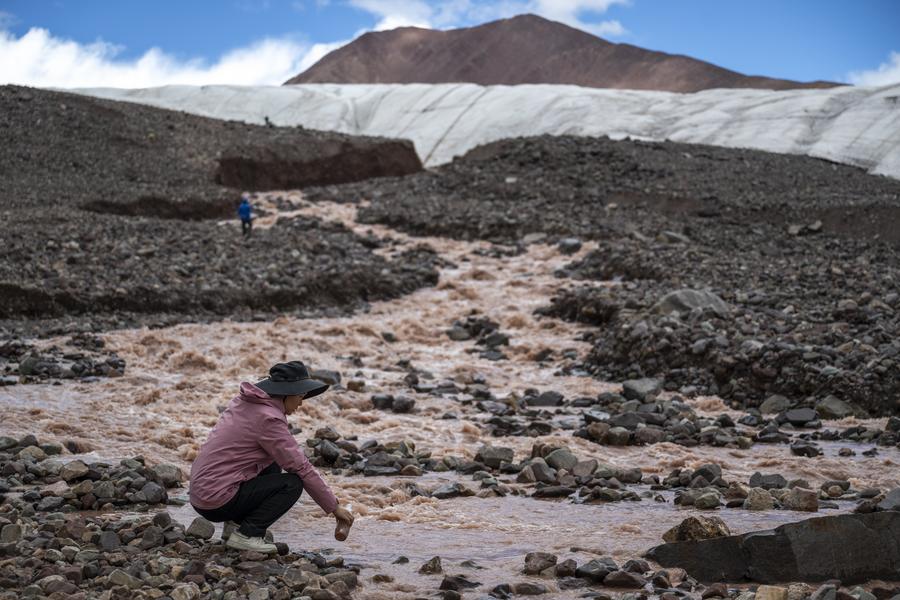
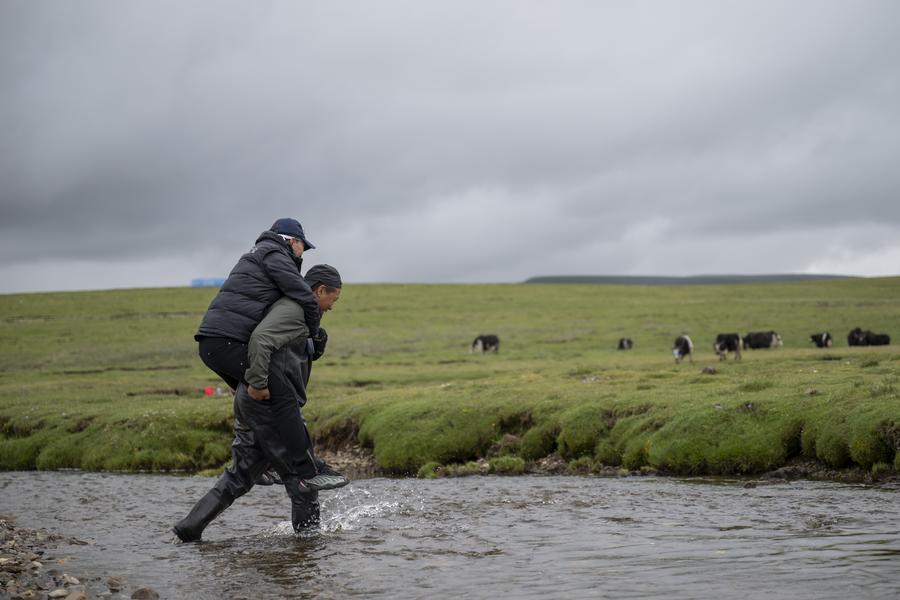
An aerial drone photo shows researchers working at the Zadoi section of Zhaqu River in northwest China's Qinghai Province, July 21, 2024. (Xinhua/Wu Zhizun)A researcher conducts on-site fish monitoring in Nangjibalong, where the Tuotuo River and Damqu River converge, in northwest China's Qinghai Province, July 24, 2024. (Xinhua/Wu Zhizun)A researcher collects water samples at the Dongkemadi glacier in northwest China's Qinghai Province, July 25, 2024. (Xinhua/Wu Zhizun)Researchers walk across the Damqu River in northwest China's Qinghai Province, July 22, 2024. (Xinhua/Wu Zhizun)
Qinghai is home to the Sanjiangyuan area, which contains the headwaters of China's three major rivers: the Yangtze River, the longest in China; the Yellow River, the second-longest; and the Lancang River, which is known as the Mekong River after it flows out of China.
As important parts of the Qinghai-Xizang Plateau ecosystem, the headwater regions of the Yangtze and Lancang rivers play a crucial role in safeguarding water resources, protecting biodiversity and ensuring ecological stability.
Annual scientific expeditions to the source of the Yangtze River have been conducted since 2012.
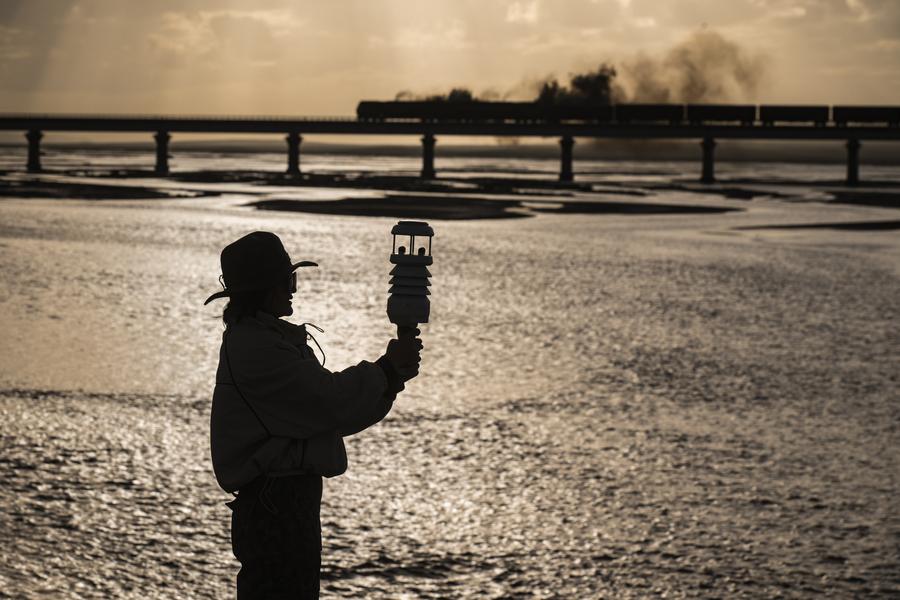
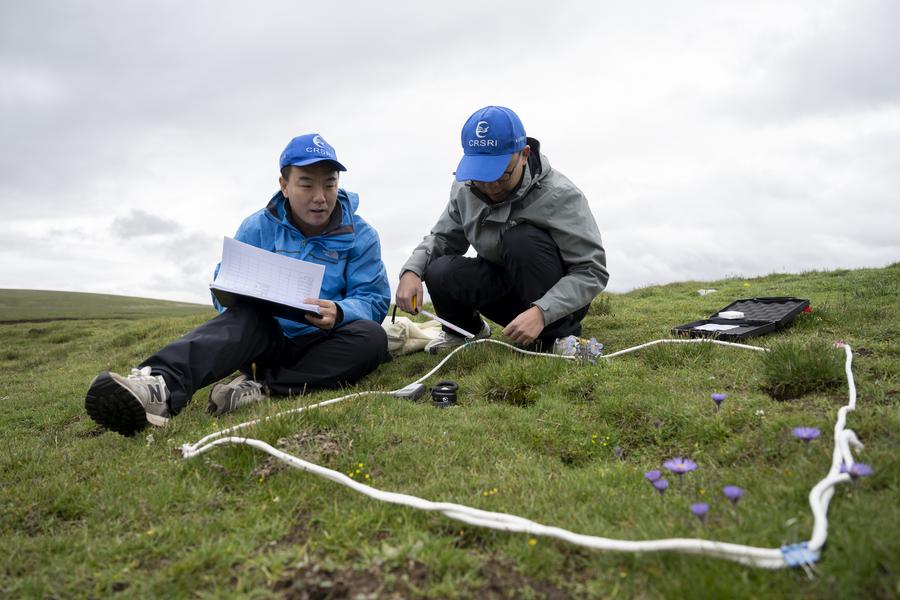
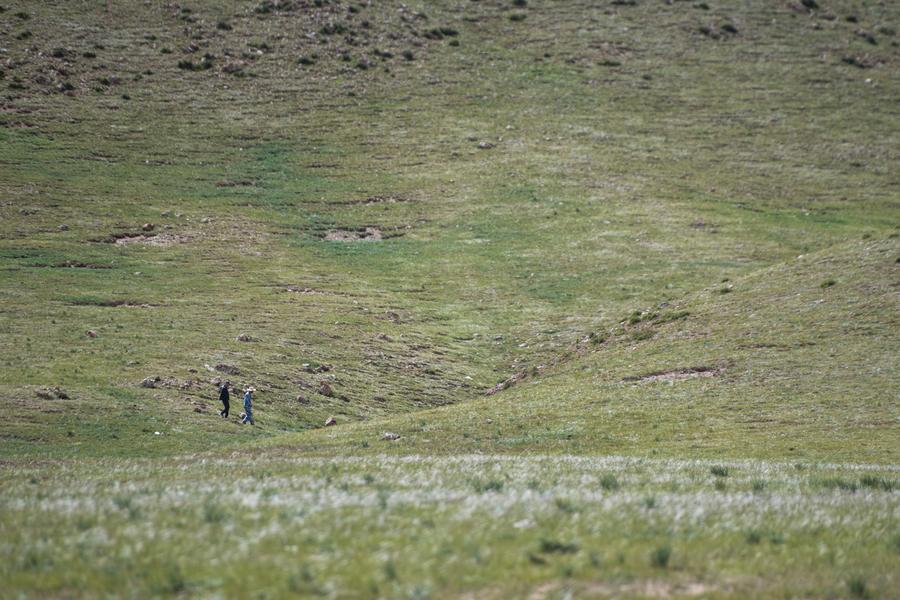
A researcher measures the meteorological conditions at a section of Tuotuo River in northwest China's Qinghai Province, July 24, 2024. (Xinhua/Wu Zhizun)Researchers probe underground water level around the Nieqiaqu River in northwest China's Qinghai Province, July 23, 2024. (Xinhua/Wu Zhizun)Researchers investigate vegetation ecology and soil erosion around the Damqu River in northwest China's Qinghai Province, July 22, 2024. (Xinhua/Wu Zhizun)A researcher picks out benthic organisms in northwest China's Qinghai Province, July 24, 2024. (Xinhua/Wu Zhizun)Researchers walk on their way to a sampling site in Nangjibalong, where the Tuotuo River and Damqu River converge, in northwest China's Qinghai Province, July 24, 2024. (Xinhua/Wu Zhizun)
Reporter: Wu Zhizun
Editors: Wang Qingqin, Meng Chenguang, Cui Bowen, Zhang Haofu