
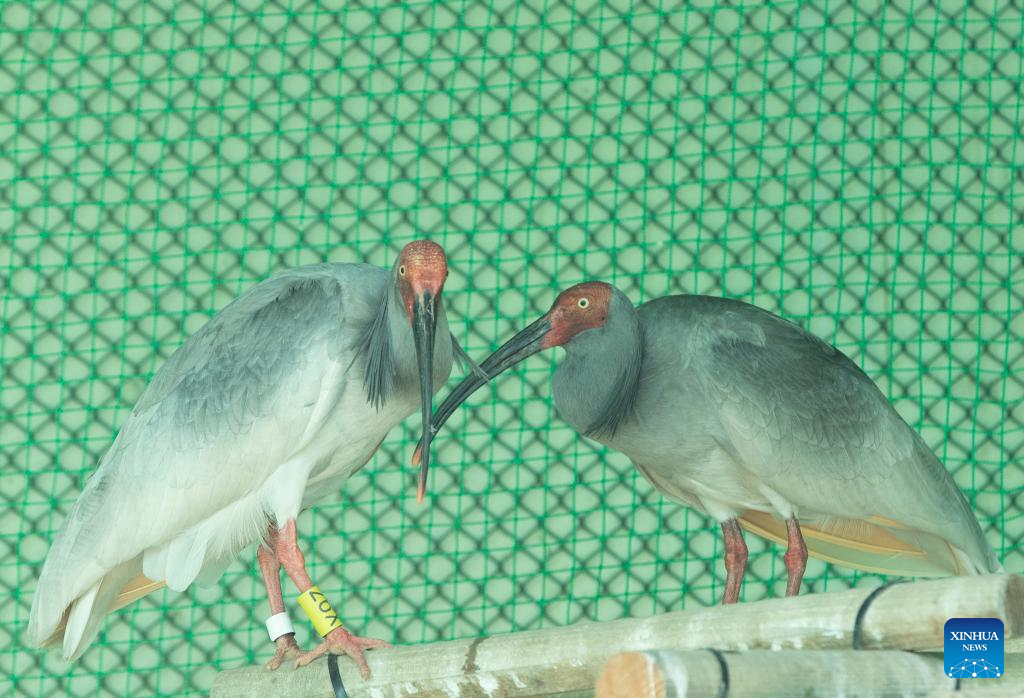
Crested ibis "Jin Shui" (R) is pictured at the Upo Crested Ibis Restoration Center in Changnyeong, South Korea, May 20, 2024. The crested ibis, which used to be widely distributed in China, Japan, South Korea and other East Asian regions, has become an endangered bird species worldwide, rarely seen in South Korea since the 1980s.
In 2008, the crested ibis couple "Yang Zhou" and "Long Ting" arrived and settled down at the Upo Crested Ibis Restoration Center in Changnyeong as a gift from China to South Korea. Another two male crested ibises "Jin Shui" and "Bai Shi" were sent to South Korea in 2013.
Years of hard work has seen over 500 offspring of the four crested ibises given birth to in South Korea, of which more than 300 were successfully released into the wild. In 2021, two crested ibis chicks were bred in the wild in South Korea, which is the first time in more than 4 decades that the birth of wild crested ibis was observed in the country.
Now a main habitat for crested ibis in South Korea, Changnyeong has taken more protective measures in its rural area where these birds live. Locals can occasionally enjoy the elegance of these creatures in the fields or woods. (Xinhua/Yao Qilin)
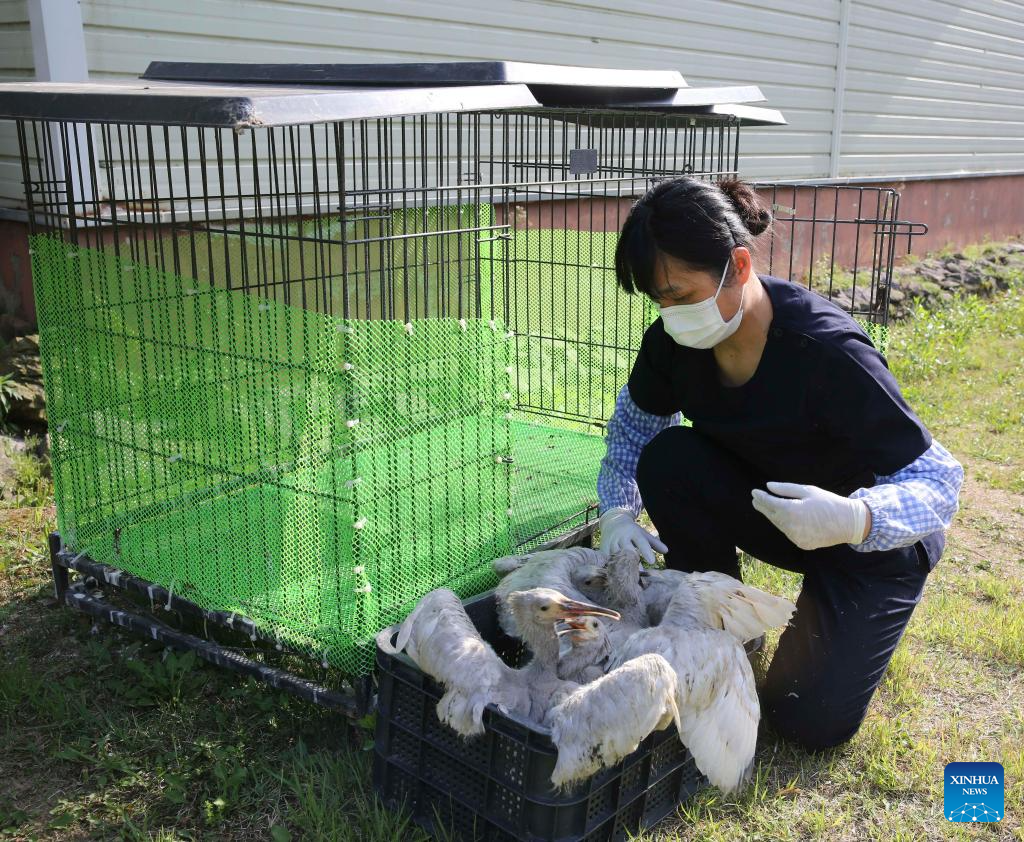
A staff member takes care of crested ibis chicks at the Upo Crested Ibis Restoration Center in Changnyeong, South Korea, May 20, 2024. The crested ibis, which used to be widely distributed in China, Japan, South Korea and other East Asian regions, has become an endangered bird species worldwide, rarely seen in South Korea since the 1980s.
In 2008, the crested ibis couple "Yang Zhou" and "Long Ting" arrived and settled down at the Upo Crested Ibis Restoration Center in Changnyeong as a gift from China to South Korea. Another two male crested ibises "Jin Shui" and "Bai Shi" were sent to South Korea in 2013.
Years of hard work has seen over 500 offspring of the four crested ibises given birth to in South Korea, of which more than 300 were successfully released into the wild. In 2021, two crested ibis chicks were bred in the wild in South Korea, which is the first time in more than 4 decades that the birth of wild crested ibis was observed in the country.
Now a main habitat for crested ibis in South Korea, Changnyeong has taken more protective measures in its rural area where these birds live. Locals can occasionally enjoy the elegance of these creatures in the fields or woods. (Xinhua/Yao Qilin)
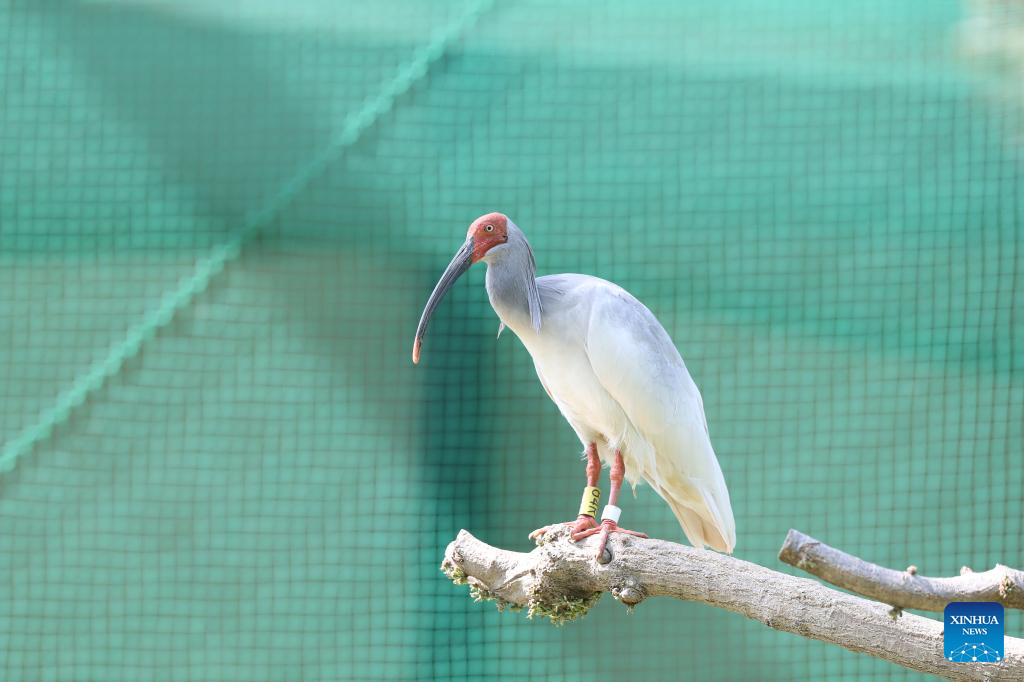
A crested ibis is pictured at the Upo Crested Ibis Restoration Center in Changnyeong, South Korea, May 20, 2024. The crested ibis, which used to be widely distributed in China, Japan, South Korea and other East Asian regions, has become an endangered bird species worldwide, rarely seen in South Korea since the 1980s.
In 2008, the crested ibis couple "Yang Zhou" and "Long Ting" arrived and settled down at the Upo Crested Ibis Restoration Center in Changnyeong as a gift from China to South Korea. Another two male crested ibises "Jin Shui" and "Bai Shi" were sent to South Korea in 2013.
Years of hard work has seen over 500 offspring of the four crested ibises given birth to in South Korea, of which more than 300 were successfully released into the wild. In 2021, two crested ibis chicks were bred in the wild in South Korea, which is the first time in more than 4 decades that the birth of wild crested ibis was observed in the country.
Now a main habitat for crested ibis in South Korea, Changnyeong has taken more protective measures in its rural area where these birds live. Locals can occasionally enjoy the elegance of these creatures in the fields or woods. (Xinhua/Yao Qilin)
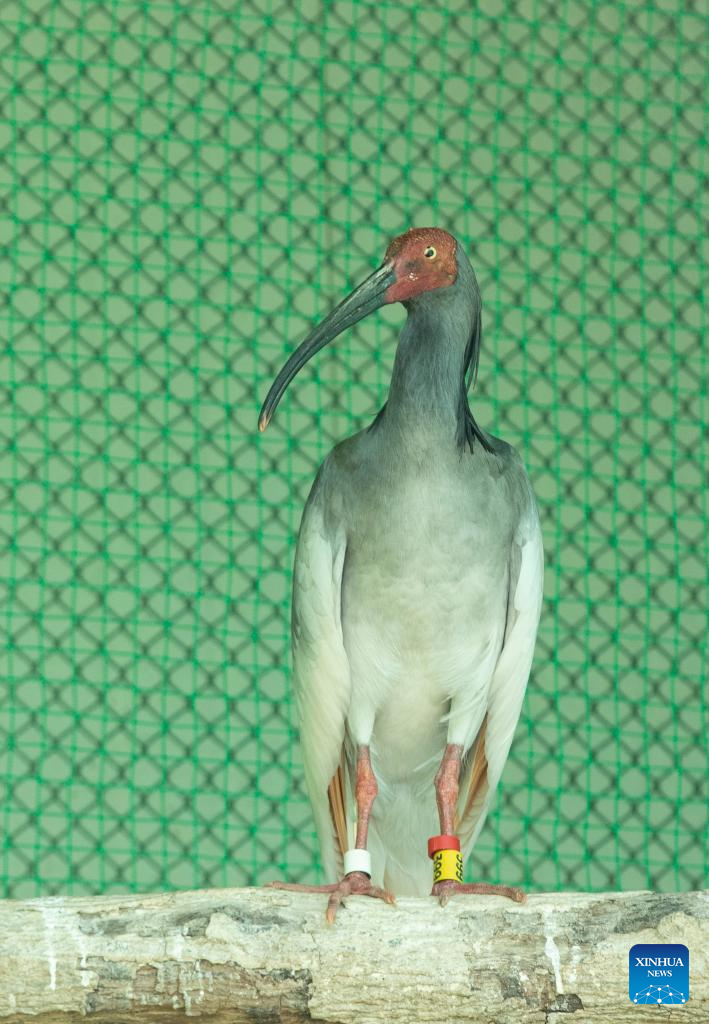
Crested ibis "Long Ting" is pictured at the Upo Crested Ibis Restoration Center in Changnyeong, South Korea, May 20, 2024. The crested ibis, which used to be widely distributed in China, Japan, South Korea and other East Asian regions, has become an endangered bird species worldwide, rarely seen in South Korea since the 1980s.
In 2008, the crested ibis couple "Yang Zhou" and "Long Ting" arrived and settled down at the Upo Crested Ibis Restoration Center in Changnyeong as a gift from China to South Korea. Another two male crested ibises "Jin Shui" and "Bai Shi" were sent to South Korea in 2013.
Years of hard work has seen over 500 offspring of the four crested ibises given birth to in South Korea, of which more than 300 were successfully released into the wild. In 2021, two crested ibis chicks were bred in the wild in South Korea, which is the first time in more than 4 decades that the birth of wild crested ibis was observed in the country.
Now a main habitat for crested ibis in South Korea, Changnyeong has taken more protective measures in its rural area where these birds live. Locals can occasionally enjoy the elegance of these creatures in the fields or woods. (Xinhua/Yao Qilin)
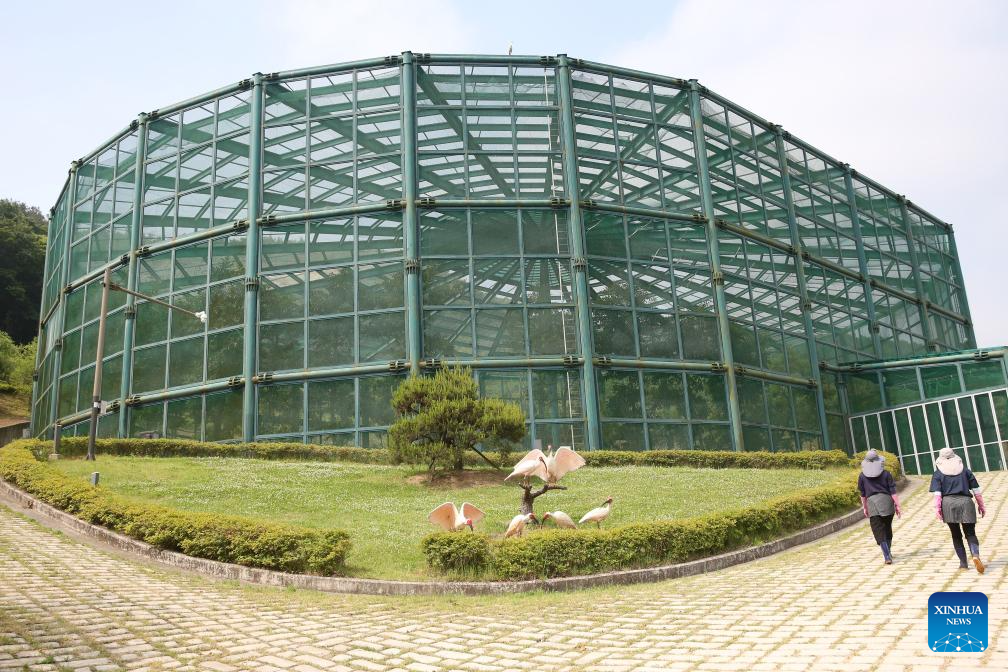
This photo taken on May 21, 2024 shows a training facility for crested ibis before their release at the Upo Crested Ibis Restoration Center in Changnyeong, South Korea. The crested ibis, which used to be widely distributed in China, Japan, South Korea and other East Asian regions, has become an endangered bird species worldwide, rarely seen in South Korea since the 1980s.
In 2008, the crested ibis couple "Yang Zhou" and "Long Ting" arrived and settled down at the Upo Crested Ibis Restoration Center in Changnyeong as a gift from China to South Korea. Another two male crested ibises "Jin Shui" and "Bai Shi" were sent to South Korea in 2013.
Years of hard work has seen over 500 offspring of the four crested ibises given birth to in South Korea, of which more than 300 were successfully released into the wild. In 2021, two crested ibis chicks were bred in the wild in South Korea, which is the first time in more than 4 decades that the birth of wild crested ibis was observed in the country.
Now a main habitat for crested ibis in South Korea, Changnyeong has taken more protective measures in its rural area where these birds live. Locals can occasionally enjoy the elegance of these creatures in the fields or woods. (Xinhua/Yao Qilin)
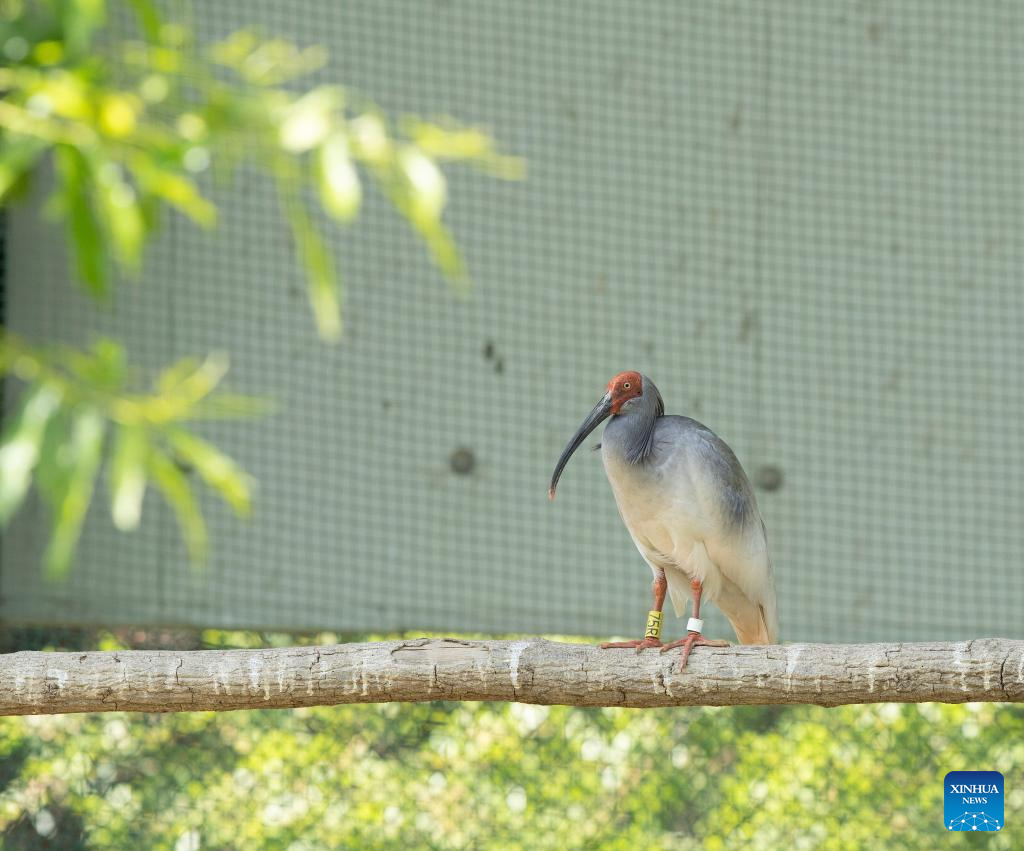
A crested ibis is pictured at the Upo Crested Ibis Restoration Center in Changnyeong, South Korea, May 20, 2024. The crested ibis, which used to be widely distributed in China, Japan, South Korea and other East Asian regions, has become an endangered bird species worldwide, rarely seen in South Korea since the 1980s.
In 2008, the crested ibis couple "Yang Zhou" and "Long Ting" arrived and settled down at the Upo Crested Ibis Restoration Center in Changnyeong as a gift from China to South Korea. Another two male crested ibises "Jin Shui" and "Bai Shi" were sent to South Korea in 2013.
Years of hard work has seen over 500 offspring of the four crested ibises given birth to in South Korea, of which more than 300 were successfully released into the wild. In 2021, two crested ibis chicks were bred in the wild in South Korea, which is the first time in more than 4 decades that the birth of wild crested ibis was observed in the country.
Now a main habitat for crested ibis in South Korea, Changnyeong has taken more protective measures in its rural area where these birds live. Locals can occasionally enjoy the elegance of these creatures in the fields or woods. (Xinhua/Yao Qilin)
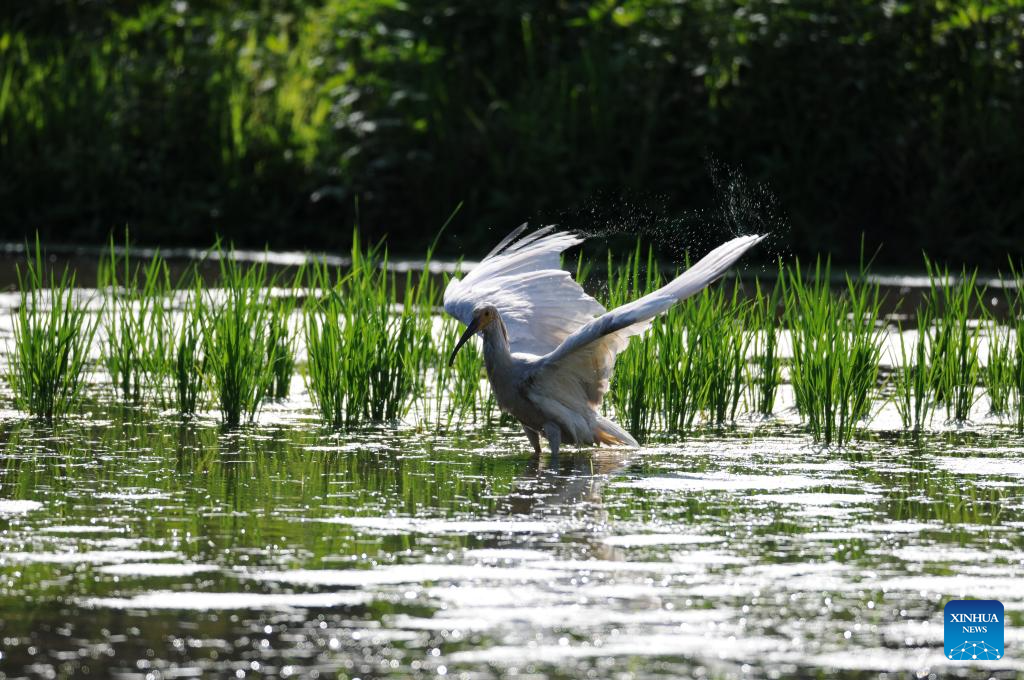
This undated file photo shows a released crested ibis near Changnyeong, South Korea. The crested ibis, which used to be widely distributed in China, Japan, South Korea and other East Asian regions, has become an endangered bird species worldwide, rarely seen in South Korea since the 1980s.
In 2008, the crested ibis couple "Yang Zhou" and "Long Ting" arrived and settled down at the Upo Crested Ibis Restoration Center in Changnyeong as a gift from China to South Korea. Another two male crested ibises "Jin Shui" and "Bai Shi" were sent to South Korea in 2013.
Years of hard work has seen over 500 offspring of the four crested ibises given birth to in South Korea, of which more than 300 were successfully released into the wild. In 2021, two crested ibis chicks were bred in the wild in South Korea, which is the first time in more than 4 decades that the birth of wild crested ibis was observed in the country.
Now a main habitat for crested ibis in South Korea, Changnyeong has taken more protective measures in its rural area where these birds live. Locals can occasionally enjoy the elegance of these creatures in the fields or woods. (Changnyeong County/Handout via Xinhua)
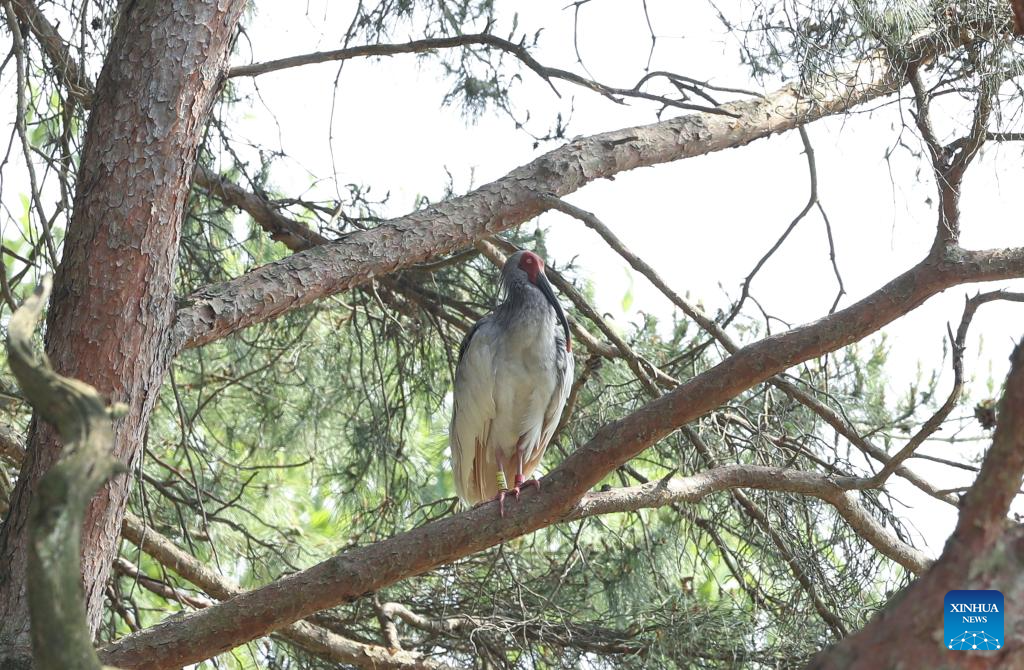
A released crested ibis is pictured in Changnyeong, South Korea, May 20, 2024. The crested ibis, which used to be widely distributed in China, Japan, South Korea and other East Asian regions, has become an endangered bird species worldwide, rarely seen in South Korea since the 1980s.
In 2008, the crested ibis couple "Yang Zhou" and "Long Ting" arrived and settled down at the Upo Crested Ibis Restoration Center in Changnyeong as a gift from China to South Korea. Another two male crested ibises "Jin Shui" and "Bai Shi" were sent to South Korea in 2013.
Years of hard work has seen over 500 offspring of the four crested ibises given birth to in South Korea, of which more than 300 were successfully released into the wild. In 2021, two crested ibis chicks were bred in the wild in South Korea, which is the first time in more than 4 decades that the birth of wild crested ibis was observed in the country.
Now a main habitat for crested ibis in South Korea, Changnyeong has taken more protective measures in its rural area where these birds live. Locals can occasionally enjoy the elegance of these creatures in the fields or woods. (Xinhua/Yao Qilin)

This photo taken on May 21, 2024 shows the Upo Crested Ibis Restoration Center in Changnyeong, South Korea. The crested ibis, which used to be widely distributed in China, Japan, South Korea and other East Asian regions, has become an endangered bird species worldwide, rarely seen in South Korea since the 1980s.
In 2008, the crested ibis couple "Yang Zhou" and "Long Ting" arrived and settled down at the Upo Crested Ibis Restoration Center in Changnyeong as a gift from China to South Korea. Another two male crested ibises "Jin Shui" and "Bai Shi" were sent to South Korea in 2013.
Years of hard work has seen over 500 offspring of the four crested ibises given birth to in South Korea, of which more than 300 were successfully released into the wild. In 2021, two crested ibis chicks were bred in the wild in South Korea, which is the first time in more than 4 decades that the birth of wild crested ibis was observed in the country.
Now a main habitat for crested ibis in South Korea, Changnyeong has taken more protective measures in its rural area where these birds live. Locals can occasionally enjoy the elegance of these creatures in the fields or woods. (Xinhua/Yao Qilin)
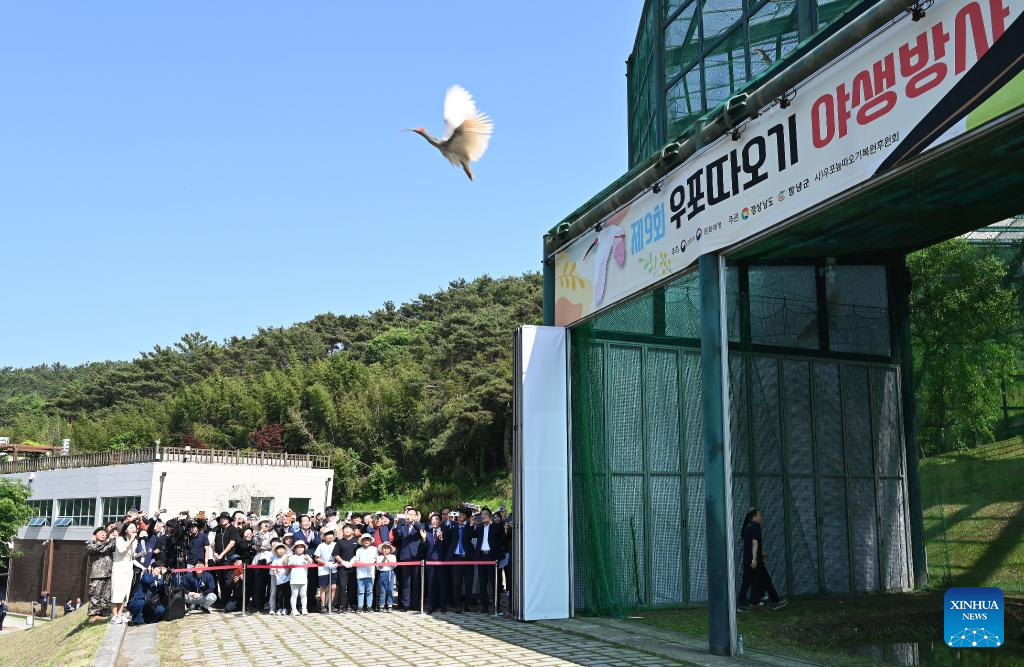
A crested ibis is released into the wild in Changnyeong, South Korea, May 10, 2024. The crested ibis, which used to be widely distributed in China, Japan, South Korea and other East Asian regions, has become an endangered bird species worldwide, rarely seen in South Korea since the 1980s.
In 2008, the crested ibis couple "Yang Zhou" and "Long Ting" arrived and settled down at the Upo Crested Ibis Restoration Center in Changnyeong as a gift from China to South Korea. Another two male crested ibises "Jin Shui" and "Bai Shi" were sent to South Korea in 2013.
Years of hard work has seen over 500 offspring of the four crested ibises given birth to in South Korea, of which more than 300 were successfully released into the wild. In 2021, two crested ibis chicks were bred in the wild in South Korea, which is the first time in more than 4 decades that the birth of wild crested ibis was observed in the country.
Now a main habitat for crested ibis in South Korea, Changnyeong has taken more protective measures in its rural area where these birds live. Locals can occasionally enjoy the elegance of these creatures in the fields or woods. (Changnyeong County/Handout via Xinhua)
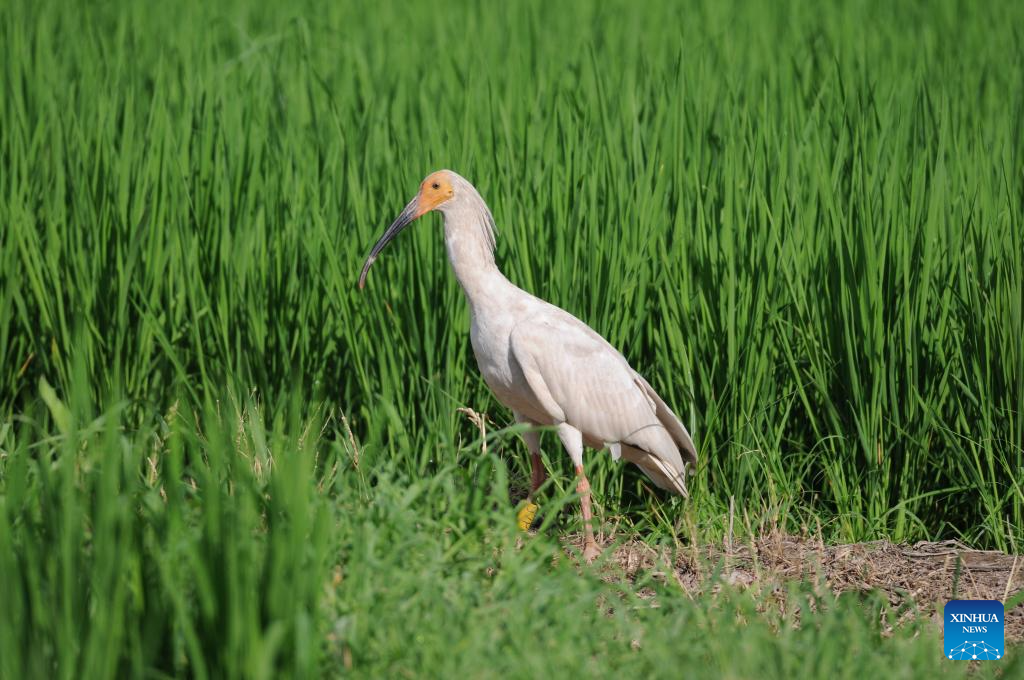
This undated file photo shows a released crested ibis near Changnyeong, South Korea. The crested ibis, which used to be widely distributed in China, Japan, South Korea and other East Asian regions, has become an endangered bird species worldwide, rarely seen in South Korea since the 1980s.
In 2008, the crested ibis couple "Yang Zhou" and "Long Ting" arrived and settled down at the Upo Crested Ibis Restoration Center in Changnyeong as a gift from China to South Korea. Another two male crested ibises "Jin Shui" and "Bai Shi" were sent to South Korea in 2013.
Years of hard work has seen over 500 offspring of the four crested ibises given birth to in South Korea, of which more than 300 were successfully released into the wild. In 2021, two crested ibis chicks were bred in the wild in South Korea, which is the first time in more than 4 decades that the birth of wild crested ibis was observed in the country.
Now a main habitat for crested ibis in South Korea, Changnyeong has taken more protective measures in its rural area where these birds live. Locals can occasionally enjoy the elegance of these creatures in the fields or woods. (Changnyeong County/Handout via Xinhua)
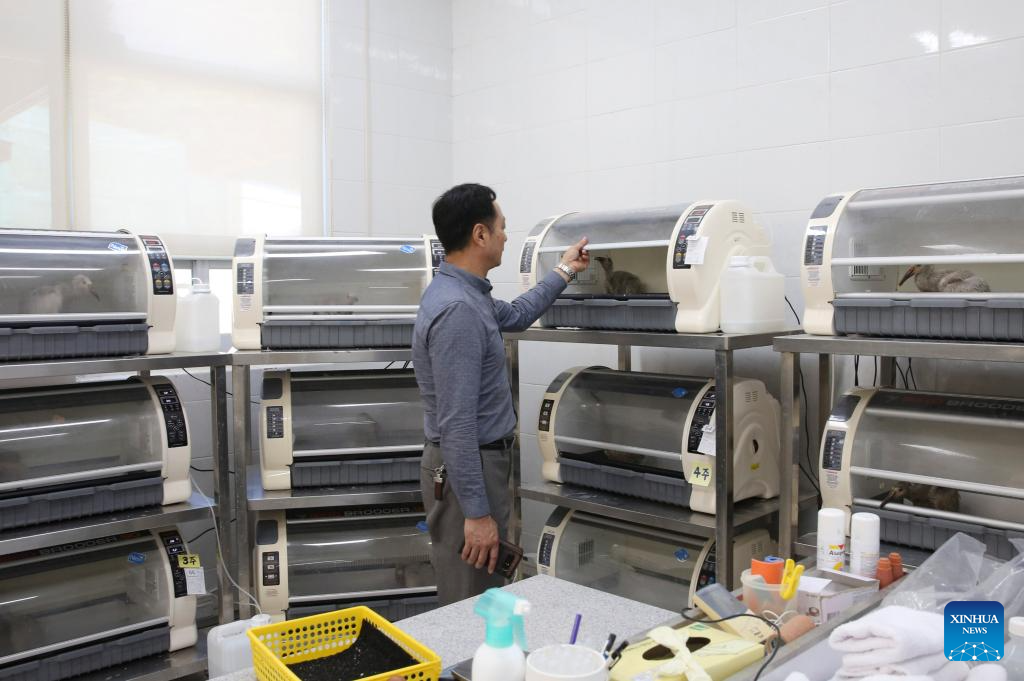
This photo taken on May 20, 2024 shows a nursery room for crested ibis chicks at the Upo Crested Ibis Restoration Center in Changnyeong, South Korea. The crested ibis, which used to be widely distributed in China, Japan, South Korea and other East Asian regions, has become an endangered bird species worldwide, rarely seen in South Korea since the 1980s.
In 2008, the crested ibis couple "Yang Zhou" and "Long Ting" arrived and settled down at the Upo Crested Ibis Restoration Center in Changnyeong as a gift from China to South Korea. Another two male crested ibises "Jin Shui" and "Bai Shi" were sent to South Korea in 2013.
Years of hard work has seen over 500 offspring of the four crested ibises given birth to in South Korea, of which more than 300 were successfully released into the wild. In 2021, two crested ibis chicks were bred in the wild in South Korea, which is the first time in more than 4 decades that the birth of wild crested ibis was observed in the country.
Now a main habitat for crested ibis in South Korea, Changnyeong has taken more protective measures in its rural area where these birds live. Locals can occasionally enjoy the elegance of these creatures in the fields or woods. (Xinhua/Yao Qilin)
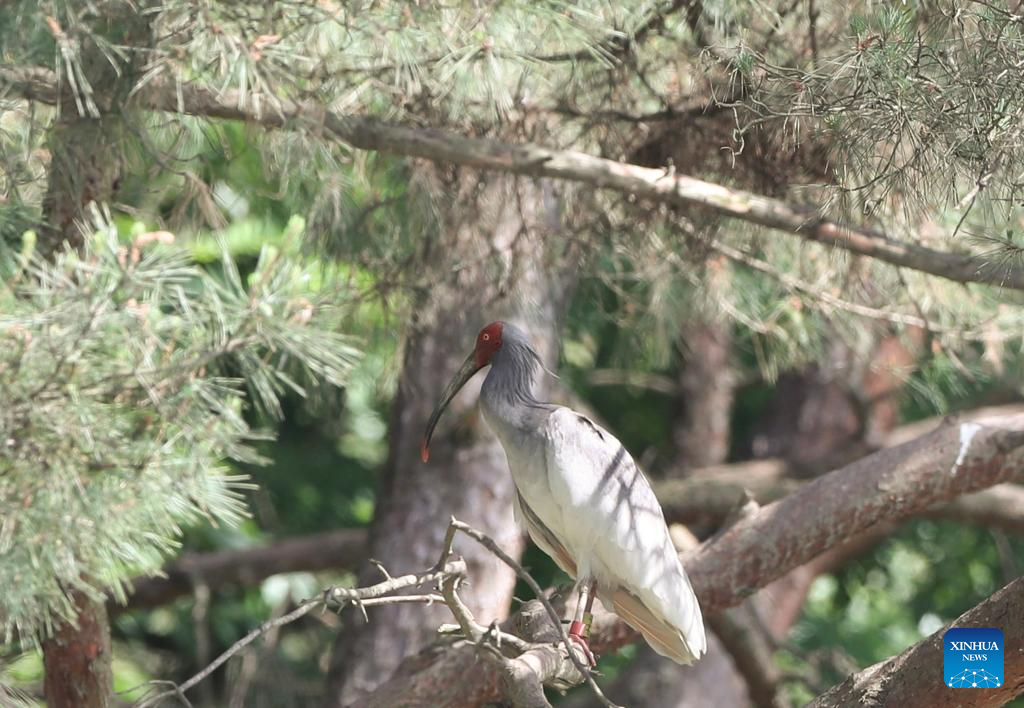
A released crested ibis is pictured in Changnyeong, South Korea, May 20, 2024. The crested ibis, which used to be widely distributed in China, Japan, South Korea and other East Asian regions, has become an endangered bird species worldwide, rarely seen in South Korea since the 1980s.
In 2008, the crested ibis couple "Yang Zhou" and "Long Ting" arrived and settled down at the Upo Crested Ibis Restoration Center in Changnyeong as a gift from China to South Korea. Another two male crested ibises "Jin Shui" and "Bai Shi" were sent to South Korea in 2013.
Years of hard work has seen over 500 offspring of the four crested ibises given birth to in South Korea, of which more than 300 were successfully released into the wild. In 2021, two crested ibis chicks were bred in the wild in South Korea, which is the first time in more than 4 decades that the birth of wild crested ibis was observed in the country.
Now a main habitat for crested ibis in South Korea, Changnyeong has taken more protective measures in its rural area where these birds live. Locals can occasionally enjoy the elegance of these creatures in the fields or woods. (Xinhua/Yao Qilin)
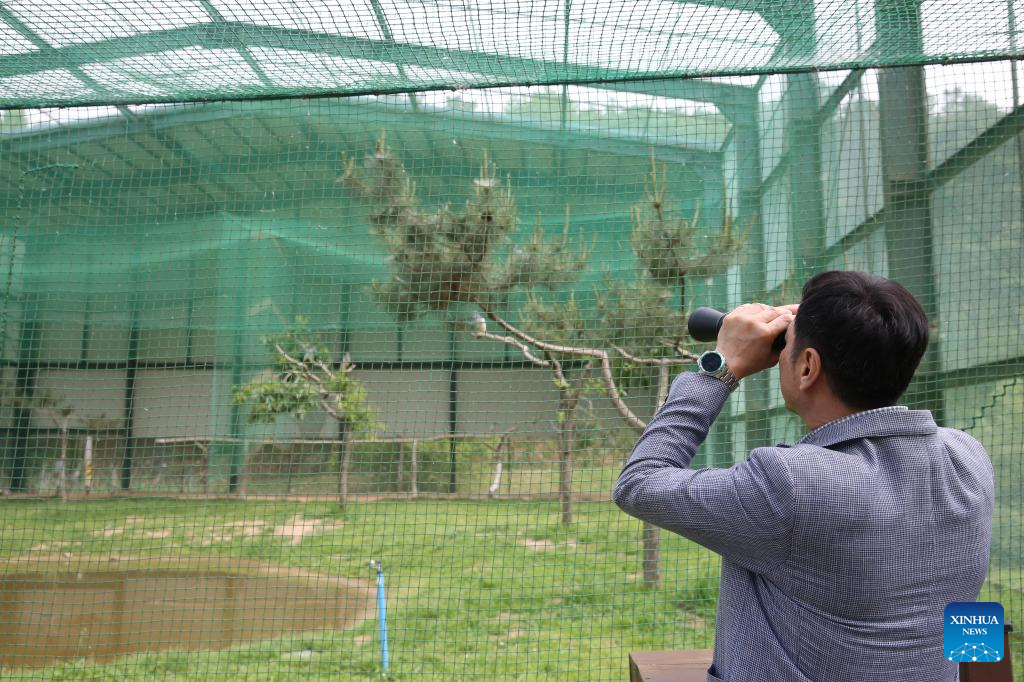
Breeder Han Yeong-In observes crested ibises at the Upo Crested Ibis Restoration Center in Changnyeong, South Korea, May 21, 2024. The crested ibis, which used to be widely distributed in China, Japan, South Korea and other East Asian regions, has become an endangered bird species worldwide, rarely seen in South Korea since the 1980s.
In 2008, the crested ibis couple "Yang Zhou" and "Long Ting" arrived and settled down at the Upo Crested Ibis Restoration Center in Changnyeong as a gift from China to South Korea. Another two male crested ibises "Jin Shui" and "Bai Shi" were sent to South Korea in 2013.
Years of hard work has seen over 500 offspring of the four crested ibises given birth to in South Korea, of which more than 300 were successfully released into the wild. In 2021, two crested ibis chicks were bred in the wild in South Korea, which is the first time in more than 4 decades that the birth of wild crested ibis was observed in the country.
Now a main habitat for crested ibis in South Korea, Changnyeong has taken more protective measures in its rural area where these birds live. Locals can occasionally enjoy the elegance of these creatures in the fields or woods. (Xinhua/Yao Qilin)


