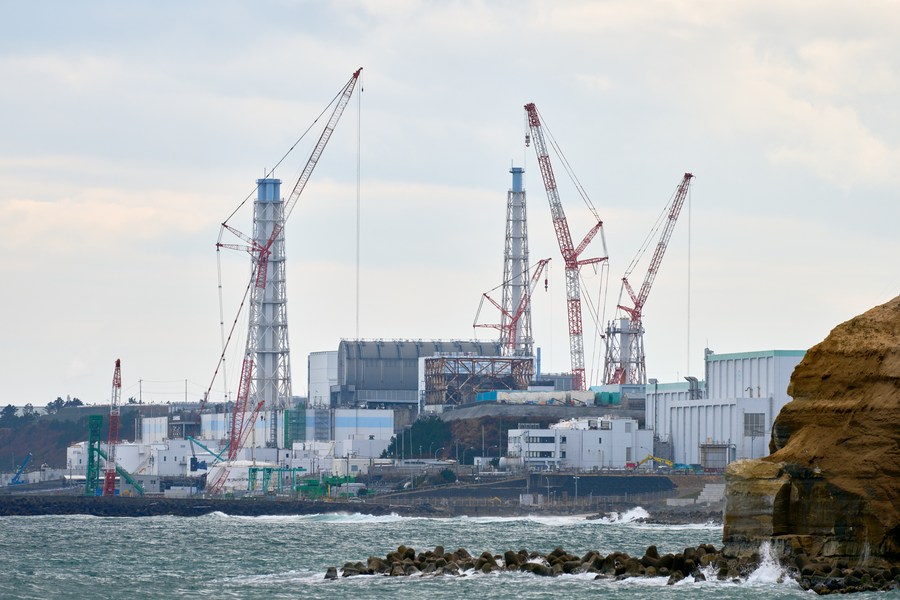
This photo taken on March 6, 2023 shows the Fukushima Daiichi nuclear power plant in Futabacho, Futabagun of Fukushima Prefecture, Japan. (Xinhua/Zhang Xiaoyu)
Despite opposition from home and abroad, Japan has started the sixth round of ocean discharge of nuclear-contaminated wastewater from the crippled Fukushima Daiichi Nuclear Power Plant, with about 7,800 tons of wastewater being released through June 4.
TOKYO, May 18 (Xinhua) -- Japan on Friday started the sixth round of release of nuclear-contaminated wastewater from the crippled Fukushima Daiichi Nuclear Power Plant into the Pacific Ocean.
Despite opposition among local fishermen, residents as well as backlash from the international community, Tokyo Electric Power Company (TEPCO), the plant's operator, started releasing the radioactive wastewater in the morning, the second round in fiscal 2024.
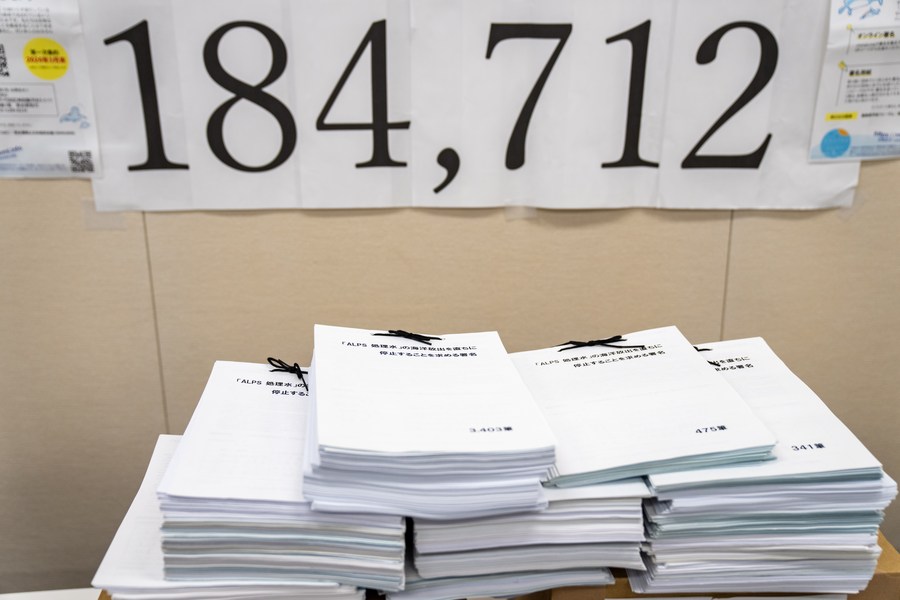
This photo taken on April 24, 2024 shows citizen signature documents at the Second Members' Office Building of the House of Representatives in Tokyo, Japan. Representatives from Japanese civic groups have submitted signatures from local citizens to the Japanese government, urging both the government and Tokyo Electric Power Company (TEPCO) to immediately halt the ocean discharge of nuclear-contaminated water from the crippled Fukushima Daiichi Nuclear Power Plant. (Xinhua/Zhang Xiaoyu)
The same as the previous rounds, about 7,800 tons of wastewater are being discharged from about a kilometer off the coast of Fukushima Prefecture via an underwater tunnel until June 4.
According to the TEPCO, the concentrations of all radioactive substances other than tritium in the water stored in the tank scheduled for release were below the national release standards, while the concentration of tritium that cannot be removed will be diluted with seawater.
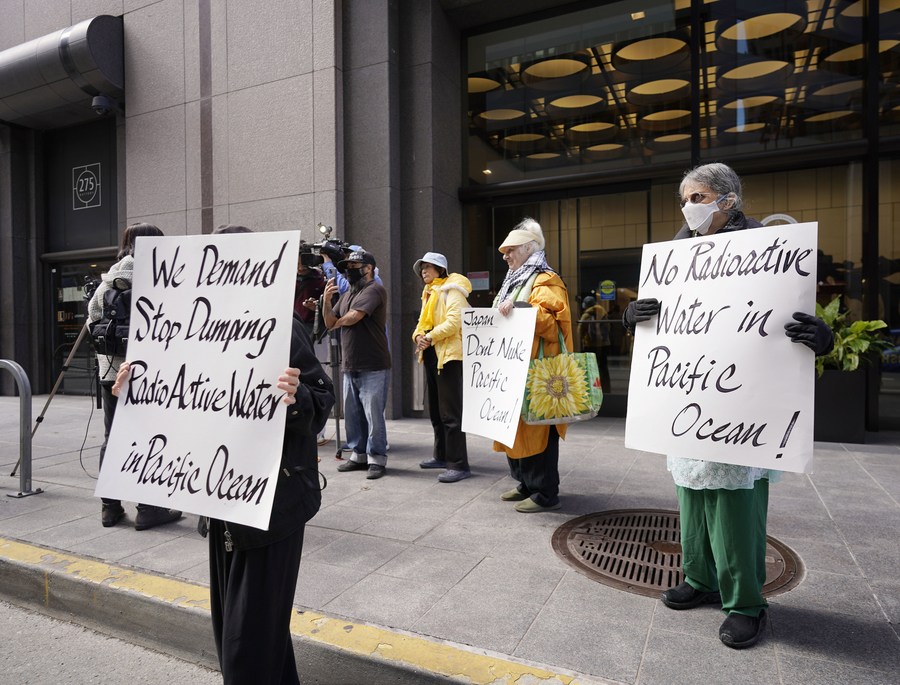
People take part in a rally against Japan's ocean discharge of Fukushima nuclear-contaminated wastewater in front of the Consulate General of Japan in San Francisco, California, the United States, March 11, 2024. (Photo by Li Jianguo/Xinhua)
The Chinese Embassy in Japan expressed firm opposition to this unilateral move of ocean discharge. While safety and reliability have yet to be ensured, Japan's dumping of nuclear-contaminated water has repeatedly raised risks to neighboring countries and marine ecology, a spokesperson for the embassy said.
The spokesperson called on the Japanese side to attach great importance to the concerns at home and abroad and to fully cooperate in setting up an independent international monitoring arrangement that remains effective in the long haul and has the substantive participation of stakeholders.
Hit by a 9.0-magnitude earthquake and an ensuing tsunami on March 11, 2011, the Fukushima nuclear plant suffered core meltdowns that released radiation, resulting in a level-7 nuclear accident, the highest on the International Nuclear and Radiological Event Scale.
The plant has been generating a massive amount of water tainted with radioactive substances from cooling down the nuclear fuel in the reactor buildings. The contaminated water is now being stored in tanks at the nuclear plant.
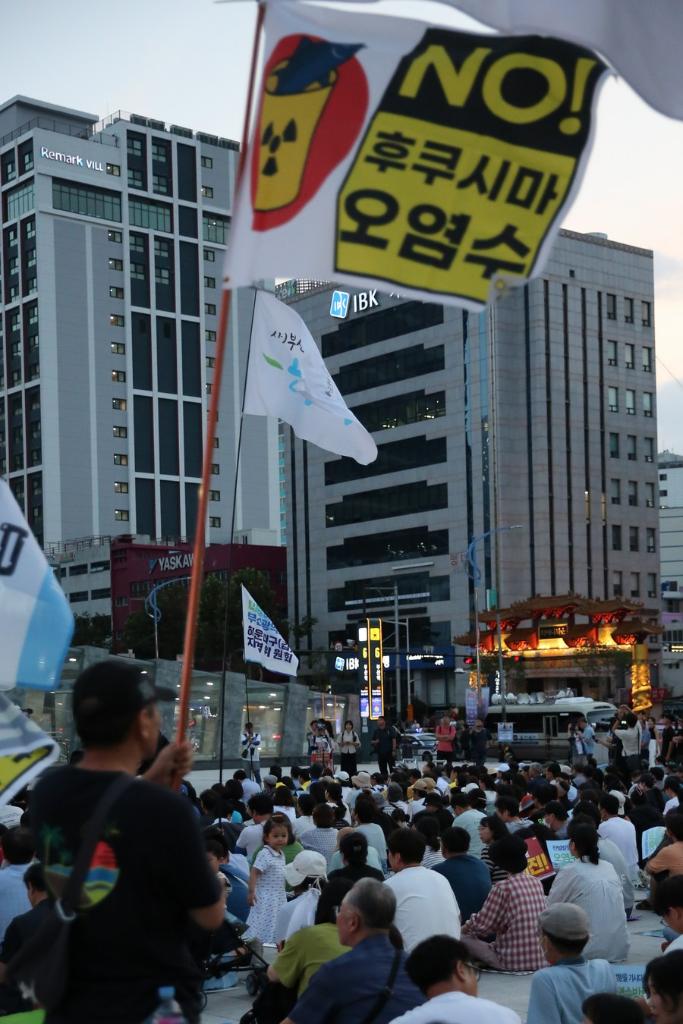
People attend a rally protesting against Japan's dumping of nuclear-contaminated wastewater into the ocean in Busan, South Korea, Aug. 26, 2023. (Xinhua/Lu Rui)
Despite furious opposition both at home and abroad, the ocean discharge of the Fukushima nuclear-contaminated water began in August 2023.
In fiscal 2024, the TEPCO plans to discharge a total of 54,600 tons of contaminated water in seven rounds, which contains approximately 14 trillion becquerels of tritium. ■