BAGHDAD, April 10 (Xinhua) -- On April 9, 2003, the fall of a statue of Saddam Hussein in Baghdad's Firdos Square marked a symbolic end to the regime of the former Iraqi leader.
The event occurred amidst the U.S.-led invasion of Iraq, initiated by then-President George W. Bush under claims that Hussein possessed weapons of mass destruction (WMDs), which were never substantiated.
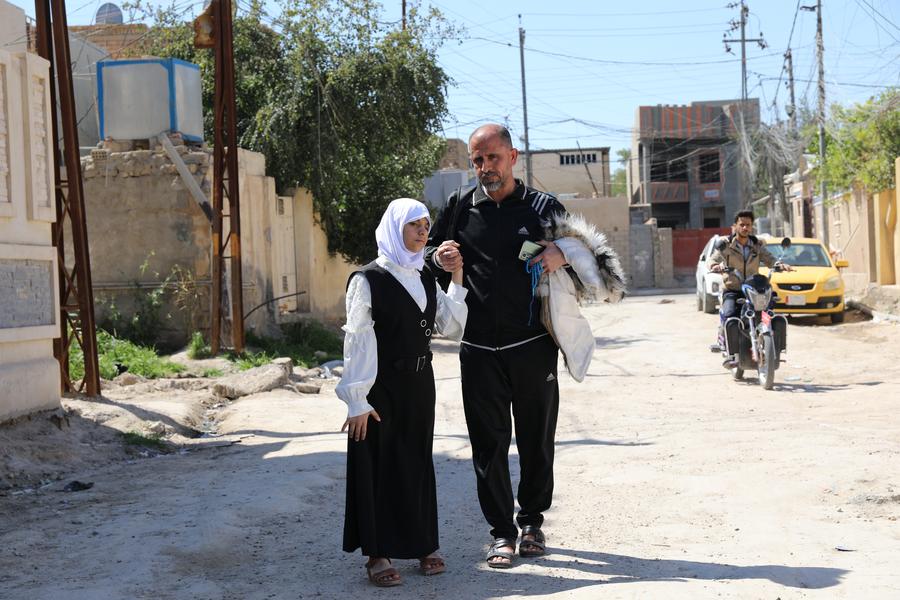
More than two decades later, the impact of the invasion is still felt in Iraq and beyond. Ali Moussa, a political analyst, reflects on the profound changes since 2003, highlighting the radical ramifications not only within Iraq but also regionally and globally. The promise of democracy, once seen as a beacon of hope, has been overshadowed by the ensuing conflicts, sectarian violence, and political stalemate.
"If anyone should be blamed for the chaos and bloodshed in Iraq, it is the U.S. administration which invaded the country and substantially decimated the fabric of its society, deepening ethnic and sectarian divisions, spreading chaos, instability, and large-scale displacement," Moussa said.
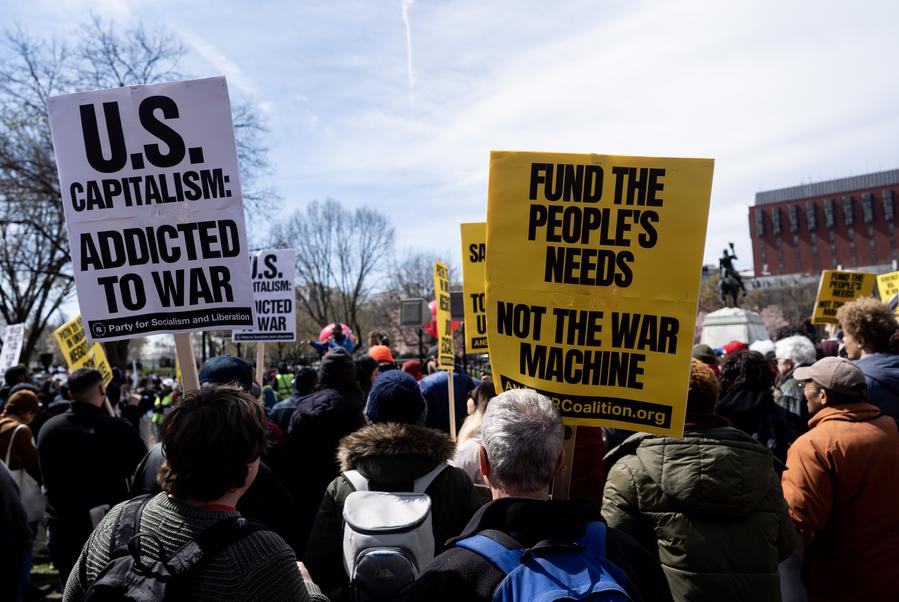
The sentiment is echoed by many Iraqis who initially welcomed the prospect of change but now advocate for the withdrawal of U.S. forces.
"After those difficult years, the Iraqis have gained nothing but devastation, blind killing, displacement, sectarianism, systematic corruption, and a deterioration in public services," Moussa said.
Yasir al-Jubouri, head of the Fawasel Foundation for Research and Studies, said the United States created a power vacuum in Iraq that resulted in the country's current chaos.
"The U.S. invasion of Iraq caused extensive damage in Iraq and the wider region, and after over two decades, my people paid a high price for the false promises of democracy made by the U.S.. It seems that it will take more decades for us to undo the damage," he said.
"Security and stability in Iraq are inversely proportional to the American presence," said Mohammed al-Jubouri, professor of media at the Baghdad-based al-Iraqia University.
As Iraqis contemplate the events of the past 21 years, there is an increasing support for groups like the Islamic Resistance in Iraq, which opposes U.S. military presence, said al-Jubouri.
"I was in my twenties when U.S. forces entered Iraq, and I once dreamed that Iraq would turn into a prosperous country. However, the Americans did not fulfill their promises, and they did everything just for their own interests," said Hussein Kadhim, a 44-year-old Baghdad resident.