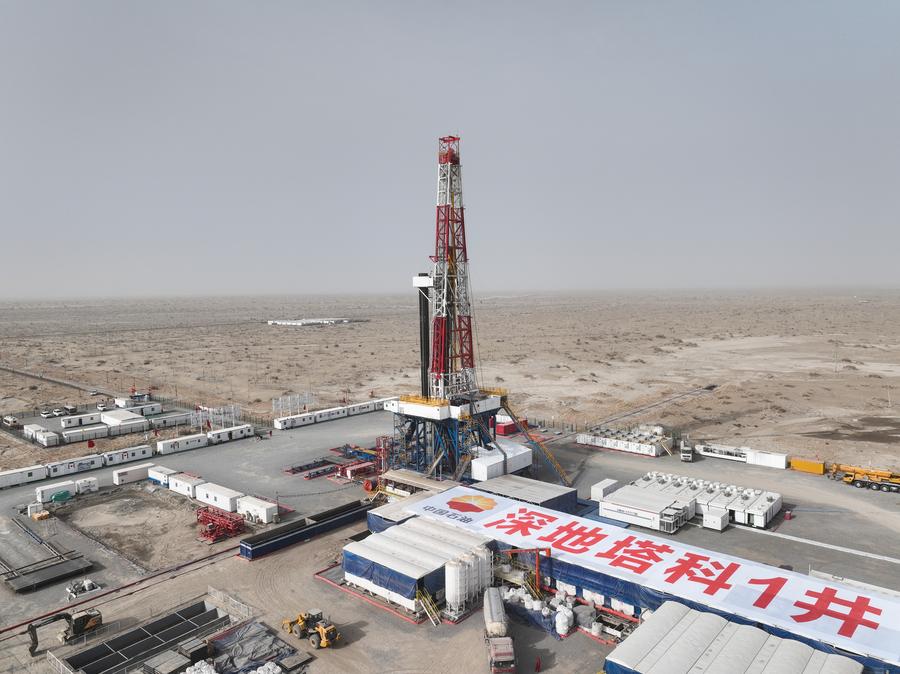
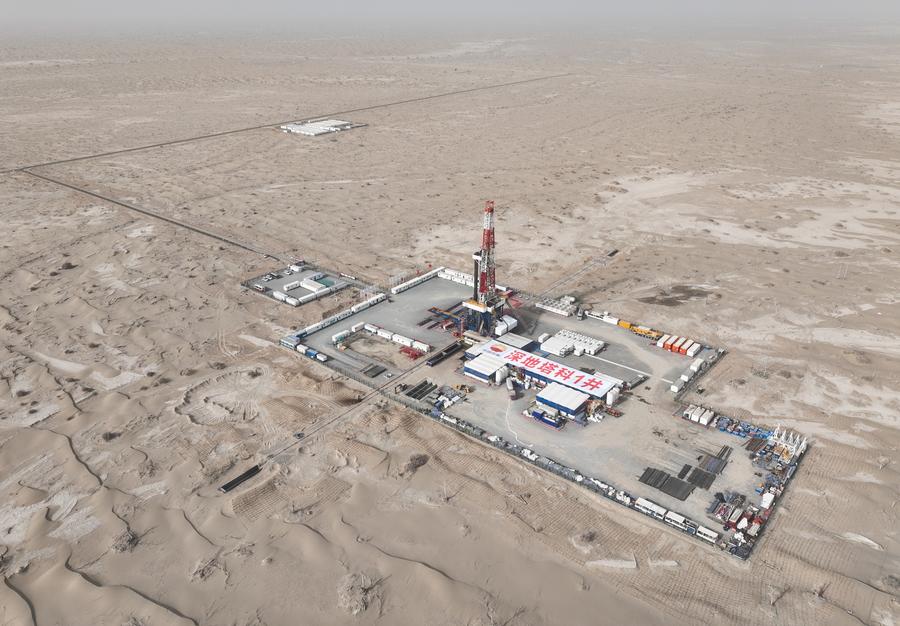
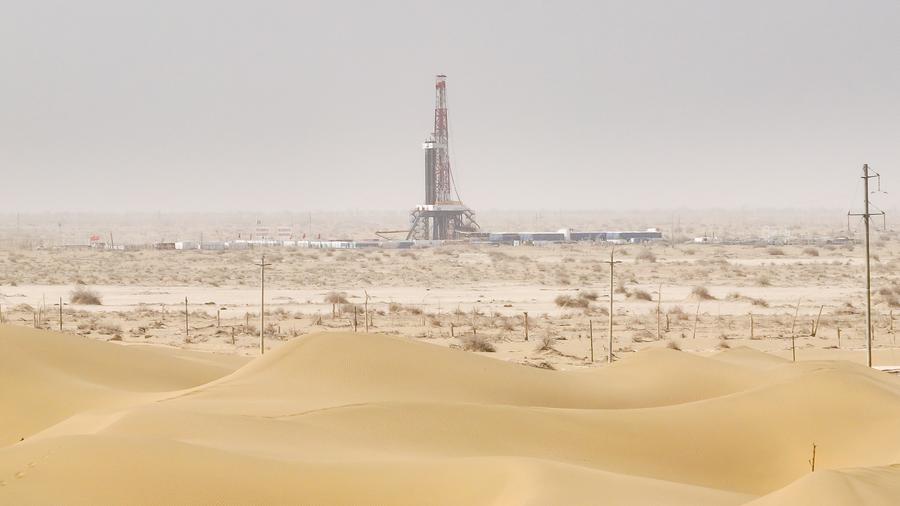
A drone photo taken on March 4, 2024 shows the "Shenditake 1" borehole in the Taklimakan Desert in the Tarim Basin, northwest China's Xinjiang Uygur Autonomous Region. (Xinhua/Li Xiang)
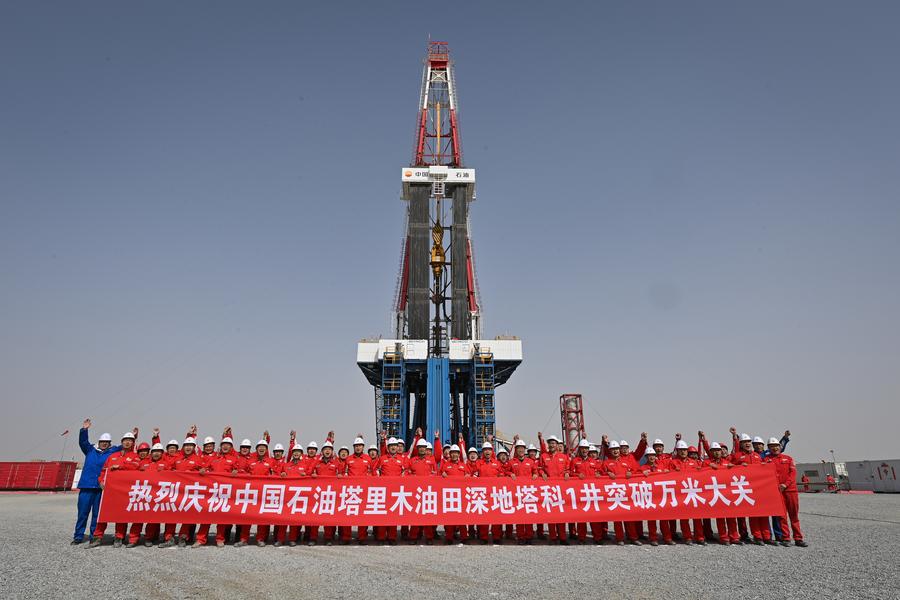
URUMQI, March 4 (Xinhua) -- The drilling of a superdeep borehole in northwest China's Xinjiang Uygur Autonomous Region reached 10,000 meters at 2:48 p.m. Monday and is going deeper, marking a breakthrough in the country's deep-Earth exploration.
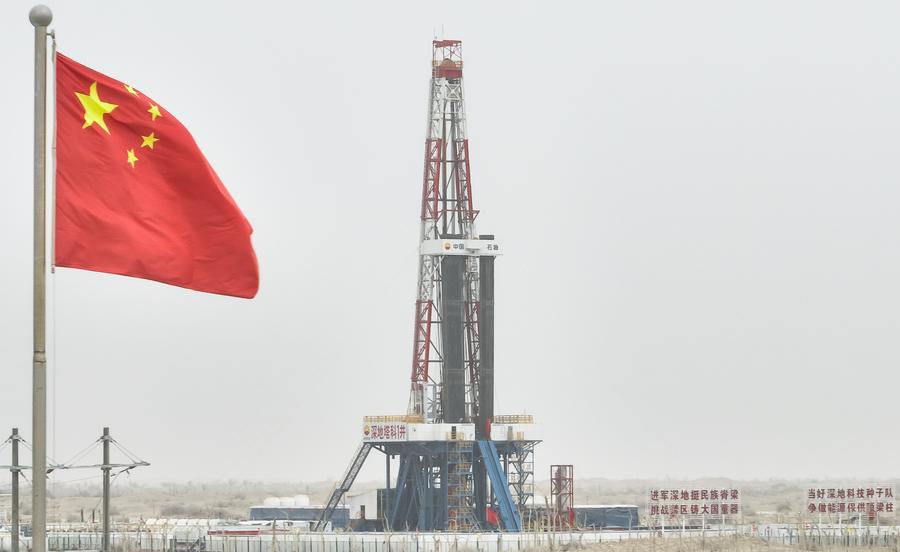
Located in the hinterland of the Taklimakan Desert in the Tarim Basin, the "Shenditake 1" is expected to reach a designed depth of 11,100 meters upon completion. It is China's first scientific exploration borehole designed to exceed a depth of 10,000 meters.
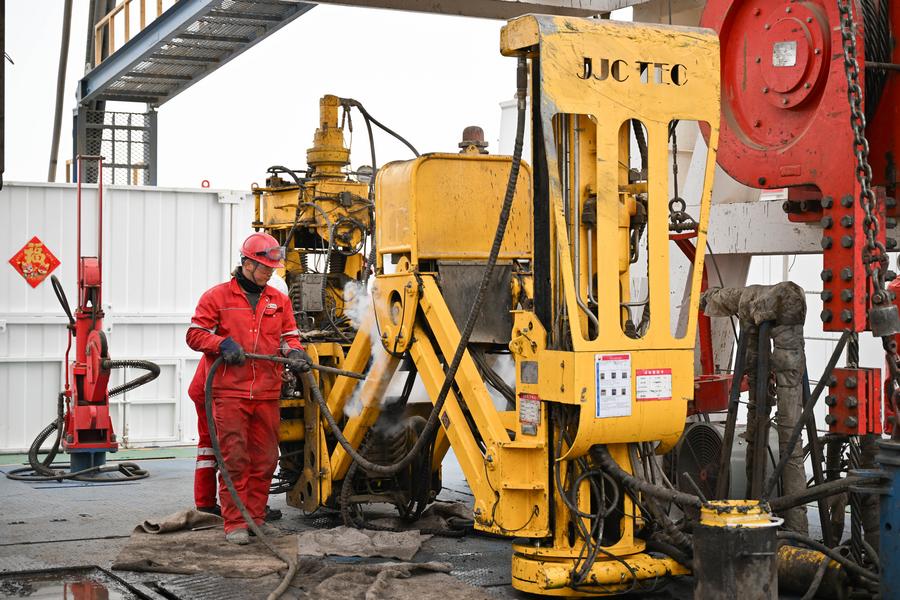
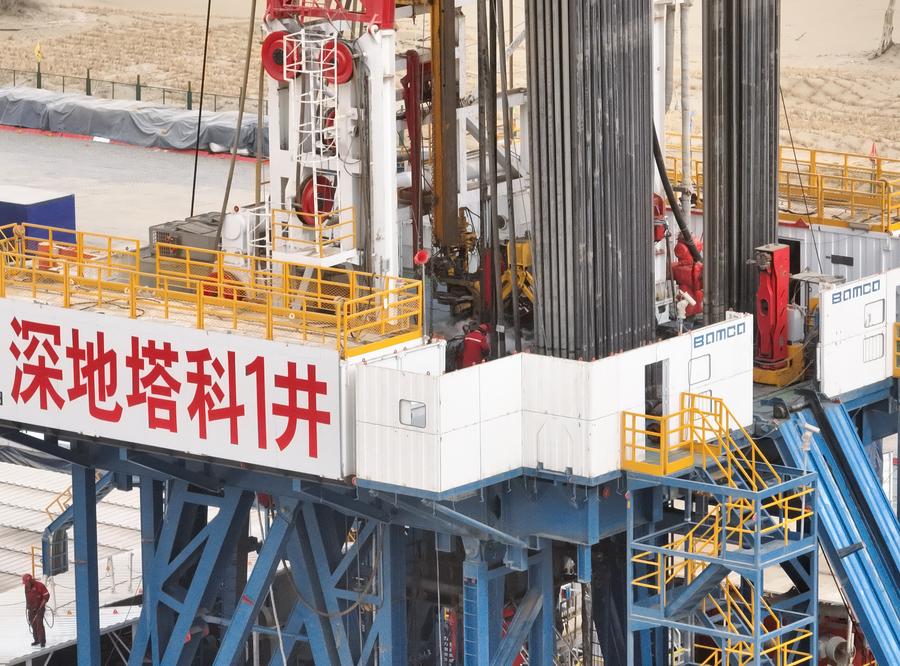
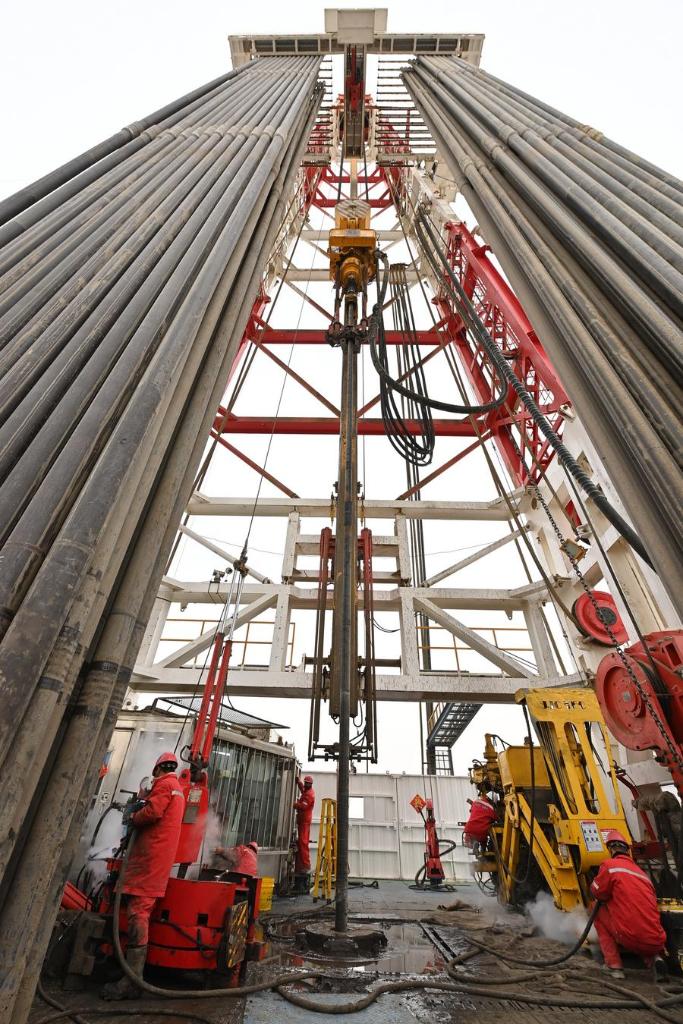
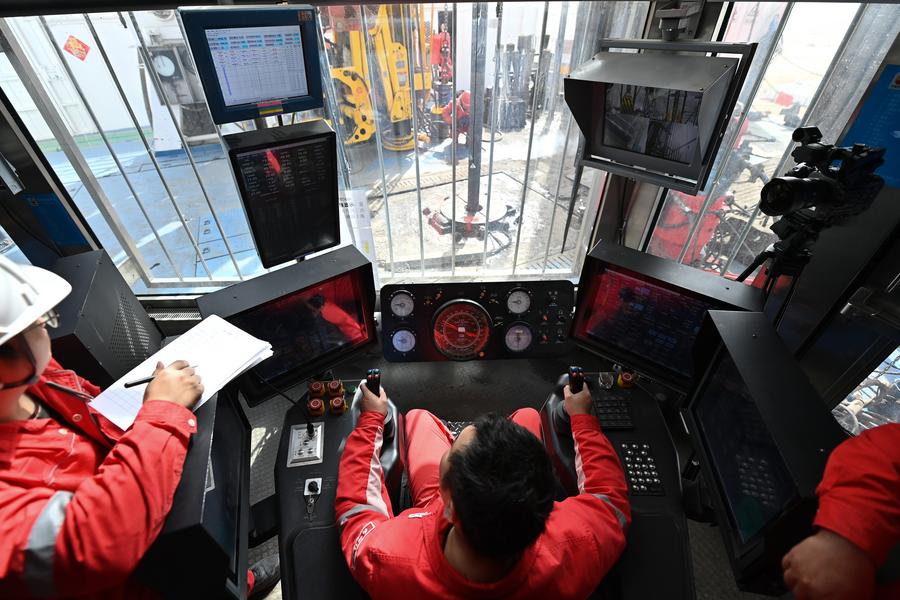
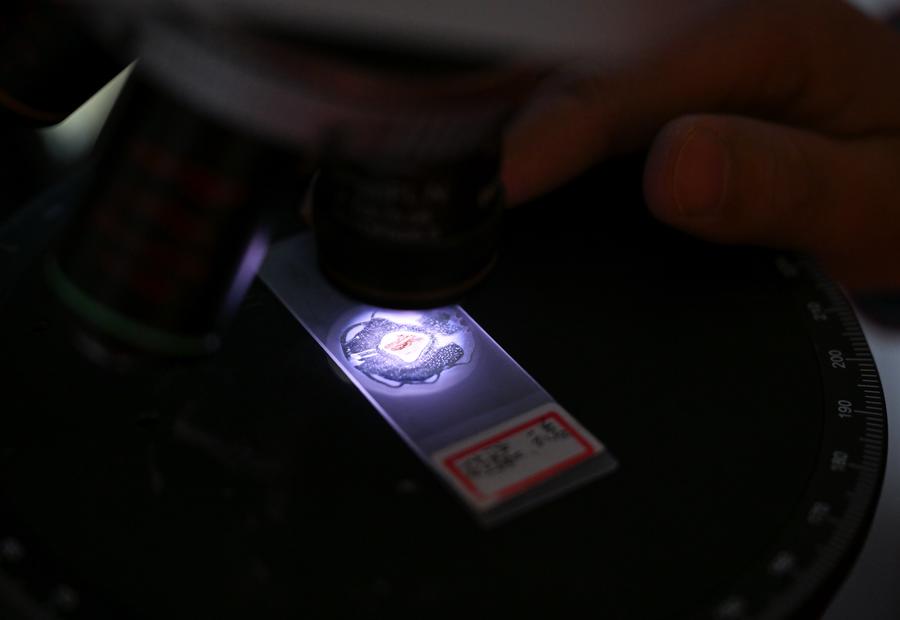
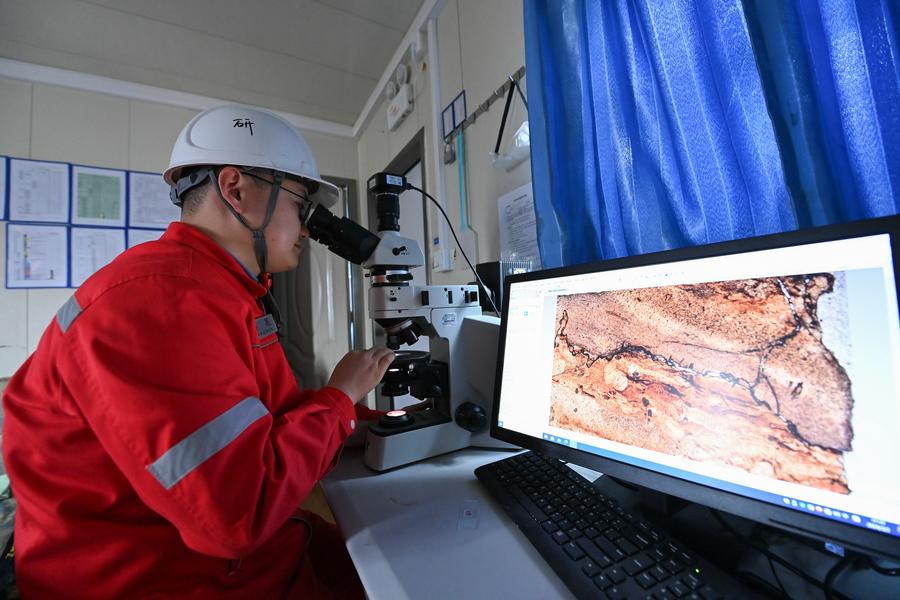
Staff members work at "Shenditake 1" borehole in the Taklimakan Desert in the Tarim Basin, northwest China's Xinjiang Uygur Autonomous Region, March 3, 2024. (Xinhua/Li Xiang)A drone photo taken on March 3, 2024 shows staff members working at "Shenditake 1" borehole in the Taklimakan Desert in the Tarim Basin, northwest China's Xinjiang Uygur Autonomous Region. (Xinhua/Li Xiang)Staff members work at "Shenditake 1" borehole in the Taklimakan Desert in the Tarim Basin, northwest China's Xinjiang Uygur Autonomous Region, March 3, 2024. (Xinhua/Li Xiang)Staff members celebrate as the drilling of the "Shenditake 1" borehole reaches 10,000 meters in the Taklimakan Desert in the Tarim Basin, northwest China's Xinjiang Uygur Autonomous Region, March 4, 2024. (Xinhua/Li Xiang)An aerial drone photo taken on March 4, 2024 shows the "Shenditake 1" borehole in the Taklimakan Desert in the Tarim Basin, northwest China's Xinjiang Uygur Autonomous Region. (Xinhua/Li Xiang)Staff members work at "Shenditake 1" borehole in the Taklimakan Desert in the Tarim Basin, northwest China's Xinjiang Uygur Autonomous Region, March 4, 2024. (Xinhua/Li Xiang)A drone photo taken on March 3, 2024 shows the "Shenditake 1" borehole in the Taklimakan Desert in the Tarim Basin, northwest China's Xinjiang Uygur Autonomous Region. (Xinhua/Li Xiang)A researcher looks at samples collected from deep earth through a microscope at "Shenditake 1" borehole in the Taklimakan Desert in the Tarim Basin, northwest China's Xinjiang Uygur Autonomous Region, March 3, 2024. (Xinhua/Li Xiang)A researcher looks at samples collected from deep earth through a microscope at "Shenditake 1" borehole in the Taklimakan Desert in the Tarim Basin, northwest China's Xinjiang Uygur Autonomous Region, March 3, 2024. (Xinhua/Li Xiang)A drone photo taken on March 2, 2024 shows the "Shenditake 1" borehole in the Taklimakan Desert in the Tarim Basin, northwest China's Xinjiang Uygur Autonomous Region. (Xinhua/Li Xiang)■