
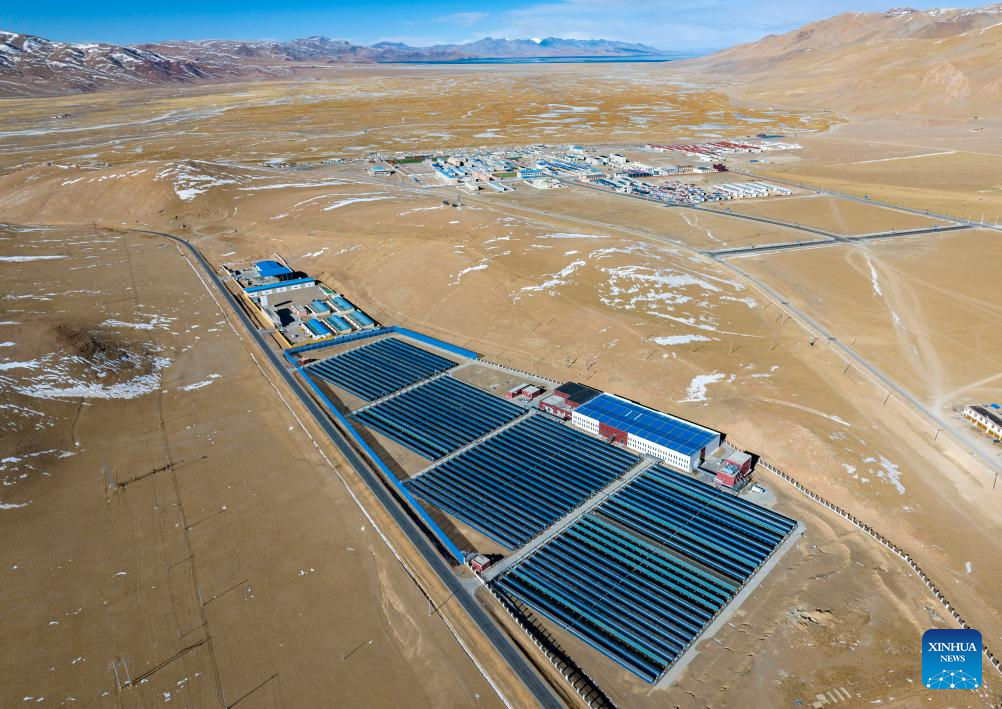
This aerial photo taken on Jan. 6, 2024 shows solar thermal collectors at a heating plant in Xainza County, southwest China's Xizang Autonomous Region.
Xainza situated at an average elevation of 4,700 meters deep in the Qinghai-Tibet Plateau has fiercely cold weather in winter, when locals used to keep themselves warm by burning cow dung. The situation was ended for good when a central heating system powered by solar energy was put into operation in the county in 2019, which ensures warmer indoor space while reducing carbon dioxide emissions during winters. (Xinhua/Tenzing Nima Qadhup)
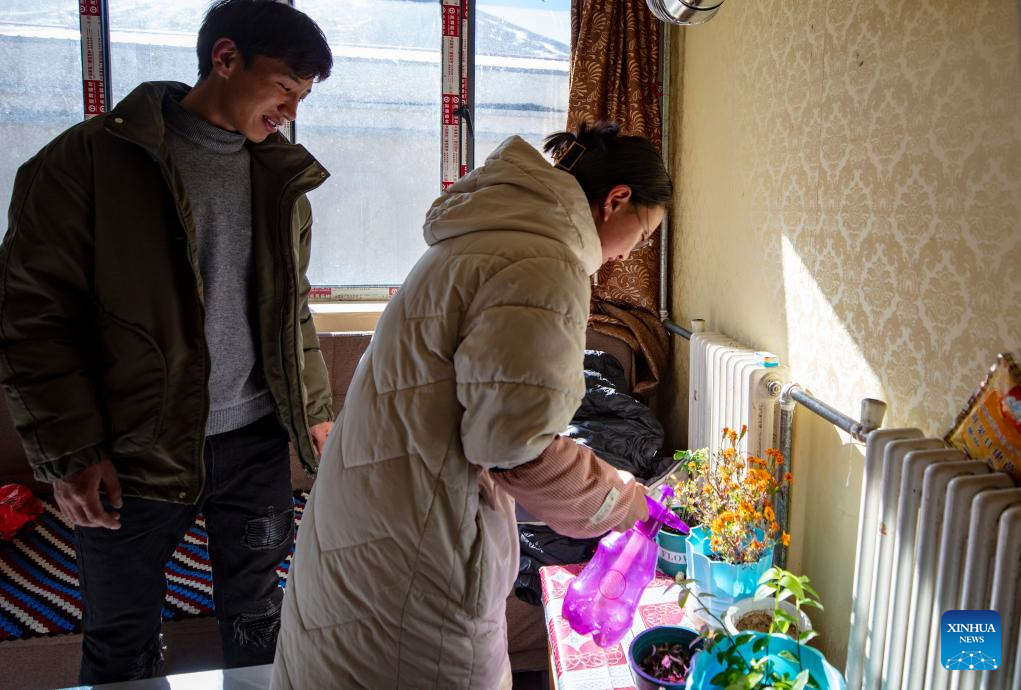
Residents take care of their potted plants at home with heating facilities in Xainza County, southwest China's Xizang Autonomous Region, Jan 6, 2024.
Xainza situated at an average elevation of 4,700 meters deep in the Qinghai-Tibet Plateau has fiercely cold weather in winter, when locals used to keep themselves warm by burning cow dung. The situation was ended for good when a central heating system powered by solar energy was put into operation in the county in 2019, which ensures warmer indoor space while reducing carbon dioxide emissions during winters. (Xinhua/Jiang Fan)
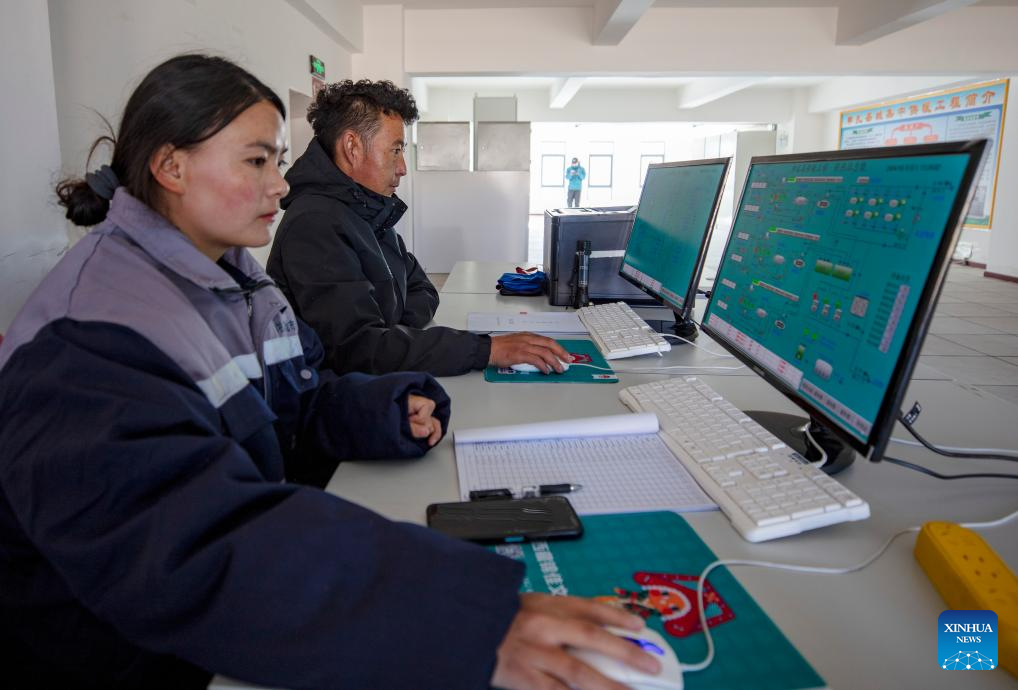
Staff members monitor the operation of a heating plant in Xainza County, southwest China's Xizang Autonomous Region, Jan. 6, 2024.
Xainza situated at an average elevation of 4,700 meters deep in the Qinghai-Tibet Plateau has fiercely cold weather in winter, when locals used to keep themselves warm by burning cow dung. The situation was ended for good when a central heating system powered by solar energy was put into operation in the county in 2019, which ensures warmer indoor space while reducing carbon dioxide emissions during winters. (Xinhua/Jiang Fan)
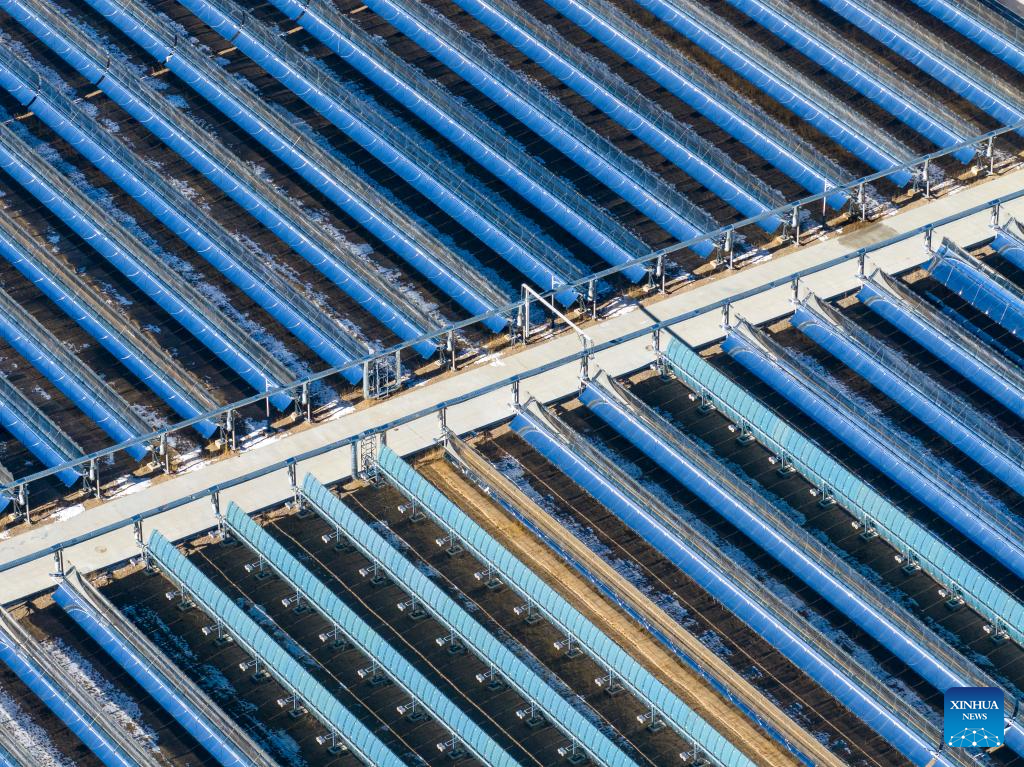
This aerial photo taken on Jan. 6, 2024 shows solar thermal collectors at a heating plant in Xainza County, southwest China's Xizang Autonomous Region.
Xainza situated at an average elevation of 4,700 meters deep in the Qinghai-Tibet Plateau has fiercely cold weather in winter, when locals used to keep themselves warm by burning cow dung. The situation was ended for good when a central heating system powered by solar energy was put into operation in the county in 2019, which ensures warmer indoor space while reducing carbon dioxide emissions during winters. (Xinhua/Tenzing Nima Qadhup)
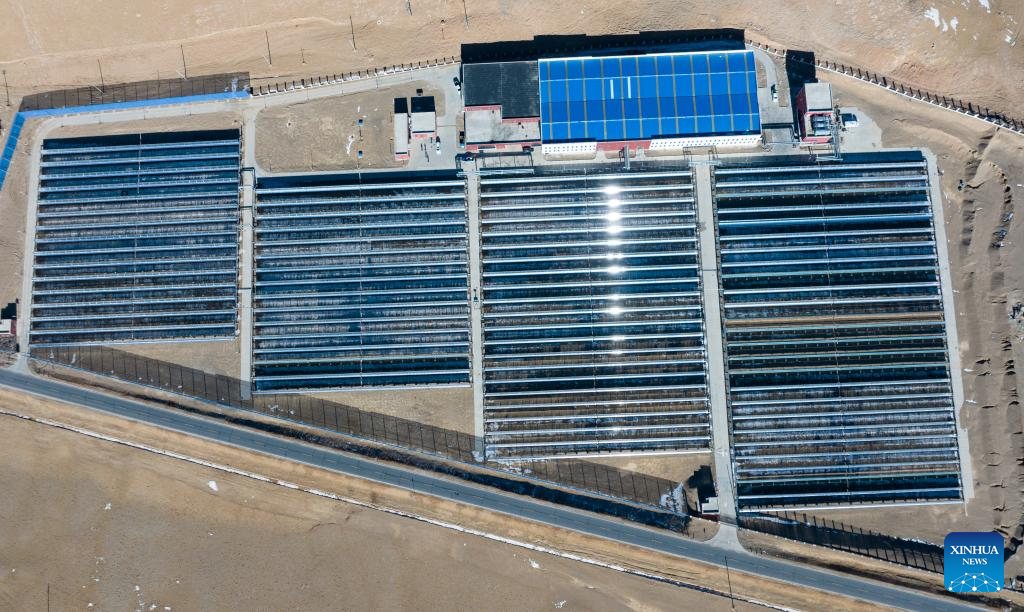
This aerial photo taken on Jan. 6, 2024 shows solar thermal collectors at a heating plant in Xainza County, southwest China's Xizang Autonomous Region.
Xainza situated at an average elevation of 4,700 meters deep in the Qinghai-Tibet Plateau has fiercely cold weather in winter, when locals used to keep themselves warm by burning cow dung. The situation was ended for good when a central heating system powered by solar energy was put into operation in the county in 2019, which ensures warmer indoor space while reducing carbon dioxide emissions during winters. (Xinhua/Jiang Fan)
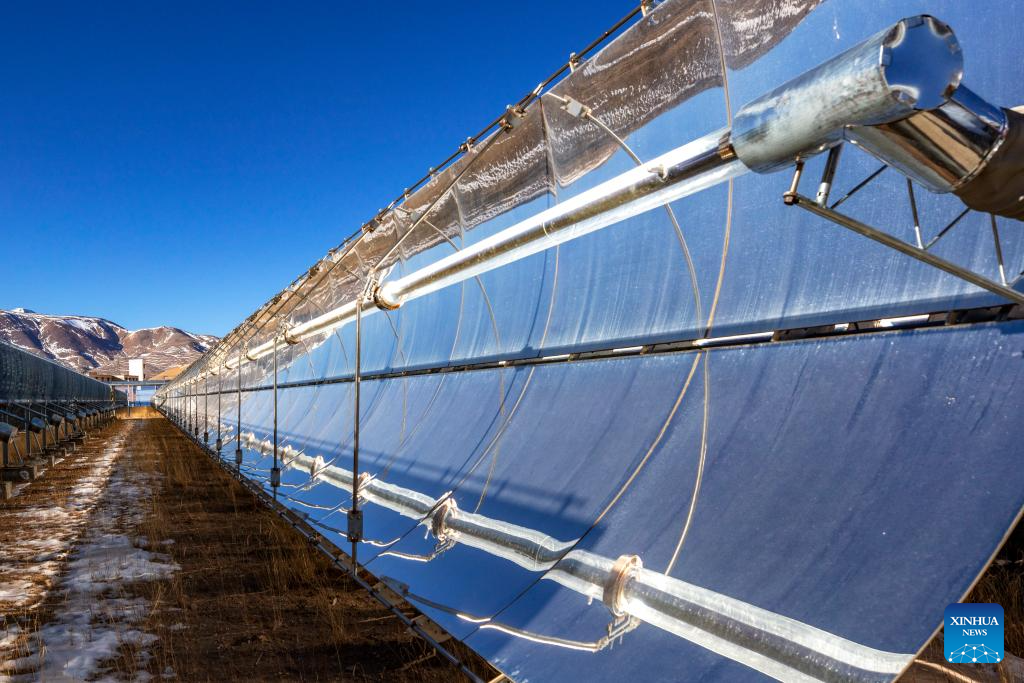
This photo taken on Jan. 6, 2024 shows solar thermal collectors at a heating plant in Xainza County, southwest China's Xizang Autonomous Region.
Xainza situated at an average elevation of 4,700 meters deep in the Qinghai-Tibet Plateau has fiercely cold weather in winter, when locals used to keep themselves warm by burning cow dung. The situation was ended for good when a central heating system powered by solar energy was put into operation in the county in 2019, which ensures warmer indoor space while reducing carbon dioxide emissions during winters. (Xinhua/Cao Bin)


