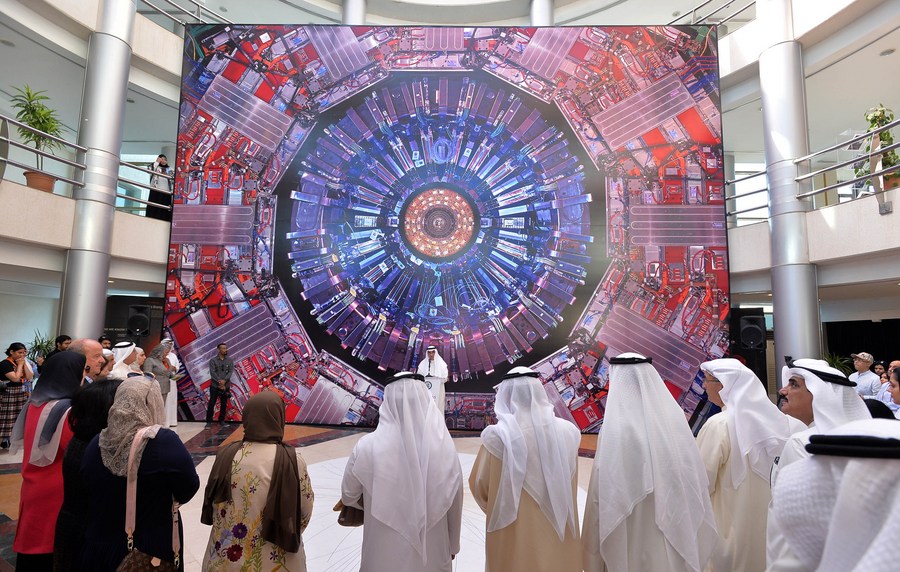
People visit a science exhibition on activities of European Organization for Nuclear Research (CERN) in Kuwait City, Kuwait, Nov. 11, 2019. (Photo by Asad/Xinhua)
CERN official Emmanuel Tsesmelis emphasized a "very nice" collaboration between his organization and China, saying, "I hope that will continue into the future."
GENEVA, Oct. 10 (Xinhua) -- Strengthening scientific collaboration has been the guiding principle of CERN, the European Organization for Nuclear Research, since its establishment almost 70 years ago, Emmanuel Tsesmelis said.
Tsesmelis, CERN'S head of relations with associate members and non-member states, made the remarks in a recent interview with Xinhua. He said this ambition is even more important today.
Since humans share the need to understand the universe, it can only be performed together, Tsesmelis said.
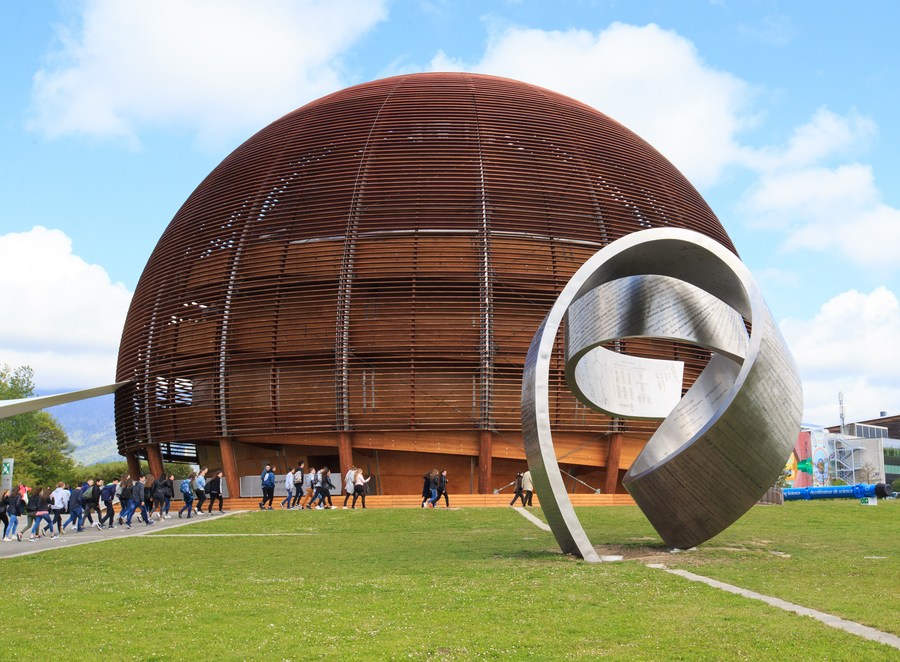
People visit the Globe of Science and Innovation at the headquarters of the European Organization for Nuclear Research (CERN, acronym in French), on May 9, 2017. (Xinhua/Xu Jinquan)
"The universe is unique, we all love to understand it as much as possible and that is the binding aspect of what we do together."
CERN, a particle physics laboratory, aims to understand the origins of the universe and the structure of matter, and at the same time to develop relevant technologies.
Another important mission for CERN is to train the next generation of particle physicists, engineers and applied scientists, Tsesmelis said, adding that all these require international collaboration.
In recent years, CERN has initiated a new geographical enlargement policy, inviting members from outside Europe.
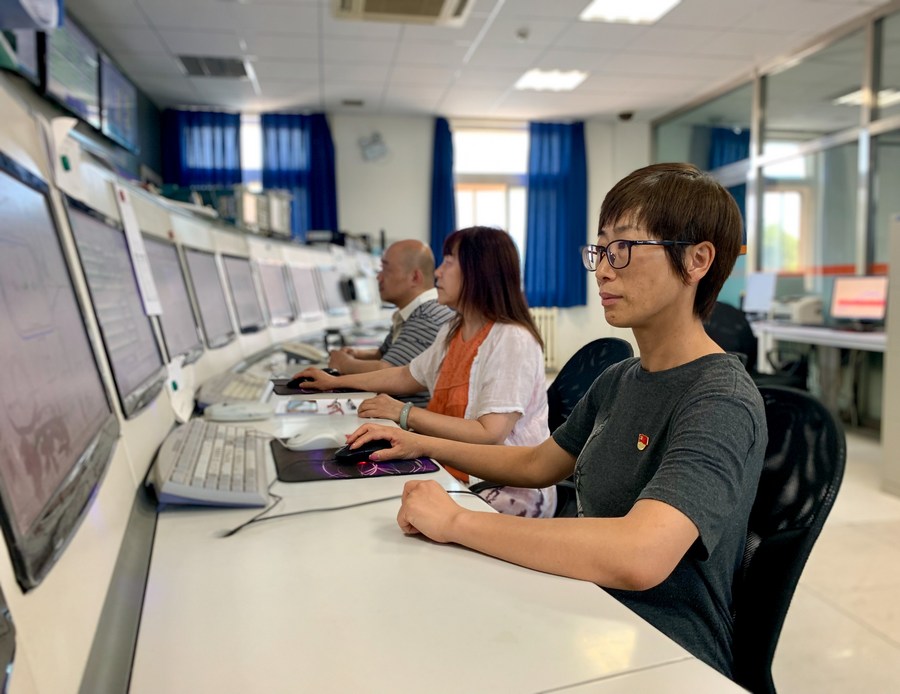
Researchers adjust electron beams in the central control room of Beijing Electron Positron Collider, Institute of High Energy Physics of the CAS, on July 1, 2019. (Xinhua/He Peiyuan)
Tsesmelis noted that CERN has a "very nice" collaboration with China. "I hope that will continue into the future," he said. ■