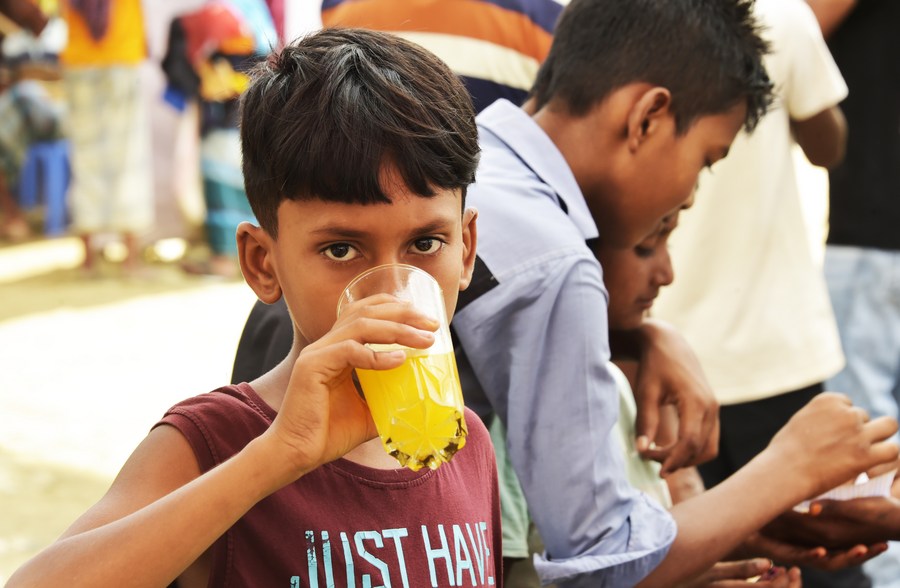
A child drinks juice in Munshiganj, Bangladesh, June 25, 2023. The heatwave has hit many parts of Bangladesh. (Xinhua)
South Asia has the highest percentage of children exposed to extreme high temperatures, and 460 million experience 83 or more days in a year when the temperature exceeds 35 degrees Centigrade, UNICEF says.
GENEVA, Aug. 7 (Xinhua) -- The United Nations Children's Fund (UNICEF) has raised the alarm over the impact of current global heatwaves on children, especially in South Asia.
The frequency and severity of heatwaves are expected to increase in the future with climate change, UNICEF said Monday.
South Asia has the highest percentage of children exposed to extreme high temperatures, and 76 percent of children under 18 in this region - 460 million - experience 83 or more days in a year when the temperature exceeds 35 degrees Centigrade.
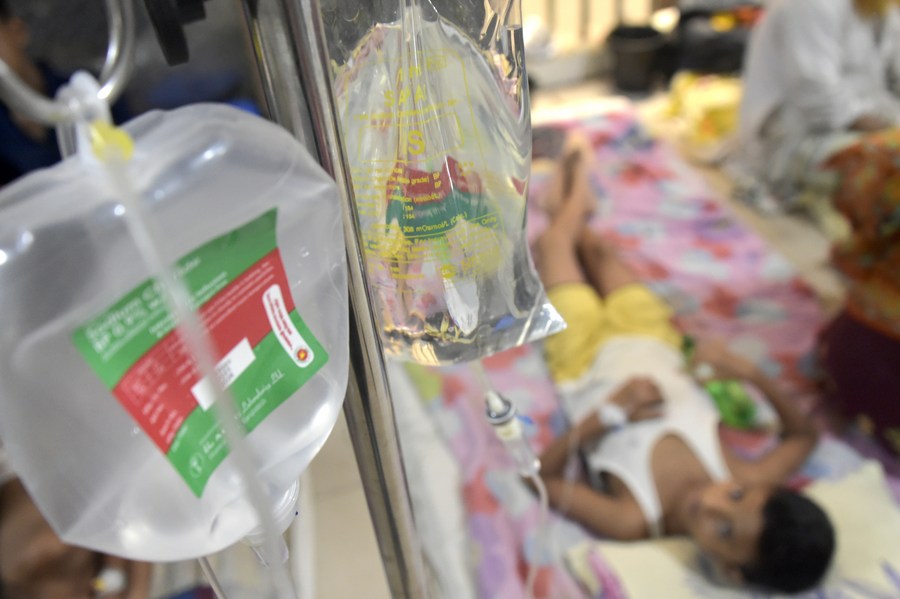
A child affected with dengue fever is treated at a hospital in Dhaka, Bangladesh, July 19, 2023. (Xinhua)
"This means that three in four children in South Asia are already exposed to extreme high temperatures, compared to only one in three children (32 percent) globally," it said.
"The lives and well-being of millions of children across South Asia are increasingly threatened by heat waves and high temperatures. Countries in the region are not the hottest in the world right now but the heat here brings life-threatening risks for millions of vulnerable children," said Sanjay Wijesekera, UNICEF's Regional Director for South Asia.
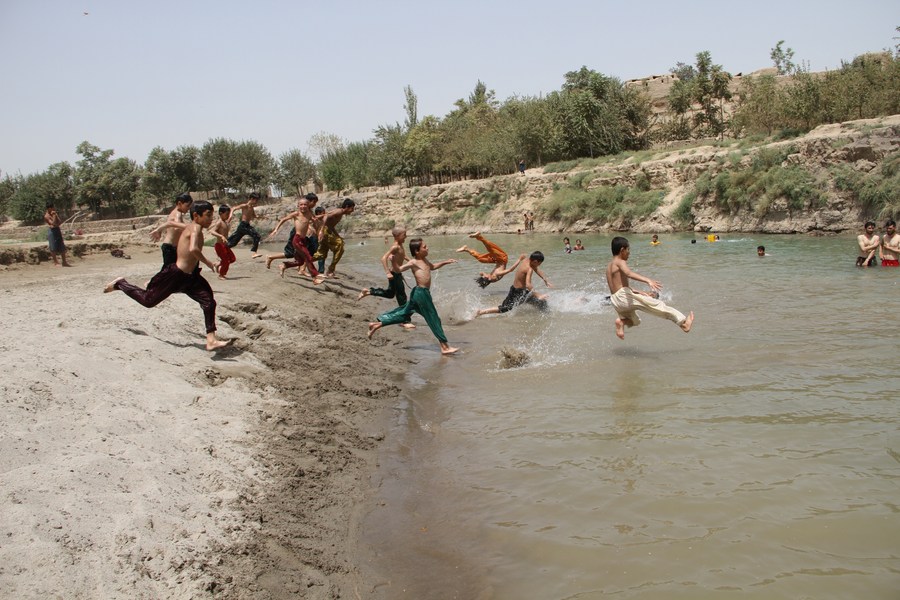
People cool off in water amid summer heat in Kunduz Province, Afghanistan, Aug. 2, 2023. (Photo by Ahmadi/Xinhua)
"We are particularly concerned about babies, toddlers, malnourished children and pregnant women as they are most vulnerable to heat strokes and other serious effects," the UN official added.
According to UNICEF's 2021 Children's Climate Risk Index, children in Afghanistan, Bangladesh, India, the Maldives, and Pakistan are at 'extremely high risk' of the impacts of climate change.■