

Kenyan President Uhuru Kenyatta (3rd R) unveils a commemorative plaque during UNEP's 50th-anniversary celebrations at the United Nations Complex in Nairobi, capital of Kenya, March 3, 2022. (Photo by Fred Mutune/Xinhua)
The implementation of flagship projects aimed at restoring degraded ecosystems has been accelerated worldwide, injecting vitality into global green agendas, a senior United Nations Environment Program (UNEP) official has said.
NAIROBI, July 14 (Xinhua) -- The implementation of flagship projects aimed at restoring degraded ecosystems has been accelerated worldwide, injecting vitality into global green agendas, a senior United Nations Environment Program (UNEP) official has said.
Natalia Alekseeva, the UNEP coordinator for the United Nations Decade on Ecosystem Restoration, said there are concerted efforts to reclaim natural habitats that sustain human livelihoods through targeted funding and policy support.
During an interview with Xinhua on Tuesday, Alekseeva said the broader aim of the UN Decade on Ecosystem Restoration, covering 2021 to 2030, is to secure a green, resilient and sustainable future for humanity through revitalizing planetary health.
"The UN Decade addresses several challenges, and of course, we are also targeting sustainable development goals. These are spanning the climate change agenda, biodiversity agenda and nature restoration agenda," Alekseeva said.
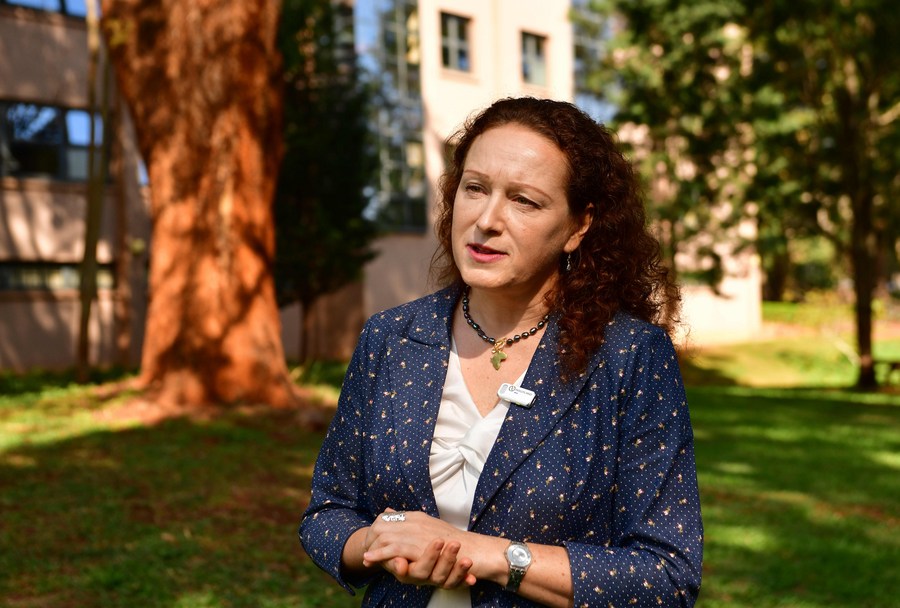
Natalia Alekseeva, the United Nations Environment Program (UNEP) coordinator for the United Nations Decade on Ecosystem Restoration, speaks during an interview with Xinhua in Nairobi, Kenya, on July 11, 2023. (Xinhua/Dai He)
Coordinated by the UNEP and the Food and Agriculture Organization (FAO) of the United Nations, the UN Decade on Ecosystem Restoration seeks to prevent and reverse the degradation of habitats globally, and boost action on poverty and the climate crisis.
The initiative, according to Alekseeva, has already identified several flagship ecosystem restoration projects, including mangrove conservation, reversing desertification and expanding acreage under forests to hasten the green transition.
She said that through partnerships with governments, industry, civil society and local communities, the initiative has mobilized funding and technical capacity to support the implementation of projects with the aim of reversing habitat loss.
By aligning its programs with the Global Biodiversity Framework, agreed in December 2022 during the UN Biodiversity Conference in Montreal, Canada, the Decade has injected vitality into national and regional efforts in restoring ecosystems from climate and human-induced depletion, Alekseeva said.
She said that a number of the Decade's partners are implementing specific projects like restoring coastal mangroves and coral reefs, greening deserts, and expanding important biodiversity areas.
Some of the 10 flagship projects identified in the Global Biodiversity Framework have attracted funding from industry and philanthropic groups, Alekseeva said.
She said the Decade has drawn inspiration from China's commitment to restoring degraded habitats by leveraging government support and home-grown innovations.
"We would be happy to see how China's experience in restoring ecosystems can be shared with other countries, because they have very nice examples from their own national flagships," Alekseeva said.
According to Alekseeva, the initiative is encouraging national governments to leverage science, data, targeted funding and policy incentives, and to share best practices to boost ecosystem restoration.
In addition, she said, the initiative has prioritized enhanced monitoring and robust multi-stakeholder engagement to boost response to habitat degradation and enable countries to achieve net-zero targets outlined in the Paris Agreement. ■